This is from 2022
Eggs benefitted children in Karnataka says study
And we must give the Bommai govt its due. Despite major pushback from seers etc, they gave eggs to kids
https://t.co/St09BEchJu
In a landmark step towards strengthening girls’ education, adolescent health, and gender-sensitive schooling, the Punjab Government under the leadership of Chief Minister @BhagwantMann has launched one of India’s largest school-based menstrual health education initiatives for adolescent girls studying in government schools across Punjab.
On the occasion of Menstrual Hygiene Day on May 28, the Punjab Government announced the phased statewide expansion of “Menstrual Hygiene Curriculum” across government high and senior secondary schools in all 23 districts of Punjab. The first session of the curriculum is set to be conducted across these government on 29.05.2026. This initiative is expected to directly benefit more than 3.4 lakh girl students from Classes VI to X studying in over 3,600 government schools.
#MenstrualHygieneDay
#PunjabGovtInitiatives
#CMOPunjab
#ਮੁੱਖ_ਮੰਤਰੀ_ਦਫ਼ਤਰ_ਪੰਜਾਬ
The Mann Govt has launched India’s largest school-based menstrual health education programme for adolescent girls in government schools.
Launched on Menstrual Hygiene Day (May 28), the expanded Menstrual Hygiene Curriculum will cover over 3.6 lakh girls studying in Classes 6 to 10 across Punjab. More than 7,200 teachers have already been trained, while around 100 resource persons were prepared as Master Trainers to implement the programme effectively in schools.
The initiative follows a successful pilot conducted in over 100 government schools across all 23 districts, where students reported greater confidence, awareness and participation.
𝐏𝐮𝐧𝐣𝐚𝐛 𝐂𝐌 𝐥𝐚𝐮𝐧𝐜𝐡𝐞𝐬 𝐦𝐞𝐧𝐬𝐭𝐫𝐮𝐚𝐥 𝐡𝐞𝐚𝐥𝐭𝐡 𝐜𝐮𝐫𝐫𝐢𝐜𝐮𝐥𝐮𝐦 𝐟𝐨𝐫 𝟑.𝟒 𝐥𝐚𝐤𝐡 𝐬𝐜𝐡𝐨𝐨𝐥𝐠𝐢𝐫𝐥𝐬
#Punjab has begun a phased rollout of its menstrual health curriculum for girls in government schools across all 23 districts. Backed by teacher training and pilot feedback, the programme seeks to normalise period conversations in classrooms.
Read more: https://t.co/kITM9brBWr
🚨 Delhi’s toxic air isn’t just choking people. It’s cutting pregnancies short.
Nearly 1 in 8 babies in Delhi are now born premature.
In just 5 years, the preterm birth rate has shot up by 21%.
Doctors are increasingly linking it to toxic air pollution. Behind the smog are babies in NICUs, mothers struggling through pregnancy, and a public health crisis hiding in plain sight.
@AkankhyaAk72623 and I report for @newslaundry -
https://t.co/Hbj97xUZe9
If we want to be serious about preparing for the next pandemic, we must help Africa become a vaccine maker, not a vaccine taker. This is why I was delighted to announce as part of this week’s #GlobalCitizenNOW event that @Gavi is looking to launch a new initiative: AVMA+. Building on our existing African Vaccine Manufacturing Accelerator, we aim to unlock $189 million in additional funding and purchase as many as 70 million vaccines manufactured on the African continent by 2030. This is the right thing to do for Africa’s economic development and it is the right thing to do for our global health security. https://t.co/y533iH1sfH
Ayushman scheme covers only hospitalisation cost. It was supposed to bring down financial burden of patients when hospitalised
But govt survey shows that though coverage of Ayushman-like schemes increased substantially, patients still bear about 90% of hospitalisation costs
It's important to ask if this new project is aligned with the goals outlined in our strategic plan, and if we have identified the right metrics to track our progress. That said, if you have funding then none of that really matters.
संशोधन विधेयक गिर गया।
उन्होंने महिलाओं के नाम पर, संविधान को तोड़ने के लिए, असंवैधानिक तरकीब का इस्तेमाल किया।
भारत ने देख लिया।
INDIA ने रोक दिया।
जय संविधान।
The ECI already holds this data in structured form. It chose to release scanned images instead — effectively locking out public scrutiny. We broke that barrier. Here's everything we found, in full, open to verification: https://t.co/dwwZ1vgiEq
So we digitised 352,287 voter records across two Kolkata constituencies -- Bhabanipur & Ballygunge -- spending $141. Muslims are 39.5% of the combined electorate in these two seats. They are 66.5% of those placed under adjudication, our analysis shows.
Jayaraj kept his mobile shop open past 9pm during lockdown.
Police came. Took him away.
His son Bennix heard about it and rushed to the station to check on his father.
They let him in.
Then locked the door.
Both were stripped. Tied down on a wooden table. Beaten with lathis every 10 minutes through the night.
Their blood splattered the walls.
The next morning police took them to a doctor who gave them a fitness certificate.
Then to a magistrate who remanded them to jail without even looking at them properly.
Bennix died on June 22. Jayaraj died on June 23.
Yesterday a court found all 9 police officers guilty of murder.
It took 6 years.
Sentencing is on March 30.
The FIR said Jayaraj and Bennix rolled on the ground and used obscene language.
CCTV from the shop next door showed nothing of that sort happened.
The case against them was completely fabricated.
They died for a crime they never committed.
Back when I was a city reporter in #Delhi, we'd all work on stories like this one 👇🏾 Regardless of the beat.
Now, we have to go on AlJazeera to read local news that is reliable. All of Delhi news rn now is election, rain, LPG. Zero public interest.
https://t.co/t7uvsiLf3t
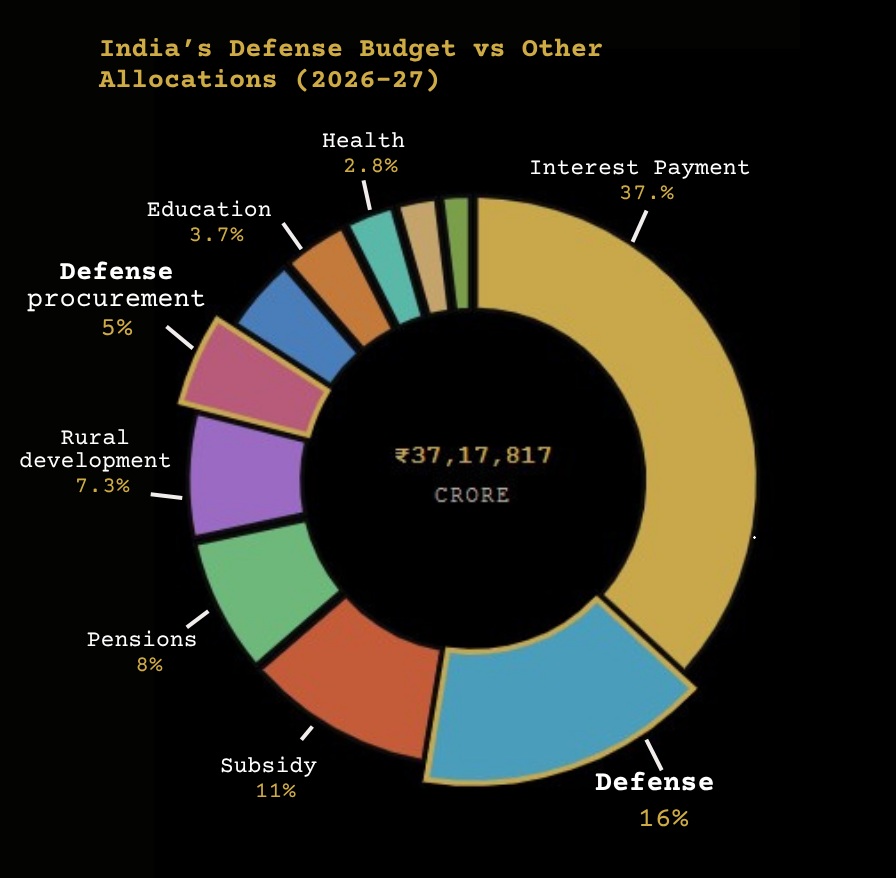
India’s defense boom is outpacing the Army’s ability to absorb it! With excess capacity, firms are turning to paramilitary and police, driving military-grade tech into domestic conflicts and accelerating hypermilitarization.
Our new investigation lays it all out:
https://t.co/wCtQfUbWy8
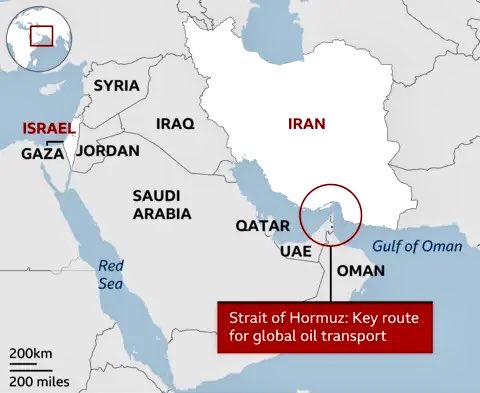
The war in the Strait of Hormuz will reach your local pharmacy within six weeks. Not because your pharmacist follows geopolitics. Because the active pharmaceutical ingredients in roughly half of America’s generic prescriptions begin as petrochemical derivatives manufactured in India, and India’s petrochemical industry begins as crude oil that transited 21 miles of water that closed on March 4.
Nearly 70 percent of the active ingredients in US generic drugs are produced in India. India imports approximately 40 percent of its crude oil through the Strait of Hormuz. The crude feeds refineries that produce naphtha. The naphtha feeds petrochemical crackers that produce intermediates. The intermediates feed pharmaceutical plants in Gujarat, Maharashtra, and Hyderabad that produce the API, the active pharmaceutical ingredient, that is shipped to contract manufacturers in the United States, Europe, and across Asia. The chain from the strait to the tablet is six steps long. Every step requires the one before it.
CNBC reported that the Hormuz closure puts America’s generic drug supply at risk. Fierce Pharma warned of longer-term effects on US manufacturing and generics. Think Global Health mapped the pharmaceutical supply chains most vulnerable to disruption. The consensus across trade publications, health policy analysts, and industry executives is identical: four to six weeks of current inventory exists in the pipeline. After that, shortages begin with the most complex formulations first.
Cancer drugs are the highest risk. Biologics requiring cold-chain storage have the shortest shelf life and the longest replenishment cycle. Clinical trial medications depend on uninterrupted supply chains that are now interrupted. Insulin analogues, antivirals, and cardiac medications all contain intermediates sourced from Indian manufacturers whose input costs are rising with every day the strait remains closed.
Air cargo is the emergency bypass. But air freight rates from India have climbed 200 to 350 percent on some routes since the war began, according to logistics tracking firms. Gulf air capacity is down 79 percent because airports in the UAE, Kuwait, and Qatar have been damaged or operate under restricted conditions. The Suez Canal route adds 10 to 14 days to maritime shipping times. The Cape of Good Hope route adds 21 to 28 days. Both alternatives assume the Red Sea remains navigable, which the Houthi threat has complicated since 2024.
The World Health Organisation reported a 70 percent funding gap for its operational response in the region. Medical supply chains to Iran itself have been devastated, with hospitals reporting shortages of surgical supplies, blood products, and anaesthetics. But the downstream pharmaceutical effect extends far beyond the war zone. Every Indian manufacturer that pays more for crude pays more for naphtha, pays more for intermediates, and passes the cost forward into API prices that American generic drug companies absorb until they cannot absorb any further.
The molecule does not know it is a medicine. The strait does not know it is a pharmacy. The petrochemical derivative that becomes a blood pressure tablet transits the same water as the petrochemical derivative that becomes a fertiliser pellet. Both are trapped. Both have shelf lives. Both have planting windows or prescription refill cycles that do not negotiate with blockades.
Six weeks. Then the pharmacy starts calling patients about substitutions.
https://t.co/iFmUcarGdV
If you know me, you’ve heard me talk about this story for months.
@HeraRizwan reported from 3 states. We obsessed over every detail.
Google's AI, designed for phones, is now rationing food to pregnant women. Read. Get angry. Share
https://t.co/1heWRv9Ghj
@pulitzercenter
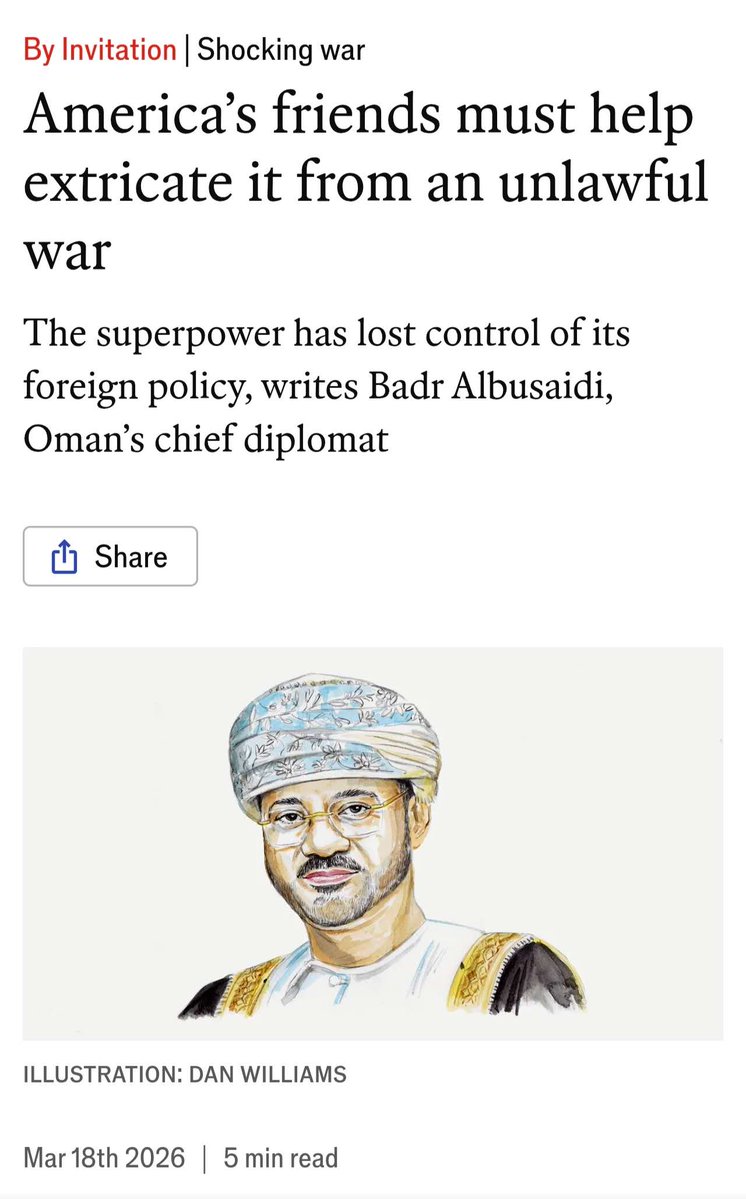
This is probably the most important article of the month: an op-ed by Oman's Foreign Minister, who mediated the talks between the U.S. and Iran, in which he writes that the U.S. "has lost control of its foreign policy" to Israel.
He repeats that a deal was possible as an outcome of the talks (something confirmed by the UK's National Security Advisor, who also attended: https://t.co/XkfSpkMjCf) and that the military strike by the U.S. and Israel was "a shock."
Interestingly, given he is one of Iran's neighbors and given that Oman has been struck multiple times by Iran since the war began (https://t.co/IXNdwD6f3j), he writes that "Iran’s retaliation against what it claims are American targets on the territory of its neighbours was an inevitable result" of the U.S.-Israeli attack. He describes it as "probably the only rational option available to the Iranian leadership."
He says the war "endangers" the region's entire "economic model in which global sport, tourism, aviation and technology were to play an important role." He adds that "if this had not been anticipated by the architects of this war, that was surely a grave miscalculation."
But, he adds, the "greatest miscalculation" of all for the U.S. "was allowing itself to be drawn into this war in the first place."
In his view this was the doing of "Israel’s leadership" who "persuaded America that Iran had been so weakened by sanctions, internal divisions and the American-Israeli bombings of its nuclear sites last June, that an unconditional surrender would swiftly follow the initial assault and the assassination of the supreme leader."
Obviously, this proved completely wrong, and the U.S. is now in a quagmire. He says that, given this, "America’s friends have a responsibility to tell the truth," which is that "there are two parties to this war who have nothing to gain from it," namely "Iran and America."
He says that all of the U.S. interests in the region (end to nuclear proliferation, secure energy supply chains, investment opportunities) are "best achieved with Iran at peace."
As he writes, "this is an uncomfortable truth to tell, because it involves indicating the extent to which America has lost control of its own foreign policy. But it must be told."
He then proposes a couple of paths to get back to the negotiating table, although he recognizes how difficult it would be for Iran "to return to dialogue with an administration that twice switched abruptly from talks to bombing and assassination."
That's perhaps the most profound damage Trump did during this entire episode: the complete discrediting of diplomacy. If Iran was taught anything, it is: don't negotiate with the U.S., it's a trap that will literally kill you.
The great irony of the man who sold himself as a dealmaker is that he taught the world one thing: don't make deals with my country.
Link to the article: https://t.co/FZxtqV3RC4
New funding opportunity! 📣
We’re investing in five teams to set up global hubs that will use AI to quickly and more reliably synthesise constantly updated research and data to inform health policy decisions. [1/3]
#NewInvestigation: #WasteTyre
Waste Tyre or used tyre (ELTs), is one of the biggest problems the developed countries are facing.
The Western and the Gulf nations, do not burn their trash in their own backyard to protect their environment. They export it to India.
Since 2017, these countries have exported 71 lakh metric tons of waste tyres in India.
And in return, India paid over ₹5,000 crore to over 50 countries bringing their trash to our doorstep. Although India is itself struggling with the waste tyre and lacks robust recycling infrastructure.
India is quietly swallowing poison so the rest of the world doesn’t have to deal with its mounting tyre waste. @Jairam_Ramesh@byadavbjp
https://t.co/0vXaawn6st