Historical Context
In the late 19th and early 20th centuries (especially ~1890–1930), child labor was rampant in Iranian carpet production. Children—often girls as young as 5–7—worked extremely long hours (sunrise to sunset) in poorly ventilated workshops, suffering health damage like deformed bones, eye strain, respiratory issues, and stunted growth. Families in poverty “rented” or contracted children to masters for advance payments, creating debt-like bondage. Western companies (e.g., British-backed Oriental Carpet Manufacturers) also benefited from this cheap labor.05
International pressure from the ILO, British diplomats, and missionaries led to some regulations (e.g., minimum ages), but enforcement was weak, especially in family/cottage settings. This pattern continued post-WWII and into the 1990s–2000s, with reports of young girls working 8–12+ hour days for very low pay in dim, dusty conditions.1
Current Situation
•Ongoing problems: Child labor persists in Iran’s carpet sector due to rural poverty, large families, and the informal economy. Afghan migrant children are particularly vulnerable. Recent reports (up to 2026) highlight rising child labor overall amid economic hardship, sanctions, inflation, and unemployment—extending to workshops, agriculture, and streets. Conditions include long hours, health risks (back pain, vision loss, respiratory issues), and low/no pay.44
•Not universal “slavery”: Much work occurs in family homes or small workshops where children learn the trade from mothers/sisters (a cultural norm in some areas). Not all is forced chattel slavery; it’s often economic necessity. Modern slavery estimates for Iran (Global Slavery Index) put prevalence around 7.1 per 1,000 people (~597,000 in 2021), including forced labor and marriage, but carpets are one sector among many. Government response is weak.49
•Scale and trends: The industry employs many women and girls, but exact current numbers for children are hard to verify due to informality. Efforts at regulation and modernization exist, but poverty sustains it. Not every Persian rug is made this way—higher-end or factory ones may differ—but the risk remains in traditional production.28
Ethical note: Buying handwoven Iranian/Persian rugs carries a real risk of indirect support for exploitative labor. Certifications (e.g., GoodWeave or similar) or alternatives from regions with stronger labor standards can help. Broader solutions involve addressing Iran’s economic pressures, education access, and enforcement of child labor laws.
This is a longstanding humanitarian concern tied to development challenges, not a simplistic “all rugs = child slaves” narrative. Reliable sources like academic histories and ILO-linked reports back the exploitation without universalizing it to every rug today.
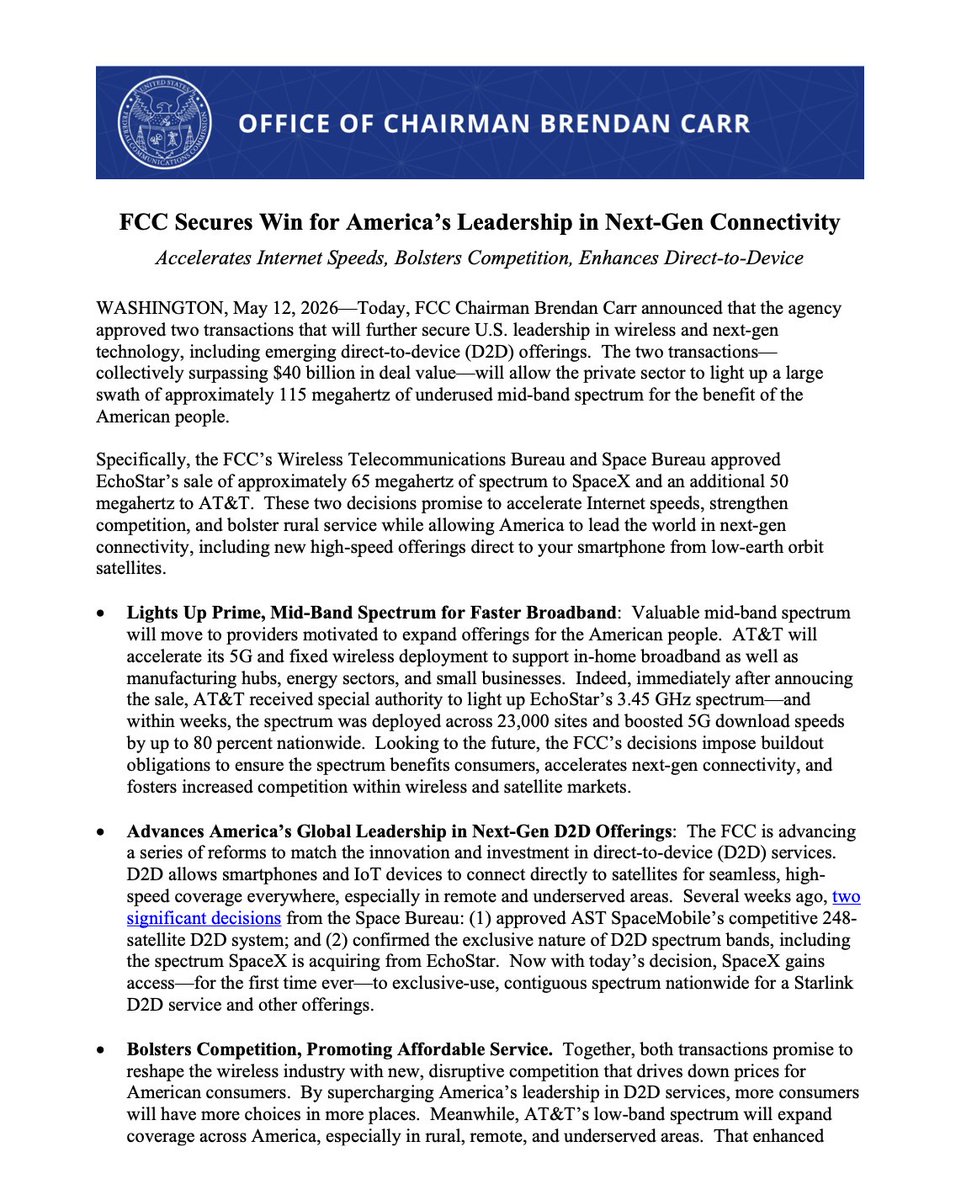
SpaceX has just received FCC approval to acquire ~65 MHz of nationwide spectrum from EchoStar for the company's next-gen direct-to-device @Starlink Mobile service.
The FCC says the deal gives SpaceX “exclusive-use, contiguous spectrum nationwide” for direct-to-phone connectivity from orbit.
Next-gen Starlink Mobile is going to be incredible, enabling 5G speeds from space in the middle of nowhere.