📣 Check out the latest @EMPHARM_NET study of 362 adults with TBI or sICH at 11 US EDs who received sugammadex
📈 A positive response (⬆️GCS ≥1) was seen in 54% & associated with a new analgesia, sedation & non-significant⬆️neurosurgical procedures
👉https://t.co/cVMNe5siNJ
“What a fooking place!” Beautiful.
Americans who seem to openly hate their own country need to explain this woman’s reaction to Boston.
Is she mistaken? Does she just not know what she’s talking about? Lay it out for me.
El Himno de los Estados Unidos acá en Seattle ha sido una auténtica escena de película. Espectacular. Véanlo hasta el final. Brutal. Más de 65 mil personas, lleno absoluto. Estados Unidos demostrando que también es un país futbolero. Fabuloso.
Something good is happening at this World Cup.
The Scots turned up. The English turned up. The Norwegians turned up. They sang their songs, got stuck in, and the Americans loved them for it. Glasgow and Boston are getting twinned off the back of it.
For 30 years we’ve been told to view the US as some sort of Great Satan — all imperialism and orange-man clichés. Not everyone buys it of course, but enough do.
And then Europeans actually go, and find a place that feels familiar. Makes sense to them. A bit richer, a bit further ahead, but recognisably ours. Settled by Europeans, still deeply European in its bones.
There’s a gathering-of-the-clans feeling to it. Old neighbours discovering they still like the same songs, the same drink, the same daft humour, and genuinely enjoying each other’s company.
None of it’s a surprise, really. It’s just been buried under so much politics that we forgot we were allowed to enjoy it.
Good to be reminded.
After Japan battled the Netherlands to a 2-2 draw, the Japanese fans stayed behind and cleaned up every single piece of trash from their section at Dallas Stadium after the game.
The strongest predictor of who does extraordinary work is whether they ever obsessed over something pointless. We've seen this across 5000 startup meetings, but the pattern showed up across everyone from scientists to athletes.
We’ve met people who spent two years optimising their fantasy football algorithms, or memorised every player in the NBA at 11, or collected thousands of train tickets, or built a Lego replica of their school; none of these activities really had much point.
What they were demonstrating was the hardest skill in any field; the mental capacity to stay focused on a boring task for much longer than it deserves. The path to genius is mostly boring repetition, and people who achieve it have a broken off-switch. It is tough to fake having spent years obsessed with boring things that didn't matter.
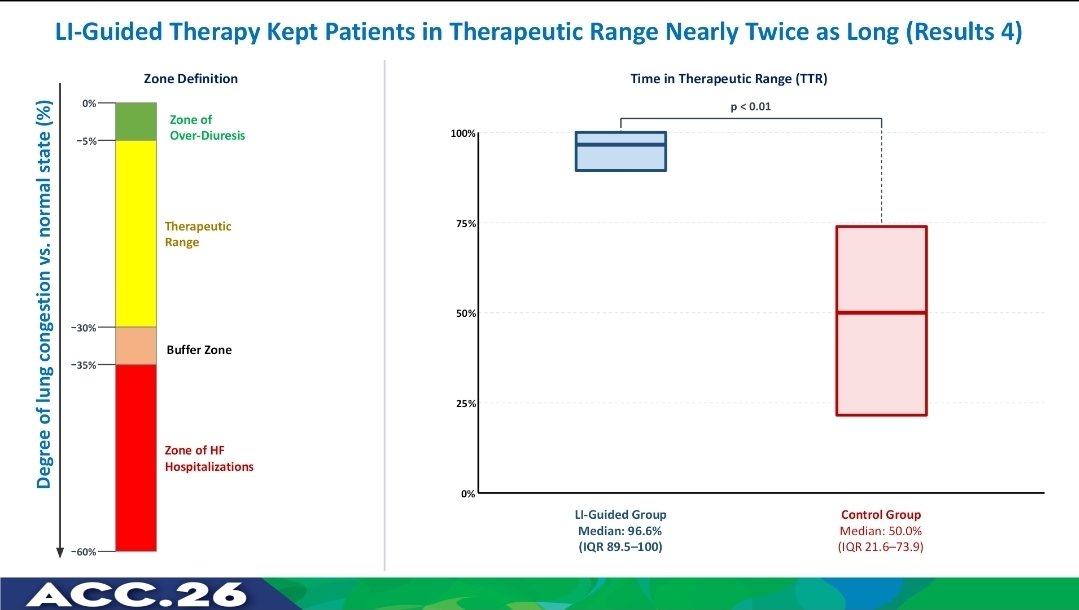
🚨 IMPEDANCE-HFpEF — #ACC26
One of the most anticipated trials delivers striking results
🔑 Noninvasive lung fluid monitoring:
• ↓ 81% HF hospitalizations
• ↓ 65% all-cause mortality
• Earlier and more frequent treatment adjustments
🧠 Detecting congestion before symptoms may change how we manage HFpEF
Anonymous
I work the night desk at a rundown motel. $39 a night. Cash only.
Man checked in at midnight. Paid for one night. Looked exhausted.
Next morning found him in the parking lot. Sitting in his truck. Engine running. Hose from the exhaust.
I ran. Ripped the door open. Pulled him out.
He fought me. “Let me go. I have nothing left.”
Called 911. Stayed with him until they came.
Paramedics took him. Psychiatric hold.
Found his room key in the parking lot. Went to his room.
Suicide note on the bed.
Addressed to his kids. He’d lost everything. Job. House. Family. Couldn’t see a way forward.
Visited him at the hospital every day. Brought food. Sat with him.
“Why do you care? You don’t even know me.”
“Because you’re here. And that means something.”
Two weeks later, he got out. Had nowhere to go.
Gave him a job. Night maintenance at the motel. Let him stay in a room.
Six months later, he was managing the place. I’d trained him. Trusted him.
Three years later, he bought the motel from me.
I was retiring anyway.
Last week, drove by. Sign out front: “Second Chance Inn.”
He’d repainted. Fixed it up. Made it nice.
Called me. “Half the rooms are permanent housing. For people like I was. People who need somewhere to start over.”
He’s housed forty-seven people in two years.
Suicide hotline number on every room phone.
“Because a night clerk grabbed me out of a truck and refused to let me disappear.”
Your entire life is an electromagnetic force field pretending to be physical contact.
When you “touch” a table, the electrons in your fingertip and the electrons in the wood repel each other. The gap never closes. What your brain registers as solid contact is the Pauli exclusion principle and electromagnetic repulsion creating the sensation of resistance at roughly 1 angstrom, one ten-billionth of a meter.
This applies to everything. The ground you’re standing on. The chair you’re sitting in. The phone in your hand right now. You’ve never made contact with any of them. You are permanently floating approximately 0.1 nanometers above every surface you’ve ever “touched,” suspended by the same force that keeps two magnets from snapping together when you flip one around.
Now scale that. Every nerve signal you’ve ever felt, every texture, every temperature, every sensation of pressure: all of it is your nervous system interpreting variations in electromagnetic repulsion strength. Silk feels different from sandpaper because the electron clouds have different geometries, not because your skin ever contacted either surface.
The part that should unsettle you: your brain has never once received direct physical input from the outside world. Every sensory experience you’ve ever had was a second-hand report from electrons that refused to get any closer.
You’re reading this on a screen you’ve never touched, with eyes that collect photons but contact nothing, processed by neurons that have never been in direct physical contact with each other.
The signal jumps the gap every single time. Your entire reality is built on things that almost meet but never do.
This retrospective quality improvement study evaluated surgeon-performed TAP blocks in emergency laparotomy patients. TAP blocks significantly reduced postoperative opioid use without increasing complications, supporting their role as a safe, opioid-sparing analgesic strategy.
https://t.co/V2Fyqv1qK8
The autoimmune market is about to get repriced and the math is staggering.
CAR-T therapy costs $400,000 to $1 million per patient for cancer. There are 50 million Americans with autoimmune diseases. Even if you limit the addressable population to severe, treatment-refractory cases (roughly 10-15%), you’re looking at 5-7 million patients.
At current pricing, treating just 1% of the autoimmune population would cost $200 billion. The entire US drug market is $600 billion.
This is why the real race isn’t proving CAR-T works for autoimmune diseases. Early results from Erlangen already showed that. All 15 patients with lupus, scleroderma, and myositis went into remission. Zero needed follow-up treatment.
The real race is manufacturing cost. Right now, producing enough virus to reprogram one patient’s cells costs $100,000 alone. The entire process takes weeks of specialized lab work per patient. You can’t treat 50 million people with a bespoke therapy that requires a cleanroom and a team of PhDs for every infusion.
That’s why in vivo CAR-T (injecting lipid nanoparticles that reprogram your T cells inside your body, no extraction needed) is the actual unlock. It turns a $500,000 manufacturing problem into something that could scale like a vaccine.
Novartis, the biotech startups, the academic labs in Germany and China racing on this… they’re not competing for who cures lupus first. They’re competing for who makes it cheap enough to treat millions.
The company that solves autoimmune CAR-T manufacturing at scale is building a $100B+ franchise. Because the patients already exist, the biology already works, and the only constraint left is unit economics.
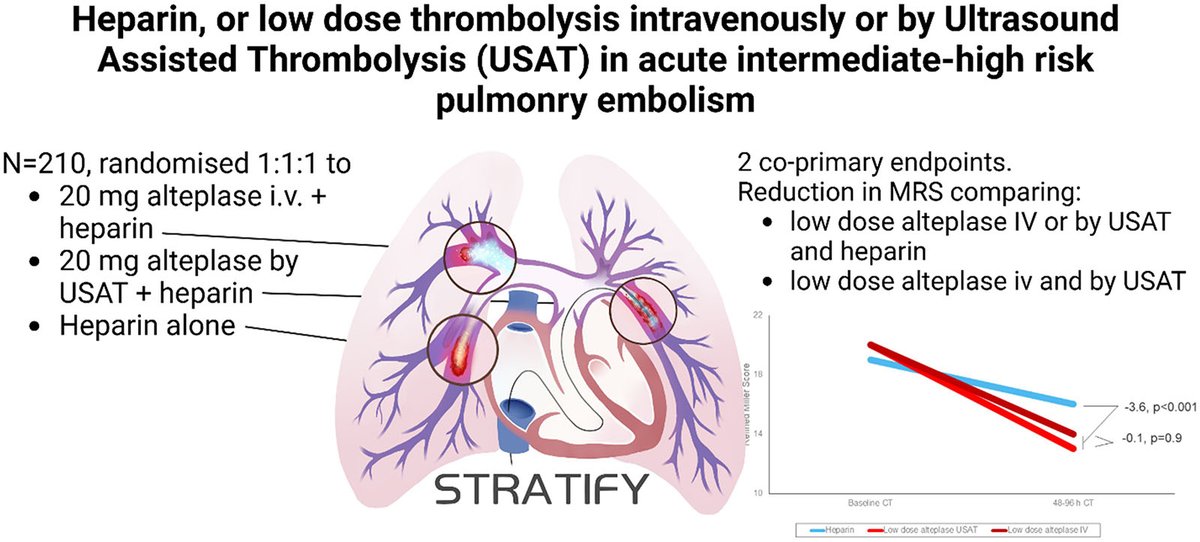
Fresh blog: STRATIFY trial for PE
Peripheral tPA infusion is EQUALLY EFFECTIVE as compared to ultrasound-assisted thrombolysis
Catheter-directed thrombolysis for PE is dead
We can get the same benefits with peripheral tPA infusions (w/o procedural costs & complications)...#1/2
A human consumes about 2,000 calories per day. Over 20 years, that’s roughly 17,000 kWh of total food energy. Training GPT-4 consumed an estimated 50 GWh of electricity. That’s 3,000 humans worth of “training energy” for a single model run.
And GPT-4 is already dead. OpenAI retired GPT-4o from ChatGPT on February 13th. The model that took 50 GWh to train got less than two years of flagship status before replacement. The human you spent 17,000 kWh “training” for 20 years produces economic output for the next 40 to 60 years. The amortization window on GPT-4 was shorter than a car lease.
Now look at what replaced it. GPT-5.2, released December 2025, is OpenAI’s current default. The GPT-5 series consumes an estimated 18 Wh per average query according to the University of Rhode Island’s AI Lab, up to 40 Wh for extended reasoning. That’s 8.6 times more electricity per response than GPT-4. With 2.5 billion queries hitting ChatGPT daily and GPT-5.2 now the default model, the inference math gets staggering fast. Even at a blended average well below 18 Wh, you’re looking at daily electricity consumption that could power over a million American households.
This is what Altman is actually doing. OpenAI hit $13 billion in annual recurring revenue but still isn’t profitable. They need you to think of AI energy consumption as natural and inevitable, the same way you think about feeding a child, because the alternative framing is that they’re burning through enough electricity to rival small countries while racing to build 1-gigawatt Stargate data centers. The food analogy makes the energy costs feel biological and unavoidable instead of what they are: an engineering and business choice that scales with every model generation.
The comparison sounds clever at a fireside chat in India. It falls apart the second you do the arithmetic.
The math on this project should mass-humble every AI lab on the planet.
1 cubic millimeter. One-millionth of a human brain. Harvard and Google spent 10 years mapping it. The imaging alone took 326 days. They sliced the tissue into 5,000 wafers each 30 nanometers thick, ran them through a $6 million electron microscope, then needed Google’s ML models to stitch the 3D reconstruction because no human team could process the output.
The result: 57,000 cells, 150 million synapses, 230 millimeters of blood vessels, compressed into 1.4 petabytes of raw data. For context, 1.4 petabytes is roughly 1.4 million gigabytes. From a speck smaller than a grain of rice.
Now scale that. The full human brain is one million times larger. Mapping the whole thing at this resolution would produce approximately 1.4 zettabytes of data. That’s roughly equal to all the data generated on Earth in a single year. The storage alone would cost an estimated $50 billion and require a 140-acre data center, which would make it the largest on the planet.
And they found things textbooks don’t contain. One neuron had over 5,000 connection points. Some axons had coiled themselves into tight whorls for completely unknown reasons. Pairs of cell clusters grew in mirror images of each other. Jeff Lichtman, the Harvard lead, said there’s “a chasm between what we already know and what we need to know.”
This is why the next step isn’t a human brain. It’s a mouse hippocampus, 10 cubic millimeters, over the next five years. Because even a mouse brain is 1,000x larger than what they just mapped, and the full mouse connectome is the proof of concept before anyone attempts the human one.
We’re building AI systems that loosely mimic neural networks while still unable to fully read the wiring diagram of a single cubic millimeter of the thing we’re trying to imitate. The original is 1.4 petabytes per millionth of its volume. Every AI model on Earth fits in a fraction of that.
The brain runs on 20 watts and fits in your skull. The data center required to merely describe one-millionth of it would span 140 acres.