#FlashbackFriday!
🌍Ischemic Stroke Prevention in Patients with Atrial Fibrillation & a Recent Ischemic Stroke, TIA, or Intracranial Hemorrhage; a World Stroke Organisation (WSO) Scientific Statement
Read here!👇
https://t.co/Ba62qKrrNd
When to start anticoagulation after an ischaemic stroke in people with atrial fibrillation? Attached please find a comment in the NEJM Journal Watch on our CATALYST meta-analysis, published in The LANCET. @BoNorrving@SignildAsberg
@TheLancet Very happy to see this in print, the result of 8 years of collaboration between the RCT:s on this topic. The final result of the individual patient data systematic analysis showed that the total was larger than the parts; a demonstration of the power of evidence based principles
Many thanks to all the CATALYST collaborators, who helped us to solve this old dilemma in acute stroke management: there is no reason to delay anticoagulants in ischemic stoke patients with atrial fibrillation!
@inselgruppe@StrokeBern@unibern
🧠 The European Stroke Science Workshop, ESSW, brings together leading clinician-scientists and researchers in a highly interactive setting. Applications for mid-career researchers who are ESO members are open until 25 April 2025 – 👉 https://t.co/AInQRuhawP
#stroke
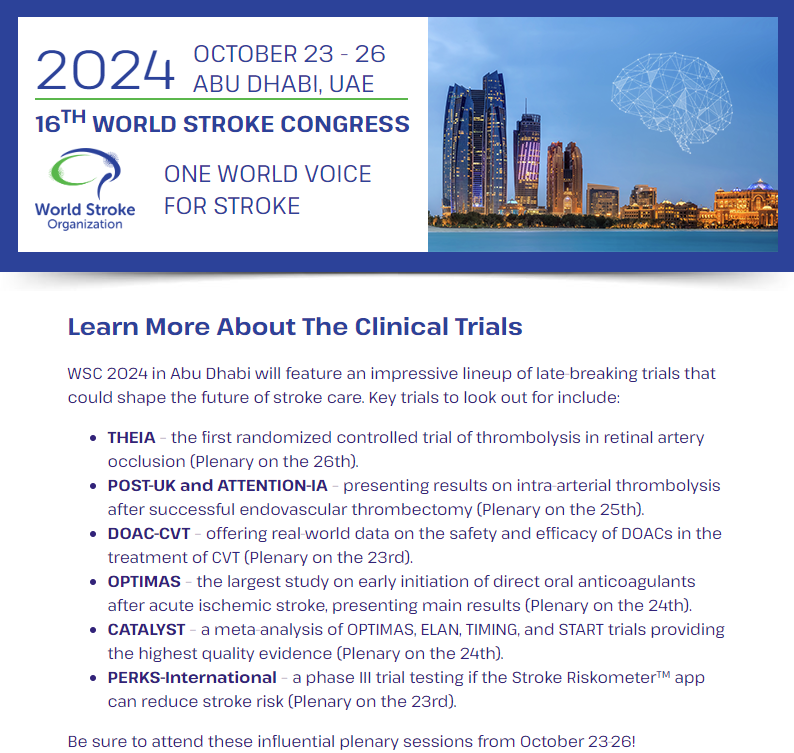
#WSC2024
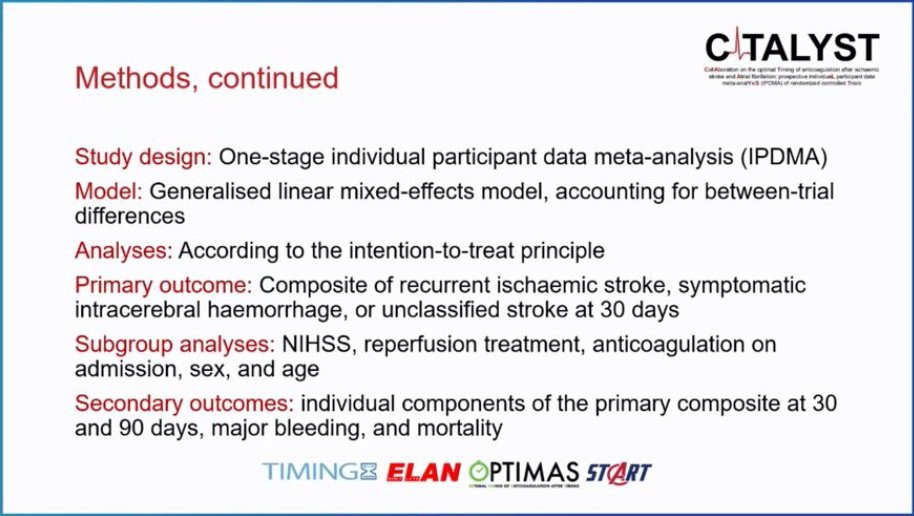
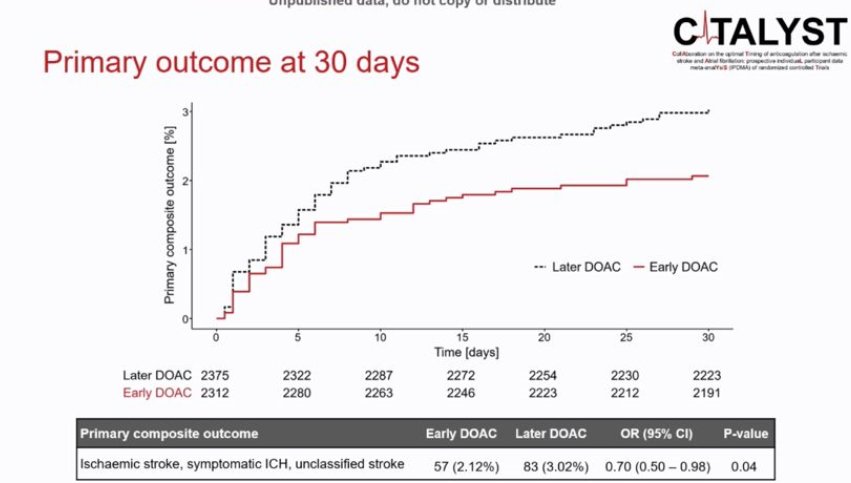
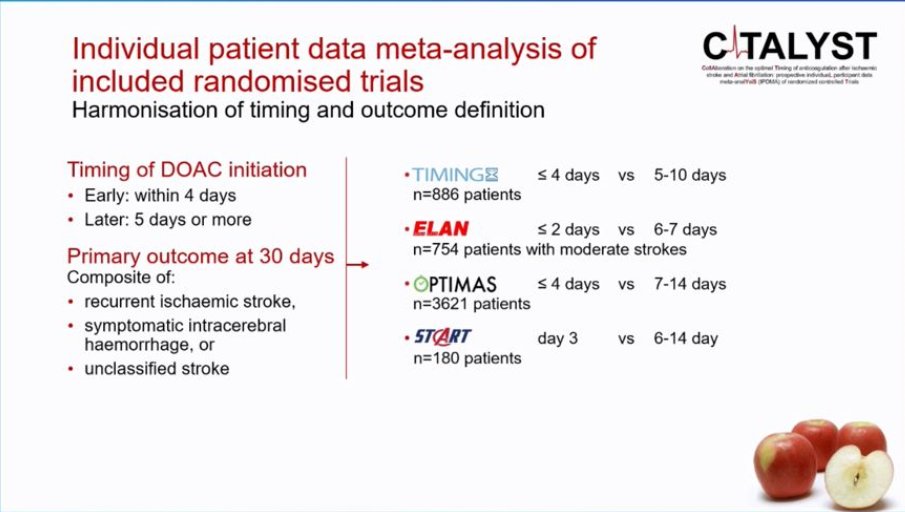
Following the #Optimas results, Dr. @SignildAsberg presented the much-anticipated #CATALYST IPD meta-analysis on early vs. late DOAC initiation after stroke in AF patients
#TIMING#ELAN#OPTIMAS#START
👏Early start better for composite PO: IS/sICH/unclasiffied stroke
David G. Sherman Lecture by @warach_steven: A shift toward selection and evaluation of #stroke patients for therapies based on direct observation of target pathology and away from clinical and temporal surrogates. https://t.co/nGGR3T2ADZ @AHAScience@DellMedSchool@uthealthaustin
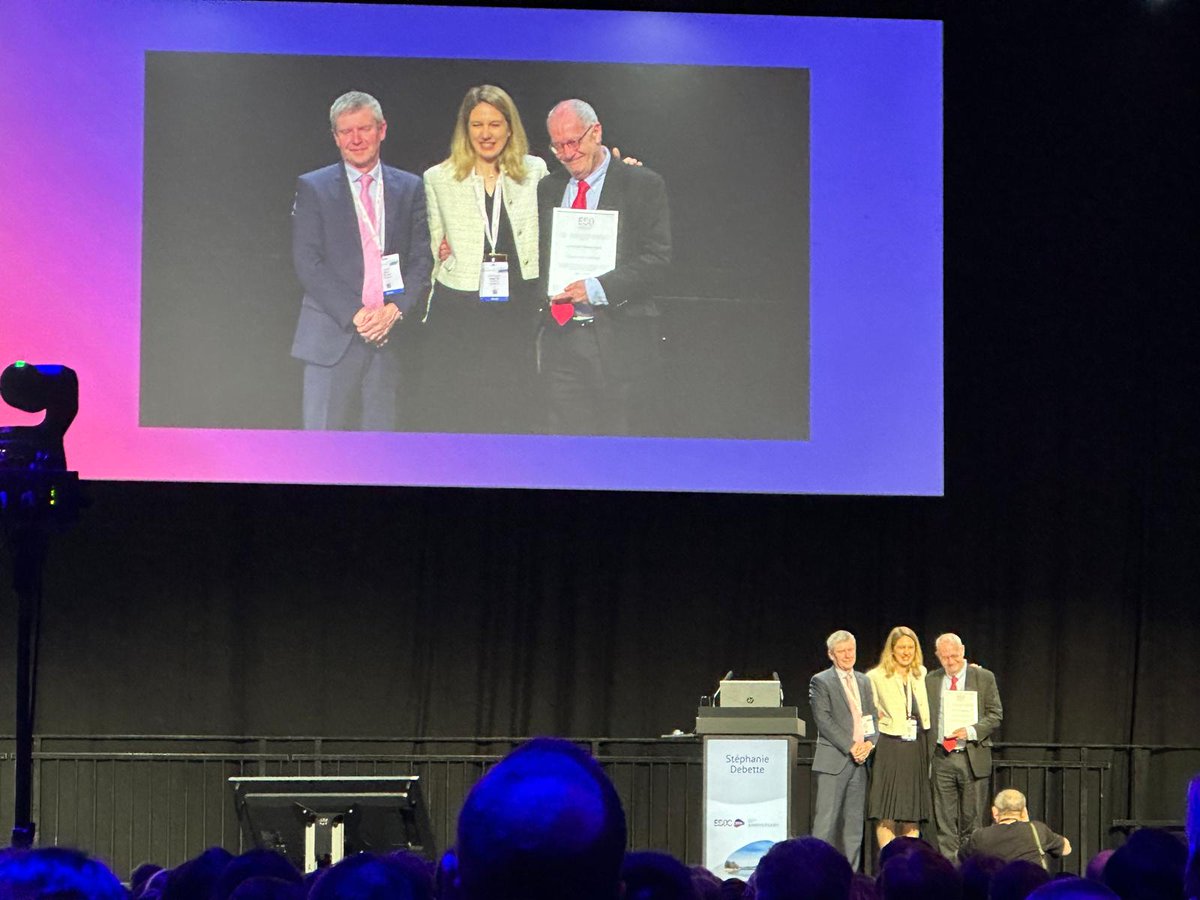
Congratulations to @BoNorrving who received the @ESOstroke Honorary Award this year for his incredible work in stroke care, research and advocacy! #ESOC2024
The new 2023 National Clinical Guideline (https://t.co/s5rdJWIjBT) has a recommendation for patients with moderate/severe ischaemic stroke: "wherever possible these patients should be offered participation in a trial of the timing of initiation of anticoagulation after stroke"
@DavidSeiffge@BoNorrving Thank you David, TIMING is the first RRCT in the stroke field demonstrating NOAC to be safe also in the acute phase of ischemic stroke w AF. Still, further evidence is needed and I can’t wait to see result from our collaboration with @OPTIMAS, @ELAN and START (@warach_steven)
#TIMING
Early vs delayed #NOAC start after acute ischemic stroke
🧠💊🩸
@BoNorrving 👏
Presented at #ESOC2021, now you can read the full article here 👇🏻
https://t.co/BkbNtIFCSJ
@syaddana_neuro Subgroups findings in Fig 6 should be interpreted cautiously, but the actual proportion of pts with NIHSS≥15 was 9% (early) and 8% (delayed). NIHSS was 4 (median) and 6 (mean) in both groups.
@MicieliA_MD@syaddana_neuro In the nation-wide pragmatic TIMING study, there were no inclusion/exclusion criteria based on NIHSS. Still, NIHSS was 4 (median) in both the early and the delayed group, as compared to 3 in the general Swedish stroke population with AF & NOAC.