A French engineer who lives quietly in Paris has spent 30 years writing software that the entire internet now runs on without knowing his name.
He wrote the code that streams every YouTube video, every Netflix show, every TikTok clip. He wrote the code that runs the virtual servers underneath AWS, Google Cloud, and Microsoft Azure. He calculated more digits of pi than anyone in history. He has no Twitter. He has no marketing. He just keeps shipping.
His name is Fabrice Bellard.
Here is the story, because almost nobody outside the systems programming world knows what one man has built.
Fabrice was born in 1972 in Grenoble, France. He studied at École Polytechnique, the top French engineering school. He never went to Silicon Valley. He never built a startup empire. He just wrote code.
In 2000 he started a project called FFmpeg, an open-source multimedia framework for encoding, decoding, and streaming video. He was 28. The project did one thing nobody else had done well. It handled every video and audio format that existed, in one library, on every operating system. He led it himself for years.
Today FFmpeg is the invisible engine of the internet. YouTube uses it. Netflix uses it. VLC uses it. Chrome and Firefox use parts of it. Every Android phone, every iPhone, every smart TV, every video editing tool you have ever touched runs FFmpeg somewhere underneath. If you have watched a video on a screen in the last 20 years, Fabrice's code processed it.
He was not done.
In 2003 he started QEMU, a machine emulator and virtualizer. He wrote it solo until version 0.7.1 in 2005. QEMU lets you run any operating system on any other operating system. It became the foundation of modern virtualization. KVM, the Linux kernel hypervisor, runs on top of QEMU. Every major cloud provider, AWS, Google Cloud, Microsoft Azure, IBM Cloud, runs virtual machines on infrastructure built around it. The Quick Emulator is the most cited piece of cloud infrastructure code on Earth.
He kept going.
In 2001 he won the International Obfuscated C Code Contest with a small C compiler that grew into TCC, the Tiny C Compiler. TCC can compile and boot a Linux kernel from source in under 15 seconds. In 2004 he calculated the most digits of pi ever computed at the time, using a personal desktop computer and an algorithm he derived himself called Bellard's formula. In 2011 he wrote a complete PC emulator in pure JavaScript that runs Linux in your browser, a project called JSLinux that engineers still cannot believe is real.
In 2019 he released QuickJS, a small but complete JavaScript engine that fits where V8 cannot. In 2021 he released NNCP, a neural network based lossless data compressor that immediately took the lead on the Large Text Compression Benchmark.
Then he turned his attention to large language models. He built TextSynth Server, a web server with a REST API for running LLMs locally. He released ts_zip and ts_sms, compression utilities that use language models to compress text and short messages at ratios traditional algorithms cannot reach. He released TSAC, a very low bitrate audio compression system. In December 2025 he released Micro QuickJS, a new JavaScript engine for microcontrollers, separate from QuickJS, designed for environments with almost no memory.
Fabrice co-founded a telecom company called Amarisoft in 2012, where he serves as CTO. Amarisoft builds 4G and 5G base station software used by carriers and labs around the world. He has been running it for over a decade while continuing to ship personal projects from his own home page at bellard dot org
He has no Twitter. He has no Instagram. He gives almost no interviews. His personal website is a flat list of projects with no styling, no fonts, no marketing copy. Just titles and links.
A quiet French engineer who never moved to Silicon Valley wrote the code that quietly runs the internet.
He is still shipping.
Quick update:
Since Sep'25, we have seen new kind of DDoS coming from US and South America (Bresil, Chili, Argentina, Maxico, Columbia). The size is around 15-16Tbps coming thought Miami,FL Dallas,TX and Los Angeles,CA.
Last months, last weeks, we added lot of new anti-ddos (VAC) capacities and lot of bandwidth. Today we have >70Tbps anti-ddos capacities (VAC) and we continue adding 2-3Tbps (VAC) every week. Also, we have now >120Tbps bandwidth between OVHcloud (AS16276) and Internet (transit, peering, pni) and we continue adding 3-4Tbps every week. The plan is to have >100Tbps anti-ddos (VAC) and >200Tbps bandwidth.
We continue working 24/7 to get there asap.
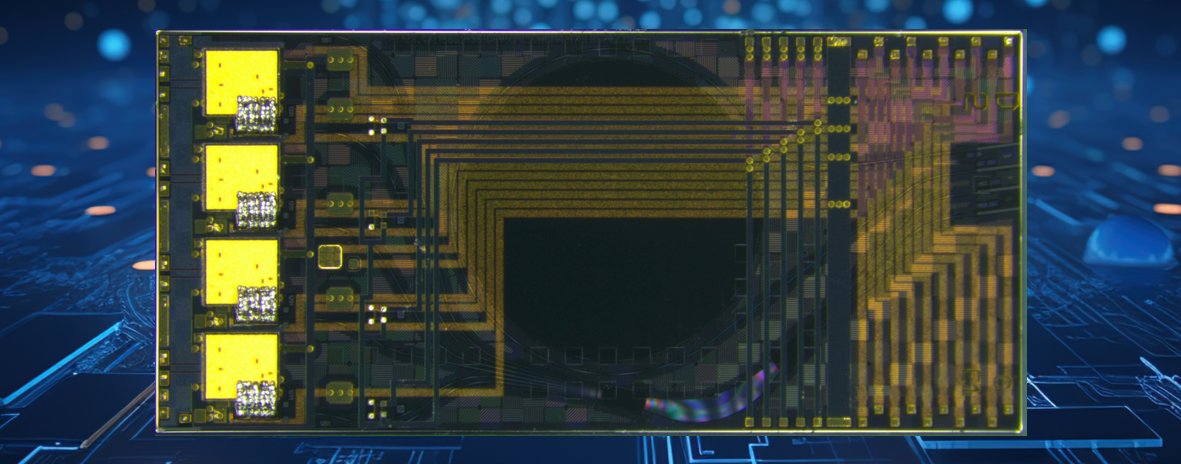
800G receiver chip (2x FR4, you can see two big arrayed waveguide gratings (AWG) for the demux)
and
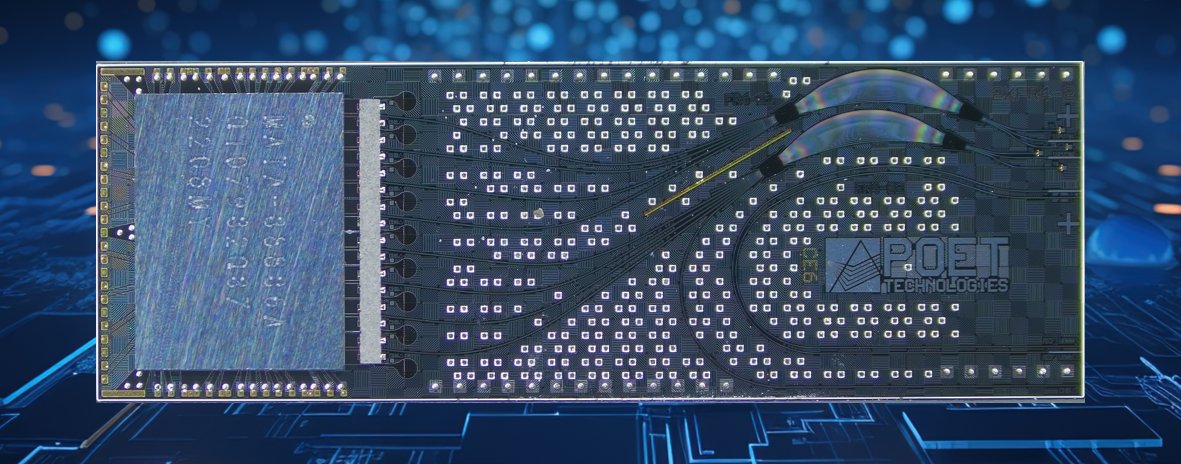
400G transmitter chip (four SOAs die bonded, one AWG, and a ring resonator? Fast modulation signals coming from the left, and bias signals from the right).
From Super Photonics Xiamen, acquired my POET recently.
En 2024, les DDoS font 2.5Tbps de traffic entrant sur un réseau. Sous peu, ils vont dépasser 10Tbps. Il faut continuer d’investir dans les capacités pour être capable de recevoir ces DDoS puis continuer à investir dans les technologies pour aspirer et nettoyer tous ces packets IP inutiles.
Chez OVHcloud, nous avons décidé de developper nous-mêmes toutes ces technologies. On les appelle VAC (de Vaccum aka aspirateur). « La team de tueurs » (les mots sont faibles) qui développe ces techno utilise les FPGA ou le DPDK sur les serveurs X86. Tout simplement. Ceci nous permet d’augmenter les capa de nettoyage pas cher et rapidement.
Article de blog sur qq details de DDoS qu’on reçoit.
https://t.co/U5y1E96b3o
I kept my mouth shut when SR Linux users inquired about our NetOps Development Kit (NDK), and I had a good reason, IMO.
It required a developer to write an NDK app, and I wanted to simplify the NDK framework so that a network engineer could write those apps.
Recently we finally devoted some time to NDK simplification, and it looks promising 😊
Yesterday morning I wrote this little NDK app that wraps https://t.co/MCLvJFWVFh service and provides a collaborative SSH web terminal from the SR Linux CLI.
But the beauty is that it is instrumented from the same SR Linux datastore, so you configure your SSHX client the same way you configure BGP.
It is part of your NOS config tree, no less.
You just install the (deb) package on your NOS and it merges into the NOS' YANG; now you can configure it, read its state, and operate it via any API interface. Simply beautiful.
I'll do a proper video explaining how it works.
GitHub Codespaces, along with tools like NetLab and ContainerLab make it easy to create and share labs.
https://t.co/8MI0bKsqGc has the goal of sharing network automation labs open source. Hopefully, many more labs are coming soon.
Kudos the Team !
« The OVH's Optical Core Backbone has successfully transitioned to FlexGrid ROADM gear. This upgrade will significantly enhance our optical network's resilience, performance, and scalability.
This migration which took about 16 hours spared in two intense nights, could be considered as one of the biggest interventions applied to OVHcloud’s history, affected 264 optical channels (2 x 132) and 16.6Tbps of traffic without any customer impact.
The migration of Legacy to FlexGrid node, concluded 260 Active and passive optical elements (cards, modules chassis, frames, etc,) installation and almost 400 rounds of wiring on 4 sites.
With the Flex implementation, we now have the flexibility to enable 200G and 300G optical channels. Also now we will connect additional dark fibers in our optical backbone to manage a better resilience on the L1 and lower latency between our DCs and POPs in Europe »
I have some terrible news but @nickrusso42518 has passed away
I considered him a friend and we always joked about a Cisco Live selfie with him mean mugging and my big smile.
Brilliant brilliant man lost too soon
Nicholas Russo Obituary - Bel Air, MD (https://t.co/LMuWZgNWJA)
In FY24, We have done :
Our first 400G Peering port
Our first 400G IX port
And now, our first 400G Transit port
Thanks to our team, our partners and suppliers.
FY24 is not finished yet, more to come 🚀📈
🎉 OVHcloud's network has just expanded to Vienna, joining BIX IX !
Enjoying faster, more reliable services and a healthy dose of schnitzel-fueled connections 🇦🇹