(1/3) In which patients with intracerebral hemorrhage should advanced work-up such as digital subtraction angiography be performed? The MACRO score may help - using a few simple MRI parameters it allows to reliably assess the risk of macrovascular causes: https://t.co/vG5bIj4WLq
New paper out today - 8 years of work! Prehospital emergency anaesthesia with intubation improves survival by 10.3% in high risk major trauma. Not only life-saving, it is so cost effective (£100m in DALYs/UK/year) it justifies NHS funding of air ambulances https://t.co/9TKzeJTg07
On the other hand, patients with non-lobar ICH had a higher risk of recurrent ischaemic stroke — possibly due to multiple concurrent stroke mechanisms (AF + small vessel disease). Major limitations: modest sample size, few outcome events. Larger meta-analyses needed.
Should patients with AF and history of ICH be treated with oral anticoagulation? A subanalysis of PRESTIGE-AF underlines individualised decisions (based on neuroimaging) - particular risk of recurrent ICH when cortical superficial siderosis and chronic ICH on MRI are present.
In this study the authors assessed the role of neuroimaging in identifying patients with particular susceptibility to #IschemicStroke or intracerebral hemorrhage, with the potential to enable individualized risk stratification: https://t.co/RFLrVGrafe
#NeuroTwitter@SimonFaHo
3/3 On the other hand, patients with non-lobar ICH had a higher risk of recurrent ischaemic stroke — possibly due to multiple concurrent stroke mechanisms (AF + small vessel disease).
Major limitations: modest sample size, few outcome events. Larger meta-analyses needed.
1/3 Should patients with AF and history of intracerebral haemorrhage treated with oral anticoagulation? This subanalysis of PRESTIGE-AF provides new data, indicating that individualised decisions based on neuroimaging (+clinical profiles) might be prudent: https://t.co/8Lc4CyLRAX
2/3 In this RCT (n=313) randomising patients with AF and prior ICH to anticoagulation vs not, cortical superficial siderosis and chronic intracerebral macrohaemorrhages on MRI strongly predicted recurrent ICH — potentially identifying patients at excess bleeding risk from OAC.
🧠Study of long-term outcome in young patients after ischemic stroke or TIA
⬆️Women had higher risk of post-stroke depression, anxiety & fatigue
🫀🚭Hypertension & smoking were modifiable risk factors contributing to worse outcome
Read more here!👇
https://t.co/d0nSsUHgHL
This is a breakthrough study that forges a new future — POC biomarkers for identifying #ICH in the prehospital phase.
Rapid Diagnosis of ICH with GFAP Levels on a Point-of-Care Device (DETECT) @neurology#curingcoma https://t.co/ufpoN4aFhO
#STROKE: In patients with acute ischemic stroke, admission NT-proBNP may predict the in-hospital development of atrial fibrillation detected after stroke (AFDAS), and a threshold of 505 pg/ml confers good discriminatory value. #AHAJournals https://t.co/3IAFCL6Sc9
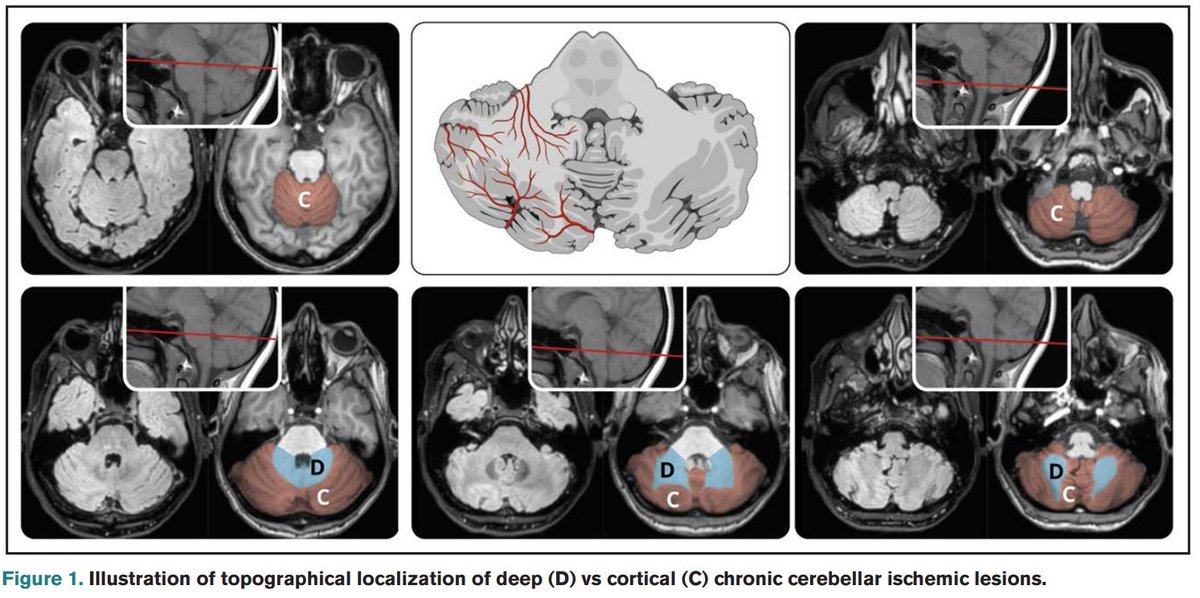
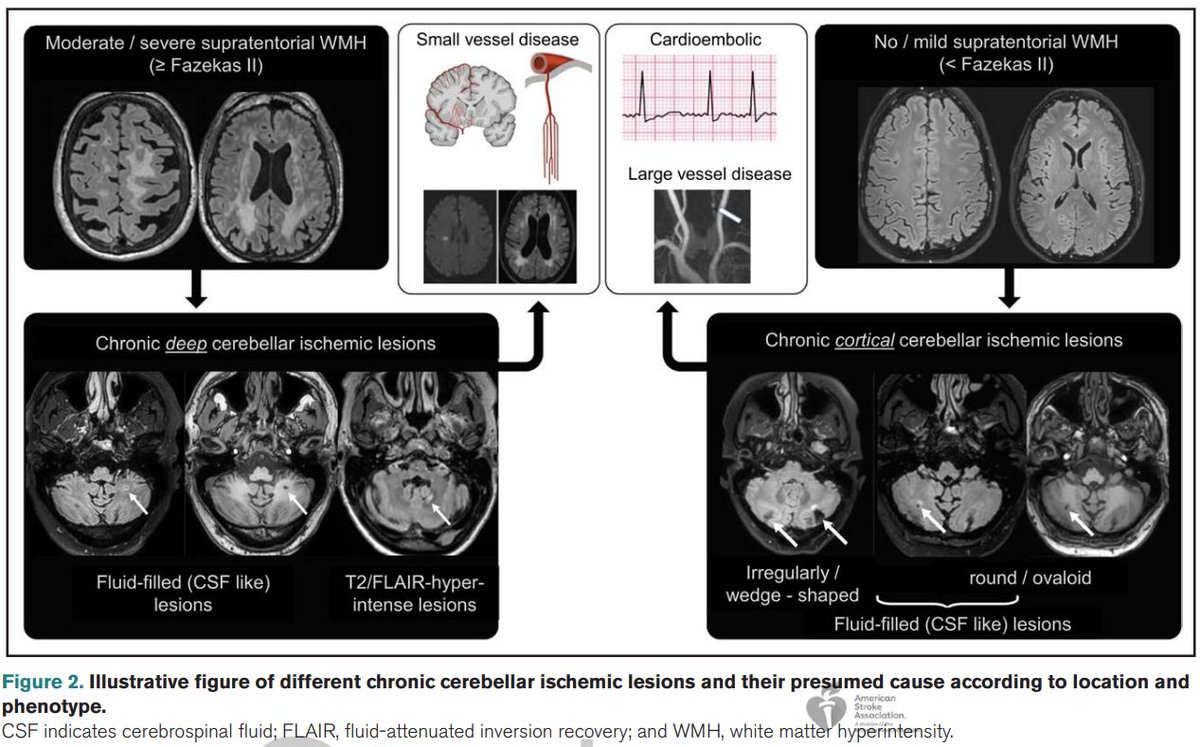
How do chronic ischemic lesions differ in patients with #AtrialFibrillation and #SmallVesselDisease?
We compared MRIs from @ELAN_Trial and #SVD cohorts: whereas AF patients had mostly cortical cerebellar lesions, SVD patients had deep lesions
https://t.co/95gesP3RIV
EURECA: New data on recurrent ICH: every second recurrence is adjacent to index ICH. Those bleedings occur early and are strongly associated with CAA. Great collaboration lead by @mbgoeldlin@StrokeBern
Author interview podcast: https://t.co/wMxa6qUunG
https://t.co/OYyJ91A5rO
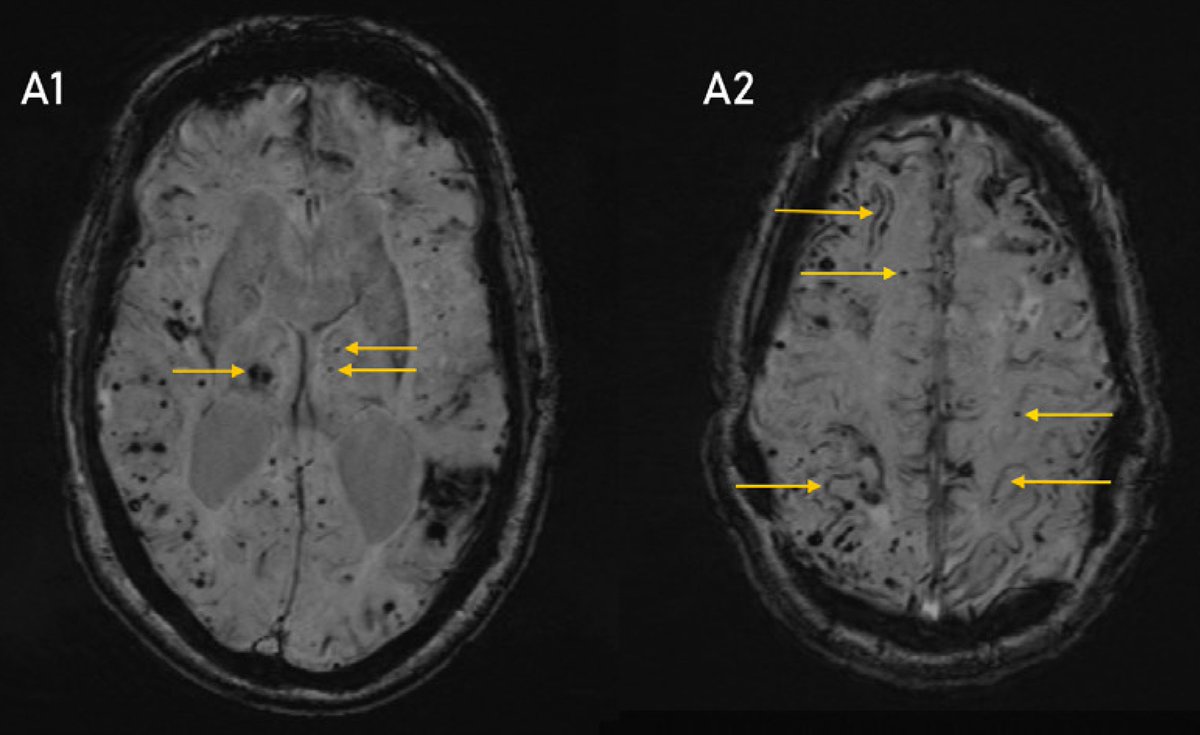
New in @JNNP_BMJ - the next chapter in the story of iatrogenic CAA 📕 and it really does seem to be different to sporadic CAA. Presence of deep haemorrhagic pathology in particular is unexpected but persistent signal.
So what does this mean? … 1/3 🧵
https://t.co/WCTwDesW8W
Our meta-analysis of 279 stroke studies over 24 years, with 117K+ participants, found that 1 in 2 stroke patients experience adverse non-motor outcomes. Adjusted meta-regression shows 8/10 domains persist more than 10-years. Time for change in stroke care. https://t.co/YAHCdsH9OX
Check out our latest paper providing the most comprehensive description of the phenotype and natural history of iatrogenic Cerebral #Amyloid Angiopathy. A great international collaboration thanks to @SimonFaHo@DrGargiBanerjee@KKaushikMD@LVpanteleenko and many others!
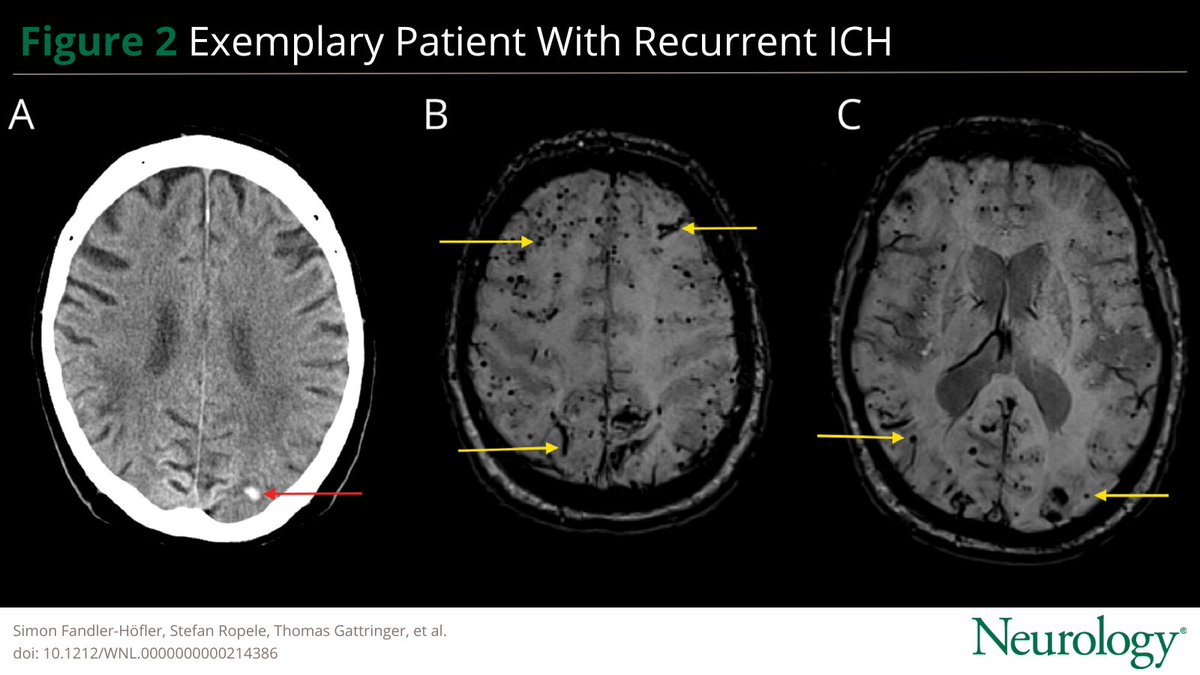
4/4 This indicates that patients with iCAA appear to have distinctive MRI characteristics, which might differentiate iCAA from other CAA subtypes and provide new insights into disease mechanisms.
https://t.co/ZV9y4h8836
@DrGargiBanerjee@UCLStrokeRes@BenStorti@KKaushikMD
1/4 Iatrogenic cerebral amyloid angiopathy (iCAA) is a scary rare disease affecting patients 30-50 years after possible CNS exposure to pathological amyloid-beta. In a large international collaboration, we investigated neuroimaging findings and clinical outcomes in 51 patients.
3/4 Besides severe CAA on MRI, we found:
a) major progression of CAA markers over 4 years
b) ipsilateral-dominant spread of haemorrhagic lesions (from amyloid-beta exposure)
c) frequent deep microbleeds
d) frequent inflammatory changes
e) very frequent small intragyral ICH
This case highlights the diagnostic approach and importance of thorough clinical evaluation of young patients with intracerebral hemorrhages.
https://t.co/D4nSxDi5cA
#NeurologyRF#NeuroTwitter