New publication - this one has been a long way time in the making, but I am very proud of the work that went into it. Take a peek at our new review article on coronaviruses of wild small mammals:
https://t.co/x0qCXtiJgE
Sorry mendacious climate deniers. The #HockeyStick is longer and sharper now, as demonstrated by an independent group of ~80 paleoclimate scientists around the world: https://t.co/XQHw5QUpvD
Certain human and livestock coronaviruses are thought to have rodent origins.
In this new article, a research team including U of G's @SimonJeeves discuss their findings from a survey of coronaviruses in wild rodents and eulipotyphlans in Ontario, Canada: https://t.co/qBW0nty8Er
We are pleased to have collaborated with many folks on this work including the Ontario Ministry of Natural Resources and Algonquin Small Mammal Project who were instrumental in collecting a breadth of samples. Thanks to all who were involved on this project. 4/4
We just published our work on coronaviruses of Southern Ontario wild small mammals. This paper was co-first authored by myself and Dr. Jon Kotwa and has been a long time in the making.
Check it out here: https://t.co/XwvxpcJoiE
#science
1/4
Some of these viruses were highly similar in their genomes to known pathogens of humans, companion animals, and livestock. The predicted structures of their spike proteins even share importantly conserved sialoglycan-binding sites. 3/4
The project will involve quantifying local habitat use by tagged waterfowl near dairy and poultry operations, assessing overlap of waterfowl movement with HPAI detections, and synthesizing implications for biosecurity, wildlife conservation, and One Health. 3/3
**Attention all seeking PhD positions in disease ecology, esp regarding highly pathogenic avian influenza (HPAI)!** See the attached photos for an exciting PhD position opportunity at the University of Saskatchewan. All details, including how to apply, are included there. 1/3
The position will be co-supervised by Dr. Mitch Weegman of the Department of Biology and Dr. Jolene Giacinti of Environment and Climate Change Canada (ECCC), and collaborating with Ducks Unlimited Canada. 2/3
@MayoClinicINFD Echinococcus multilocularis. Domestic dogs can also act as definitive hosts, shedding eggs into the environment and posing a zoonotic risk. Alternatively, dogs can develop alveolar echinococcosis similar to humans and intermediate hosts.
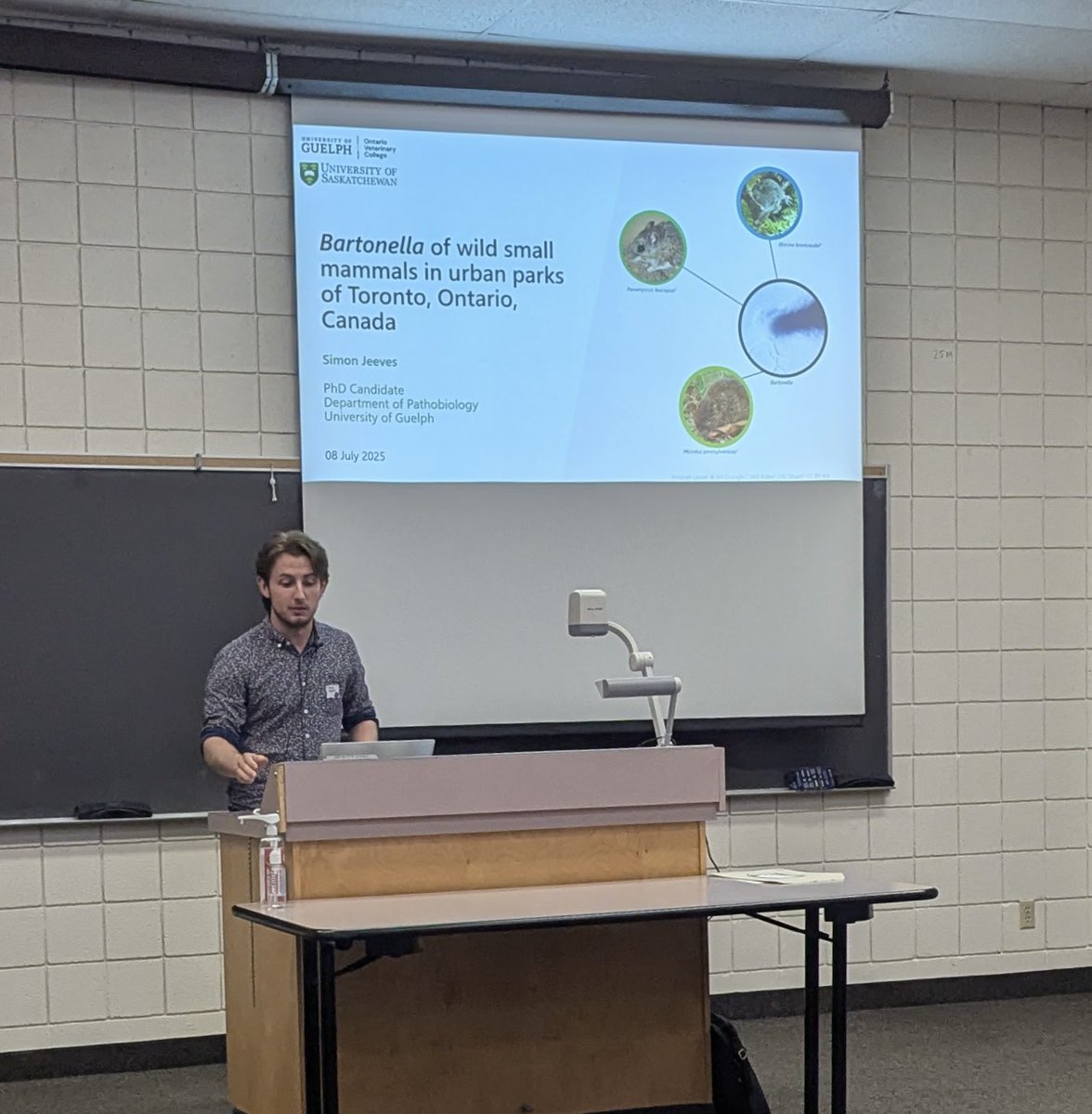
Yesterday I presented at the 2025 OVC Grad Student Research Symposium - a preview of the work I’ll be presenting later this month in Victoria BC for WDA 2025
Vaccine RCT spreadsheet aims to show the data, dispel myths about vaccines
In an effort to combat misinformation, a group of volunteers have compiled a growing list of randomized controlled trials conducted for licensed vaccines.
https://t.co/mbIjyxPGSb
"Whether at a conference, in a classroom, or over a pint at a pub, we have a responsibility to make science accessible, engaging, and meaningful". Our latest blog is from Dr Michael Shaw on presenting their phage research at a Pint of Science event in May. https://t.co/VUSIpyoSIh
I despise and wholeheartedly disagree with the actions and positions held by those who own this platform; I only continue to hold this account to maintain connections in my scientific/academic position.