@vfsglobalcare "Sorry you have encountered an error. Please try again in another 2 hours having cleared your browser cache and cookies. Try in a different browser if the error still occurs." I have tried everying, using difference devices, networks, but nothing helps.
Recently, @ENERGY's High-Performance Computing for Energy Innovation program announced the funding of $4 million for 10 new projects, including three collaborations involving #LLNL aimed at improving carbon capture, energy savings and CO2 reduction. https://t.co/pjBjbOJdLt
Researchers at #LLNL and @GeorgiaTech have made a significant breakthrough in understanding a crucial component in Direct Air Capture carbon-capture technologies. Explore how the new insights could enhance the efficiency and durability of DAC systems: https://t.co/TgANZNglVc
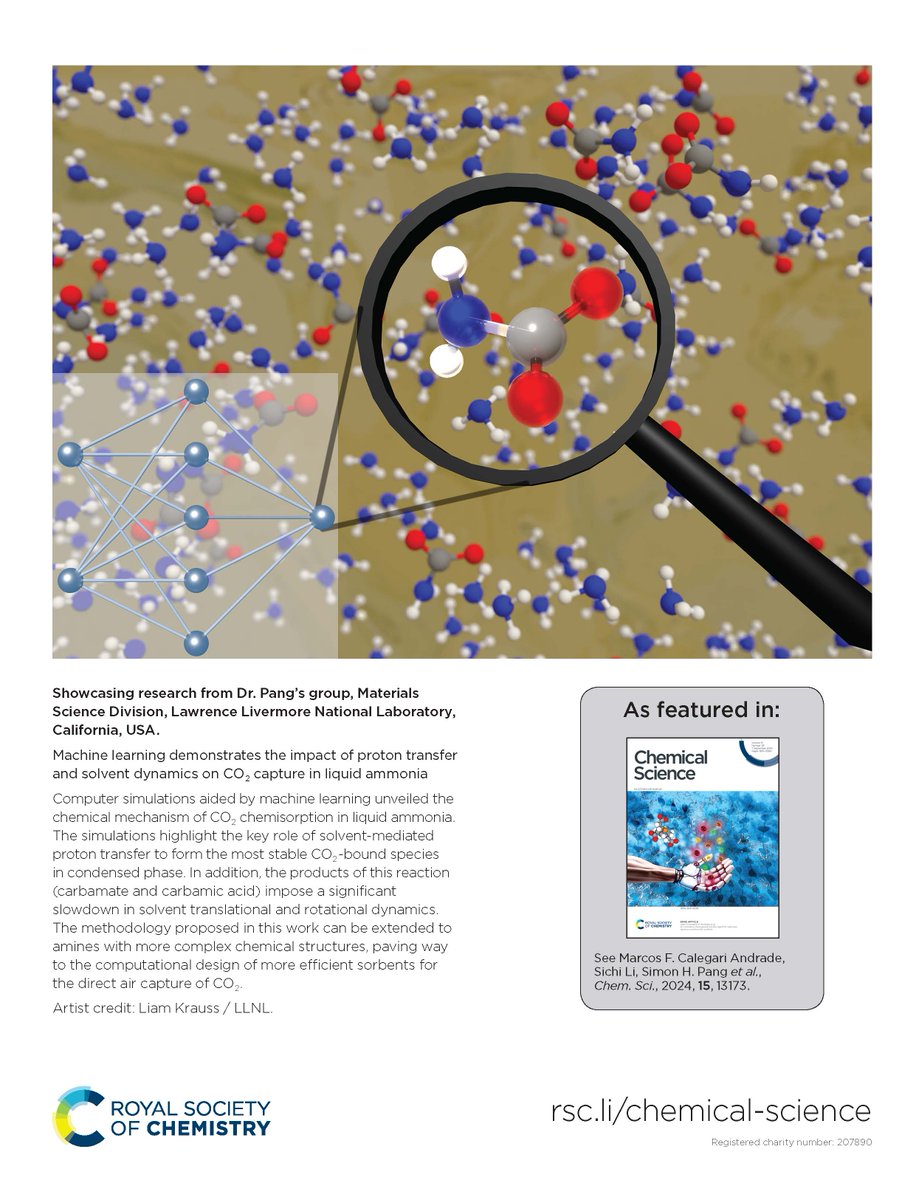
Don't miss 'Machine learning demonstrates the impact of proton transfer and solvent dynamics on CO2 capture in liquid ammonia' by Simon H. Pang, Marcos F. Calegari Andrade, Sichi Li et al.
🔗 https://t.co/Ix1URUUsgd
@SimonLisichi@Livermore_Lab@doescience
📌 #ChemSciCovers
In a significant stride toward implementing scalable climate solutions, @livermore_lab scientists have uncovered how some carbon capture materials have improved lifetime compared to others. Explore how these materials can move us closer to a greener world: https://t.co/DxhyjnAUu4
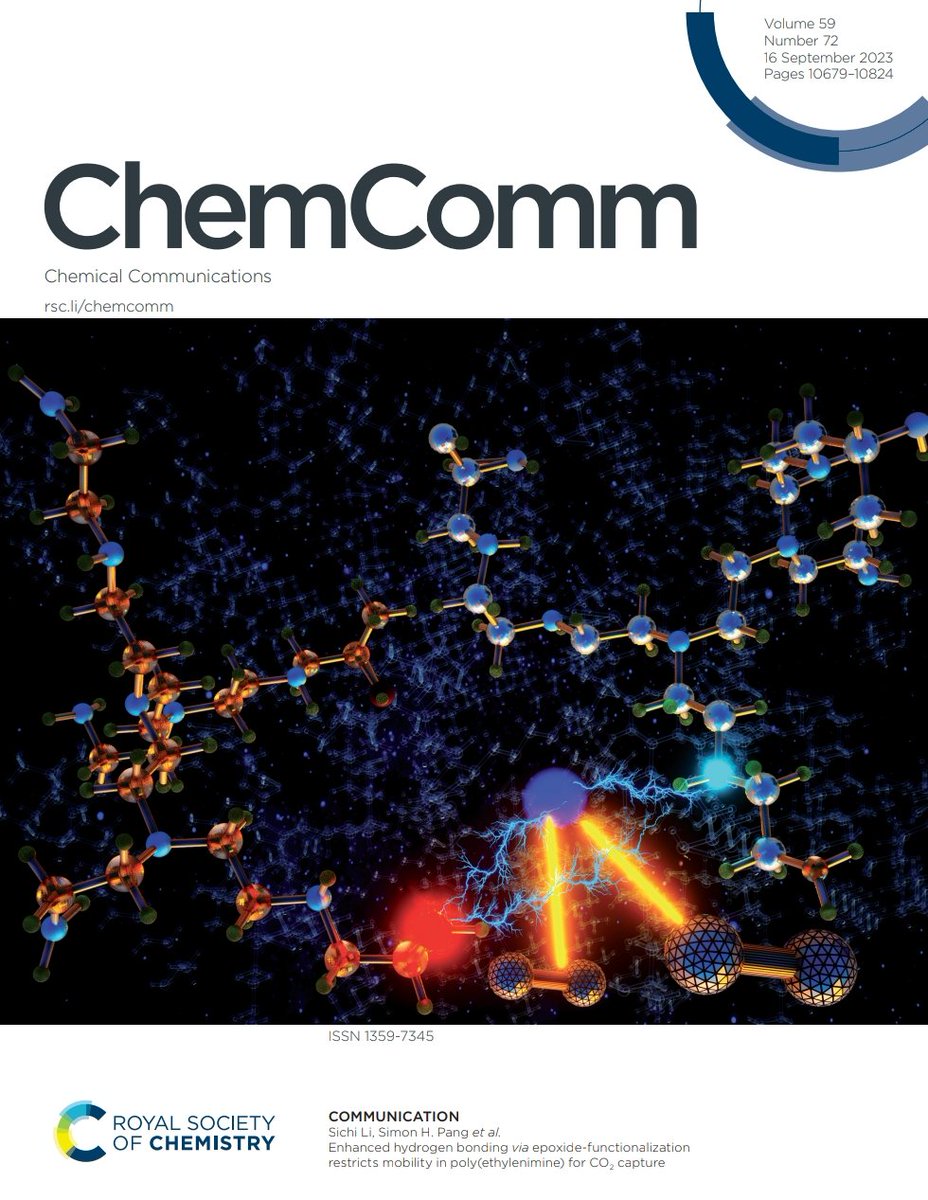
On the latest cover:
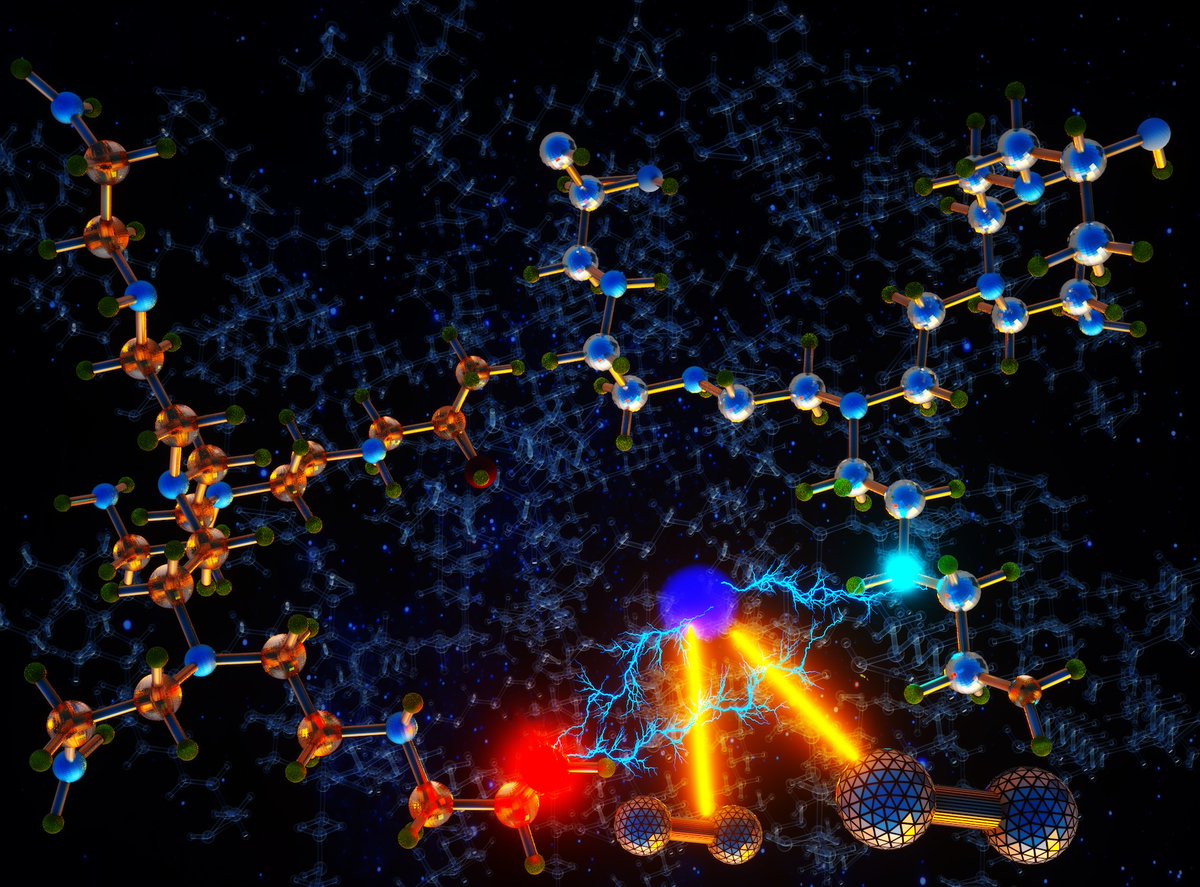
'Enhanced hydrogen bonding via epoxide-functionalization restricts mobility in poly(ethylenimine) for CO2 capture by Sichi Li, Simon Pang & co. at @Livermore_lab 🔓🔥
Check out the article at https://t.co/EoM7iWwQRH
Check out this #OpenAccess#HOT article by Sichi Li, Simon Pang, & co. 🔓🔥
"Enhanced hydrogen bonding via epoxide-functionalization restricts mobility in poly(ethylenimine) for CO2 capture"
@Livermore_lab
Read the full article here 🔗 https://t.co/EsWQwx2mi9
LLNL computational scientists worked with experimental collaborators at @BerkeleyLab and @SandiaLabs to design metal amide-based composites capable of overcoming key kinetic limitations in their performance as hydrogen storage materials. Read more: https://t.co/4Tovo1hTf7
Collaboration is key 🔑
A collaboration including scientists from #LLNL, @SandiaLabs, @iitgn and @BerkeleyLab has created 3-4 nanometer ultrathin nanosheets of a metal hydride that increase hydrogen storage capacity. Learn more: https://t.co/18x4vS4eR6 @eeregov
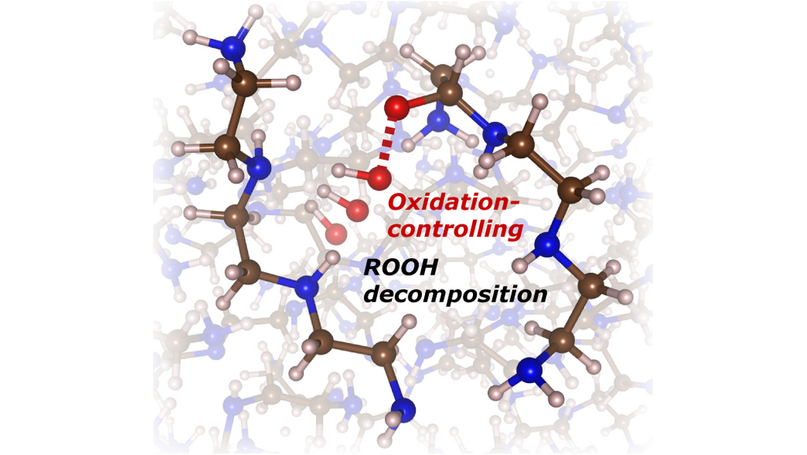
Probing the Kinetic Origin of Varying Oxidative Stability of Ethyl- vs. Propyl-spaced Amines for Direct Air Capture (@SimonLisichi et al. @Livermore_Lab) https://t.co/Qi9m4NBWPv
@RazzaqSamad_@spleonard1 @AlexJProbst I would just apply if there were positions posted that match your background and skill sets. Pay (for 2-3 yr) 100% covered if being selected. Not sure about preexisting external grants for a postdoc. Honestly I personally haven’t seen anyone in such a situation at national labs.
@fxcoudert Personally not bothered by such research since it is not using taxpayer's money. If it is tangential then it will disappear soon, perhaps the whole team. Time will tell.
First fruits of exciting experiment/modeling collaboration with @DIFFEREnergy on plasma catalytic nitrogen oxidation are now out. @NDCBE@NDengineering @HanyuMa1 https://t.co/9OUZPcfdMd
LLNL scientists have found that atomic disorder in certain boron-based hydrogen storage systems can potentially improve the rate of hydrogen uptake. @NNSANews https://t.co/6DHcReT30H