Iran is at war.
Within hours of strikes, Nobitex saw 700% outflows, state miners went dark, and Bitcoin dipped to $60.9K before rebounding toward $73K.
Iran's $7–10B crypto shadow economy—built to dodge sanctions—is now under fire. Short-term pain for risk assets.
But this conflict is proving crypto's real geopolitical weight: sanctions workaround, citizen lifeline, open-source intel in wartime.
A stress test that could unlock medium-term upside.
https://t.co/sAMR2gWNXN
ALTCOINS vs. Bitcoin is about to do soemething it hasn't done in almost 6 years!
Maybe I'll be wrong about altcoins.
Maybe I'll be the last one here bullish on altcoins.
But I won't sit on sidelines...not while all this data is coming together.
Altcoin MACD, Clarity, PMI...
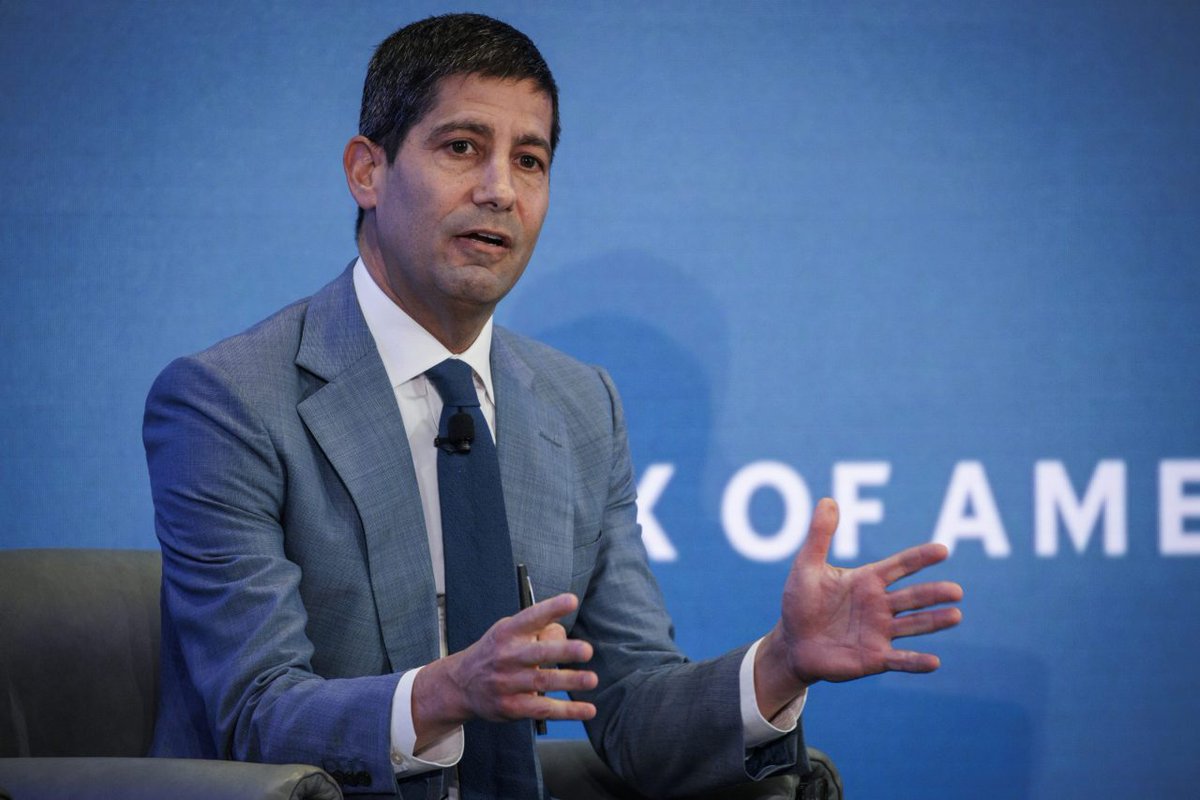
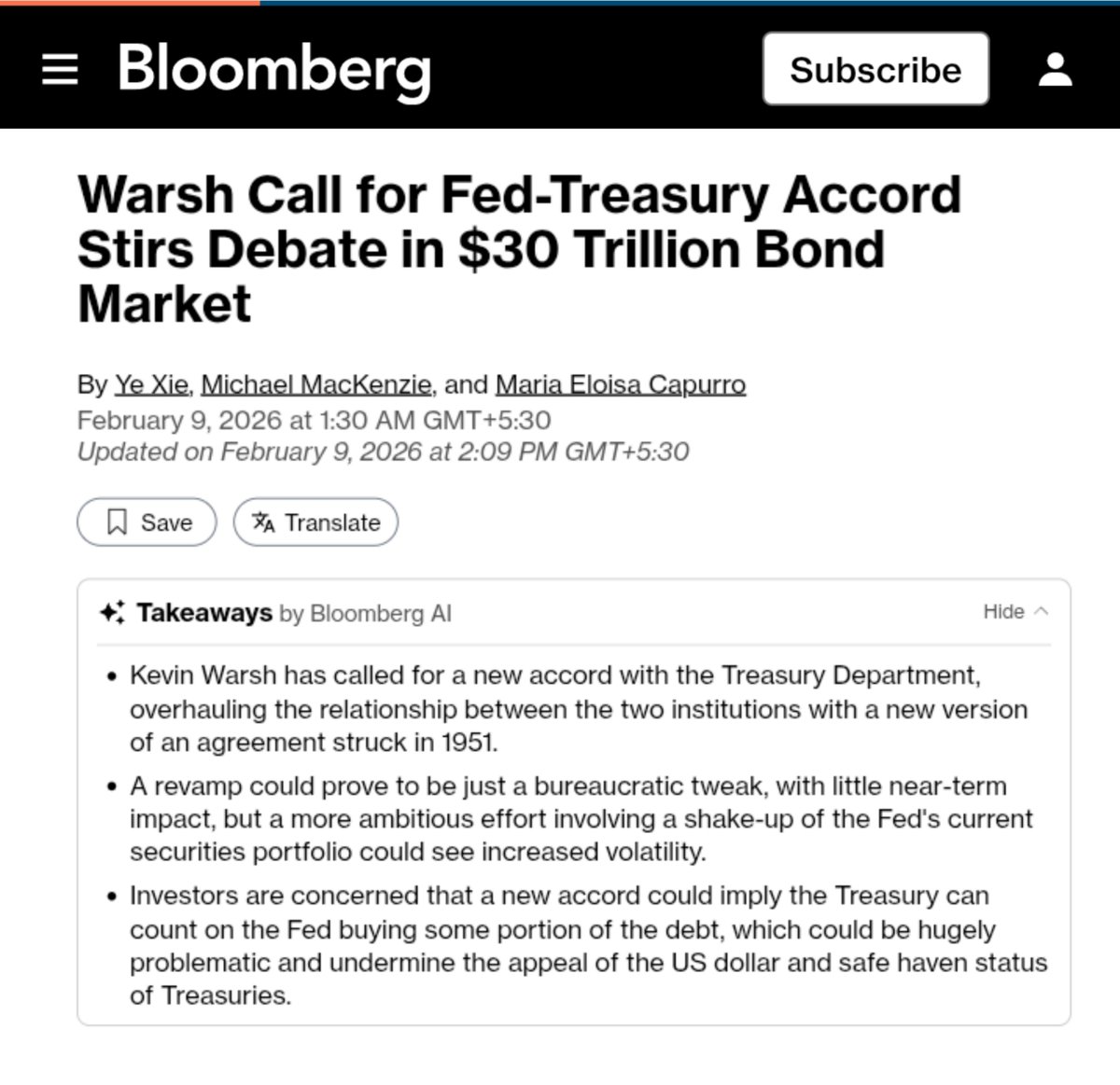
🚨 IS KEVIN WARSH ABOUT TO FLOOD MARKETS WITH LIQUIDITY OR TRIGGER A BOND MARKET RISK?
Recently, the upcoming Fed Chair Kevin Warsh has called for a new FED TREASURY ACCORD, basically a framework that would decide how the Fed and the U.S Treasury work together on debt, money printing, and interest rates.
This is not only about rate cuts.
Yes, markets expect Warsh to support rate cuts over time, possibly bringing rates down toward the 2.75%–3.0% range.
But the bigger story is what happens behind the scenes.
Warsh has long argued that the Fed’s massive balance sheet, built through years of bond buying pulls the central bank too deep into government financing.
So his plan could involve:
- The Fed holding more short term Treasury bills instead of long term bonds.
- A smaller overall balance sheet.
- Limits on when large bond buying programs can happen.
- Closer coordination with the Treasury on debt issuance.
And this is where history matters. Because the U.S. has already done something very similar before. During World War II, government debt exploded from about $48 billion to over $260 billion in just six years. To manage borrowing costs, the Fed stepped in and controlled interest rates directly.
Short-term yields were fixed near 0.375% and Long-term yields were capped near 2.5%.
If yields tried to rise, the Fed printed money and bought bonds to push them back down. This policy is known as Yield Curve Control. It helped the government borrow cheaply during the war.
But it came with consequences.
Once wartime controls ended, inflation surged sharply. Real interest rates turned negative. And the Fed lost independence over monetary policy. By 1951, the system broke down and the famous Treasury Fed Accord ended yield caps.
Now fast forward to today.
U.S. debt levels are again near World War II levels relative to the economy. Interest payments alone are approaching $1 trillion per year. Even a small drop in long term yields would save the government tens of billions in financing costs. That fiscal pressure is why Warsh’s proposal is getting so much attention.
Other countries also tried something similar.
- Japan ran yield curve control from 2016 to 2024.
Its central bank ended up owning more than 50% of government bonds. Yields stayed low, but the yen weakened and bond market liquidity suffered.
- Australia tried a smaller version in 2020–2021.
When inflation surged, they were forced into a messy exit that hurt central bank credibility.
Across all these cases, the pattern was similar:
Borrowing costs stayed low. Liquidity stayed high. Currencies weakened. Exits were difficult.
If Warsh’s framework leads to lower real yields, rate cuts, and easier liquidity conditions, that usually supports risk assets like equities, gold, and crypto.
Because when bond returns fall, capital looks for higher-return alternatives. But bonds themselves could face volatility.
Less Fed support for long term yields combined with heavy Treasury issuance could steepen the yield curve and push term premiums higher and that's why this could become the most important structural shift in U.S. monetary policy since the 1940s yield curve control era.
2025: Gold & silver sprinted to ATHs on debasement fears + industrial demand. Bitcoin? Lagged hard as a liquidity-sensitive risk asset. The decoupling is real—and it might be setting up the classic 'metals first, Bitcoin later' play for 2026. What history actually shows:
https://t.co/vBIWi0E2SD
BREAKING: $125 BILLION IS MIGRATING TO ETHEREUM.
UBS. Société Générale. Banque de France.
Three pillars of traditional finance just made their move:
They’re porting repo markets, the engine of global liquidity on-chain via Ethereum.
Not tests. Not whitepapers.
Real collateral. Real settlement. Real capital.
- Global repo market = $12.5 trillion
- Just 1% = $125B
- Deployment has begun.
This isn’t DeFi vs TradFi.
This is TradFi uploading itself to Ethereum.
In 2019, they mocked smart contracts.
In 2020, they ignored DeFi.
In 2025, they’re rewriting global finance on open rails.
So here’s the question no one dares to ask:
What happens when Ethereum doesn’t just integrate with the system…
but becomes the system itself?
The message is loud and irreversible:
Institutions are not experimenting.
They’re transitioning.
The rails have shifted.
Wall Street is being rebuilt one block at a time.
THE 4-YEAR CYCLE WAS A LIE!
THE REAL BULL MARKET ONLY STARTS NOW!
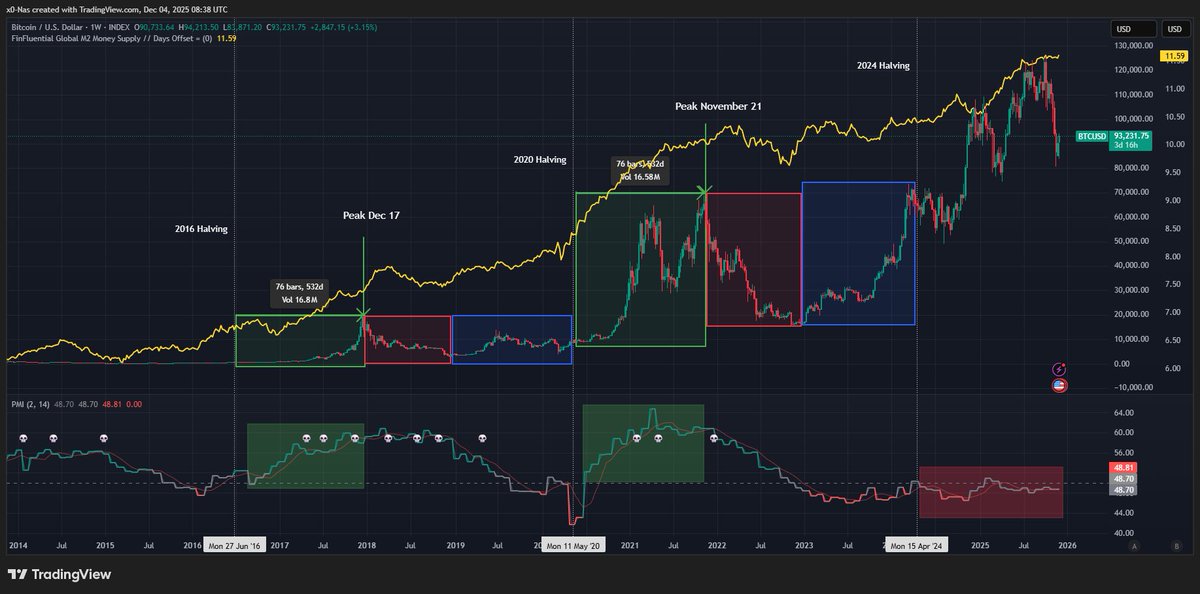
Even though the Bitcoin top happened exactly at the end of the “4-year cycle”, the data shows it was a lie and that there was another driver that coincidentally lined up at exactly the same time!
The uncomfortable truth in the data is that the halving didn’t drive the last 3 bull markets.
It only lined up perfectly with the real driver: global liquidity expansion.
See the chart below.
2013: Fed QE
2017: ECB, BOJ & China pumping
2020: The biggest QE in history
Bitcoin followed liquidity, not the halving clock.
Every time there was a global liquidity surge, the economy expanded, and this flowed into crypto!
The one metric that exposes this clearly: PMI.
PMI < 50 = contraction
PMI > 50 = recovery
PMI > 55 = Bitcoin liftoff
PMI > 60 = altcoin mania
That sequence matched every bull market.
The reason this cycle was so disappointing is that this cycle broke the pattern.
The halving happened…
Liquidity didn’t.
PMI never recovered.
The Fed was still draining money through QT.
That’s why 2025 was messy; the liquidity cycle never started.
But, this is all changing!
QT ended
Rates going down
Liquidity turning
PMI bottoming
Institutions flowing in via ETFs + DATS
And historically, we’ve never entered a bear market while liquidity is expanding.
So maybe the 4-year cycle didn’t “break.”
Maybe it never existed to begin with; it just happened to overlap with the liquidity cycle.
And maybe the real bull market starts now!
What if Wall Street lived on the blockchain? RWAs are exploding to $26B+, fractionalizing everything from Tesla stock to Monet paintings. BlackRock, JPMorgan in—trillions incoming! Read why this is finance's biggest shift. #RWA#Tokenization#Crypto#MyntraCapital
https://t.co/weoRdTVd25
Stablecoin regs are shaking up the $250B market in 2025, impacting companies like PayPal & Block. Legitimizing crypto or tightening control? Is Bitcoin the ultimate hedge? Dive into my article for insights on winners, losers & opportunities! #Crypto #Stablecoins #MyntraCapital
https://t.co/rRB5s9ReHY
President Trump has announced a Crypto Strategic Reserve consisting of Bitcoin and other top cryptocurrencies. This is consistent with his week-one E.O. 14178. President Trump is keeping his promise to make the U.S. the “Crypto Capital of the World.” More to come at the Summit.
2025 suinami countdown day 1️⃣4️⃣
number of chains you can build a zero-reserve centralized exchange, providing a perfect UX just like any centralized exchange, but never owning any user assets:
in 2024 - 0
in 2025 - 1
time to learn move anon @ikadotxyz is coming to @SuiNetwork
I think people need a little reminder $SUI is going to change how we interact in the digital world.
$SUI compute & ram foundation layer
@WalrusProtocol + @AkordApp Data Storage and ownership
@DeepBookonSui Decentralized Orderbook
@ikadotxyz borderless DeFi
#Crypto#community
BREAKING: $2.3T in assets can now be programmed on @SuiNetwork 🚀
what we’re shipping:
• sub-second MPC finality
• native BTC/ETH/SOL on Sui
• zero bridges needed
• infinite scalability
translation: your assets are finally free anon
more in thread 🧵👇
Most people can see that @SuiNetwork is taking over web3 and @ikadotxyz is going to be a big part of that end game.
What most people don’t realize is that web2 is next 👀
And that’s why the future can’t be EVM