Voyager 1 is 24 billion kilometers from Earth.
It communicates with us using a 23-watt transmitter.
Less than a refrigerator light bulb.
The signal takes 22 hours to reach us, traveling at the speed of light.
By the time it arrives, it's 20 billion times weaker than the power of a digital watch battery.
NASA's Deep Space Network picks it up using 70-meter dish antennas cooled to near absolute zero to reduce electronic noise.
The engineering required to hear a 23-watt signal from 24 billion km away is arguably more impressive than the spacecraft itself.
Launched 1977.
Still transmitting.
Still being heard.
We built something that works perfectly, 47 years later, in conditions no one has ever tested in.
That's what engineering for the long term looks like.
After 144 years of construction, the Sagrada Família in Barcelona has reached its full height with the placement of the final piece atop its central tower.
[📹davidcantor]
YOUR BONES ARE NOT SOLID. THEY ARE PIEZOELECTRIC CRYSTALS THAT GENERATE ELECTRICITY EVERY TIME YOU MOVE.
You were taught that your skeleton is a dead frame. Calcium scaffolding. A coat hanger for your muscles. That is the biggest lie in anatomy.
Your bones are alive. They contain more nerve endings than your skin. They produce every red blood cell in your body — 2 million per second. They store 99% of your calcium, 85% of your phosphorus, and 60% of your magnesium. Your skeleton is not structural support. It is a chemical factory and an electrical generator.
In 1957, Japanese orthopedic surgeon Dr. Iwao Yasuda discovered that when human bone is compressed or bent, it produces a measurable electrical voltage. He called it the piezoelectric effect. The same principle used in quartz watches, microphones, and sonar technology. Your bones are literally crystals that convert mechanical stress into electricity.
This is not metaphor. This is physics.
When you walk, every step generates an electrical charge through your bones. That charge signals your osteoblasts — bone-building cells — to deposit new mineral exactly where the stress occurred. This is why astronauts lose 1-2% of their bone density per month in space. No gravity. No compression. No piezoelectric signal. No rebuilding.
Dr. Robert O. Becker proved in the 1960s that this electrical signal is what controls all bone healing. He applied micro-currents to non-healing fractures and watched bones regenerate that doctors had given up on. His work led to the FDA-approved bone growth stimulators used in hospitals today — devices that apply specific electrical frequencies to accelerate bone repair by up to 300%.
But here is what they never connected for you: if your bones generate electricity from movement, and that electricity controls bone density, then a sedentary population is not just unfit. It is electrically dead. The skeleton stops generating its own repair signal. Osteoporosis is not a calcium deficiency. It is a voltage deficiency.
They told you to take calcium pills. They should have told you that your bones are batteries that only charge when you move.
Every step you take is not just exercise. It is electricity. Your skeleton is a living, breathing, self-charging crystal matrix that was designed to carry current from the ground through your entire body.
You are not a machine that runs on food. You are a bioelectric system that runs on frequency, voltage, and movement. And they made sure you sat still.
✨🙌🏽💫
Charles Schwab ran the largest steel company in the world.
He had access to every consultant, every system, every productivity tool available in 1918.
He said a 15-minute conversation with a man named Ivy Lee was the most valuable business advice he ever received.
He paid him $25,000 for it. The advice fit on an index card.
Ivy Lee was not famous. He was not a philosopher or a scientist or a professor at a prestigious institution. He was a productivity consultant who had spent years watching extremely capable people fail to do their most important work, and he had developed a precise theory about why.
The theory was not complicated. It was uncomfortable.
The reason most people never do their most important work is not that they lack time. It is that they never decide what their most important work actually is. They arrive each morning at a pile of tasks with roughly equal claim on their attention, choose based on whatever feels most urgent or easiest in that moment, and spend the day moving through a list that was never designed to move them forward. They are busy in a way that feels productive and accomplishes far less than it should.
Lee asked Schwab for 15 minutes with his executive team. Schwab agreed. Lee walked them through six steps. He asked them to try it for three months and pay him whatever they thought it was worth.
Here is the system.
At the end of every workday, write down the six most important things you need to accomplish tomorrow. Not ten. Not twenty. Six. If you cannot decide what matters enough to make that list, you have already identified the real problem.
Prioritize those six items in order of their true importance. Not urgency. Not ease. Importance. The thing that will matter most three months from now goes first, regardless of how uncomfortable it is to start.
When you arrive the next morning, begin immediately on item one. Work on it until it is finished. Do not touch item two until item one is complete. Do not check email. Do not attend to whatever walked through the door. Item one, until it is done.
Move through the list in order. If you reach the end of the day and items four, five, and six remain untouched, move them to the next day's list without guilt. They were not the most important things. The most important things got done.
Repeat this process every day for the rest of your working life.
That is the entire system. Six steps. Four minutes the night before. No app required. No morning ritual. No tracking software. An index card and a pen.
What Lee understood that most productivity systems miss entirely is that the bottleneck in human performance is almost never capacity. It is prioritization. The average knowledge worker has more than enough hours in the day to accomplish something significant. What they do not have is a forcing function that makes them decide, the night before, in a calm moment free from the noise of the incoming day, what significant actually means for them tomorrow.
The morning is the worst possible time to make this decision. The morning brings email and notifications and other people's priorities and the accumulated urgency of everything that did not get done yesterday. By the time most people have decided what to work on, an hour is gone and the decision was made by their inbox rather than by them.
Lee's method moves the decision to the evening, when the day's noise has settled and the mind can assess without distraction. The prioritization is done before the chaos begins. Which means the next morning, there is no decision to make. There is only execution.
The second insight embedded in the system is the single-tasking constraint. Item one, until it is finished. Not item one until something more urgent appears. Not item one until you have checked in on items two through six. Item one, finished, before anything else receives your attention.
This runs against every instinct that modern work has trained into people. The entire infrastructure of the contemporary workplace is designed to fragment attention. Email expects a response within hours. Slack expects a response within minutes. The open office assumes that any question is more important than whatever the person being asked is currently doing. The result is a workforce that is in constant motion and making almost no progress on anything that actually matters.
Lee's method is a direct refusal of this dynamic. It does not negotiate with urgency. It does not make exceptions for whoever shouts loudest. It asks you to decide, once, what matters most, and then protect that decision from everything that will try to override it the next morning.
Charles Schwab ran Bethlehem Steel. He had seven hundred employees. He had more operational complexity, more competing demands, more legitimate urgency than most people reading this will ever face.
He tried the system for three months.
Then he sent Ivy Lee a check for $25,000 and a note saying it was the most valuable business advice he had ever received.
The system has not changed. The morning has not gotten less chaotic. The inbox has not gotten smaller.
The only variable that was ever under your control was what you decided the night before.
Six things. In order. Starting with the first.
The most valuable productivity advice in history is still free.
Most people will read it, find it obvious, and go back to checking email.
the best thing you can do for yourself is actively increase your surface area for luck to hit you. go outside, try new cafes, museums, events, take a new route home, speak to people, ask questions, side quest.
the more you do, the more serendipity and synchronicity will find you.
A Soviet psychologist walked into a café in 1927 and watched a waiter do something impossible.
He remembered every open order at every table. Perfectly. Without notes. Without effort.
Then a table paid their bill. She asked him to repeat the order.
He couldn't remember a single item.
She spent the next two years figuring out why. What she found is now the operating system underneath every platform fighting for your attention.
Her name was Bluma Zeigarnik, and she was a graduate student at the time, sitting with her professor Kurt Lewin, watching the waiters work the room. What caught her attention was something so ordinary that it had been happening in restaurants for centuries without anyone asking why.
The waiters could remember every open order with perfect accuracy. Table four wanted the schnitzel with no sauce. Table seven had changed their wine twice. Table twelve owed for three coffees and a dessert. Every detail, held without effort, without notes, without any visible system at all.
But the moment a table paid their bill, the information vanished. Completely. Lewin tested it on the spot. He called a waiter back minutes after a table had settled up and asked him to recite the order. The waiter could not do it. Not partially. Not approximately. The information was simply gone.
Zeigarnik went back to her lab and spent the next two years turning that observation into one of the most replicated findings in the history of psychology.
Here is what she proved, and why it changes how you think about attention, memory, and almost every piece of media you have ever consumed.
She gave participants a series of tasks. Some tasks they were allowed to finish. Others were interrupted before completion. Then she tested recall across both groups.
The unfinished tasks were remembered at nearly twice the rate of the completed ones.
Not slightly better. Nearly twice. The brain was holding the incomplete work in a state of active tension, returning to it, keeping it warm, refusing to file it away. The finished tasks were closed, archived, released. The unfinished ones were still running.
She called it the resumption goal. When the brain commits to a task and cannot complete it, it opens a file that stays open until resolution arrives. That open file consumes a portion of your cognitive bandwidth whether you are thinking about it consciously or not. It surfaces in idle moments. It pulls at the edge of your attention during other work. It is the thing you find yourself thinking about in the shower when you were not trying to think about anything at all.
This is not a flaw in human cognition. It is a feature. The brain evolved to finish things. An open loop is a signal that something important is unresolved. Keeping that signal active increases the probability that you will return to it and complete it. In an environment where most tasks had real survival stakes, this was an extraordinarily useful mechanism.
In the modern world, it is the most exploited vulnerability in human attention.
Netflix did not invent the cliffhanger. But it industrialized it in a way no medium before it ever had. When a show ends on an unresolved question, it does not just create curiosity. It opens a file in your brain that stays active until the next episode closes it. The autoplay countdown that begins at 15 seconds is not a convenience feature. It is a precise calculation about how long the average person can tolerate an open loop before the discomfort of not knowing overrides every other intention they had for the evening. One more episode is not a choice. It is your brain doing exactly what it was designed to do: return to what is unfinished.
The writers who built Lost, Breaking Bad, and Succession understood this intuitively without ever reading a psychology paper. Every episode ended on an open question. Every season finale answered three things and opened five more. The entire architecture of prestige television is a Zeigarnik machine running at industrial scale.
But television is not where this gets dangerous.
Every notification on your phone is an open loop. Every unread email is an open loop. Every task you wrote on a list and have not yet crossed off is an open loop. Each one is consuming a small but real portion of your available attention, pulling fractionally at your focus, degrading your capacity to be fully present in whatever you are actually doing right now. TikTok's algorithm does not just serve you content you like. It serves you content that ends one loop and immediately opens another, keeping the resumption system permanently activated so the cost of stopping always feels higher than the cost of continuing.
The research on this accumulation effect is striking. Psychologists studying cognitive load have found that unfinished tasks do not sit passively in memory. They actively interrupt. They surface at the wrong moments. They are the reason you are reading something and suddenly remember an email you forgot to send. The brain is not malfunctioning. It is running its resumption system exactly as designed. It is just running it across forty open loops simultaneously, in an environment that generates new ones faster than any human nervous system was built to process.
The most important practical implication Zeigarnik's research produced is one that most people use backwards.
David Allen built his entire Getting Things Done system on the insight that the only way to close a cognitive open loop is to either complete the task or make a trusted commitment to complete it later. Writing something down in a system you actually trust has the same effect on the brain as finishing it. The file closes. The bandwidth is released. This is why writing a task down feels like relief even before you have done anything about it. You have not solved the problem. You have simply told your brain that the loop is registered and will be returned to, which is enough for the resumption system to stand down.
The inverse is equally true and far more destructive. Every task that lives only in your head, unwritten and unscheduled, is an open loop burning cognitive resources around the clock. The mental cost is not proportional to the size of the task. A tiny nagging obligation consumes the same active tension as a major project. Your brain does not discriminate by importance. It discriminates by completion.
Zeigarnik published her findings in 1927. The paper sat in academic literature for decades before anyone outside psychology paid attention to it.
Then television got good. Then the smartphone arrived. Then the entire attention economy was engineered, largely by people who understood intuitively what she had proven scientifically: an open loop is the most powerful hook available to anyone who wants to hold human attention.
Netflix knew it. Instagram knew it. Every designer who ever made a notification badge red instead of grey knew it.
The café in Vienna is long gone.
The mechanism she discovered there is now the operating system underneath every platform fighting for your time.
Every "to be continued."
Every unread notification.
Every thread that ends with "part 2 tomorrow."
All of it is the same waiter, the same unpaid bill, the same brain refusing to let go of what it has not yet finished.
Zeigarnik noticed it over coffee in 1927.
A century later, it is the most valuable insight in the history of media.
And nobody taught it to you in school.
The distinction between engineering and magic is entirely a modern linguistic conceit.
To the ancients, a wizard, a magus, a sorceror, was not a man who commanded forces outside the laws of nature. He was a man who commanded the forces of nature, by manipulating them through his understanding of natural law.
But the modern word for a man who commands the universe by understanding its laws is "engineer".
Yes, the ancient sorceror would try to commune with the spirits of the dead, or read the destiny of kings in the stars, or perform fertility rites to make the crops grow, but this wasn't some special supernatural discipline to him.
This was simply his model of how the natural world worked.
He would not have made a distinction between understanding heat and phase changes, and thereby distilling alcohol, and cutting out the intestines of a bird to predict the fortunes of a business venture.
Both, to him, were philosophy and natural law.
But as our understanding of the laws of physics grew more sophisticated, we gradually exiled the term "magic" to that which had not been proven to work, and to that which had been proven not to work.
Were we given the opportunity to take an ancient Egyptian king on a tour of modern society, riding in an electric car, he would remark that we are a rich people, because we have many powerful magicians.
Some of us might hasten to correct him, telling him that there is no magic used here.
But he would not, in fact, be wrong.
Мне кажется, новая фишка твиттера с переводом это лучшее, что могло бы случиться❤
Такое единение и интерес народов к друг другу. Прямо тепло на душе.
Всем привет из России🇷🇺💕
🚨In 1990s, Stanford researcher Dr. Robert Sapolsky discovered something that should have broken the internet by now.
He was studying dopamine pathways in primates and found that the brain doesn't just adapt to repeated stimulation. It actively fights back.
When you flood dopamine receptors consistently, the brain deploys what neuroscientists call "opponent processes." For every artificial high you create, your nervous system generates an equal and opposite neurochemical low. Not eventually. Immediately. The system is designed to maintain balance, so it starts producing compounds that directly counteract dopamine while you're still experiencing the dopamine hit.
This means every notification, every scroll, every digital reward doesn't just give you a high followed by a return to baseline. It gives you a high followed by a crash below baseline. You end up in neurochemical debt.
Tech companies never publicized this research. They probably never read it. They were too busy discovering that variable ratio reinforcement schedules could keep users engaged for hours. They built addictive systems by accident, then refined them into addiction machines once they realized what they'd stumbled onto.
Your phone delivers an average of 80 dopamine hits per day. Your ancestors got maybe 5. Each hit triggers opponent processes that create a corresponding low. By the end of a typical day of normal phone usage, your baseline dopamine is running in negative territory. You feel flat, restless, vaguely unsatisfied, and hungry for stimulation because your brain chemistry is literally below zero.
You think you're bored. You're chemically depressed by artificial highs.
The opponent process theory explains why nothing feels interesting anymore. Your brain isn't broken. It's precisely calibrated to maintain neurochemical balance, and you keep throwing that balance off with artificial intensity. Every Instagram hit requires an equal Instagram crash. Every TikTok high gets paid for with a TikTok low. Every notification rush gets balanced with notification emptiness.
Your reward system is running a neurochemical deficit that grows larger every day.
Sapolsky's research revealed something even more disturbing: opponent processes don't just create temporary lows. They become permanent changes to your baseline dopamine production. Chronic overstimulation doesn't just make you tolerant to digital rewards. It makes you insensitive to natural rewards.
The sunset that would have captivated your great-grandfather becomes invisible to you not because sunsets got worse, but because your dopamine system needs intensity levels that sunsets can't provide. A good conversation becomes boring not because conversations got less interesting, but because your brain requires the rapid-fire stimulation of social media to register engagement.
You've accidentally trained your reward system to ignore everything that isn't artificially amplified.
This connects to research from Dr. Anna Lembke at Stanford, who found that people who undergo complete digital fasting for just 30 days show measurable increases in dopamine receptor density. Their brains literally regrow sensitivity to natural rewards. Food tastes better. Music sounds more complex. Social interactions become genuinely engaging again.
But there's a catch that nobody talks about: the first two weeks of dopamine detox feel like clinical depression. Your brain has been chemically dependent on artificial stimulation for years. Removing that stimulation creates actual withdrawal symptoms. Restlessness, anxiety, inability to focus, emotional flatness, and desperate cravings for digital input.
Most people interpret these symptoms as evidence that they need their phones. Actually, they're evidence that they've been neurochemically dependent on their phones without realizing it.
The withdrawal period isn't a bug. It's proof the reset is working.
What happens after week three is remarkable. Colors become more vivid. Conversations become genuinely absorbing. Simple pleasures like hot coffee or cool air become satisfying in ways you forgot were possible. Your brain rediscovers that reality contains enough complexity and beauty to hold your attention without artificial amplification.
You don't need more interesting content. You need more sensitive reward systems.
The solution isn't better apps or more engaging entertainment. The solution is restoring your brain's factory settings for what constitutes a worthwhile experience.
Sapolsky's opponent process research suggests this can happen faster than anyone expected. Every day you don't artificially spike your dopamine, your baseline moves a little higher. Every natural reward you pay attention to rebuilds receptor density. Every moment of boredom you endure without reaching for stimulation strengthens your capacity for sustained focus.
Ancient humans lived in a world that provided exactly the right amount of stimulation to keep their reward systems healthy. Enough challenge to stay engaged, enough calm to stay balanced, enough novelty to stay curious, enough routine to stay stable.
We built a world that provides 10 times too much stimulation and wonder why nothing feels rewarding anymore.
Your brain is not the problem. Your environment is the problem.
Change the environment, and the brain heals itself automatically.
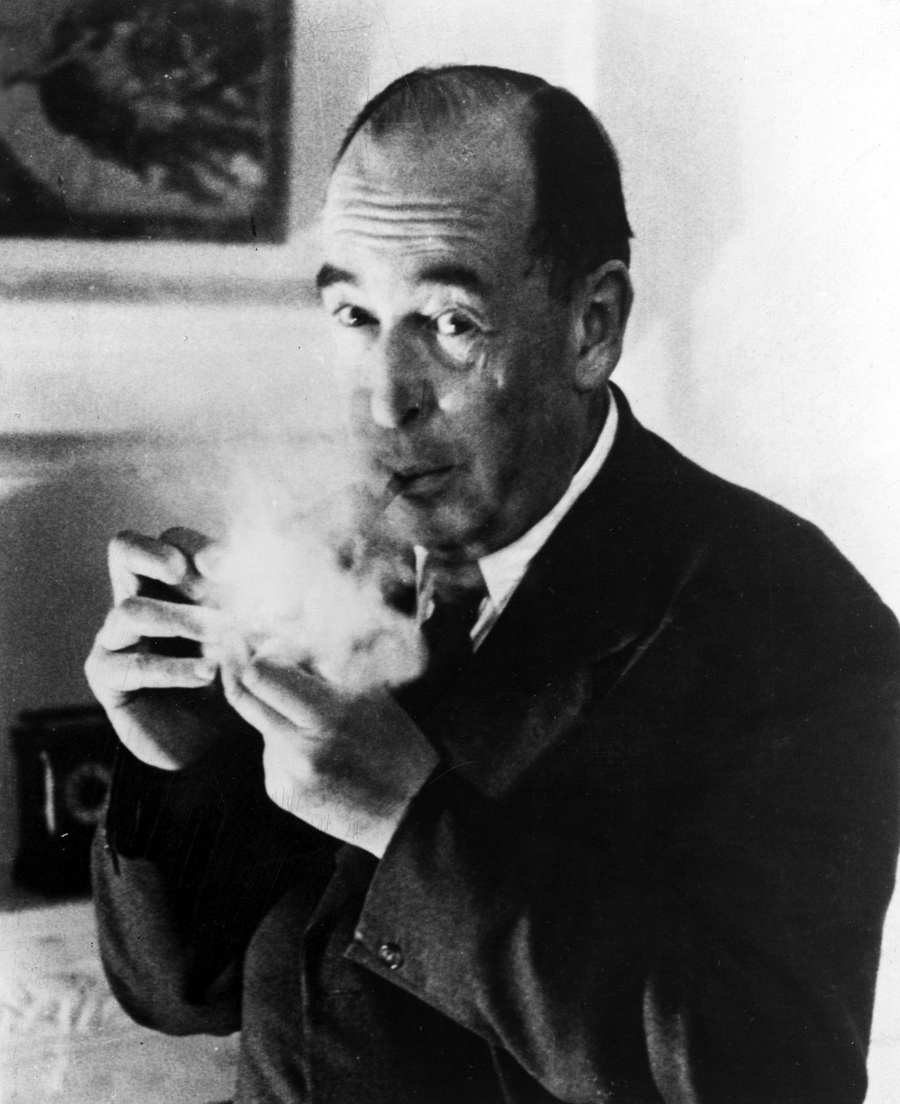
Did you know C.S. Lewis predicted the modern obsession with “being nice” would destroy the soul?
In The Abolition of Man, Lewis argues that when a society stops believing in objective virtue, it doesn’t become tolerant… it becomes manipulable.
He calls the result “men without chests.”
People with appetites and intellects, but no courage, no honor, no trained moral instincts. They can calculate everything and defend nothing.
Lewis saw that once we reject inherited moral law, we don’t become free. We become raw material… easily shaped by propaganda, pleasure, and fear.
Modern man prides himself on compassion while quietly surrendering every standard that once gave compassion meaning.
Lewis’s insight is brutal: a civilization that educates clever cowards will eventually be ruled by tyrants or technicians.
Because when nothing is worth dying for, everything becomes negotiable… including human dignity.