🎬…and cut. We are done recording lectures for my “Computational Many-Body Physics” course.
Tune in if you want to break the exponential complexity of many-body systems with polynomial algorithms: Monte Carlo sampling, tensor networks & machine learning
https://t.co/bRCoafMmDk
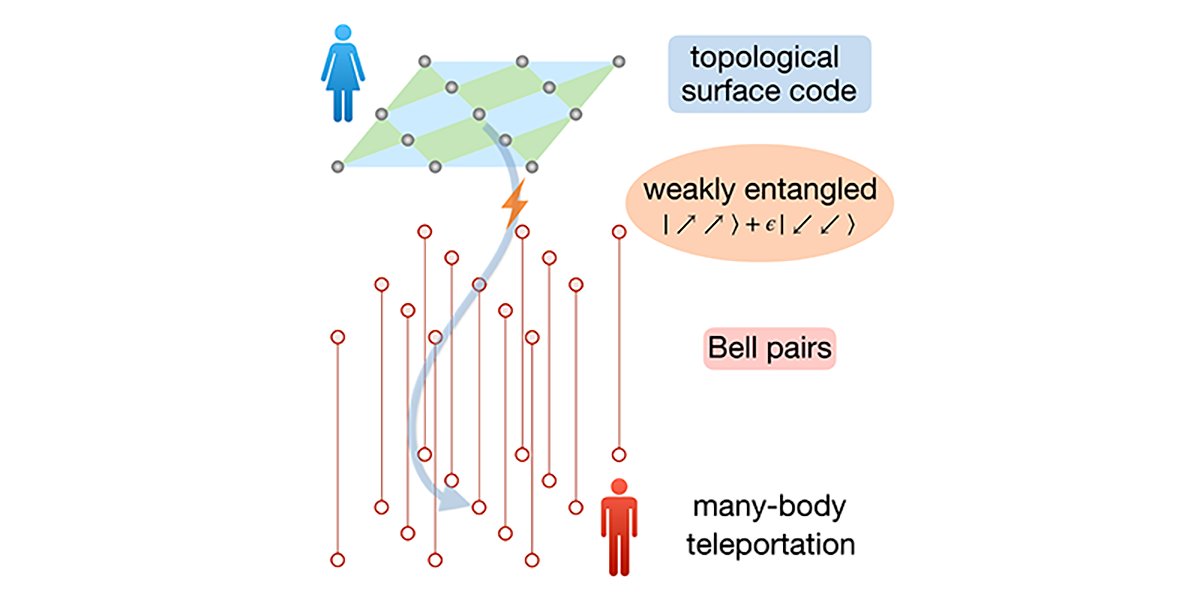
Teleportation of surface codes with minimal entanglement resources can be enhanced using an electric-magnetic self-duality, charting a way to experimental realizations of robust many-qubit teleportation. @GuoyiZhu@SimonTrebst @ML4Q
https://t.co/DDezjld6NS
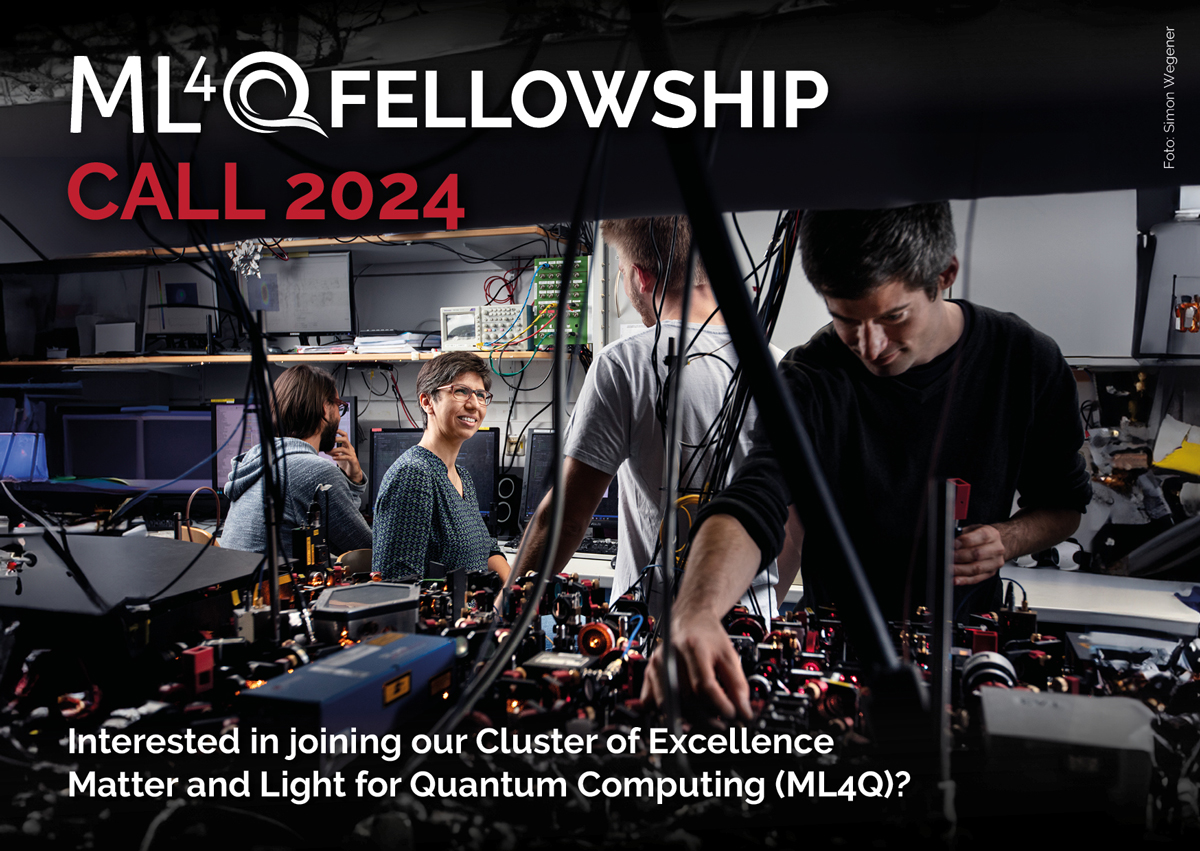
📢Join our vibrant international research environment to develop new #QuantumComputing and networking architectures! We offer 2-year #fellowships for excellent #postdocs.
Visit our website for more details: https://t.co/KCQa3wPMq7 Don't miss the application deadline on March 12!
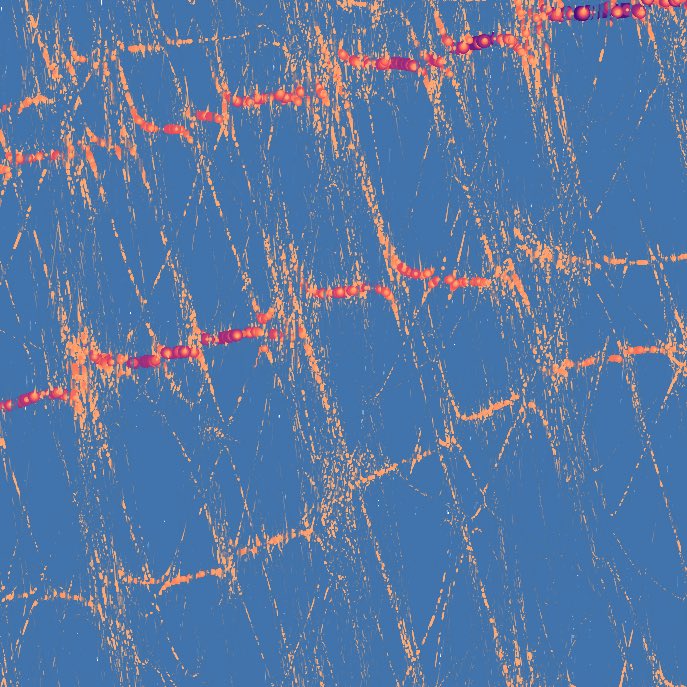
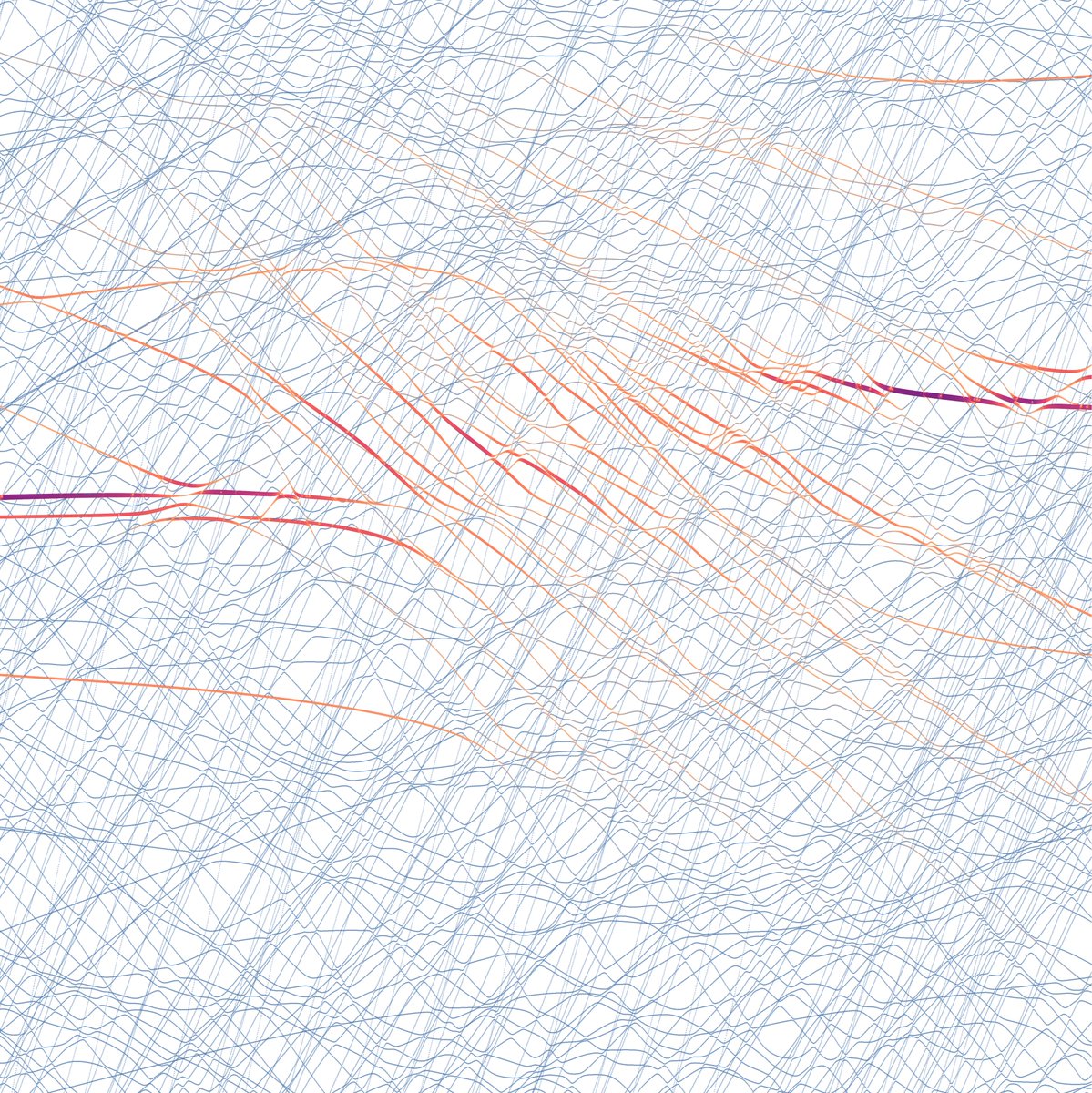
This is how the operation of a transmon gate looks like near the quantum speed limit — the dynamics turn chaotic and the system transitions out of the computational subspace. But does this mean that the gates are no longer operational?
Find out here:
https://t.co/nqAfMlNaqz
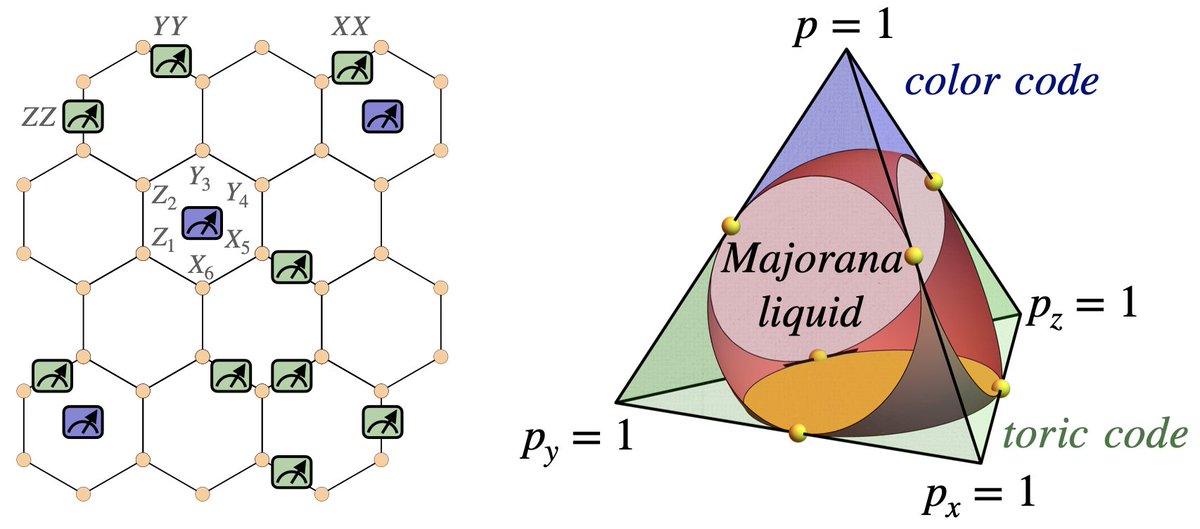
In quantum error correction, stabilizer codes using a set of *commuting* measurements (such as the toric code or surface code) have been the go-to solution for topological quantum memories — despite the need for multi-qubit measurements.
1/7
So what’s inbetween the two peaks? A Majorana metal in which the entanglement negativity shows an L ln L scaling. Think of a long-range resonating valence bond state of the emergent Majoranas.
Preprint: https://t.co/1zMgXlSM6Q
6/7
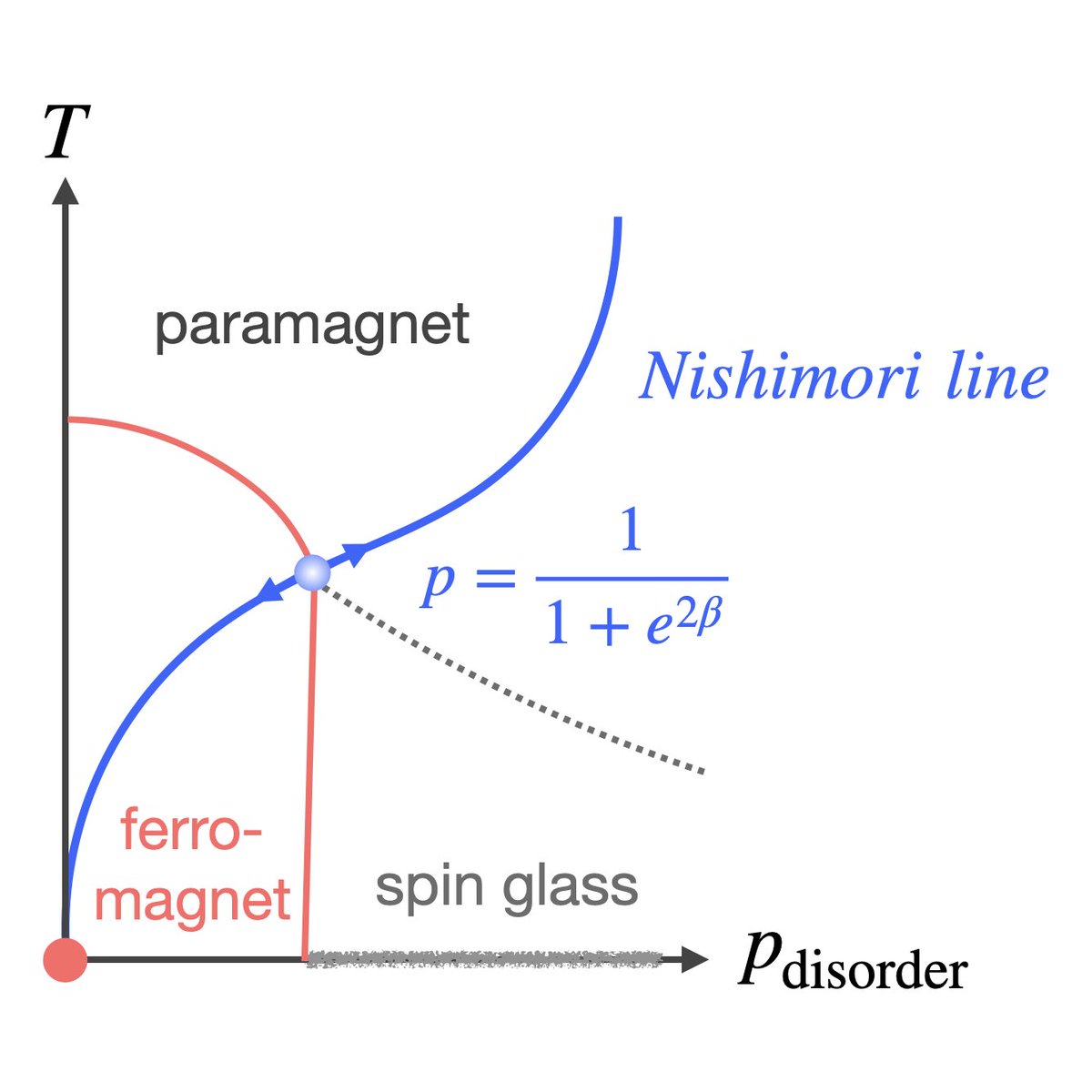
We also connect to seminal work by Dennis, Kitaev, Landahl, & @preskill on error thresholds & decoding — they established resilience against incoherent noise, while we discuss stability against coherent errors. Both limits are connected via a line of Nishimori transitions.
3/3
The Nishimori transition is a staple of stat mech — one of few exact results for the random-bond Ising model famous for its spin glass phase. Moving directly through the transition, however, is an exceedingly fine-tuned manoeuvre balancing thermal fluctuations and disorder.
1/3
In contrast, Nishimori physics turns out to be a natural phenomenon in the *quantum* realm, guaranteed by no less than Born’s rule. This is how we could tune an actual 127 qubit device through this transition on the IBM quantum platform.
https://t.co/Vz6eY9kKmZ
2/3
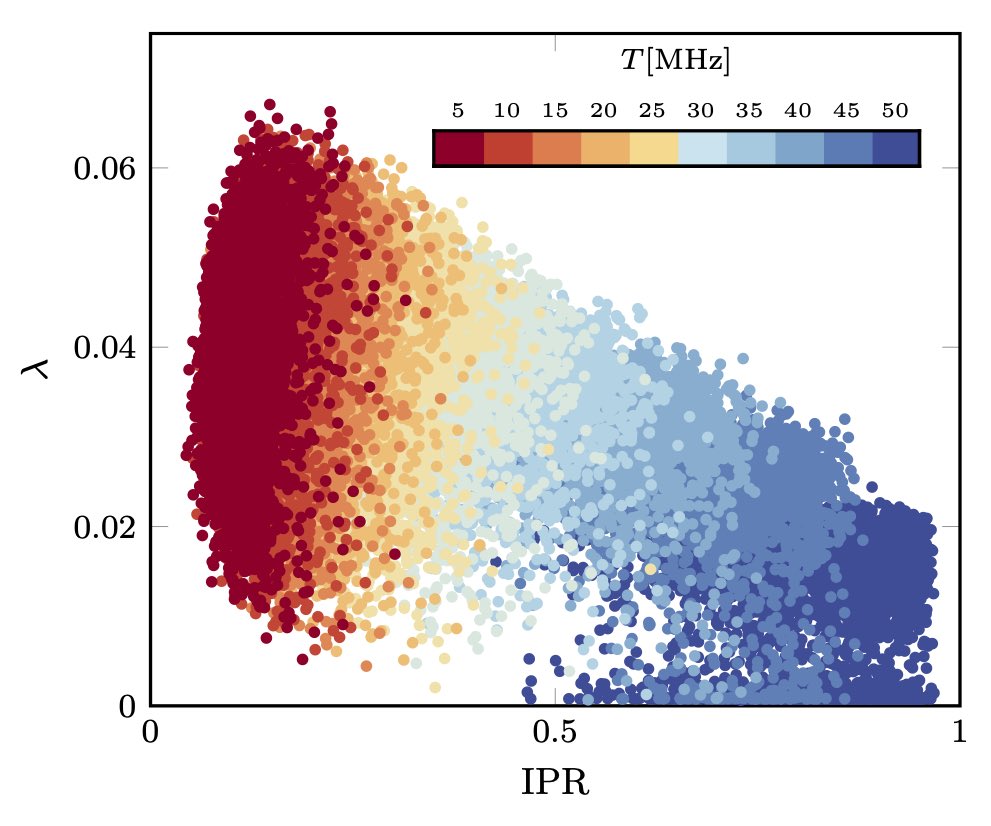
Turn your quantum processor into its classical regime — coupled, non-linear oscillators which might hover dangerously close to destabilizing chaotic resonances — and simulate its many-body physics. But does this really work?
Find out here:
https://t.co/QjhITAhk9Q
2/2
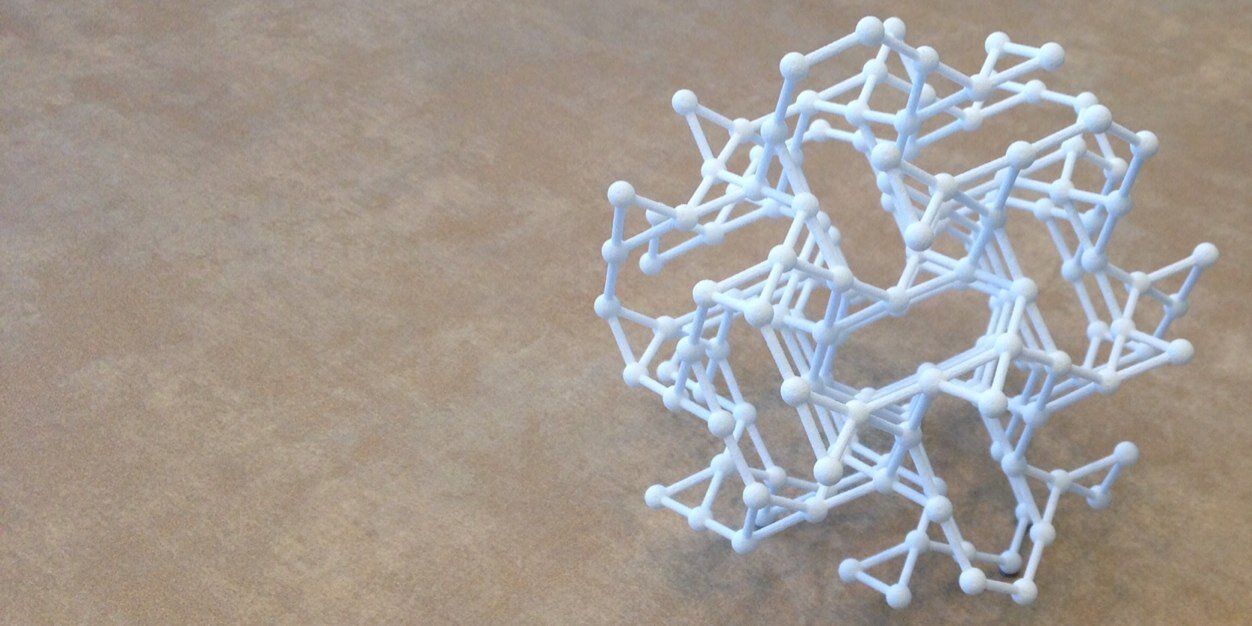
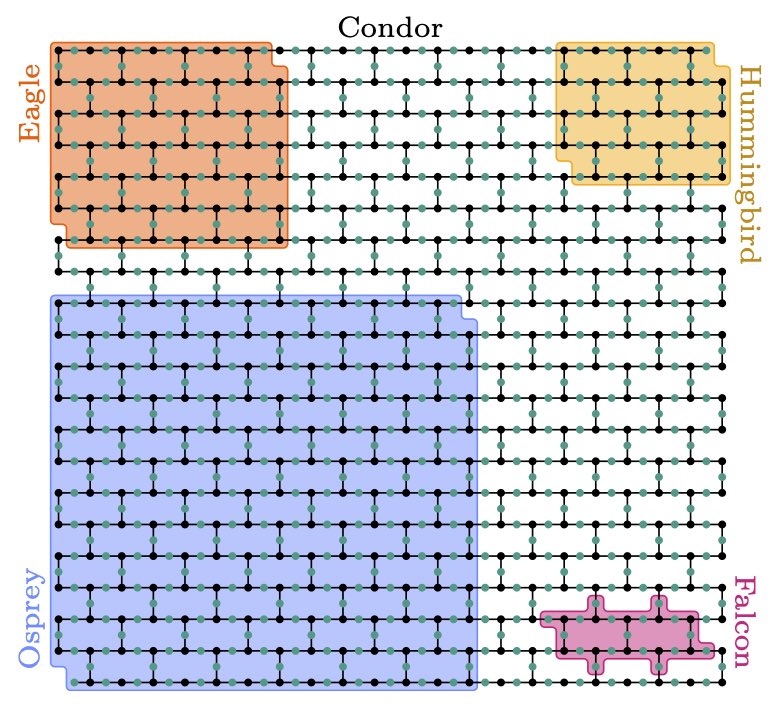
Current-day quantum processors with 50-100 qubits already operate outside the range of what one can efficiently simulate on classical, silicon-based computers. So how do you design future generations of these processors that have even more qubits?
1/2
Thanks @GuoyiZhu and @nat_tanti for plowing through this project over the past few weeks. Looking forward to shaping even more bizarre, non-equilibrium entangled states of matter.
https://t.co/oZmlF0clFA
3/3
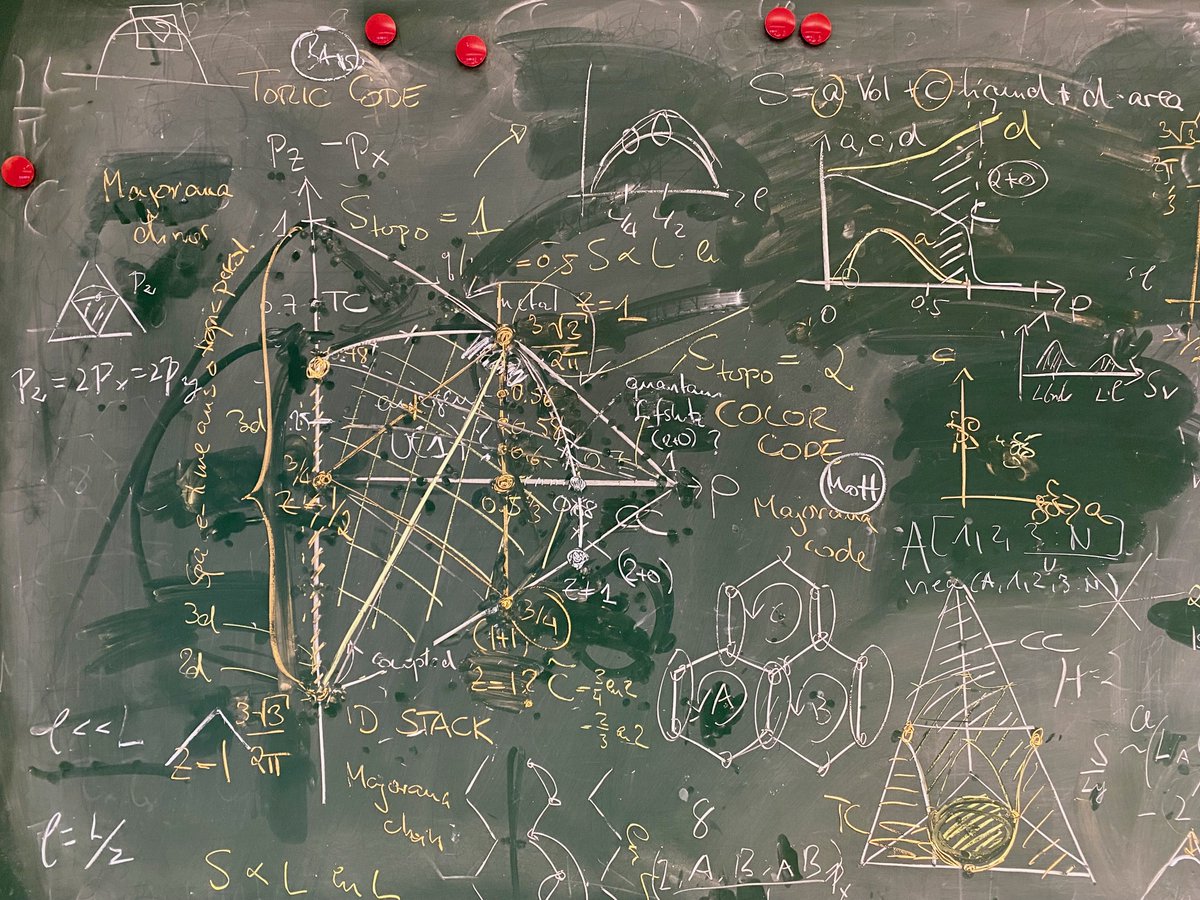
A new class of *monitored* quantum circuits allows for unprecedented dynamical control of many-body entanglement. But how do you shape entanglement at will? Turns out this still needs a lot of back-and-forth on one of the most traditional devices — the blackboard.
1/3
Notably, one can create long-range, many-qubit entanglement bypassing any unitary evolution and using measurements only. We devise such a measurement-only circuit that gives rise to a *structured* volume-law entangled phase — a state of matter with no thermal counterpart.
2/3
Anyone interested in the power of classical versus quantum computing, should take time reading @MStoudenmire’s take on Grover’s algorithm today. Inspiring work!
In "Grover's Algorithm Offers No Quantum Advantage" we argue there is no a priori quantum speedup of Grover's algorithm over classical algorithms since a problem solvable by Grover's is structured: there must always be the structure of a quantum circuit.
https://t.co/7ujQbRkxxS