Most people turn against you because your existence became an uncomfortable comparison. The disciplined man, the calm man, the man whose life is clearly moving somewhere, quietly exposes how much of their own stagnation was a choice, and very few people forgive a mirror that arrives without asking permission.
A man who studies his own patterns with brutal honesty eventually becomes harder to manipulate, because once he understands where he typically bends, panics, or seeks comfort, he can anticipate his own weaknesses and close the gaps before someone else exploits them.
Tolerating always turns to resentment. At first, you call it patience, then love. But what it really is, is self-abandonment. Every time you swallow a boundary, excuse a pattern or silence your discomfort, something inside you keeps score. Likes And eventually, the bill comes due.
Envy does not usually come from your enemies. It comes from people close enough to compare, but not strong enough to create. That is why your progress bothers the friend from your old life more than the stranger online. Proximity makes comparison unbearable for weak men. Distance makes admiration easier.
A man’s first mistake is thinking everyone wants him to win. Many people only support your rise while it still flatters their judgment. The moment your growth starts proving they underestimated you, their encouragement becomes silence, then concern, then criticism with a moral tone
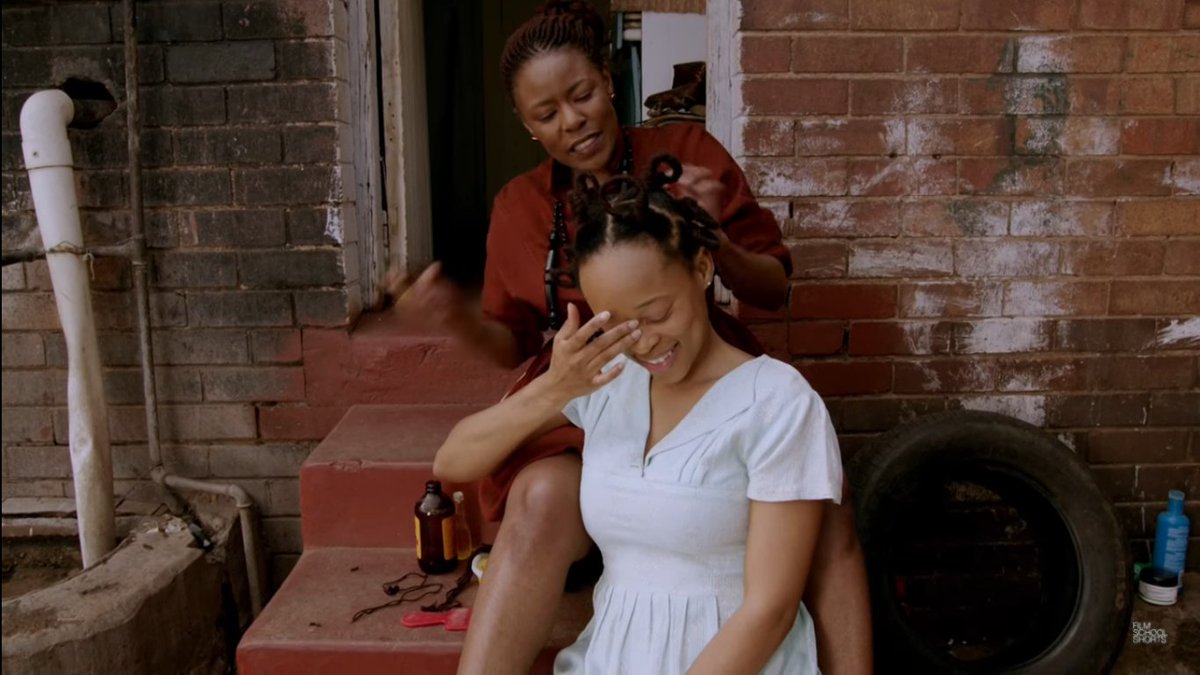
📺 Nomalanga and The Witch (2018)
A church going woman in a small South African town becomes obsessed with her hairdresser neighbor, a rumored murderer.
A film by Palesa Shongwe.
🔗: https://t.co/6dB1nBD48M
TIME IS NOT TREATED THE SAME EVERYWHERE:
1. Germany: Being late is disrespectful. Meetings start to the second. Punctuality here is not a habit. It is a moral standard.
2. Brazil: An invitation for seven means nine. Relationships matter more than schedules. Rigidity kills the atmosphere.
3. Japan: Trains run to the minute. A sixty second delay comes with a formal public apology. Time is a system. The system is everything.
4. India: Events begin when people arrive. The gathering defines the time. Presence matters more than precision.
5. Polynesian cultures: Time was tied to stars, seasons, and the ocean. Circular, not linear. The clock came later and from somewhere else.
6. United States: Time is money. Literally. Every hour is billable. Every minute is scheduled. Rest has to earn its place.
7. Spain: Lunch at three. Dinner at ten. The day bends around the person. Not the other way around.
8. Ethiopia: A different calendar entirely. Thirteen months. New Year in September. A different year than the rest of the world. Time here is a cultural choice, not a global agreement.
9. France: August belongs to rest. Emails go unanswered. Shops close. Nobody apologizes for this. Leisure is a right, not a reward.
10. Kenya: The clock starts at sunrise. Six in the morning is hour zero. Noon is hour six. Time is built around light, not an arbitrary number on a wall.
11. China: One time zone for the entire country. A landmass that should span five. In the far west the sun rises at ten in the morning. Unity was chosen over accuracy.
12.Australia: Aboriginal communities have always read time through seasons, animal movements, and the stars above. For over sixty thousand years the land itself served as the calendar. No clock was ever needed. Nature told them everything.
13. Mexico: Mañana means not right now. Urgency is often self-imposed. The present moment has its own demands and they are considered legitimate.
14. Greece: A guest arrives at any hour. You welcome them fully. The clock adjusts to the person. The person never adjusts to the clock.
15. Scandinavia: Months of darkness then months of endless light. The body follows seasons, not schedules. This is ancient. Science is only now catching up.
16. Nigeria: Start times are a suggestion. What matters is that everyone arrives, connects, and the evening becomes what it was meant to be. The experience always outranks the schedule.
17. Indonesia: Jam karet. Rubber time. Time stretches around mood, traffic, and social obligation. Rigidity is considered uncomfortable, not professional.
18. Russia: Eleven time zones. Vast winters. Long silences. Time here is treated with patience that outsiders often mistake for slowness.
19. Egypt: One of the first civilizations to invent a calendar. Yet modern Egyptian social time is deeply flexible. Hospitality always comes before the clock.
20. Congo: Community shapes the day more than any schedule. Time belongs to the people in the room, not the hands on the clock.
21. Philippines: Filipino time is a known and accepted reality. Six in the evening means seven or eight. Arriving before the host is ready is the real social mistake.
22. Vietnam: Built on endurance and long horizons. Planning here thinks in years and generations. Short deadlines feel foreign to a culture that measured time in struggles spanning decades.
23. Tanzania: Pole pole. Slowly slowly. A phrase that governs daily life. Rushing is not a virtue here. Moving with intention is.
24. Argentina: Dinner at ten. Parties at midnight. The night is its own world. Compressing it into earlier hours would make it something lesser.
25. Turkey: A meeting can become a meal can become a long evening. Nobody considers this a deviation. It is simply what time is for.
26. Iran: Its own solar calendar. New Year on the spring equinox. Time tied to nature, poetry, and a civilization so old that modern urgency feels like a passing trend.
A lion can stand three feet from your face on a safari and not even register that you exist. To its brain, you and the jeep are the same animal. One big weird shape that doesn't smell like food. Stand up though, and you go from invisible to dinner in under a second.
For the lion, you and the other tourists never register as separate people. The whole jeep looks like one giant creature made of metal and fabric and humans all smushed together. That shape has no scent of any prey animal, and it moves nothing like one. The brain searches its mental file of every animal it's ever hunted, finds no match, and moves on.
Lions learn this from their mothers. In places like the Serengeti or Maasai Mara, they see more than 100 of these jeeps a day. Cubs grow up watching mom ignore every truck. They copy what mom does. After a few generations, an entire population of lions has decided that safari vehicles are boring background noise, no different from trees or rocks.
Hunting is expensive. A lion that picks the wrong target won't have enough energy left to catch the right one tomorrow. So when the brain sees a weird shape that doesn't fit anything in its hunting memory, it just skips it.
But the whole truce hangs on one rule. The shape has to stay the same. The second someone stands up or leans out the window, the big creature breaks apart. Suddenly there's a person-sized snack standing where a big boring shape used to be. The lion's brain registers the change in under a second.
In June 2015, a 29-year-old American filmmaker rolled down her window at a park near Johannesburg to take a photo. A lioness was already a meter from the truck, just watching. It lunged through the open window and bit her in the neck. She died at the scene.
Ten years later, in September 2025, a zookeeper at Safari World in Bangkok stepped out of his vehicle in the lion section. One lion charged. The rest of the pride joined within seconds. The park had run these tours for over 40 years and nobody had ever died like that.
Craig Packer has spent over 40 years studying lions and started the world's first lion research center back in 1986. He's said it plainly more than once. Lions don't have much patience for humans acting weird. Sit still and you're part of the furniture; move suddenly and you're a target.
The truce works because every lion in those parks grew up watching its mom ignore the trucks. Break the pattern, and the whole thing falls apart in about as long as it takes to stand up.
Never show them the process. Appear effortless. The more they see your struggle, the more human you become, and humanity doesn’t inspire obedience. Hide your labor. Let the finished product look divine. Effortlessness is the perfume of power.
A man who studies his own patterns with brutal honesty eventually becomes harder to manipulate, because once he understands where he typically bends, panics, or seeks comfort, he can anticipate his own weaknesses and close the gaps before someone else exploits them.