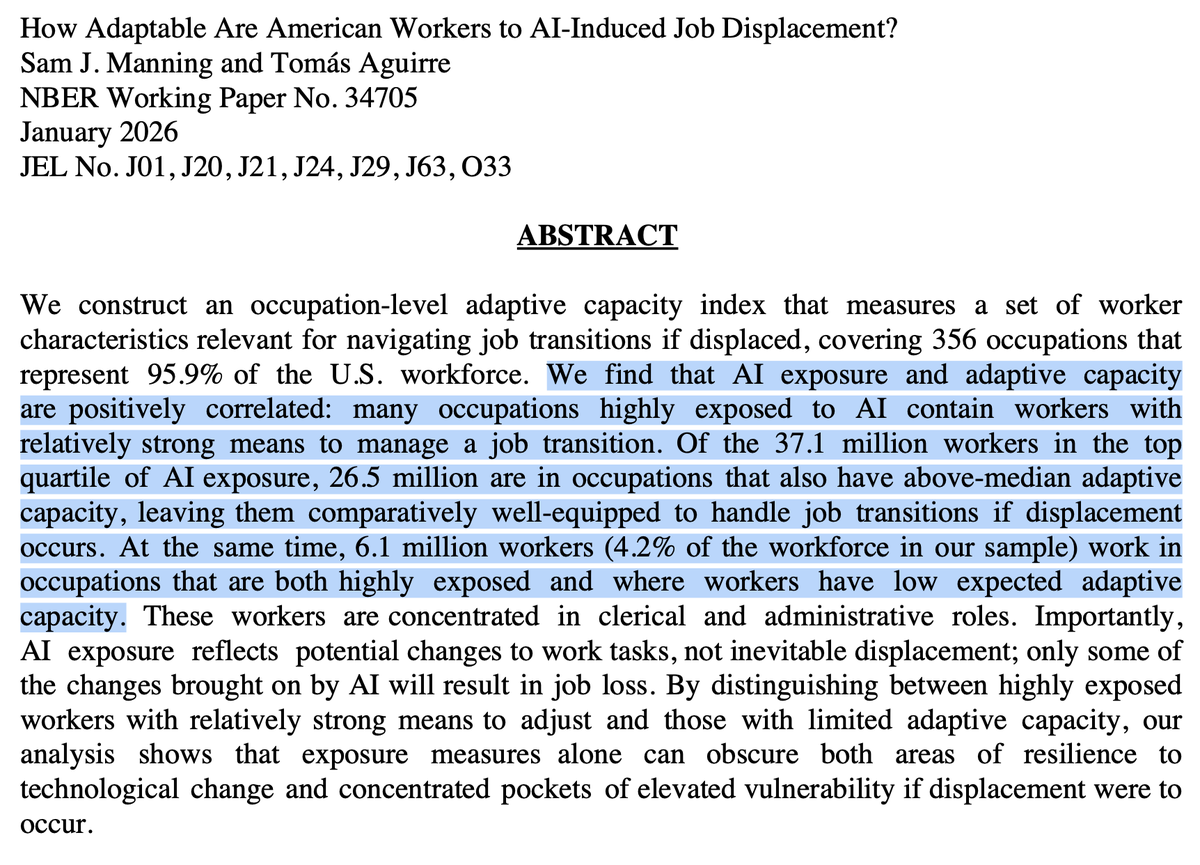
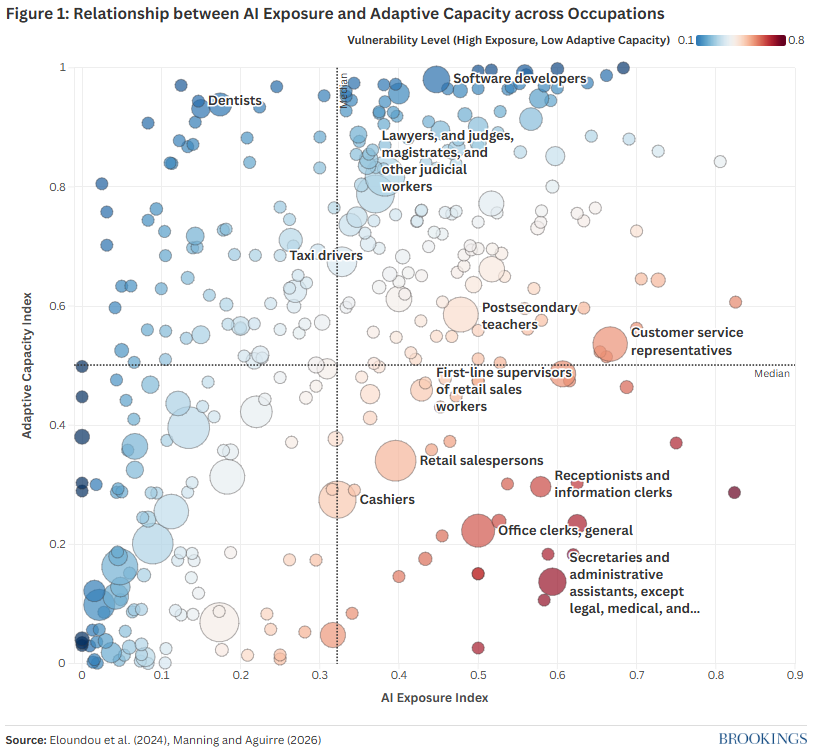
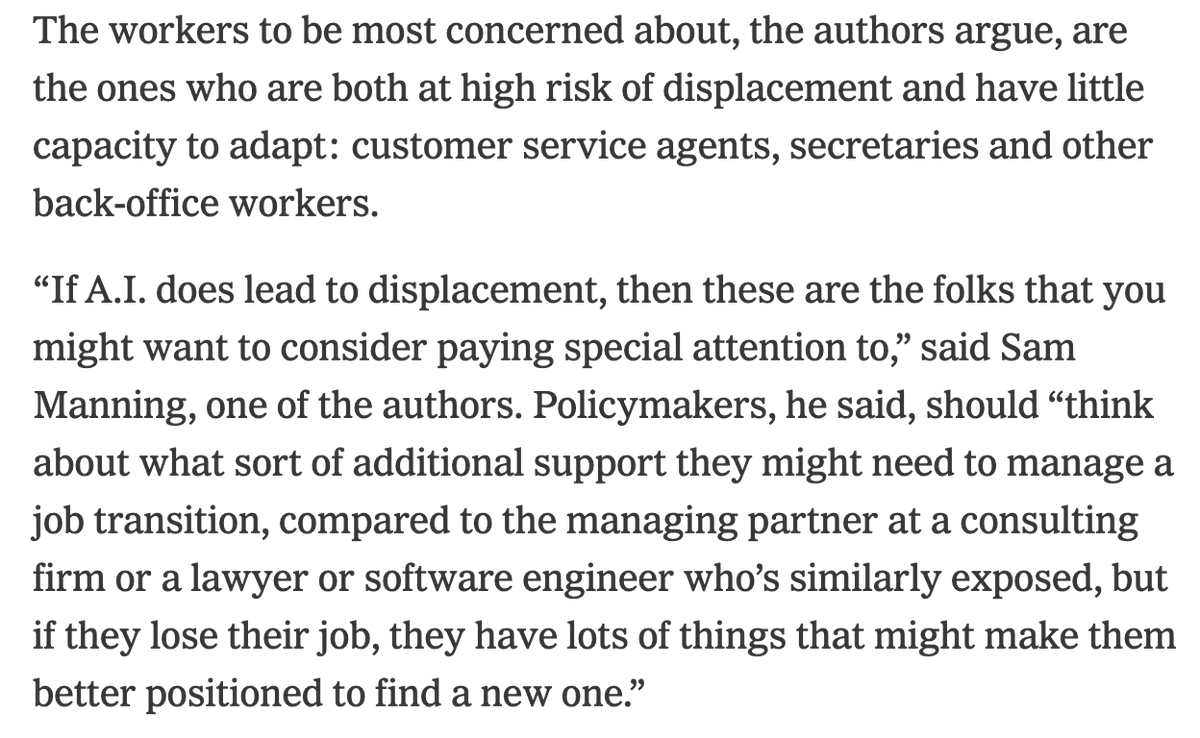
If AI leads to displacement, which AI-exposed workers will struggle to land on their feet after job loss? And which workers are best positioned to adapt on their own?
In a new @nberpubs paper and complementary @BrookingsInst brief, we work towards answering this question. 🧵
I’m no legal expert, but it seems likely to be unconstitutional (would come up against the takings clause of the 5th amendment). I would worry if it actually did pass and was upheld by Supreme Court (again seems unlikely), it could set potentially dangerous precedent around govts ability to expropriate private property.
Seems relevant for considering effect of this on concentrations of power.
If govt were to purchase shares or if they were handed over voluntarily by companies, then this is not an issue.
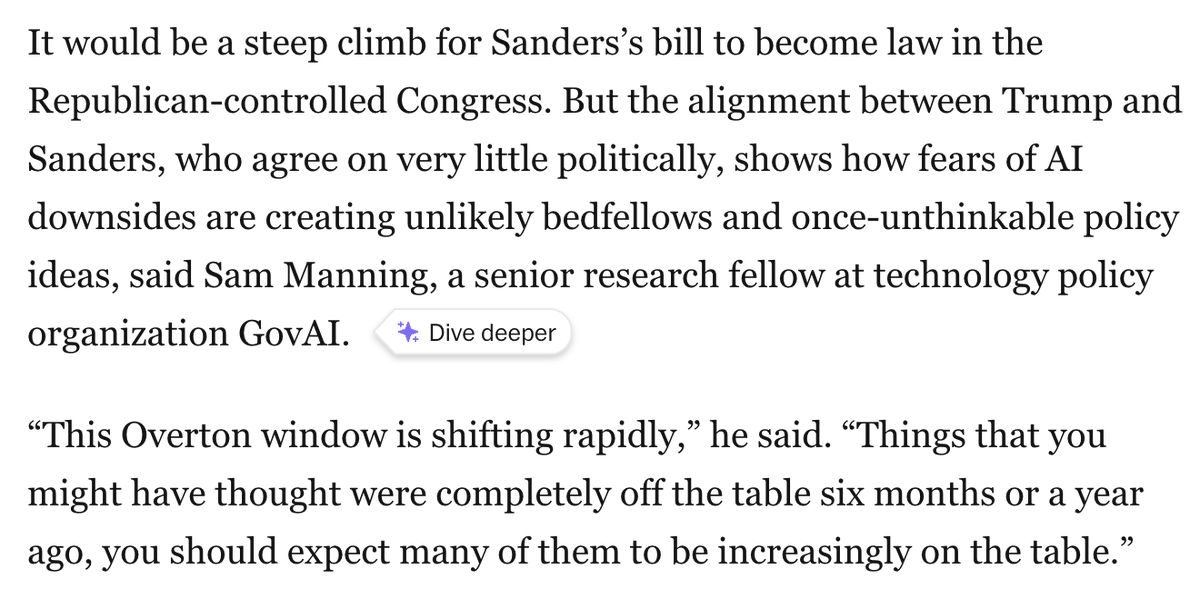
One lesson from the last week in DC: The Overton window in AI policy is shifting fast. Policies you think aren't possible today could be increasingly viable a few months from now.
Talked to @ShiraOvide at the @washingtonpost about this yesterday.
In a previous @JoinFAI report, I outlined the importance of strengthening data-sharing partnerships with the private sector, including model developers like @OpenAI, @AnthropicAI and @GoogleDeepMind.
Link here: https://t.co/C7rxEAmzxu
Earlier this spring, a bipartisan group of nine senators sent a letter to DOL, Census, and BLS urging improved data collection on AI's workforce impacts.
Our new @joinFAI blog post discusses concrete options to improve govt surveys, addressing each of the senators' recommendations directly.
We draft full sets of survey questions that could be considered for the CPS and NLSY before the 2027 cohort starts. Co-authored with @t6aguirre.
Of course, government surveys are just one part of the picture, as are administrative data like EWRs. Improving federal surveys might be particularly helpful, however, for generating consistently defined publicly available data over time.
Over the past few months I've been working on a very exciting project: a new $10m fund for research on multi-agent multi-principal AGI safety! Instead of focusing on single agent alignment and centralized control, we're looking to support research focusing on multi-agent settings, mechanism design, cooperative AI, and coordination problems.
This is a joint initiative between @GoogleDeepMind, @Googleorg, @schmidtsciences, @coop_ai, and @ARIA_research. Huge thanks to @James_D_Fox, @weballergy, @FranklinMatija, @lrhammond, and @ObadiaAlex for their invaluable work!
See: https://t.co/L5351OpPqH
Apply: https://t.co/a1uJLJnfYw
If AI causes displacement, not all workers will have the same capacity to transition to new work. Clerical and administrative workers may be among the most vulnerable while workers in professional and technical occupations may be better positioned to manage a job transition.
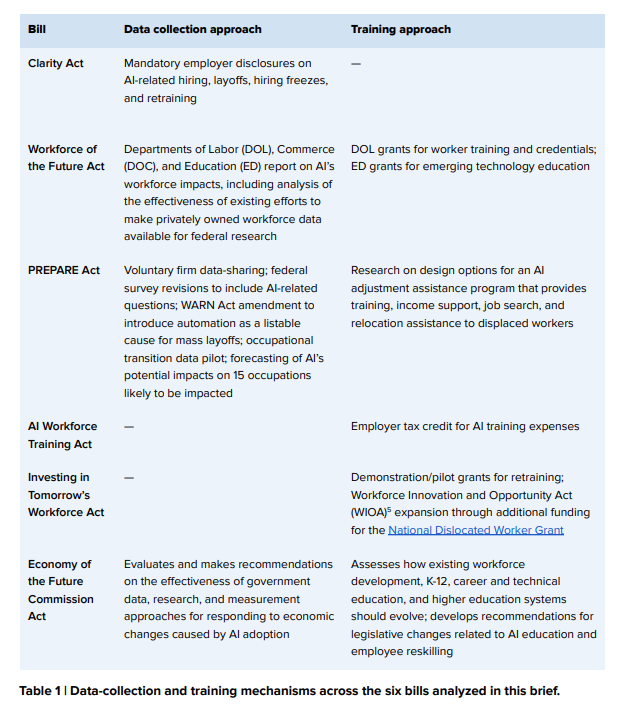
New policy brief out analyzing recently introduced bills that aim to address AI's labor impacts.
These are early entries in a policy conversation that will evolve rapidly in the coming months. If you want to understand what has been formally proposed to date, give this a read.
1/ Congress is starting to take AI’s labor-market impacts seriously.
Over the past year, lawmakers in both parties have introduced bills aimed at understanding how AI is changing work and preparing workers for the disruption that may follow.
In a new @GovAIOrg policy brief, @sj_manning and I analyze recently proposed bills.