Venture Capital Investor @AMV focused on #DigitalHealth and Technology. Enjoy aviation, soccer (@ussoccer @sjearthquakes @ucdavisathletics), food and wine.
@BallzSoccer@ImCollegeSoccer I just think the way you phrase it is too broad. If someone picks a school to study computer science or biology or engineering, that makes a ton of sense. Certain schools are very strong in academic areas.
@BrianSciaretta Great piece. I watch Tsakiris a lot in San Jose. I admit he looks good with the USYNT, but at PayPal he looks below mls standards in midfield. He’s not super quick and lacks technical skills. He’s just not smooth on the ball. I’ve seen him eaten alive by more skillful players.
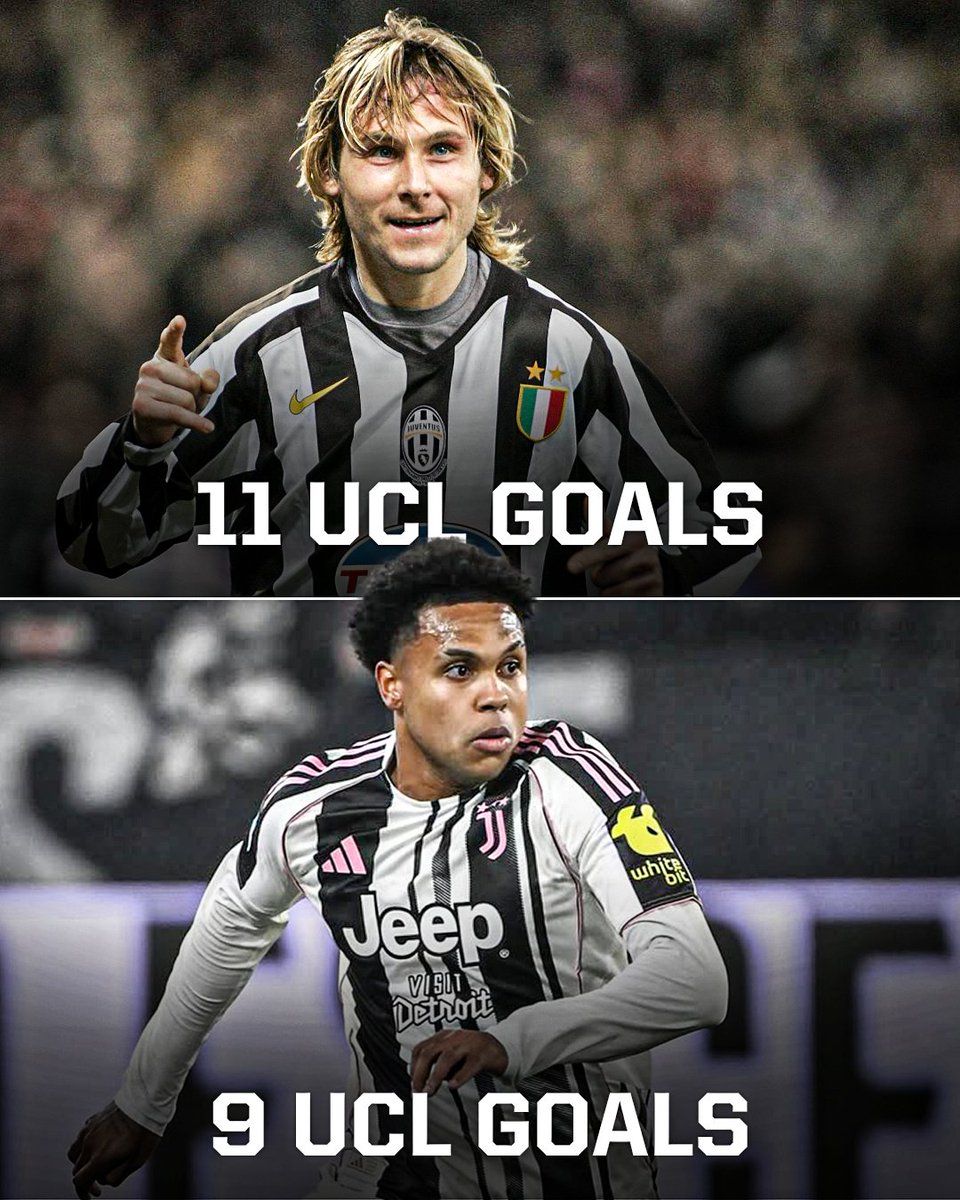
Weston McKennie has the second most Champions League goals of amongst ALL Juventus midfielders in history, tied with Arturo Vidal.
🥇 Pavel Nedved (11 goals)
🥈 Weston McKennie (9 goals)
🥈 Arturo Vidal (9 goals)
🥉 Zinedine Zidane (5 goals)
Put some respect on his name. 🇺🇸👏
A dozen years old, but curious how many of these little lies are still told around the #JPM26 conference....
"Top 10 Little White Lies Told At The JP Morgan Healthcare Conference"
https://t.co/0er4Beffn3
Former USMNT defender Steve Cherundolo is now back in Germany after stepping down from LAFC coaching job.
He spent 15 years playing in Germany and six more years as a youth coach. He explains why the youth system there is much better than in the U.S. 🗣️
“A lot of players can get lost down the wrong path [in the U.S.] that maybe isn’t right for them,” Cherundolo told Cobi Jones for LA Galaxy YouTube channel.
“If we can simplify the path like it is in Europe. All of the youth leagues are filtered upward towards the Bundesliga, the first division. All of the youth national teams act as scouts for all of the clubs.”
“So the Federation and clubs are working together. There is a filter system that no talent is gone unseen.”
“I fear that in this moment in the U.S., there’s a lot of good players that aren’t being seen for many reasons.”
“Most of the scouting going on is from U.S. Soccer. Huge country, you need a lot of manpower to cover the U.S. Not realistic.”
“And then you have MLS. But MLS clubs are only responsible for their own region. So it doesn’t make sense for us to go scout in Texas.”
“That’s where other countries get it right. They have regional and international scouts. There’s just a number of scouts out there where every single player is identified.”
“Remember the old Olympic development programs? You start with your district, state, regional, then national. I felt there were a lot more players being identified and seen in that system than there are currently.”
“Long story short, I think the path is much clearer in Europe than it is here. You can get lost in this mess of youth development programs.”
“A lot of clubs, a lot of leagues within clubs or clubs form their own leagues to keep players within the clubs.”
“Our system right now is not conducive to developing talent. It’s keeping talent in a closed league. We need to change that.”
Dear @peacocktv and @fuboTV. If NBC doesn't stop showing @premierleaguegames on networks we can't access because of your lack of contract with Fubo, then I'm cancelling Peacock. The way @NBCSports is showing Premier League content is deplorable.
Dan - I decided to sleep on this because I wanted to assume positive intent and it felt like I was drifting. Here is how I’m thinking about it. Happy to talk more if you think it’s useful….
The real issue with a wealth tax isn’t about how much money the government needs or whether wealthy people should contribute. How much they should is a valid discussion and we should have it honestly.
The deeper issue is who the government exists to serve and where the wealth tax leads to when it comes to that question.
In a free society, the government is meant to serve the people. Individuals come first, and the state comes second. Most taxes respect this idea. You pay income tax when you earn money. You pay sales tax when you buy something. You pay capital gains tax when you sell an asset. In each case, you act first, and the government responds. And in each case you can create a link between an activity that benefited from the government’s service to the people.
A wealth tax works differently. You can owe it even if nothing happens at all. You don’t earn more, sell anything, or spend anything. You owe tax simply because you continue to own what you already have. That changes the meaning of ownership. It starts to feel less like something you truly own and more like something the state allows you to keep as long as you keep paying. It’s as if property becomes an abstract thing the state gives you permission to own and where the terms can therefore arbitrarily change.
This matters because wealth often represents years of saving, patience, and risk-taking. Taxing ownership itself sends the message that property is not fully yours…it is conditional.
The government can raise large amounts of money without crossing this line. Broad taxes on income, spending, and transactions already do that. A wealth tax crosses a boundary by putting the state above the individual. That shift…not revenue…is the core concern.
You might not 100% agree that this is an important line to cross but I imagine you can understand why some people think it would be a very clever technique for a politician with socialist tendencies to support as the first step in a more problematic set of steps that eat away at the very premise of private property.
I think it’s an important line. A very important one. Both from a moral perspective as well as a progress perspective.


![golz_tv's tweet photo. Former USMNT defender Steve Cherundolo is now back in Germany after stepping down from LAFC coaching job.
He spent 15 years playing in Germany and six more years as a youth coach. He explains why the youth system there is much better than in the U.S. 🗣️
“A lot of players can get lost down the wrong path [in the U.S.] that maybe isn’t right for them,” Cherundolo told Cobi Jones for LA Galaxy YouTube channel.
“If we can simplify the path like it is in Europe. All of the youth leagues are filtered upward towards the Bundesliga, the first division. All of the youth national teams act as scouts for all of the clubs.”
“So the Federation and clubs are working together. There is a filter system that no talent is gone unseen.”
“I fear that in this moment in the U.S., there’s a lot of good players that aren’t being seen for many reasons.”
“Most of the scouting going on is from U.S. Soccer. Huge country, you need a lot of manpower to cover the U.S. Not realistic.”
“And then you have MLS. But MLS clubs are only responsible for their own region. So it doesn’t make sense for us to go scout in Texas.”
“That’s where other countries get it right. They have regional and international scouts. There’s just a number of scouts out there where every single player is identified.”
“Remember the old Olympic development programs? You start with your district, state, regional, then national. I felt there were a lot more players being identified and seen in that system than there are currently.”
“Long story short, I think the path is much clearer in Europe than it is here. You can get lost in this mess of youth development programs.”
“A lot of clubs, a lot of leagues within clubs or clubs form their own leagues to keep players within the clubs.”
“Our system right now is not conducive to developing talent. It’s keeping talent in a closed league. We need to change that.”](https://pbs.twimg.com/media/G-MTSUhWIAAxlea.jpg)











![golz_tv's tweet photo. Former USMNT defender Steve Cherundolo is now back in Germany after stepping down from LAFC coaching job.
He spent 15 years playing in Germany and six more years as a youth coach. He explains why the youth system there is much better than in the U.S. 🗣️
“A lot of players can get lost down the wrong path [in the U.S.] that maybe isn’t right for them,” Cherundolo told Cobi Jones for LA Galaxy YouTube channel.
“If we can simplify the path like it is in Europe. All of the youth leagues are filtered upward towards the Bundesliga, the first division. All of the youth national teams act as scouts for all of the clubs.”
“So the Federation and clubs are working together. There is a filter system that no talent is gone unseen.”
“I fear that in this moment in the U.S., there’s a lot of good players that aren’t being seen for many reasons.”
“Most of the scouting going on is from U.S. Soccer. Huge country, you need a lot of manpower to cover the U.S. Not realistic.”
“And then you have MLS. But MLS clubs are only responsible for their own region. So it doesn’t make sense for us to go scout in Texas.”
“That’s where other countries get it right. They have regional and international scouts. There’s just a number of scouts out there where every single player is identified.”
“Remember the old Olympic development programs? You start with your district, state, regional, then national. I felt there were a lot more players being identified and seen in that system than there are currently.”
“Long story short, I think the path is much clearer in Europe than it is here. You can get lost in this mess of youth development programs.”
“A lot of clubs, a lot of leagues within clubs or clubs form their own leagues to keep players within the clubs.”
“Our system right now is not conducive to developing talent. It’s keeping talent in a closed league. We need to change that.”](https://pbs.twimg.com/media/G-MTSUiW0AAH9Sx.jpg)


