Laken Riley had a Garmin smartwatch on when she was attacked
Her heart rate jumped to 170 bpm which told investigators that was when she was being attacked
It lasted for 17 minutes then suddenly stopped - that's when the animal finally killed her
So the next time you want to tell me about how unfair illegal immigrants are being treated I want you to set a timer for 17 minutes and watch it go by so you can understand how long that young woman fought for her life
a very simple solution to virtually every problem would be to stop allowing people who live off taxpayer money to vote
anyone whose entire livelihood depends on the government taking money from other people will always vote for a government that takes more money
we’ve built a system where people can literally vote to give themselves more of other people’s money
the conflict of interest is beyond ridiculous and if you remove the incentive you remove the problem
He was 28 when he saw Nazi soldiers dragging children out of an orphanage. That day, he knew he could no longer stand by and watch.
On August 7, 1942, in the town of Boryslaw, in Nazi-occupied Poland, a young German manager named Berthold Beitz witnessed a scene that would change his life forever.
The SS were clearing out a Jewish orphanage, forcing terrified young children onto trucks heading toward extermination camps. Beitz was not a politician, a soldier, or a member of an underground resistance movement.
He was simply a commercial director for the Carpathians Oil Company, tasked with keeping local oil fields running for the war effort. Yet, seeing that moment of cruelty made it impossible for him to stay silent.
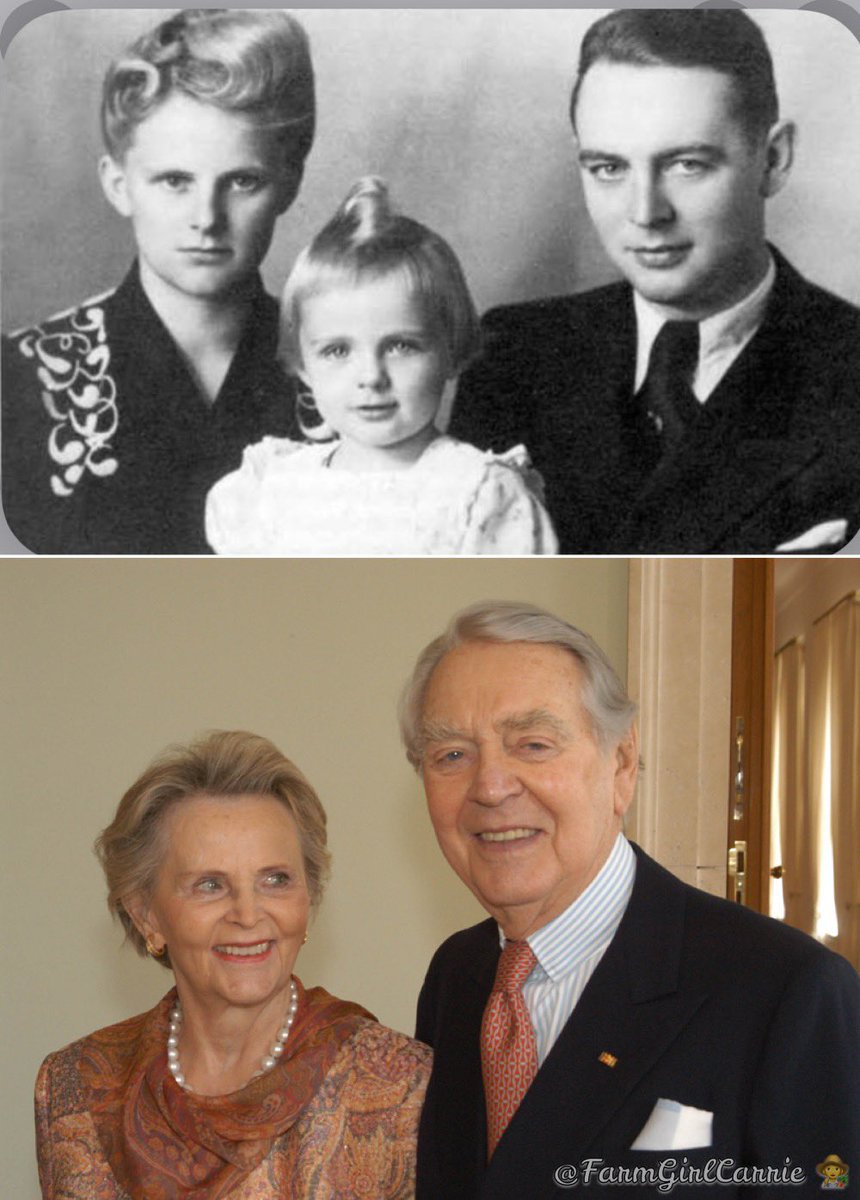
He went home that evening to his wife, Else, and their young daughter, deeply shaken by what he had seen.
"We cannot just sit here and watch this happen," he told his wife as they spoke about the roundups. "If we have the power to stop even a small part of it, we have a duty to act."
Because oil was essential to the military, people working in the industry received temporary protection from deportation. Beitz realized he could use his position to save lives.
He began issuing official work permits and forging documents for people who had no technical background at all. A local tailor became a specialized oil technician on paper.
A barber was listed as a vital machine operator. A scholar was registered as a crucial field assistant. By signing these documents, Beitz turned men and women condemned to death into essential workers for the German war effort.
His actions did not end at his desk. When deportation trains arrived at the station, Beitz walked directly onto the platforms alongside SS officers.
He pointed into overcrowded cattle cars, picked out specific individuals, and declared that they were indispensable to the oil refineries. On many occasions, his bold approach worked, and people were pulled off the trains moments before departure.
At the same time, Else Beitz turned their house into a secret sanctuary. She hid Jewish children and families in their attic, cellar, and quiet back rooms while Gestapo patrols searched the neighborhood.
Both Berthold and Else knew that a single thorough inspection would mean death for their entire family, but they chose to keep helping anyway.
In 1943, the Gestapo discovered forged documents bearing Beitz's signature and brought him in for interrogation.
Despite intense pressure and direct threats, he managed to avoid arrest because the German military desperately needed his skills to keep the oil fields running.
As soon as he was released, he went right back to saving lives.
By the end of World War II, Berthold and Else Beitz had directly saved about eight hundred men, women, and children. Over the decades, those survivors rebuilt their lives, had children, and welcomed grandchildren.
Today, thousands of people exist because one couple refused to look away.
After the war, Beitz became one of Germany's most prominent industrial leaders. Yet, he rarely bragged about his wartime actions. When asked why he risked everything for strangers, he kept his answer simple:
"It was not heroism. I was simply a human being watching what was happening, and I could not turn away."
Yad Vashem later recognized both Berthold and Else Beitz as Righteous Among the Nations. Berthold passed away on July 30, 2013, just days before his one hundredth birthday.
Most people like to believe they would stand up against injustice if they lived through a dark period of history.
Yet millions of ordinary people in the 1940s chose comfort and safety over doing what was right.
Eight hundred people survived because a young couple decided that humanity mattered more than fear.
Today, those eight hundred lives have bloomed into thousands of children, grandchildren, and great-grandchildren.
Love and courage truly carry a ripple effect that outlasts the darkest moments of human history ♥️♥️
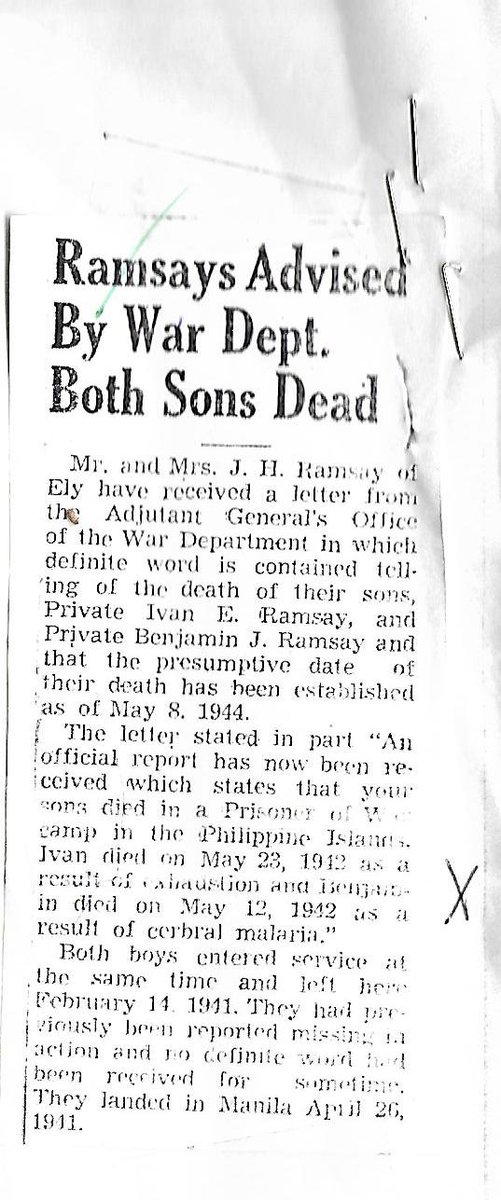
@Jason_R_Burt I found a sad story of 2 local ranch brothers who enlisted together. Both were sent to the Philippines. Parents only knew both were MIA. 2 yrs later they learned both died in POW camps- their cross headstones are in the American Cemetery in Manila.
The mother of an American soldier killed in the Philippines during WWII. 🇺🇸
She flew all the way from the United States to visit her son's grave at the Manila American Cemetery in 1967. 🪦
On September 29, 2006, when an enemy grenade bounced off the chest of U.S. Navy SEAL Michael Monsoor on a rooftop in Ramadi, he was the only man standing right next to the open exit door.
In less than one second, he could have stepped backward through that doorway and lived without a scratch.
Monsoor was a twenty-five-year-old heavy machine gunner with SEAL Team Three. Just weeks earlier in the streets of Ramadi, when a sniper bullet struck his teammate Ryan Job in the face, Monsoor had run straight out into an intersection full of AK-47 fire, firing his twenty-five-pound Mk 48 machine gun with one hand while dragging his blinded brother to safety with the other.
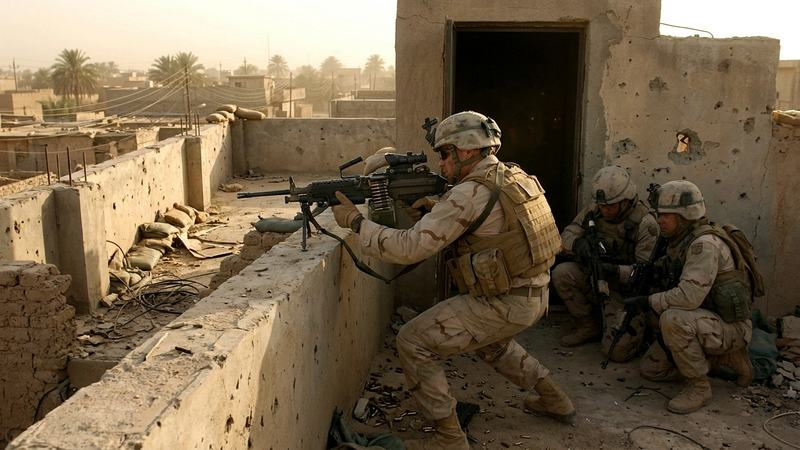
On September 29, Monsoor and two SEAL snipers were holding an exposed rooftop surrounded by insurgents on three sides.
Why could the other two SEALs not run when an insurgent on the street below hurled a fragmentation grenade onto the roof?
Because the two snipers were kneeling in a tight corner boxed in by high concrete parapet walls and heavy gear, with nowhere to go. The grenade hit Monsoor right in the chest plate and dropped onto the concrete floor between him and his trapped teammates.
Monsoor was standing in the open doorway. One single step backward behind the thick concrete door frame would have shielded him completely from the blast.
He did not step backward.
Shouting "Grenade!" so his teammates could brace themselves, Monsoor threw his own body forward and pressed his chest flat over the grenade on the concrete floor.
The blast took his life thirty minutes later, while the two SEALs inches away from him survived to come home to their families.
At his funeral in California, as his coffin was carried to the grave, every single Navy SEAL on the West Coast lined up in two rows and slapped their golden Metal Trident pins deep into the wooden lid of his casket.
He had the open door right behind him. He chose his brothers instead.
Vote 🗳 YES on amendment 3 for property tax relief!
Counties have plenty of funds for essential services. They just need to cut out the wasteful spending, bloated budgets, and excessive administrative salaries!
This is the Kapishter Family.
They were on their way home from a camping holiday for Ethan’s 5th birthday on October 7th.
Hamas butchered them.
Authorities found the 3 bodies together. They buried them together.
But the 8 year old girl Aline’s body was found days later in a different location.
Make of that what you will.
May their memories all be blessings.
Dina, Evgeny, Ethan and Aline.
🕯️🕯️🕯️🕯️
I didn't vote red up and down the ballot because I agree with everything Republicans stand for
I voted red because I DISAGREE with EVERYTHING Democrats stand for!!
And since people have been growing food for profit, famine has disappeared.
Famines in the Soviet Union? Gone today.
Famines in Mao's China? Gone today.
Famine in India? Gone today.
Famine in Europe? Gone today.
The only places where there is famine is where there is socialism.
If food weren't grown for profit, most of it would never be produced in the first place. People would largely grow food for themselves and their families.
Profit is precisely what incentivizes people to produce food for complete strangers.
What communists are actually demanding is that someone else grow, harvest, process, and deliver their food without expecting anything in return.
They don't object to exploitation. They object to having to compensate the people whose labor keeps them alive.
Their ideal farmer isn't an entrepreneur. He's a slave whose only reward is another list of demands and sacrifices.
What could go wrong?
Roy Benavidez survived six hours of combat and 37 wounds, only to be placed in a body bag while he was still alive.
On May 2, 1968, he volunteered to rescue a surrounded Special Forces team during the Vietnam War. Carrying a medical bag and armed with a knife, he jumped from a hovering helicopter into enemy fire.
He treated casualties, dragged men to safety and kept fighting after being shot and hit by shrapnel.
When an enemy soldier bayoneted him, he killed the attacker with his knife and continued the rescue.
His actions saved at least eight men.
Back at base, a doctor believed he was dead. Unable to speak or open his eyes, Benavidez spat in the doctor’s face.
He survived and received the Medal of Honor in 1981.