Security teams: the waitlist is over, the AI is in.
Claude Security launched into public beta on April 30, 2026, opening access to Anthropic's security-focused Claude capability for the first time.
Security teams can now access Claude Security directly in public beta, moving from waitlist-only to open availability. This brings AI-assisted security workflows into reach for organizations that previously had no access.
Your team spots an anomaly in prod logs — you pull in Claude Security instead of waiting on a specialist.
Source: https://t.co/s5lYZxOex2
Get the full weekly briefing at https://t.co/ueZu5V48BM — just the tools you use, every Friday.
Your brainstorm is now a finished file. One prompt.
Gemini can now generate polished documents, spreadsheets, and PDFs from a single prompt, turning a brainstorm into a finished file in one step.
Before, you'd draft in Gemini, then manually recreate the output in Docs, Sheets, or as a PDF. Now the finished file is the output — one prompt, done.
You type a project brief prompt and hand your team a finished, formatted doc — no copy-pasting into Docs required.
Source: https://t.co/FJ07GbLmWt
Get the full weekly briefing at https://t.co/ueZu5V48BM — just the tools you use, every Friday.
The agent was always there. Now you can actually drive it.
Cursor released the Cursor SDK in public beta, exposing its agent runtime, harness, and models to TypeScript so developers can build programmatic agents that run locally or in Cursor cloud, priced by token.
Before, Cursor's agent capabilities were locked inside the desktop app, CLI, and web app — you used them, you didn't build with them. Now developers can wire the same agent runtime directly into their own TypeScript code, automating workflows without touching the Cursor interface at all.
You're building a code review pipeline — wire the agent runtime directly into your TypeScript CI script, no Cursor interface required.
Source: https://t.co/zHwdJegrek
Get the full weekly briefing at https://t.co/ueZu5V48BM — just the tools you use, every Friday.
Your OpenAI workloads no longer have to leave the building.
OpenAI GPT models, Codex, and Managed Agents are now available on AWS as of April 28, 2026, letting enterprises build and deploy secure AI directly inside their existing AWS environments.
Enterprises previously had to route OpenAI workloads outside their AWS infrastructure, creating data residency, compliance, and security friction. Now they can run GPT models, Codex, and Managed Agents natively within AWS, keeping sensitive data inside the stack they already control.
When your security team flags an external API call, you point to the AWS console — the model runs in your stack, not outside it.
Source: https://t.co/uYB8sV7nYg
Get the full weekly briefing at https://t.co/ueZu5V48BM — just the tools you use, every Friday.
The velvet rope around GPT-5.5 just dropped for devs.
OpenAI made GPT-5.5 and GPT-5.5 Pro available via API on April 24, 2026, opening both models to developers building on top of them.
Before today, GPT-5.5 and GPT-5.5 Pro were ChatGPT-only — developers had to wait. Now they can wire both models directly into their own products, agents, and pipelines.
When your pipeline needs GPT-5.5's capability, you call it directly — no workaround, no ChatGPT middleman.
Source: https://t.co/QcayqhKXIG
Get the full weekly briefing at https://t.co/ueZu5V48BM — just the tools you use, every Friday.
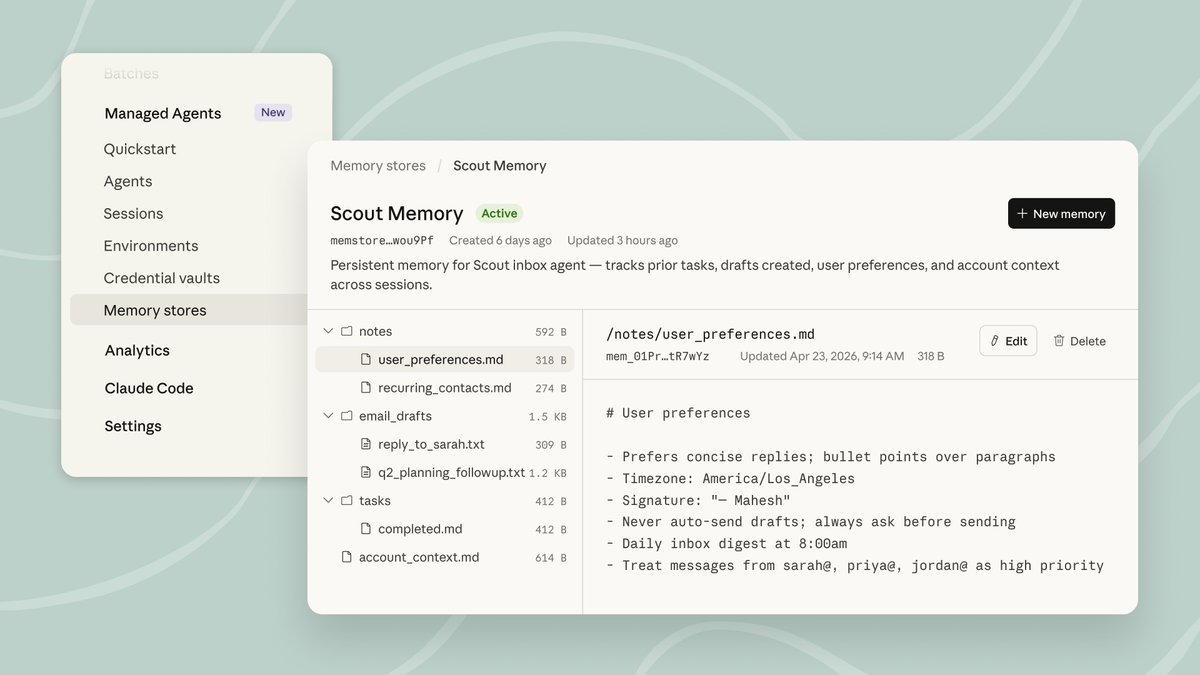
Your agent just remembered something. You didn't have to repeat yourself.
Memory on Claude Managed Agents is now in public beta, giving agents an intelligence-optimized memory layer that retains learning across sessions, available now.
Before this, agents started every session cold — no context from previous runs, no accumulated knowledge about your preferences or patterns. Now they carry forward what they've learned, session to session, without you rebuilding that context each time.
You pick up a long-running refactor where you left off — your agent already knows the patterns you established last session.
Source: https://t.co/ZITLNirpMz
Get the full weekly briefing at https://t.co/ueZu5V48BM — just the tools you use, every Friday.
Memory on Claude Managed Agents is now in public beta.
Your agents can now learn from every session, using an intelligence-optimized memory layer that balances performance with flexibility.
Your AI agent finally stopped having amnesia every Monday morning.
Anthropic launched built-in memory for Claude Managed Agents on April 23, 2026, giving agents native persistent memory across tasks and sessions.
Before this, managed agents lost all context between runs — every session started from scratch, forcing developers to manually wire up external memory stores. Now agents can remember state, prior decisions, and learned context natively, without custom plumbing.
Your agent picks up mid-project exactly where it left off — no context-dumping, no re-explaining the decisions you already made.
Source: https://t.co/kTTWgL7j9V
Get the full weekly briefing at https://t.co/ueZu5V48BM — just the tools you use, every Friday.
Your IDE just got a mobile plan.
Claude Code is now available on web, desktop, and mobile (beta) across all plans, as of April 23, 2026.
Before, Claude Code was confined to a single surface — now you can start a coding session on desktop and pick it up on your phone. Every plan gets access, so the terminal-in-your-pocket era officially starts today.
You're mid-refactor on your laptop, step away, and keep the session alive from your phone on the commute.
Source: https://t.co/vjbQo65YxL
Get the full weekly briefing at https://t.co/ueZu5V48BM — just the tools you use, every Friday.
Your AI assistant finally knows your dinner reservation, grocery list, and...
Claude can now connect to consumer apps including Tripadvisor, https://t.co/nd3Dtqu5z2, Resy, Instacart, Spotify, Audible, AllTrails, Thumbtack, and TurboTax, as of April 23, 2026.
Before, Claude's integrations skewed heavily toward work tools — now it can pull from the apps running your actual life. Planning a trip, ordering groceries, filing taxes, or booking a restaurant can fold directly into a Claude conversation instead of requiring you to context-switch across ten tabs.
You're planning a weekend trip — ask Claude to find trails, book the restaurant, and add groceries to your cart without leaving the conversation.
Source: https://t.co/Tz8Rasp9ut
Get the full weekly briefing at https://t.co/ueZu5V48BM — just the tools you use, every Friday.
The gap between "technically capable" and "actually usable" just closed.
OpenAI deployed full-stack inference improvements to ChatGPT on April 23, 2026, making GPT-5.5 Pro meaningfully faster and more capable for demanding, multi-step tasks.
GPT-5.5 Pro was previously powerful but slow enough to feel impractical for heavy workloads — now the same model runs faster, making it viable for sustained, complex tasks rather than occasional use. Early testers found it performs especially well as a research partner when paired with documents and plugins, closing the gap between 'technically capable' and 'actually usable.'
You're midway through a complex research task — instead of waiting out the lag, GPT-5.5 Pro keeps pace with your thinking.
Source: https://t.co/JFQvMMNttp
Get the full weekly briefing at https://t.co/ueZu5V48BM — just the tools you use, every Friday.
In ChatGPT, full-stack inference improvements enable a more capable model at faster speed. This efficiency is a game-changer for GPT-5.5 Pro, now a much more practical option for demanding tasks, and a step change in the level of difficulty and quality of work ChatGPT can take on for people.
Early testers described it as an iterative “research partner,” performing especially well when paired with contextual inputs from documents and plugins.
AI agents that actually finish what they start. Bold claim. Let's see.
OpenAI launched GPT-5.5 on April 23, 2026, a new model built to understand complex goals, use tools, self-verify, and drive multi-step tasks to completion, available now in ChatGPT and Codex.
Before, agentic workflows stalled when models lost context, skipped verification, or dropped tasks mid-run. GPT-5.5 is explicitly engineered to carry tasks through to completion — checking its own work and using tools along the way — which means agents built on it should fail less quietly and finish more reliably.
You hand your agent a multi-step research task and walk away — GPT-5.5 checks its own work and delivers a finished result, not a half-done draft.
Source: https://t.co/2FMfhew1QA
Get the full weekly briefing at https://t.co/ueZu5V48BM — just the tools you use, every Friday.
Introducing GPT-5.5
A new class of intelligence for real work and powering agents, built to understand complex goals, use tools, check its work, and carry more tasks through to completion. It marks a new way of getting computer work done.
Now available in ChatGPT and Codex.
The gap between "Claude suggested it" and "Claude did it" just closed.
Anthropic launched new connectors in Claude on April 23, 2026, expanding Claude's ability to integrate with everyday tools and services directly from the Claude interface.
Claude can now connect to more of the apps and services people use daily, reducing the need to copy-paste between tools or leave Claude to complete tasks elsewhere. The gap between 'Claude suggests it' and 'Claude does it' just got smaller.
You're mid-task and Claude just drafts, sends, and logs it — without you switching tabs.
Source: https://t.co/rmyBR8Wjuw
Get the full weekly briefing at https://t.co/ueZu5V48BM — just the tools you use, every Friday.
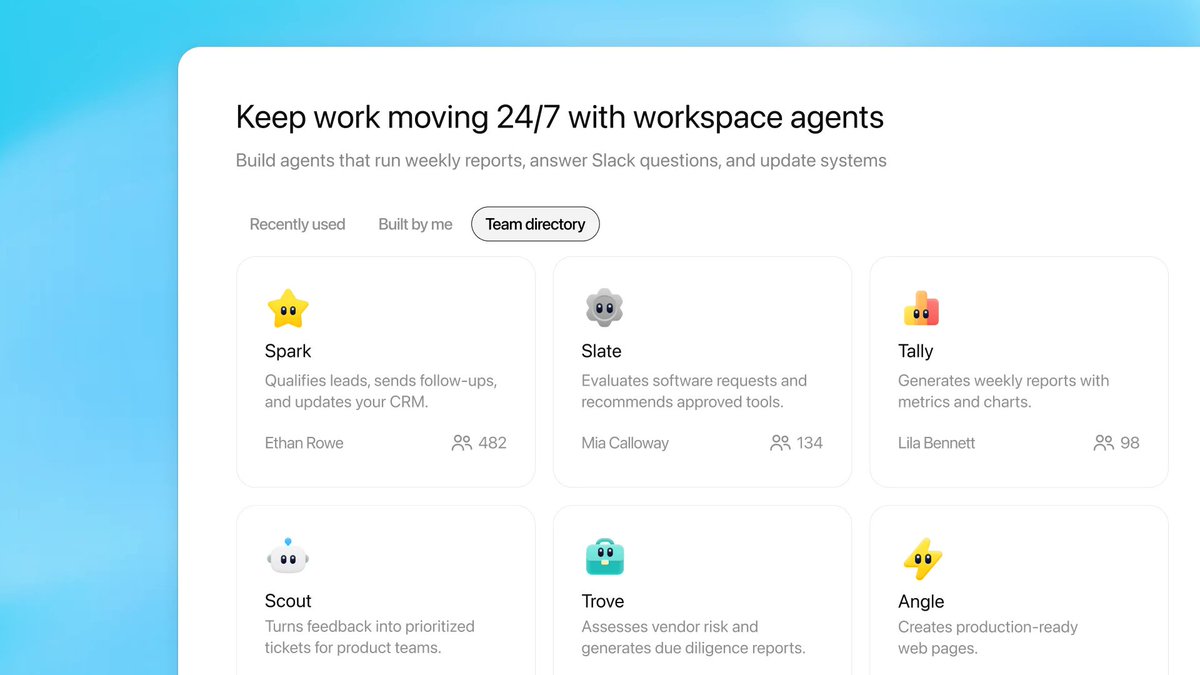
One person describes the job. The whole org runs the agent.
OpenAI launched shareable ChatGPT workspace agents on April 22, 2026, letting teams describe a job in plain language and deploy reusable agents for tasks like lead qualification, vendor research, and report pulling.
Before, automating a workflow meant rebuilding it every time or keeping it siloed with whoever set it up. Now one person describes the job once, ChatGPT builds the agent with your team's best practices baked in, and the whole org can run it.
When your team needs vendor research done, you run the shared agent instead of rebuilding the process from scratch each time.
Source: https://t.co/LvHYfl5so0
Get the full weekly briefing at https://t.co/ueZu5V48BM — just the tools you use, every Friday.
Build an agent once, then share it across teams.
Describe the job, and ChatGPT helps turn it into a working agent that can use your team’s best practices.
Use agents for tasks like qualifying leads, routing feedback, reviewing requests, pulling reports, or researching vendors.
Free AI access for doctors. The hospital bill stays the same, though.
OpenAI made ChatGPT for Clinicians free for verified U.S. physicians, nurse practitioners, and pharmacists on April 22, 2026, covering clinical care, documentation, and research.
Before: clinicians paid the same subscription fees as everyone else. Now: verified U.S. physicians, nurse practitioners, and pharmacists get full access at no cost, removing the price barrier for clinical documentation and research workflows.
You're mid-chart and need to summarize a complex medication history — pull up ChatGPT and draft it without leaving your workflow.
Source: https://t.co/mroSgV7jDi
Get the full weekly briefing at https://t.co/ueZu5V48BM — just the tools you use, every Friday.
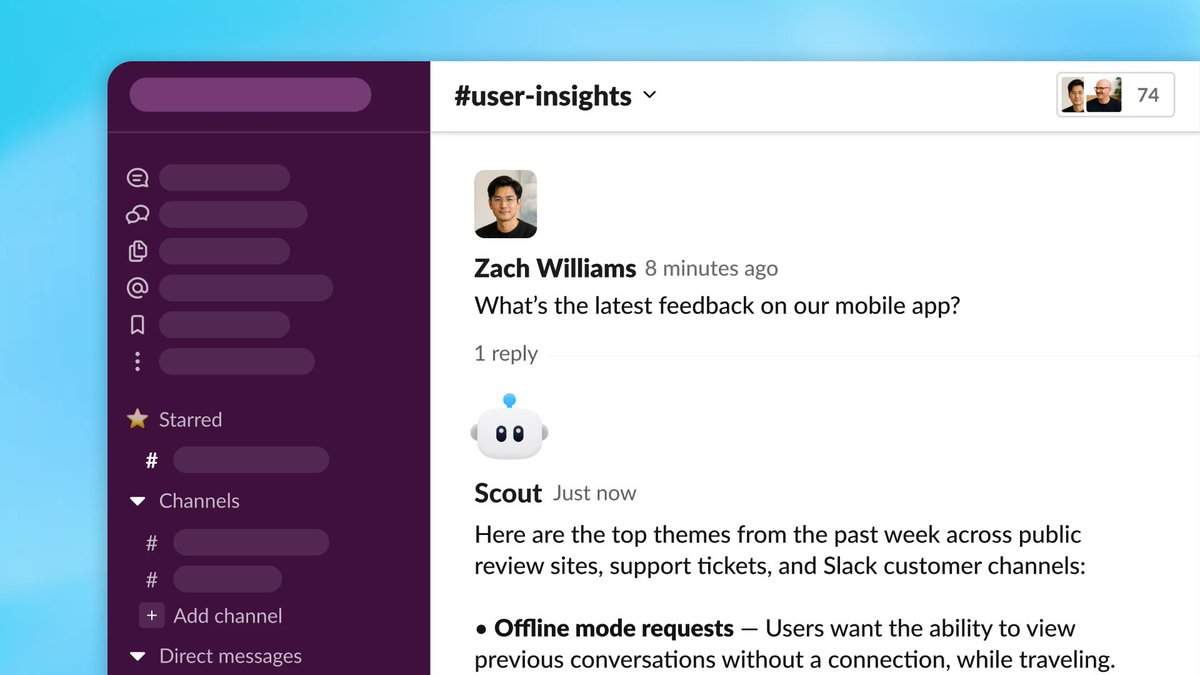
Your agent closed the Slack thread while you were asleep.
OpenAI announced on April 22, 2026 that ChatGPT workspace agents can pull context from docs, email, chats, code, and systems, then take approved actions—like updating Linear issues, creating docs, or sending messages—including autonomously in the ...
Before, AI assistance stopped when you stopped prompting. Now an agent can jump into a Slack thread, resolve the issue, update the linked Linear ticket, and keep running scheduled tasks while you're asleep. You delegate the work; the agent handles the thread-to-ticket loop.
You drop a Slack thread on the agent before EOD; it resolves the issue, updates the ticket, and closes the loop before you're back online.
Source: https://t.co/OyqVMdYv1d
Get the full weekly briefing at https://t.co/ueZu5V48BM — just the tools you use, every Friday.
Workspace agents can work across tools—pulling context from docs, email, chats, code, and systems, and taking approved actions like updating @Linear issues, creating docs, or sending messages.
In @SlackHQ, agents can jump into a thread, understand what’s needed, pull the right context, help resolve the issue, and update the right systems.
They can also keep going in the background or on a schedule, while you’re away.
Your research assistant stopped asking for directions.
Google launched Deep Research and Deep Research Max, the next generation of its autonomous research agents, on April 21, 2026.
Before: autonomous research meant AI-assisted searches with human handholding at each step. Now: Deep Research Max operates as a fully autonomous agent, handling multi-step research end-to-end without babysitting.
You hand it a competitive analysis brief and walk away — it returns with the finished report, no check-ins required.
Source: https://t.co/g1NWsnlOTA
Get the full weekly briefing at https://t.co/ueZu5V48BM — just the tools you use, every Friday.
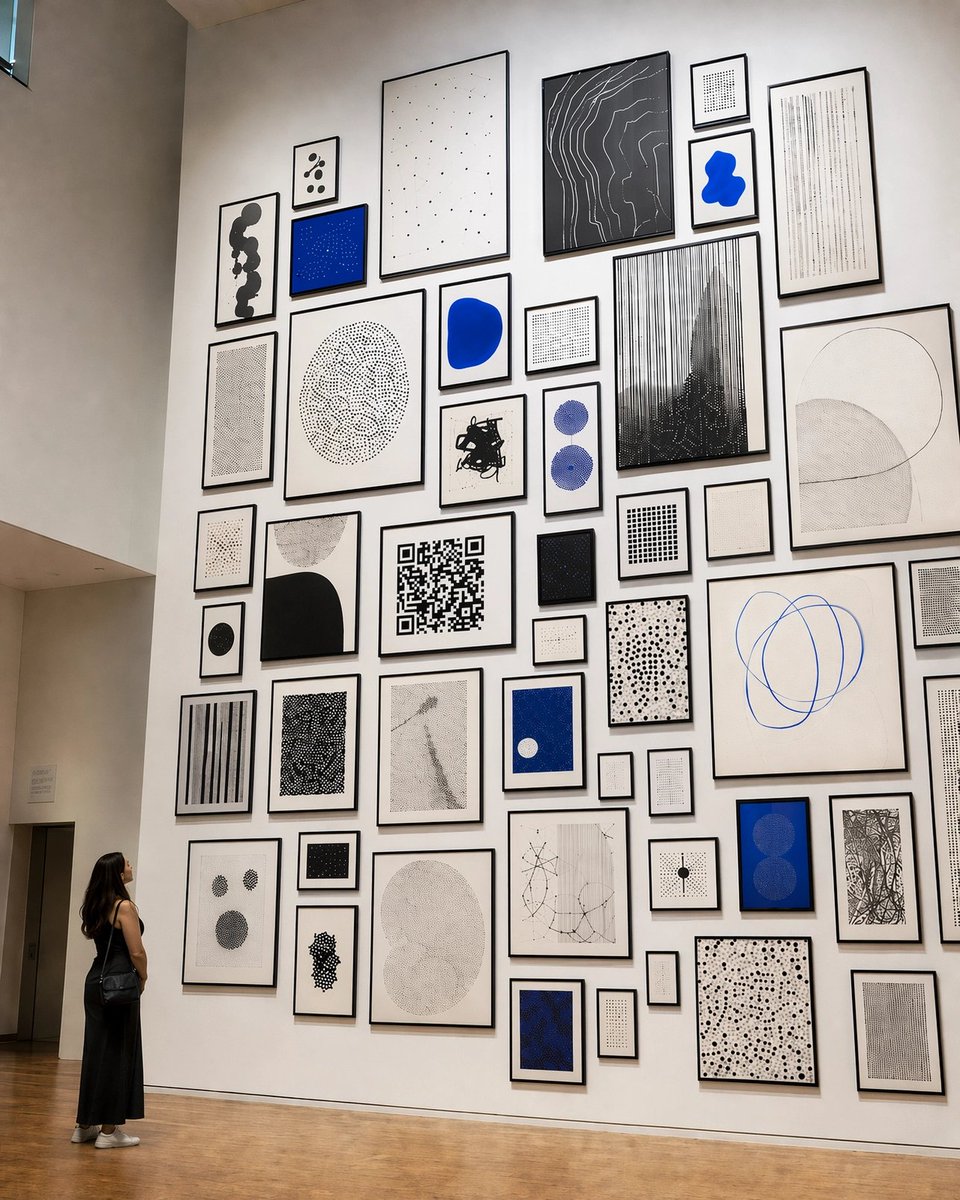
Your image prompt just grew a brain and a search engine.
ChatGPT Images 2.0 launched on April 21, 2026 as OpenAI's first image model with thinking capabilities, adding web search, multi-image output, self-checking, and functional QR code generation when a thinking model is active.
Before, image generation was a one-shot prompt with no awareness of current information or self-correction. Now Images 2.0 can pull live web data, generate multiple distinct variations, verify its own output for accuracy, and produce working QR codes — all within a single prompt workflow.
You're mocking up a product launch flyer — paste in your URL and the model drops a working QR code straight into the finished image.
Source: https://t.co/ToLOLhjSdj
Get the full weekly briefing at https://t.co/ueZu5V48BM — just the tools you use, every Friday.
A Visual Thought Partner
ChatGPT Images 2.0 is our first image model with thinking capabilities.
When a thinking model is selected in ChatGPT, Images 2.0 can search the web for real-time information, create multiple distinct images from one prompt, double-check its own outputs, and even create functional QR codes.
This allows it to take on more of the heavy lifting between idea and image, especially when accuracy, up-to-date information, consistency, and visual cohesion matter most.
You can now watch ChatGPT think. In real time. While it answers.
OpenAI teased a ChatGPT capability on April 21, 2026, showing the model thinking, generating, and livestreaming simultaneously in real time.
Before, ChatGPT produced outputs after processing was complete — you waited for the answer. Now, thinking, generation, and live output appear to stream concurrently, collapsing the gap between model reasoning and visible response.
You watch the reasoning unfold as you type your last word — the answer is already half-built before you finish asking.
Source: https://t.co/3ruw2QCmy5
Get the full weekly briefing at https://t.co/ueZu5V48BM — just the tools you use, every Friday.
ChatGPT is watching now. Not reviewing. Watching.
OpenAI demonstrated live video understanding in ChatGPT on April 21, 2026, showing the model perceiving and reasoning about real-world scenes in real time.
Before, ChatGPT could analyze static images you uploaded. Now it can watch and reason about live video as it happens — turning it from a photo analyzer into an active visual observer.
You're debugging a hardware setup and hold your phone up — ChatGPT watches the live feed and tells you what's wrong before you type a word.
Source: https://t.co/alBB7zYkbz
Get the full weekly briefing at https://t.co/ueZu5V48BM — just the tools you use, every Friday.
Cowork is no longer a VIP lounge. Everyone's in.
Claude Cowork is now available on all paid Claude plans as of April 20, 2026 — accessible via the updated Claude app.
Before: Cowork was limited to select users or plans. Now: every paid subscriber can open the Claude app and collaborate inside Cowork immediately.
Your team needs to align on a draft — open Cowork in the Claude app and work through it together, live, without switching tools.
Source: https://t.co/BAl2eNGdTJ
Get the full weekly briefing at https://t.co/ueZu5V48BM — just the tools you use, every Friday.