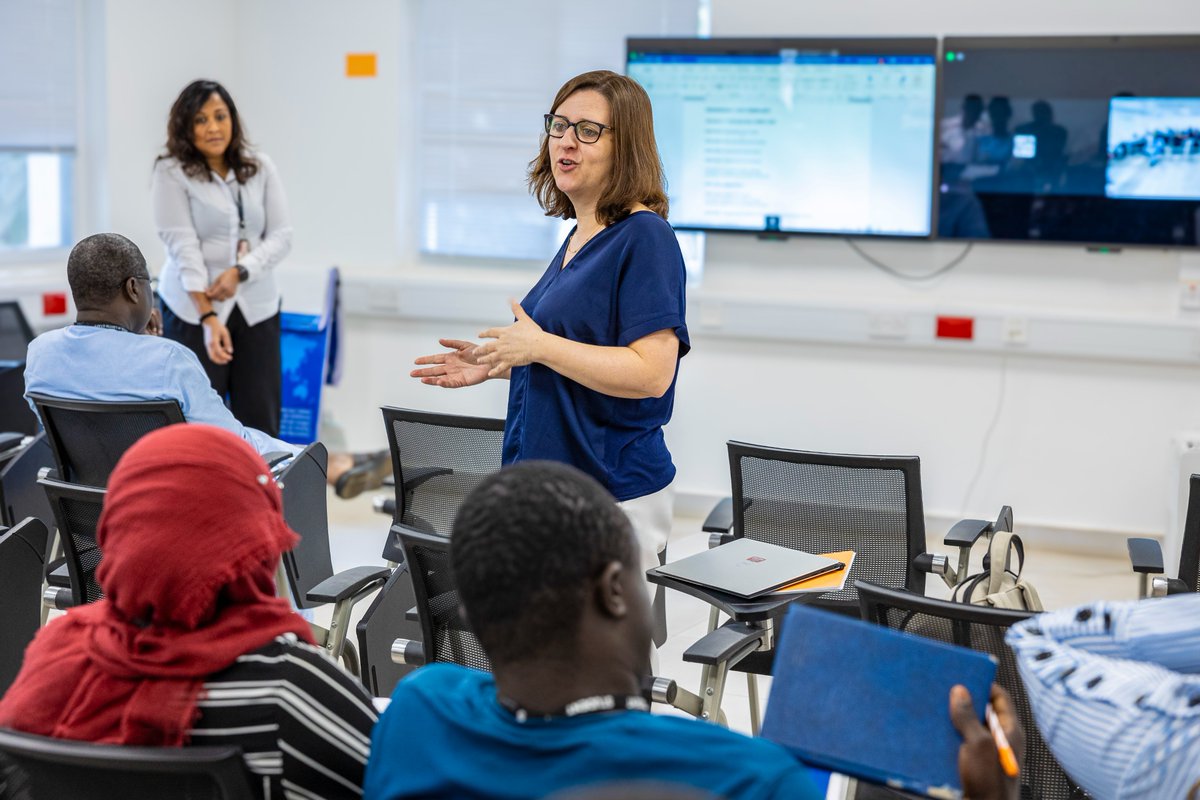
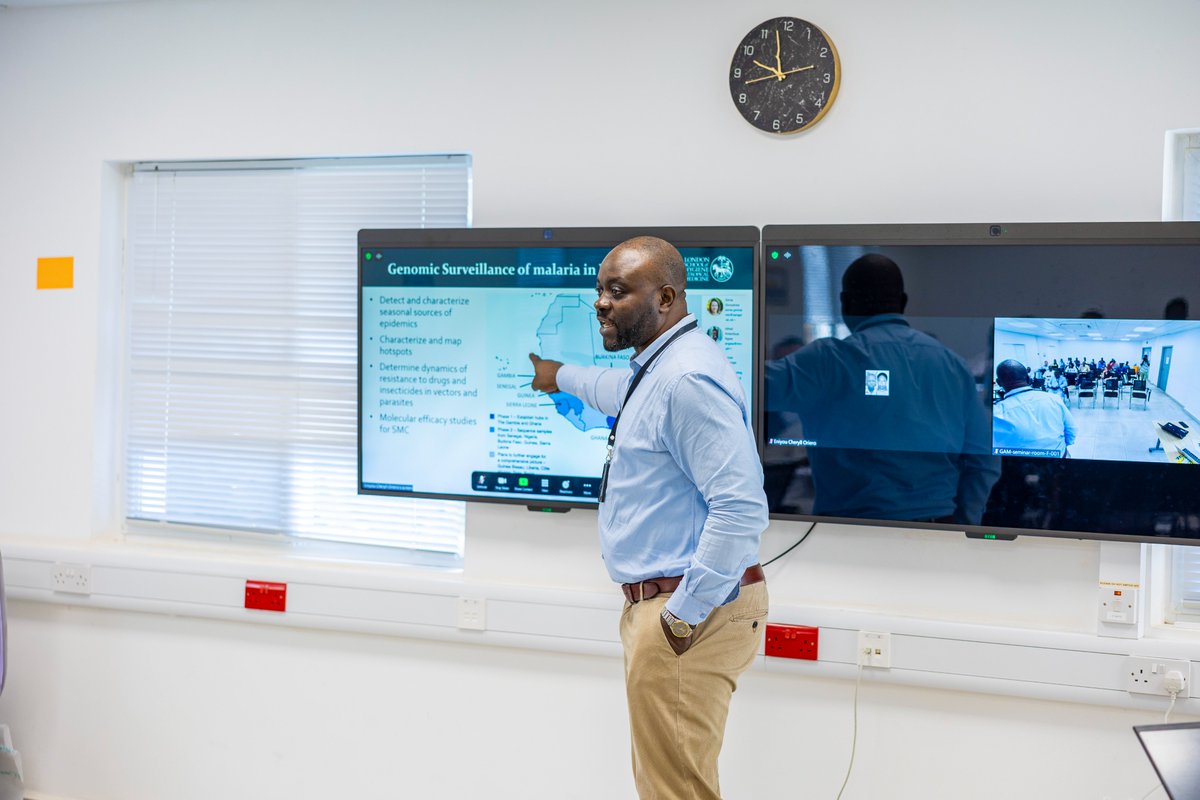
This week, we are hosting the Genomic Surveillance of #Malaria (GSM) project meeting.
The meeting brings together project partners from the UK and #WestAfrica including The #Gambia#Ghana#Guinea#Nigeria#Senegal and #BurkinaFaso to review project priorities and progress.
The Genomic Epidemiology of Malaria (GEM) conference returns this year! #GEM24
GEM provides a forum to discuss the latest on the genomic epidemiology of the malaria host, vector & parasite to inform malaria control.
More on the @eventsWCS website ⬇️
https://t.co/2JccXDjpb3
@JHMRImalaria@JohnsHopkinsSPH invites applications for two full-time, tenure-track faculty positions. Seeking candidates using ‘omics’ technologies and systems biology approaches in their studies of the pathogen, host, or vector are encouraged. INFO: https://t.co/YHeNZByWG7
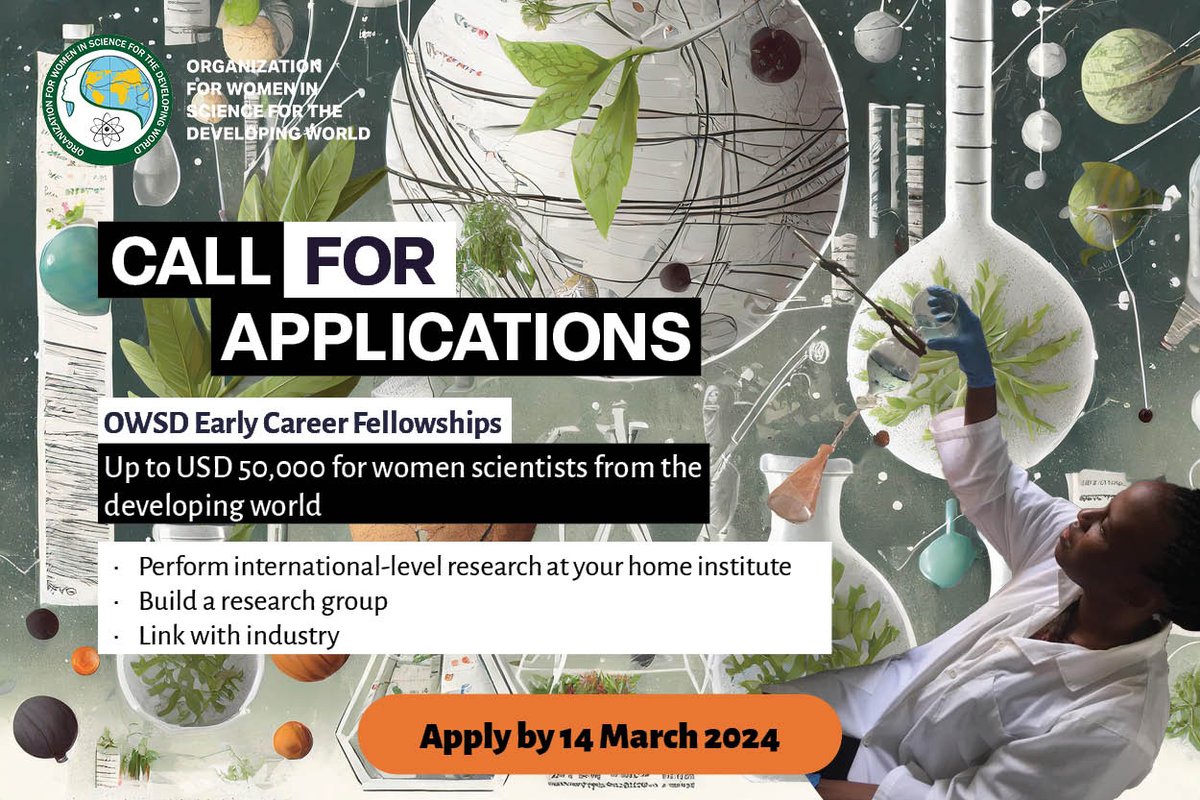
📢 The Call for Applications for our 2024 Early Career Fellowships is now OPEN! If you're a woman scientist in a developing country, don't miss this opportunity for funding that lets you do your own research, without leaving home. All info @ https://t.co/ltsjopjgNl
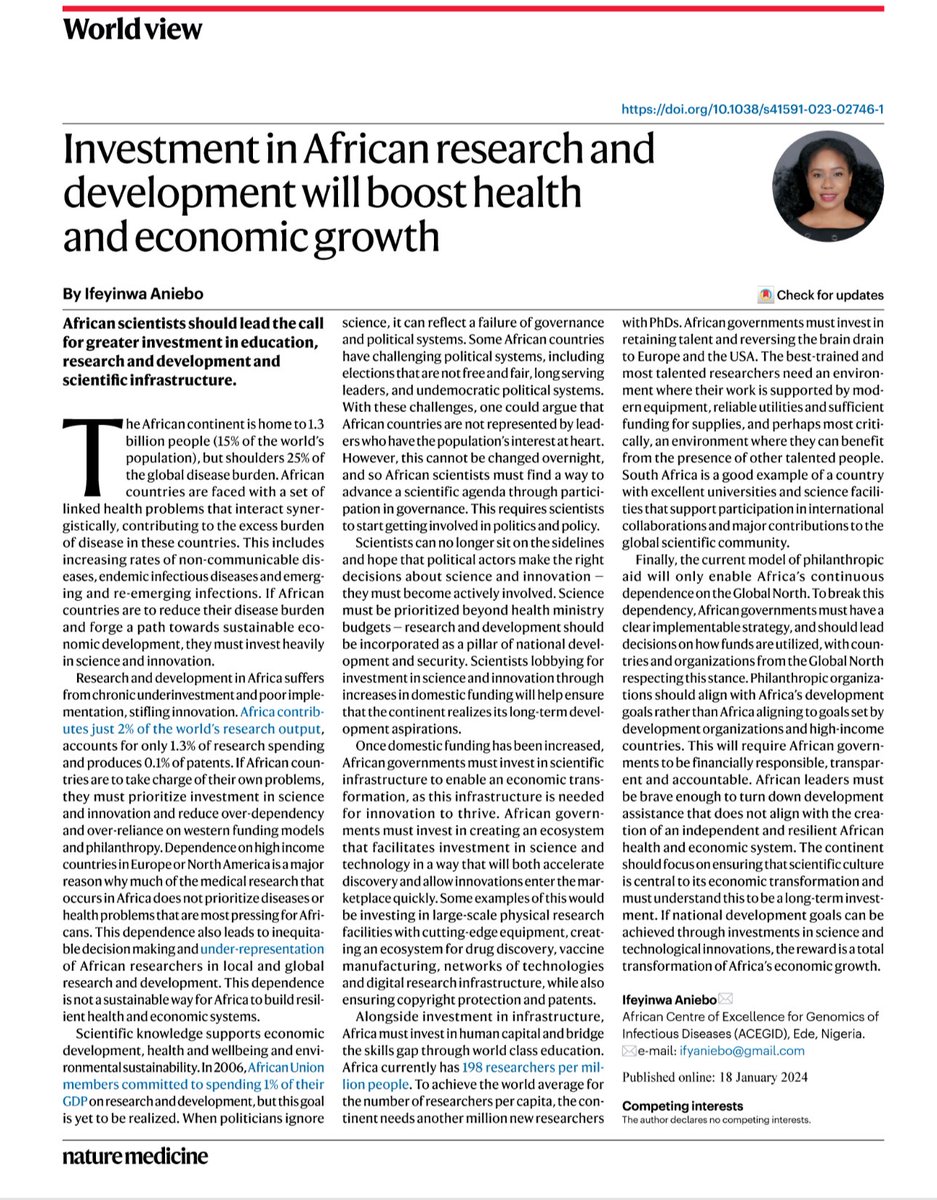
Here’s my latest publication on @NatureMedicine highlighting the need for Investment in African research and development to boost health and economic growth on the continent.
#WomenInScience
🚨 @institutpasteur Massive Open Online Course (MOOC) on Neglected Tropical Diseases 🚨
- 30 Jan - 3 Apr, 2024
- In English, completely FREE, 9 weeks (~3 h 30 m per week)
- Registration open until 26 March '24
- All details & registration available at https://t.co/jy409Dzwkz
we are leading @BIOSCAN_UK to study arthropod diversity across space (UK) and time (monthly samples for 5 years). so far, we have 60k (of our 1 million ambition) single specimens on @sangerinstitute campus with DNA barcodes. the project also has great promise to contribute to..
A global partnership between research institutes in malaria-endemic countries and @sangerinstitute's Genomic Surveillance Unit are seeking to transform how - and crucially, where - infectious diseases are monitored worldwide 🧬🦠🦟🌍👀
Read more: https://t.co/eHZCIaD55L
🎉 Wow! Over 4,000 of you have enrolled on our brand new, and free, online course to boost genomic data analysis skills. And there is still plenty of time to join this group before we go live on Monday 9 October!
📢 Funding opportunity!📢
With support from the @gatesfoundation, we've reopened our procurement grant for lab equipment, specialist reagents, and consumables to support #malaria genomic surveillance projects!🔬
Find out if you are eligible and apply📝https://t.co/Pg0Fx2vrXE
📢The "Women In Malaria" Research Topic, in @FrontiersIn in Malaria, is open for submissions
If you are a female scientist working in malaria and wants to be part of this pioneer initiative, follow this link to submit your work
https://t.co/gH26K5HwI8
🗓️Deadline 13/11/23
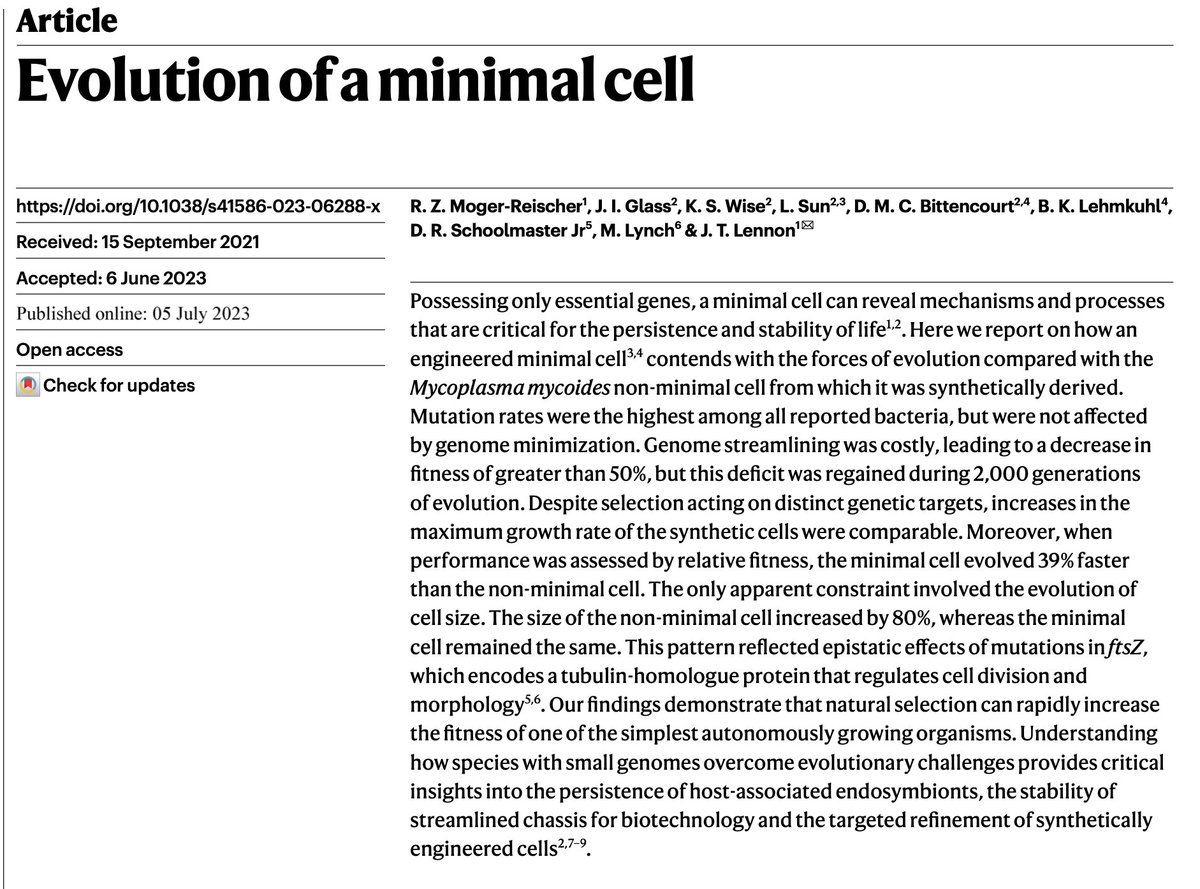
A mind-blowing paper has come out today in @Nature
In 2016, JC Venter Institute scientists trimmed a bacterial genome to its barest minimum required for life to synthesize what they called a "minimal genome" (https://t.co/Rk8oZJ0bUj).
Today, a group of scientists from Indiana University reports how that minimal genome evolved over 2000 generations in comparison to the non-minimal genome.
The authors found that even when you reduce a bacterial genome to its absolute minimum where every nucleotide matters, the genome undergoes mutational events generation after generation as much as the non-minimal genome. One simply cannot stop the evolution.
Just over 300 days of evolution (equivalent to 40,000 years in humans) the minimal cell has gained everything it lacked in fitness on day one in comparison to the non-minimal cell.
When comparing the evolved traits between the minimal and non-minimal cells, the scientists found something striking. The evolutionary process increased the cell size of non-minimal cells but not that of the minimal cell. But that is not the striking part.
The scientists were able to identify the key mutation that resulted in cell size evolution. And it turned out that the mutation that helped the non-minimal cells to grow bigger is the same that helped the minimal cells to stay smaller. Growing bigger had a survival advantage for non-minimal cells and not growing bigger had a survival advantage for minimal cells. So, the mutation had a context-dependent effect. This just demonstrates that the evolutionary effects on traits have no absolute direction. All that matter is what is beneficial for the organism's survival.
The conclusion of the paper is metaphorically a quote from the Jurassic Park movie:
“Listen, if there’s one thing the history of evolution has taught us is that life will not be contained. Life breaks free. It expands to new territories, and it crashes through barriers painfully, maybe even dangerously, but . . . life finds a way". (https://t.co/UlxRlb86CT)
https://t.co/zA9OAqSoAu
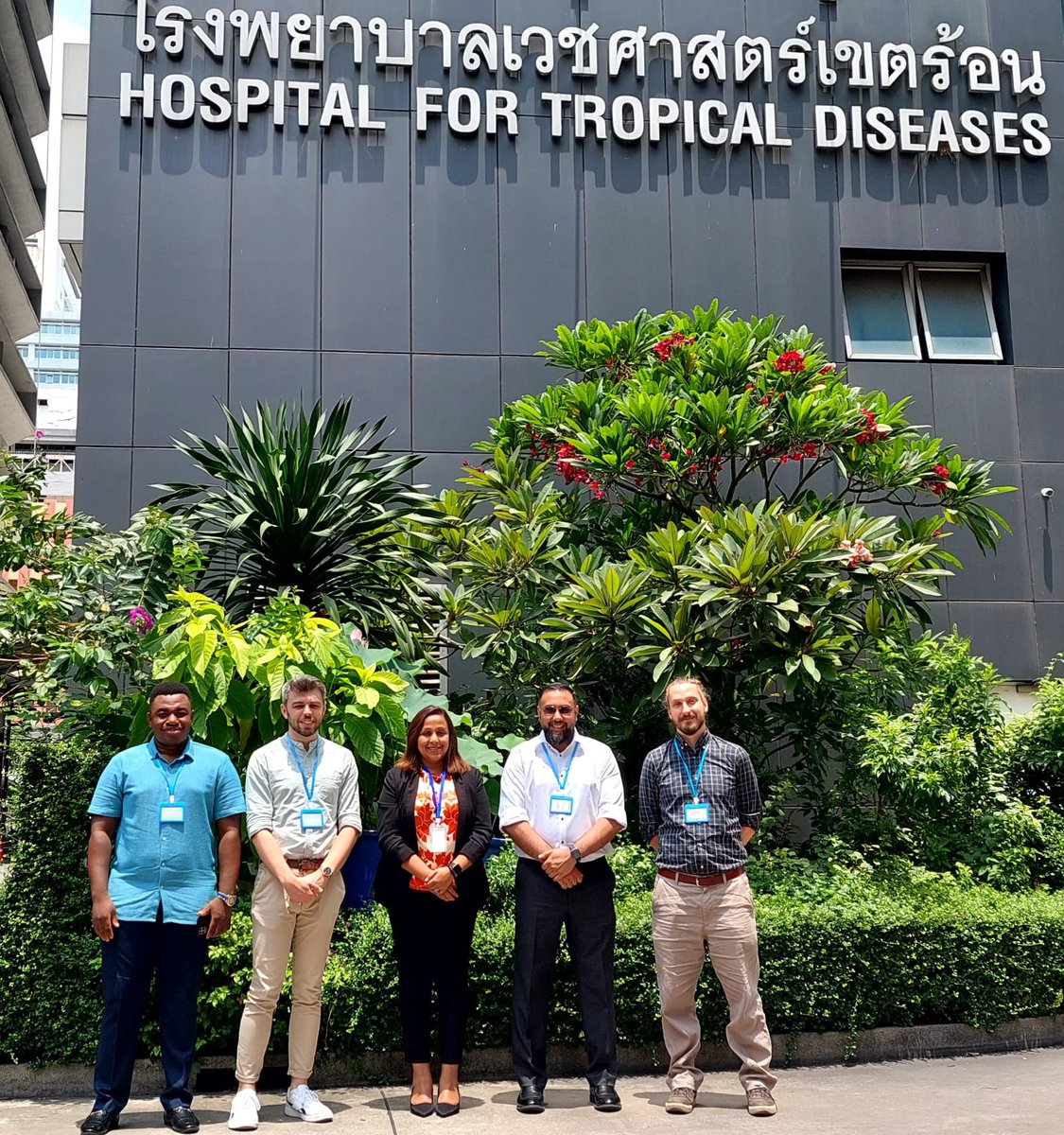
Fantastic work team!! Another great training workshop to support genomic surveillance of malaria in country, focusing on the implementation of the @malariagenomics Amplicon Toolkit to monitor drug resistance in the malaria parasite.
Last week,@Shav_R's team from @sangerinstitute started the Pf amplicon sequencing implementation workshop in @MORUBKK, Bangkok🇹🇭
The hands-on wet lab training helps set up the Pf amplicon sequencing protocol for in-country sequencing & data generation of the #malaria parasite🦠
👩🏾🔬 Are you an #infectiousdiseases researcher based in a low/ lower-middle income country?
The @ISID_org-@ESCMID joint fellowship allows you to travel to Europe for multidisciplinary clinical and laboratory training.
Apply by 15 June: https://t.co/piKVKGPo81
African-led R&D is driving progress against malaria and talented researchers like @Fredros_Inc are leading the charge. In a new @gatesfoundation podcast episode, Dr. Okumu discusses how his research is helping to bring eradication within reach. https://t.co/A4JAdNeF2C
The amazing and humble Rose McGready, asking for funds to continue her work on the Thai-Myanmar border... Any donations apprecaited and will be used to great effect: https://t.co/Yt6WHKjBTe