"The WiFi is slow" is almost never the WiFi.
9 times out of 10 it's: one cheap router covering too much space, a channel fighting your neighbors, or a 10-year-old switch quietly bottlenecking everything.
Coverage and speed are different problems. Most setups solve neither.
The better approach is running everything through UniFi Protect with proper PoE switching from the start.
One system. Reliable feeds. Centralized recording.
If you're building or renovating a custom home here, this is one of the integrations that makes the biggest difference long-term.
How are you currently handling cameras and networking on your projects?
More often than not, when I get called to work on a custom home I see the same problem.
The network and the security cameras were installed as two separate systems.
This creates constant headaches like:
• Cameras dropping when the Wi-Fi gets congested
• No unified recording or playback
• Painful troubleshooting when something fails (I hate Hikvision)
@MactelecomN Would love to know if there is any API access or ability to have third party devices call for video switching between endpoints? Basically recallable presets. (i.e. setup with 2 TX EAV devices and 1 RX EAV device)
The best part: I pulled the FCC internal photos from 2001 to confirm it's not rolling-code. Found a Zilog Z86E04 MCU with no external EEPROM — physically can't track a rolling counter. 25-year-old hardware, modern smart home integration for the win.
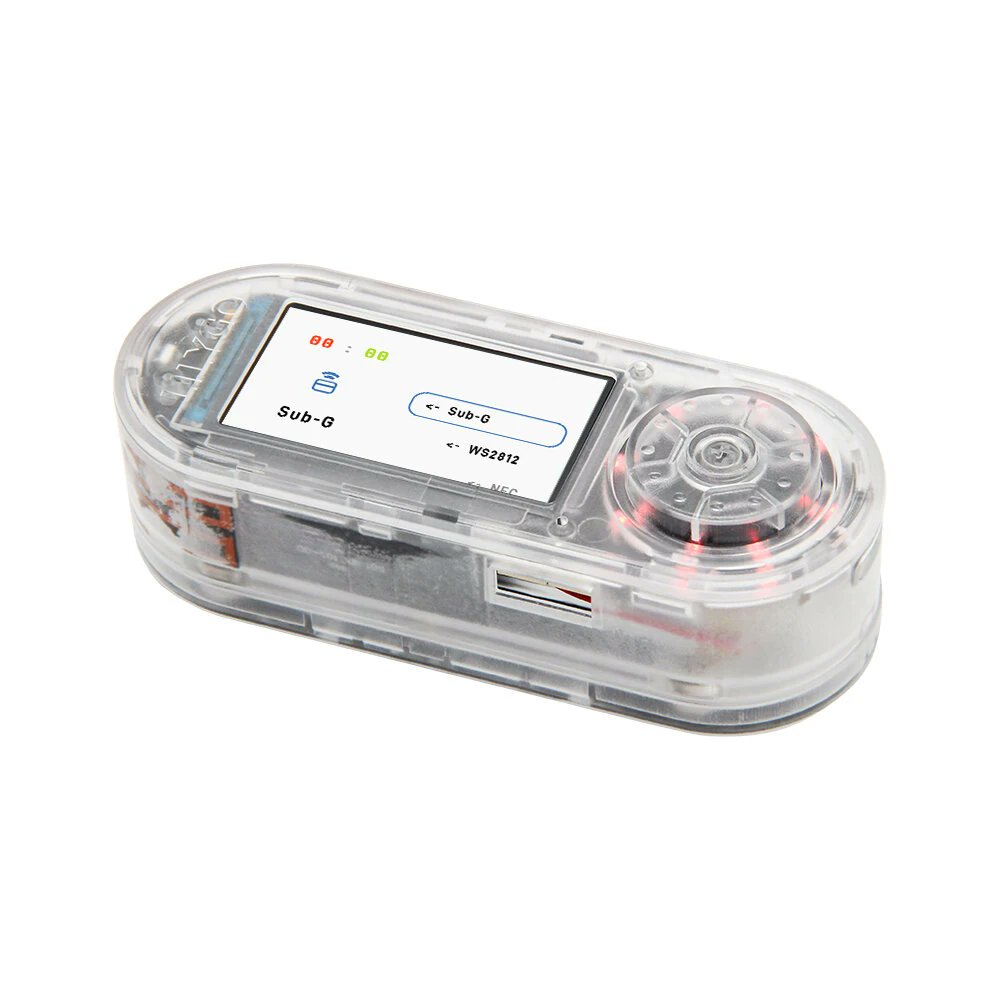
I am more excited than I should be, to be using the newest release of @home_assistant to be building a custom RF integration for a Emerson ceiling fan from the early 2000's. All you ultimately need is a middle-man device like this ESPHome Lillygo device flashed with custom firmware.
Architecture: Using my Flipper Zero to capture the 8 button codes once. A LilyGo T-Embed CC1101 sits on USB-C as the permanent transmitter. Custom HA integration uses the new radio_frequency entity platform (HA 2026.5) to route commands and expose fan, light, and preset-mode buttons natively.
@SnazzyLabs I’m in the same exact situation as you. Bought in 2017, refinanced in 2020. Outgrew the house, can’t afford to sell it and buy another place to pay 5% more in interest. Somehow the whole market is stuck. My only option was to become an accidental landlord.
@Jason Would Tesla really want the logistical administrative headache of getting rid of the manual driving part of the Uber business? They want all automation, less humans the better. I don’t see them wanting this at all.
Just checked out the new UniFi Protect NVR G2 Pro for a client — this is what enterprise-grade security infrastructure looks like.
2U form factor. 8 HDD bays. AI-powered analytics. Supports up to 50 4K cameras in a single rack unit.
For integrators who actually care about reliability: this is the future.
#integrator #security #networking #infrastructure
https://t.co/2WXQujMIJK
Explore UniFi Protect 7.1 and the latest Physical Security updates:
🔹 Expanded ONVIF support
🔹 Multi-Site Custom Video Walls
🔹 PTZ Vehicle Tracking
🔹 Next-gen UNVRs
🔹 And much more
https://t.co/2CilEs0CYz
Access control looks simple until it breaks in subtle ways.
Your card reader gets compromised and nobody notices for weeks. Your door lock loses power and defaults to... locked? Unlocked? Nobody decided upfront so it's random.
Before you buy anything, sit down and ask the hard questions. What happens when power fails? Can I actually audit this system's API or is it a black box?
Most projects get this wrong because nobody asked.
Walk into any equipment closet and you'll find a heat trap.
Switches stacked with no breathing room. Cables draped over everything like a blanket. AC vent pointing the wrong way. The gear inside is running 20 degrees hotter than it should.
Then at year 3 something dies and you're shocked.
It takes maybe 4 extra hours to do it right—proper rack, front-to-back airflow, cables below the equipment. Saves you from the $8K emergency call.
Elon Musk says one heat shield problem could kill Starship's reusability for years.
Starship is the most complicated machine humans have ever built.
The hardest part isn't the engines.
It isn't the steel.
It isn't even the explosion margin on liftoff.
Musk named the one remaining bottleneck.
"It's having the heat shield be reusable. No one's ever made a reusable orbital heat shield."
The shield does two impossible jobs.
"It's gotta make it through the ascent phase without shucking a bunch of tiles, and then it's gotta come back in and also not lose a bunch of tiles or overheat the main airframe."
40,000 tiles per ship.
Musk reframed the consumable problem through brake pads:
"Your brake pads in your car are also consumable, but they last a very long time."
The shield must consume slowly.
It must not require inspection between launches.
Musk on the current state:
"We have brought the ship back and had it do a soft landing in the ocean. But it lost a lot of tiles."
A soft landing is not reusability.
The bar is daily launches. One ship. Many flights.
Musk, on the gap that's left:
"You can't do this laborious inspection of 40,000 tiles type of thing."
The first reusable heat shield in history is the last gate to Mars.
If you're new here, @GeniusGTX is a gallery for the greatest minds in economics, psychology, and history. Follow along for more similar content.
— Elon Musk ( @elonmusk ), CEO of Tesla and SpaceX, on Dwarkesh Patel's ( @dwarkesh_sp ) podcast
You ever promise a client "everything will talk to everything"? Then Zigbee doesn't play nice with Z-Wave, WiFi does its own thing, and suddenly you're managing four separate apps.
Pick one protocol first. Seriously. Most of the time it's Zigbee. Then if you need to bridge different worlds, Home Assistant handles that without forcing them all together.
Spend 15 minutes deciding now. It saves months of "why isn't this working?"