The brain doesn’t always say “NO.” Sometimes it says: “yes, but carefully.”
New in Science Advances: a PL→aNAcC pathway helps learned threat restrain reward pursuit.
Less a fear switch, more a regulator of caution.
Proudly done at UNAM, Mexico.
https://t.co/l7WVG3JraB
The brain doesn’t always say “NO.” Sometimes it says: “yes, but carefully.”
New in Science Advances: a PL→aNAcC pathway helps learned threat restrain reward pursuit.
Less a fear switch, more a regulator of caution.
Proudly done at UNAM, Mexico.
https://t.co/l7WVG3JraB
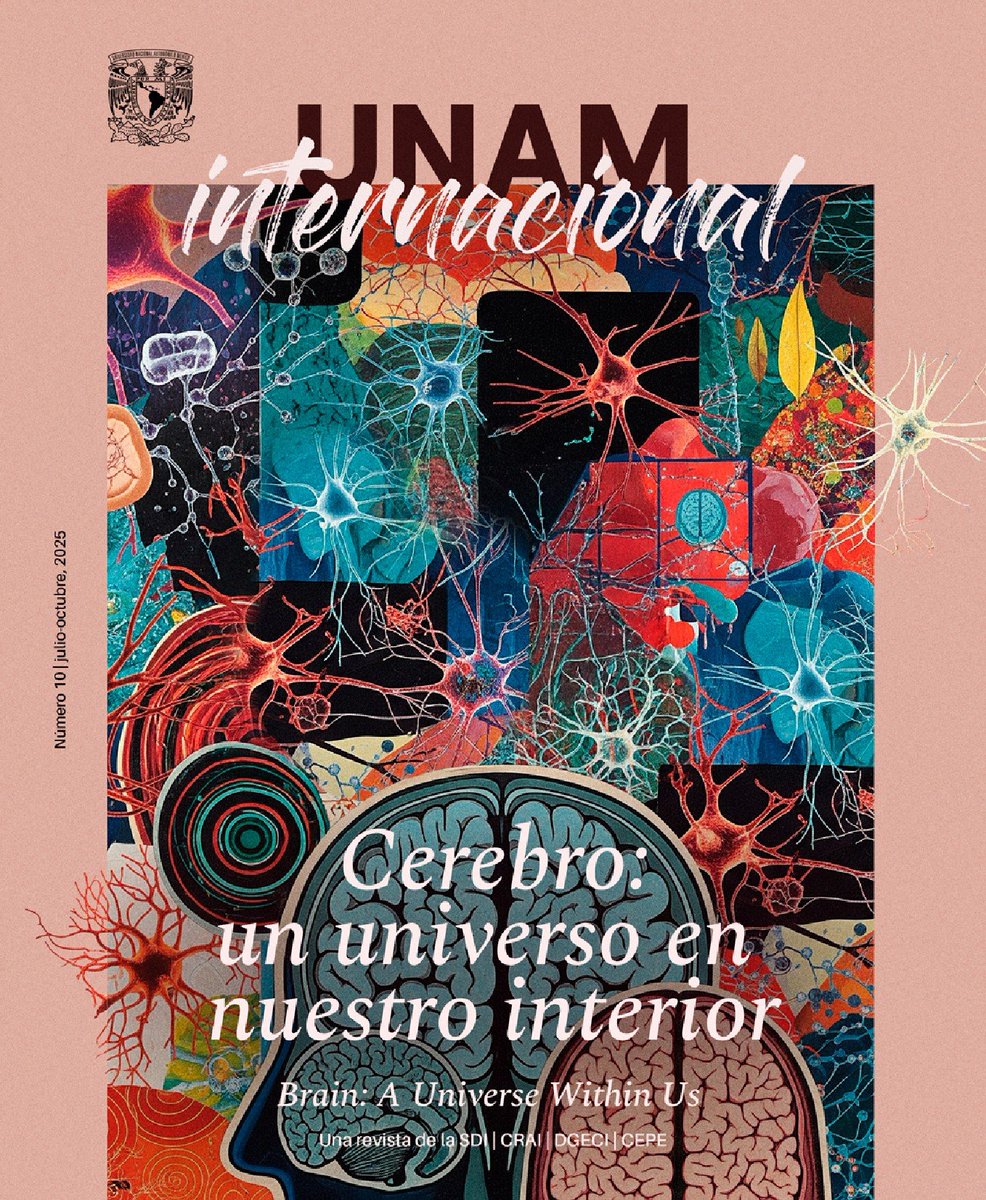
🧠 Cerebro: un universo en nuestro interior
Ya está disponible el décimo número de la revista UNAM Internacional, editada por la Dirección General de Cooperación e Internacionalización.
Léela aquí 👉 https://t.co/XwupVkKE8q
#UNAMInternacional#Cerebro#Investigación
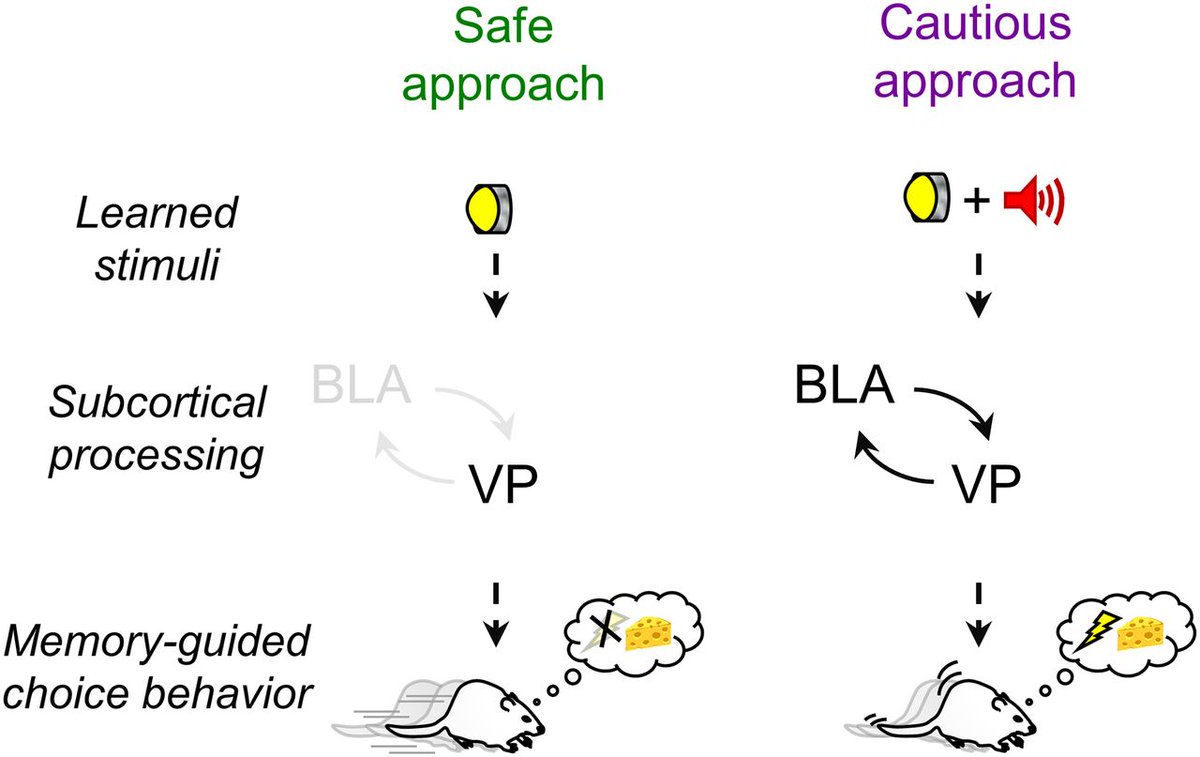
#JNeurosci: Findings from Hernández-Jaramillo et al. reveal the critical role of the pallidal-amygdalar connection in controlling cautious approach behaviors influenced by past experiences in rats. @So3Lab@UNAM_MX
https://t.co/sU66RFazSZ
Ever face a tough motivational choice?🧀 vs ⚠️. Our research on rats suggests the amygdala and ventral pallidum team up to help us decide! #braindecisions
https://t.co/0nlR1u8aIB
Excited to share our latest preprint showing that ventral pallidum and amygdala cooperate to restrain risky reward choice behaviors during conflict 🧠😱😋🎌https://t.co/blXjuSr0ca
Counting down the days to go to #IBNS2024 to talk about avoidance behavior and neural circuits with @DrDiehl_neuro@CBravoRivera and Guillermo Aquino-Miranda 🤩
Online now in @NeuroCellPress !
A tale of two neurotransmitters (glutamate and dopamine). We show how VTA glutamate projections to NAc paradoxically promote reward and aversion. What we found may surprise you!
https://t.co/jPNIInbCgf
El hecho de que hasta para la ciencia sea un misterio qué es y cómo funciona el miedo nos resulta aterrador. 👻 Por eso, Sotres Bayón y su equipo del @IFC_UNAM indagan la controlabilidad, para "no ser esclavos de nuestras respuestas reactivas al miedo".
https://t.co/gDgW3yD5by
I am thrilled to see my postdoctoral work finally published in @NatureNeuro ! (free access here: https://t.co/Myl2RGGaNv). We used in vivo ephys and a new behavioral paradigm to elucidate what the PFC represents when mice face danger. These are the main findings of our work: 🧵
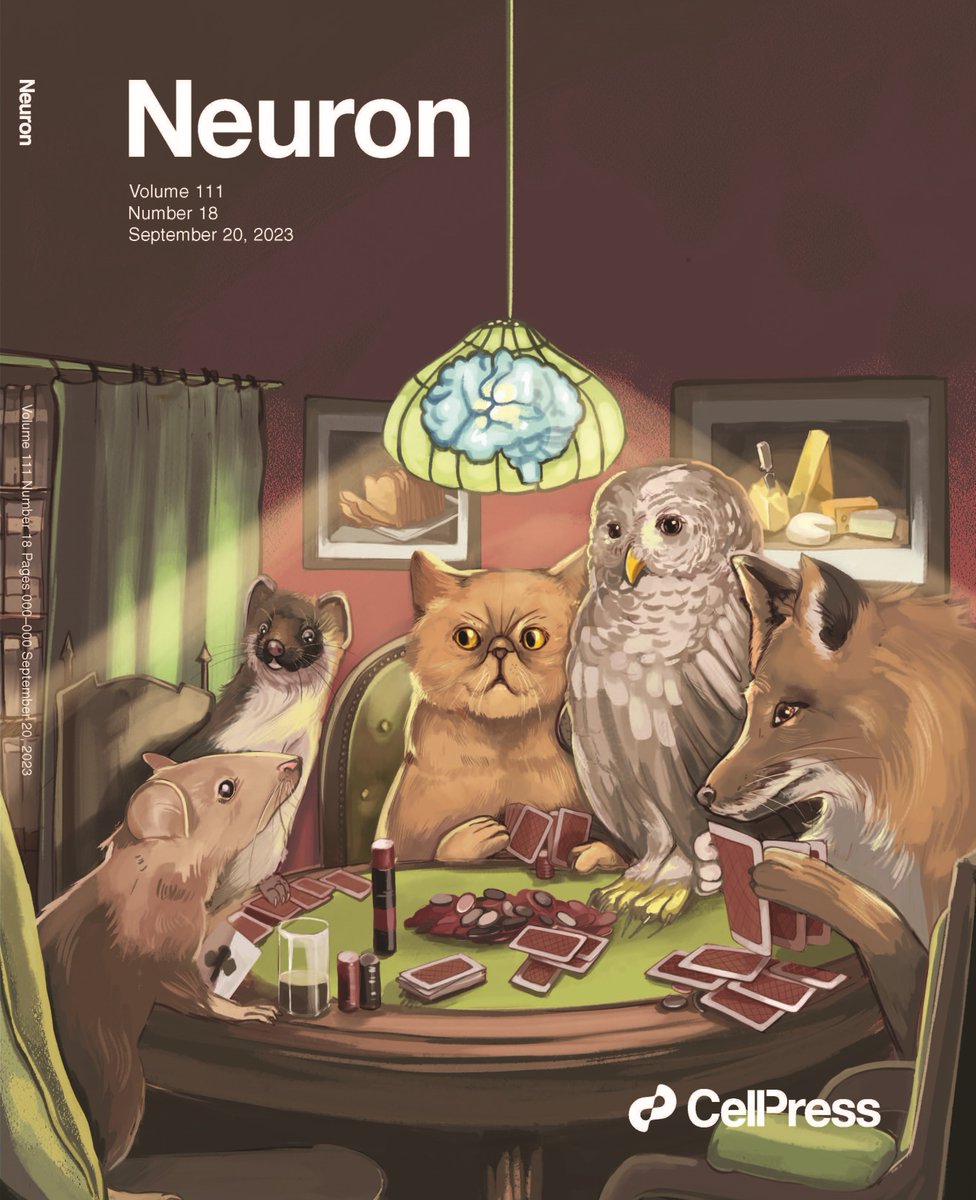
Check out latest issue https://t.co/ImgPc6z4Dp
The cover illustrates de Araujo Salgado & coll.'s study examining the behaviors used by animals seeking food under predation threat.
Artwork by Erina He @NIHMedicalArts
Paper is here: https://t.co/3Vo3wNmgmY
Choice information in the rat orbitofrontal cortex (#OFC) is relayed to the dorsomedial #striatum (DMS) to lead accurate economic decision-making
New from @KarlDeisseroth and colleagues
https://t.co/yQxUsqpRHS
New Research: Conflict Test Battery for Studying the Act of Facing Threats in Pursuit of Rewards: Survival depends on the ability of animals to avoid threats and approach rewards. Traditionally, these two opposing motivational systems have… https://t.co/eMQOdDoaui #Neuroscience
In a new theory of embodied consciousness, neuroscientists Antonio Damasio & Hanna Damasio propose that feelings are the source of consciousness. W/o them, consciousness is impossible–w/radical implications for the ‘hard problem’ of consciousness & ... AI https://t.co/HKKHbe2KsK
Excited to share our new eLife paper on interactions between the PFC and BLA, showing how rostral and caudal BLA engage different circuits in the prelimbic and infralimbic PFC, all done by my amazing student @KManoocheri:
https://t.co/1axaVMi1OQ