The most celebrated writer living in India, to this day, is English. He lives in a Himalayan hill station like the one he was born in pre-partition. He's 92, and named Ruskin Bond. Doesn't get more English than that, but he's unknown in England. He's a proud Indian.
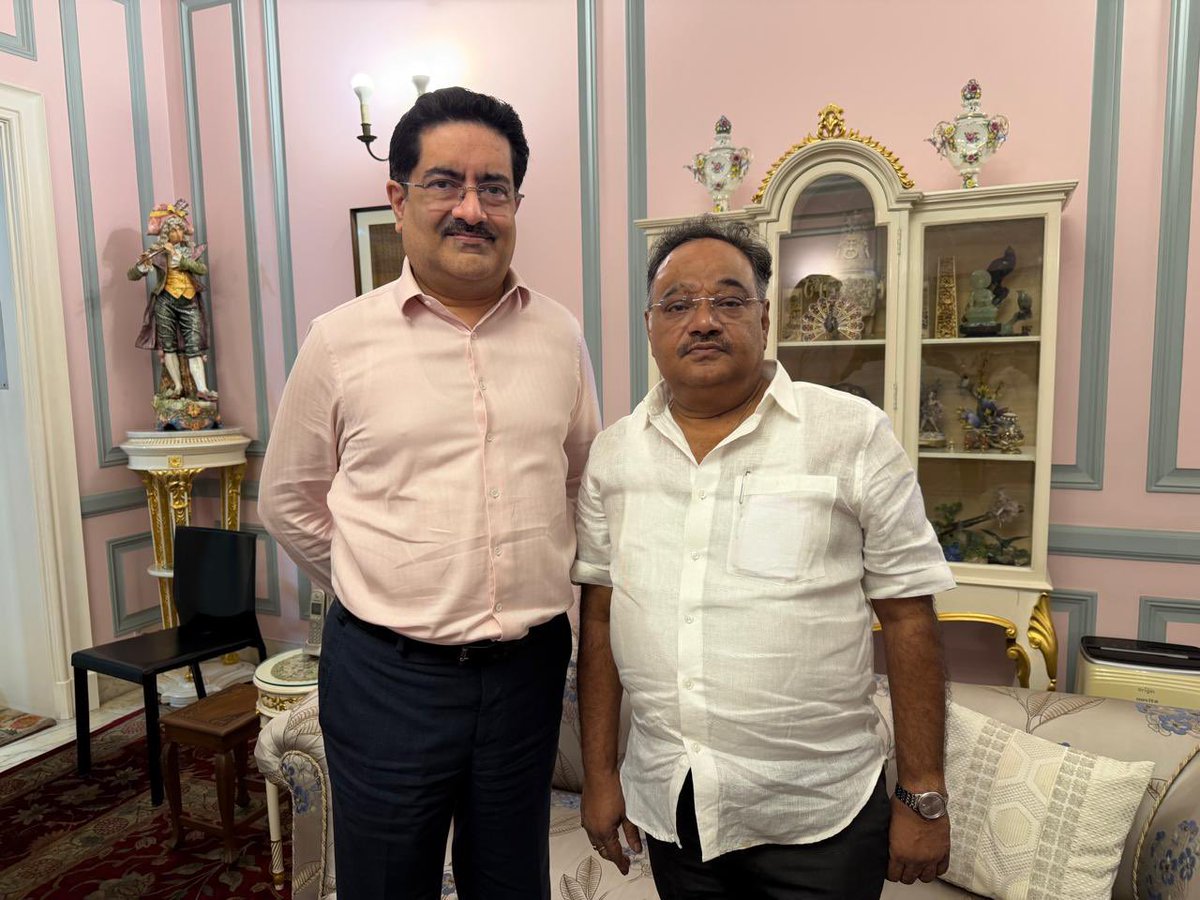
আজ আদিত্য বিড়লা গ্রুপের চেয়ারম্যান শ্রী কুমার মঙ্গলম বিড়লা-র সঙ্গে এক আন্তরিক ও ফলপ্রসূ আলোচনা হয়েছে ।
আলোচনার মূল বিষয় ছিল পশ্চিমবঙ্গের শিল্প সম্ভাবনা, নতুন বিনিয়োগ এবং বিদ্যমান শিল্পের সম্প্রসারণ। রাজ্যের ভৌগোলিক সুবিধা, দক্ষ মানবসম্পদ, বন্দর ও যোগাযোগ পরিকাঠামো এবং উৎপাদনমুখী শিল্পের অনুকূল পরিবেশ নিয়ে বিস্তারিত মতবিনিময় হয়েছে।
পশ্চিমবঙ্গকে দেশের অন্যতম শিল্প ও কর্মসংস্থানের কেন্দ্র হিসেবে গড়ে তোলার লক্ষ্যে ভবিষ্যতে শিল্পোন্নয়ন ও বিনিয়োগের বিভিন্ন সম্ভাবনা নিয়েও ইতিবাচক আলোচনা আমাদের মধ্যে হয়েছে ।
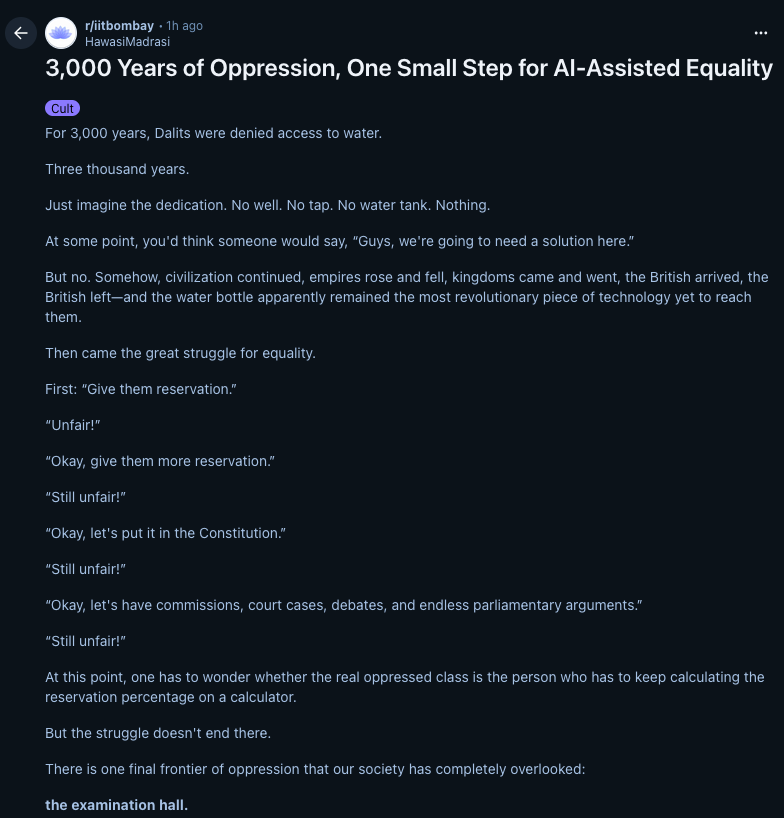
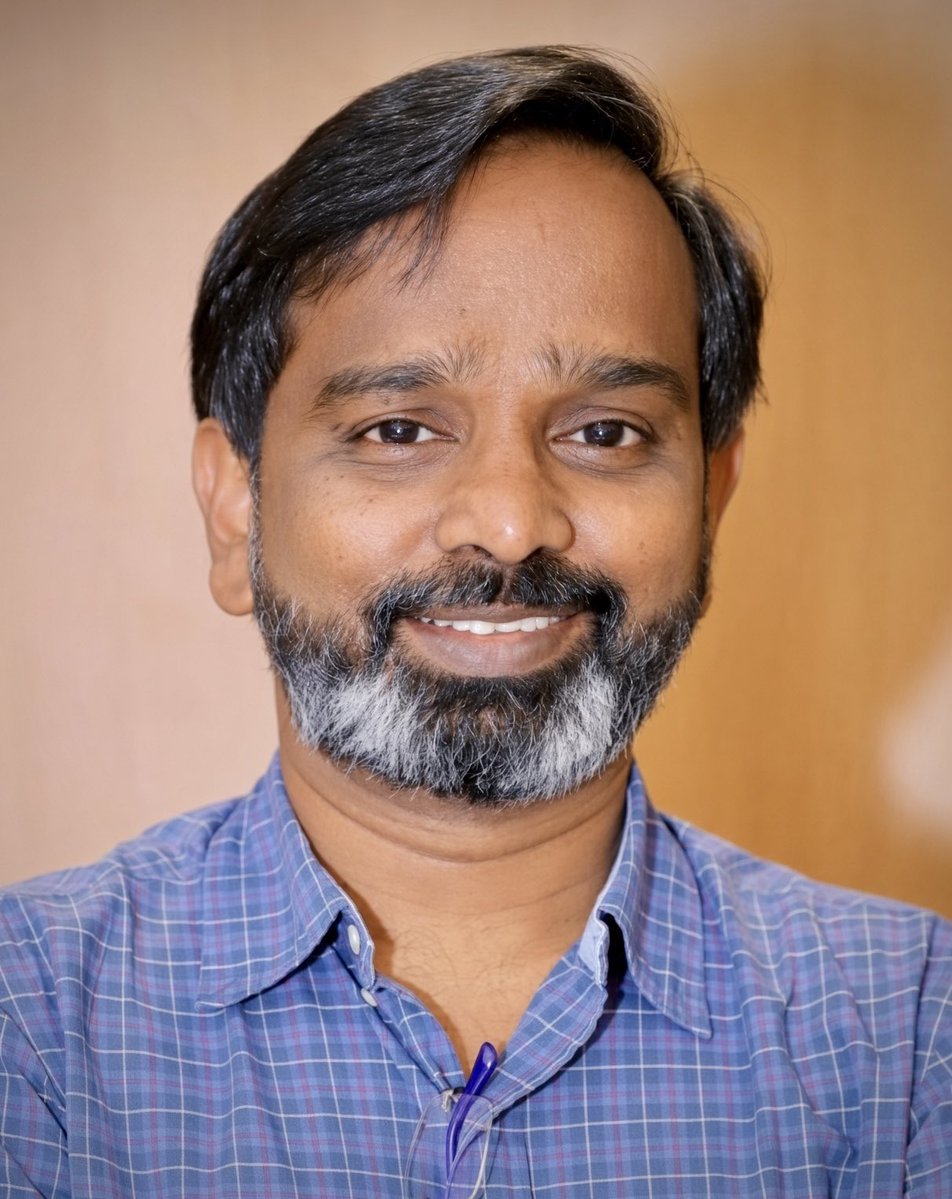
did my https://t.co/zANOEvvHvH at IIT Bombay and my PhD at IIT Delhi. I've been a professor for 14 years now. In 22 years of watching the IIT/IIIT system closely, I have never once witnessed a teacher discriminate against a student on the basis of caste.
During my https://t.co/zANOEvvHvH, most of us had no idea what caste our batchmates belonged to. Many of my close friends were SC/ST. We never discussed it. It never entered any conversation or decision. Not once. Our exposure to the humanities department was limited, though — the term "Brahmanical patriarchy" didn't even exist back then.
As a teacher, I don't ask a student's name before solving their doubt. Often I don't know their name at all — some of my classes have 300+ students. We treat them all the same. So does every colleague I know. So did every professor who taught me.
Social media has now filled vulnerable students' heads with a lot of manufactured grievance about caste discrimination that, in my experience, doesn't exist.
Top 50 brightest PCs (by mean nightlight intensity) in India as of 2025 :
1. KOLKATA UTTAR
2. BANGALORE SOUTH
3. MUMBAI SOUTH
4. MUMBAI NORTH-CENTRAL
5. CHANDNI CHOWK
6. HYDERABAD
7. NEW DELHI
8. MUMBAI SOUTH-CENTRAL
9. CHENNAI CENTRAL
10. KOLKATA DAKSHIN
11. MUMBAI NORTH-WEST
12. SECUNDERABAD
13. EAST DELHI
14. CHENNAI NORTH
15. BANGALORE CENTRAL
16. LUCKNOW
17. AHMEDABAD WEST(SC)
18. CHANDIGARH
19. KANPUR
20. CHENNAI SOUTH
21. DUM DUM
22. NORTH EAST DELHI
23. MUMBAI NORTH-EAST
24. THANE
25. PUNE
26. WEST DELHI
27. BANGALORE NORTH
28. MUMBAI NORTH
29. SOUTH DELHI
30. NAGPUR
31. KALYAN
32. NORTH WEST DELHI (SC)
33. MALKAGIRI
34. JAIPUR
35. SRIPERUMBUDUR
36. HOWRAH
37. GHAZIABAD
38. VARANASI
39. GAUTAM BUDDHA NAGAR
40. PATNA SAHIB
41. ERNAKULAM
42. DAMAN & DIU
43. BARASAT
44. SURAT
45. GURGAON
46. BARRACKPUR
47. JADAVPUR
48. GANDHINAGAR
49. SREERAMPUR
50. PONDICHERRY
Entire stadium was silent when they announced Golden Ball winner and then everyone starts chanting "MESSI MESSI MESSI"
THIS IS THE WORST WORLD CUP FINAL EVER.
I strongly oppose the charges against Prof. Suryanarayana Doolla of IIT Bombay under the SC/ST (Prevention of Atrocities) Act.
My background: I belong to the Devendra Kula Vellalar (DKV) community, classified as SC. I grew up in deep rural poverty and witnessed the suffering of my people first-hand. I was educated thanks to broad-minded people from many communities.
I studied Electronics at NIT Tiruchirappalli, worked at C-DOT Bengaluru, and then at Intel in India and the US, where I rose to Engineering Director and Senior Silicon Architect, responsible for high-speed interconnects vital to modern CPUs and GPUs. I hold multiple patents in this field.
I share this to make clear that I know what it means to come from an SC community and rise through hard work and commitment.
Our DKV community has taken a principled, voluntary stand not to file SC/ST cases against anyone. We have seen how cases under this Act are weaponised, and how that deepens enmity on the ground.
On that basis, I oppose the misuse of this Act in this case. The case against Prof. Doolla must be withdrawn. This matters for the future of SC/ST students and for our nation.
Jai Hind 🙏
@AmitShah@Dev_Fadnavis
Today is a day I will remember for a long time.
At the ONGC Oilfield in Ashoknagar, North 24 Parganas, I stood and watched oil flow from the soil of Bengal. For the past four years, I have pursued this project relentlessly: raising it in Parliament, following up with the Ministry of Petroleum and Natural Gas, and meeting ONGC officials again and again to ensure that Bengal's resources are finally put to work for Bengal's people.
Today's moment is not just about oil. It is about investment coming to our state, jobs for our local youth, new opportunities for small businesses around Ashoknagar, and a real contribution to India's energy security under the vision of #AatmanirbharBharat.
My heartfelt gratitude to Prime Minister @narendramodi ji, the Minister of Petroleum and Natural Gas, Hardeep Singh Puri and the entire team at @ONGC_ whose engineers and workers made this possible on the ground.
This is only the beginning. The fight for Bengal's development will continue with the same determination.
#Ashoknagar #ONGC #WestBengal #EnergySecurity
Prevent a thief from stealing, and the SC/ST act will be slapped against you.
That the professor himself was from OBC community did not protect him from this act.
GC and OBC Hindus must immediately realize they are in existential danger. Otherwise, this is just the tip of an iceberg and you will not survive this storm.
Bullshit. Nobody was sent home, they were allowed to continue at their jobs on work permits. Some Brits even served in the Indian armed forces after independence. They even had quotas in the Indian Parliament. They all mostly migrated to Australia or back to England because our economy took a toxic socialist turn in the late 60s.
Not only did India not do that, but all British civil servants in India were allowed to retain their jobs on their original expatriate terms, including a promise of promotion prospects. The last British Indian Civil Service member didn't leave Indian service until 1968.
I was a very fortunate kid. My dad's GP surgery sat between the Dell and Hampshire's County Ground, so at weekends I could go to a game and get a lift home afterwards. It left me with a passion for both sports and a belief that sport opens a window onto who we are.
When I was growing up, the Tebbit test was a matter of intense debate. Which side did you cheer for at the cricket? For all the criticism it received, it was a test anyone could pass. If you supported England because you saw it as home, you were part of the team regardless of the colour of your skin. Born in Southampton, 10 year old me passed it without even knowing about it.
Giving the @MCCOfficial's Cowdrey Lecture on Thursday made me think about cricket's place in our national life and the current arguments about identity.
In Britain we've built the world's most successful multi-faith, multi-ethnic democracy. I was a beneficiary of it. Whatever issues people had with me as PM (and there was no shortage) my race and religion weren't among them. I could read a lesson at the King's coronation or light Diwali diyas on Downing Street with my daughters without controversy. Foreign leaders assumed these must be huge symbolic moments. For most Brits, they just weren't that big a deal.
But Britain's democratic achievement is now under strain. Some of the challenges are ones I've written about before, like Islamism, and the failure of governments, including the one I led, to adequately control immigration. But something else is going on - a risk that we start equating skin colour with nationality.
After I left office, a debate kicked off here on @X about whether I was English at all, because I was a "brown Hindu". During the election campaign I'd been shocked when footage was broadcast of someone calling me a "Paki." It was shocking precisely because it was so unusual. That kind of abuse had simply not been a feature of my political life. But the Englishness argument was stranger still. Call it the reverse Tebbit test. If you're not white, it no longer matters who you support at the cricket, because you can never be English. It's a test no non-white person can ever pass.
I have no truck with people who offend our sense of fairness and come here illegally; I spent half my premiership trying to deport them to Rwanda. I think the bar for legal migration should be high. It is entirely possible to want a radical reduction in immigration and a far more robust approach to integration, and still totally reject the attempt to turn Britishness into a DNA test.
If you're born and brought up in England and view it as home, what are you other than English? Denying people their Englishness or their Britishness because of the colour of their skin is a recipe for alienation and a two-tier society. How are children who hear this meant to feel?
Sport can play a small but significant role here. Cricket is played by nearly every major ethnic group in this country. Ask what my largely white rural constituents in the Dales and the British-Asian kids in Bradford have in common, and the answer is cricket. If cricket can produce England teams in which every kid can see themselves, the impact reaches far beyond the boundary.
As I write in @thetimes today, we must all be on the same side, cheering for the same team.
We cannot allow race to be reintroduced into our politics. We cannot allow Briton to be set against Briton.
There are 23 IITs. 12 should be reserved entirely for students who cleared Open category cut off and for EWS students.
6 should be reserved entirely for OBC quota students and remaining 5 entirely for SC/ST.
The staff in these colleges too should be from categories to which students belong.
This is the only way to solve issue of casteism on campus.
I do hope professors across the IITs in India push back. While my sympathies are with the student and his family, you cannot go after someone for upholding the integrity of an exam. And then cry about brain drain.
Payal Mehta Ji was a hardworking journalist who remained firmly connected to the ground, bringing a deep understanding of national issues to her reporting.
Beyond her work, she will be remembered for the kindness and warmth with which she touched so many lives. Her sudden and untimely passing is extremely saddening.
My condolences to her family, friends and colleagues. May they find strength in this difficult hour. Om Shanti.
Now we are after our most elite cohort. IIT Bombay professors. People who are in India purely by choice. Training the 99.99th percentile of the country. They will simply shift to the US.
Darjeeling was part of Sikkim. Not Nepal.
Originally part of the Kingdom of Sikkim, seized during Gorkha expansion from 1780 onwards and came under Nepal. Nepal surrendered the conquered Sikkimese territories after the Anglo Nepalese War under the Treaty of Sugauli, 1816.
The British restored the territory between the Mechi and Teesta to Sikkim under the Treaty of Titalia, 1817.
The British acquired the Darjeeling hill tract from Sikkim in 1835. Darjeeling subsequently became part of British India’s Bengal administration.
Ref: Book by Bertil Lintner