As a professor, pursue the careers of your PhD students and postdocs instead of pursuing your own.
I know it may sound strange and even provocative. But in fact it is how it’s supposed to be.
Unfortunately, a personal gain is the biggest motivation for many professors. More publications, more awards, more invited talks…
Why? In addition to personal recognition, it can result in more funding and higher salaries (especially in the U.S.).
Many PIs say that their personal growth also helps their students get a better visibility. Plus, more funding brings in more students, which is (kind of) “great” for those students.
Others will say that their “tenure requirements are too demanding” and if they stop focusing on personal gain, they will be denied tenure.
In either case, I want you to think about the following:
1. When we focus on personal achievements, we lose track of the wellbeing and personal preferences of team members. Although it often feels like we still track it, in fact we become far less efficient at it. Students' progress and personal development are impeded. Their career opportunities become less diverse or even missed.
2. Concentrating too much funding in one big lab is NOT a good idea because it leads to PhD students receiving far less mentorship and research advising (than in smaller labs).
3. Tenure requirements often look intimidating to young professors. However, in reality, very few professors are denied tenure. Why? First, because any university invest big resources into TT professors and don’t want get rid of them without a big reason. Second, because departments often exaggerate the tenure challenges to ensure their young hires are “hard-working faculties”.
Many PIs think I am too idealistic and propose unrealistic ideas. And a lot of people will never agree with this post. Even myself, I can easily come up with bitter criticism over it.
However, idealism is among the biggest driving forces. It can drive you through challenging times and help improve.
In either case, I want you to think about the following:
1. When we focus on personal achievements, we lose track of the wellbeing and personal preferences of team members. Although it often feels like we still track it, in fact we become far less efficient at it. Students' progress and personal development are impeded. Their career opportunities become less diverse or even missed.
2. Concentrating too much funding in one big lab is NOT a good idea because it leads to PhD students receiving far less mentorship and research advising (than in smaller labs).
3. Tenure requirements often look intimidating to young professors. However, in reality, very few professors are denied tenure. Why? First, because any university invest big resources into TT professors and don’t want get rid of them without a big reason. Second, because departments often exaggerate the tenure challenges to ensure their young hires are “hard-working faculties”.
My message is:
If we all pursue the careers of your students/postdocs in the first place, this shift in priorities will make academia a much better world to live in.
I see an increasing number of faculties trying to genuinely care for their team members, in all countries and academic environments. It is all possible. Just do it. Make science better.
Oh, and don’t forget:
Growth of your team members = Growth of yourself.
#AcademicTwitter #research #phdlife
We are recruiting Associate/Full Professors. Join me in an exciting journey on Biofilms and Microbiomes @SCELSE @NTUsg . The ad is at Science https://t.co/AxTOaI4Gmv Nature https://t.co/43gwn84xLc THE https://t.co/A98DrUc0J7. Apply and contact me [email protected] for info.
Happy to see the #microplastic research from the @slime_lauro lab featured on a @CGTNOfficial short documentary on fighting marine plastic pollution.
https://t.co/N5Fenjnyd6
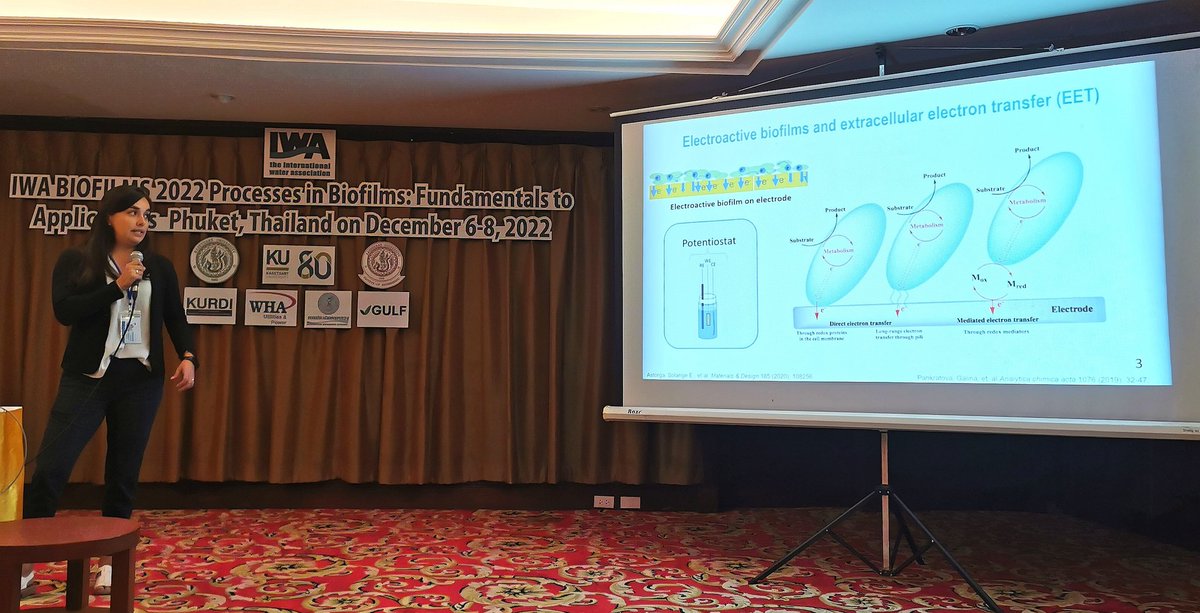
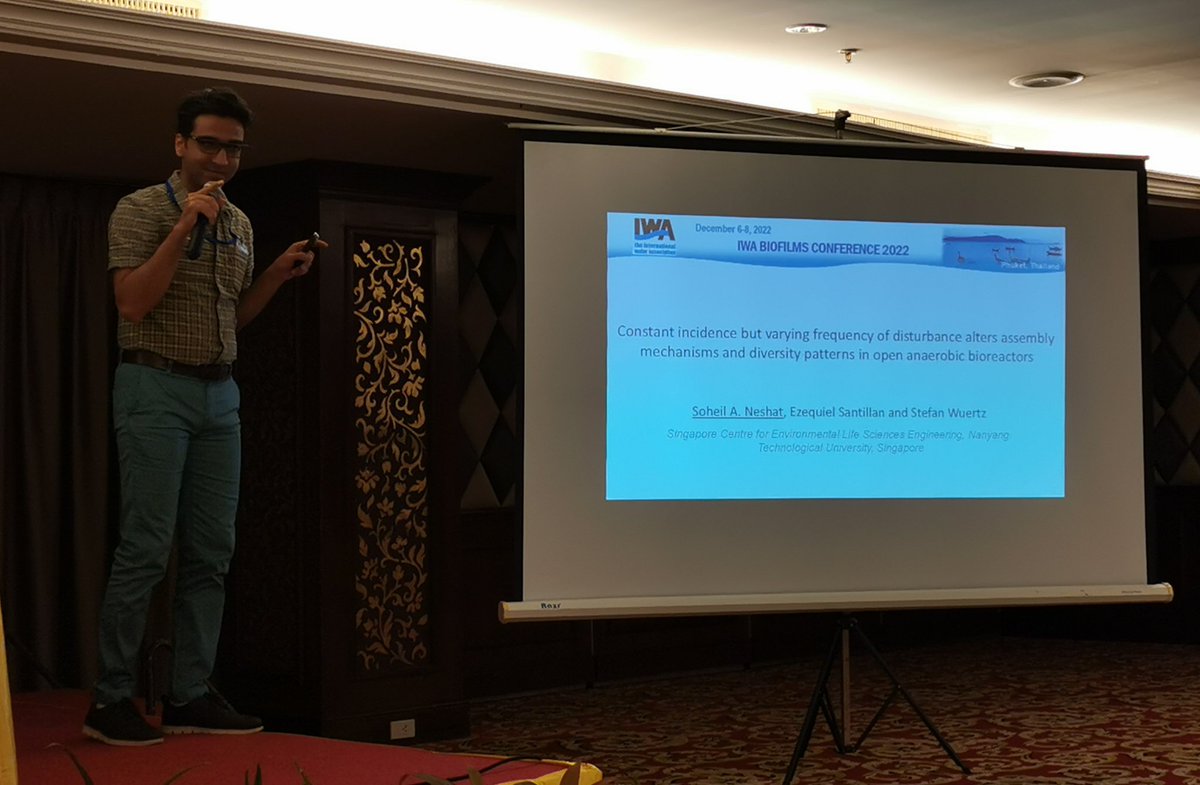
Great talk during the #microbialecology session #iwabiofilms2022 from @SoheilNeshat@SCELSE_SG about testing the intermediate stochasticity hypothesis (ISH) of community assembly and diversity across a disturbance range, with constant incidences, using open anaerobic digesters.
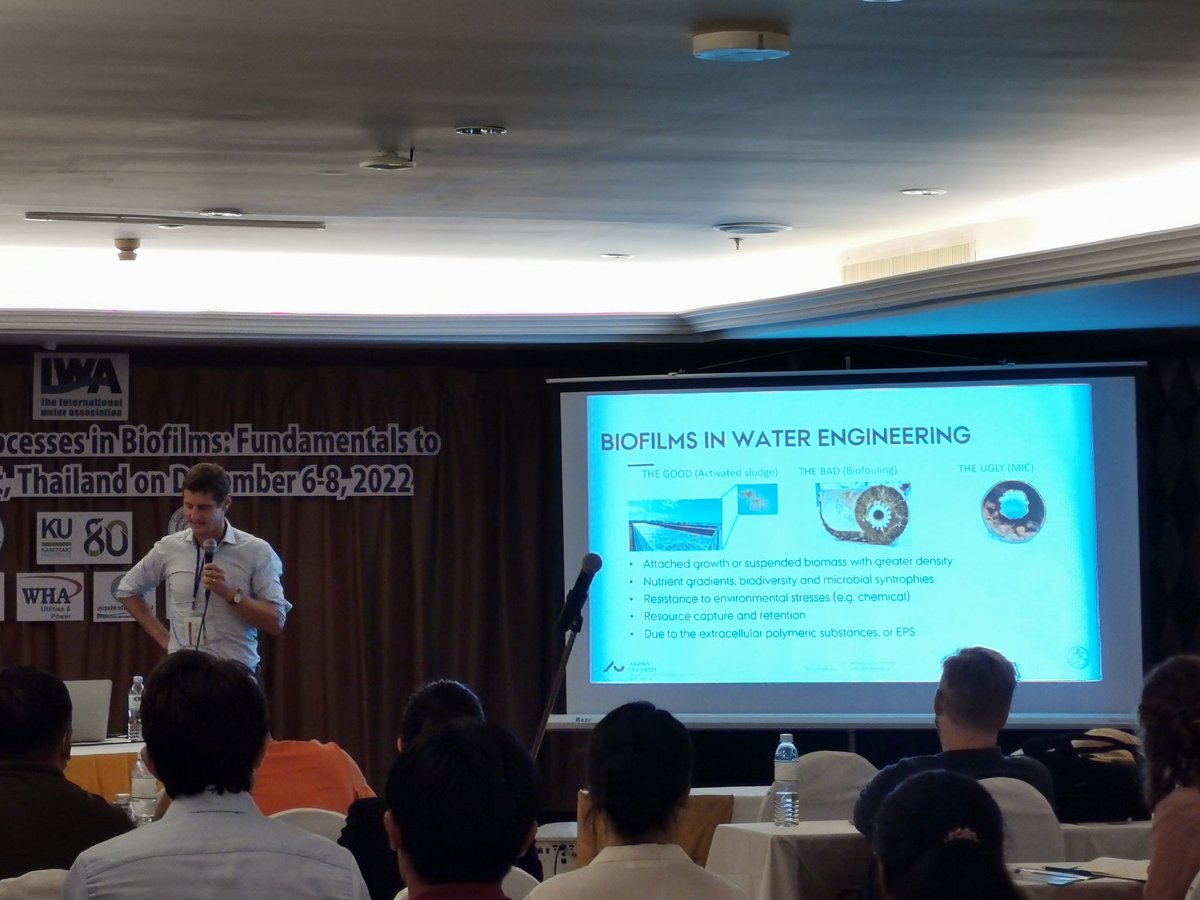
Insightful talk #iwabiofilms2022 from @Incottonwool about tackling the microbial EPS "identity crisis" (i.e., extracting and identifying its components) toward resource recovery, including work done @SCELSE_SG
We pay too much attention to the most confident voices—and too little attention to the most thoughtful ones.
Certainty is not a sign of credibility. Speaking assertively is not a substitute for thinking deeply.
It's better to learn from complex thinkers than smooth talkers.
As far as life philosophies go, “The right time is right now” isn't a bad one. Most of us would benefit from a greater bias toward action.
If you move fast, you can try more things. And if you try more things, you're likely to find something that works for you.
Recruiting a postdoc to join our lab to work on an exciting project that aims to understand the interactions between the members of the skin microbiome. Please spread the word. https://t.co/KdE1Ax6odv
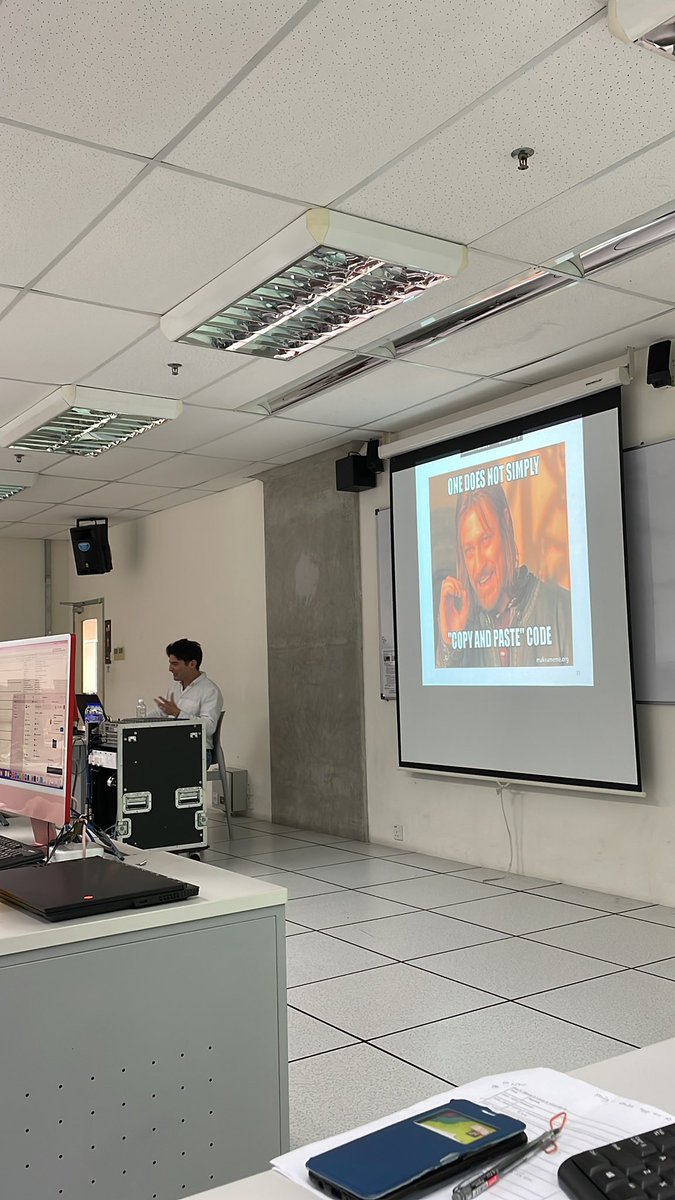
The bioinformatics workshop microbiome analyses with R is ON!
We’re happy to welcome all the participants and hope that the workshop will be an amazing experience!