@Foxtel@FOXTEL_Help I've been put on hold now for 1hr50m due to an error from your staff! And told to call back tomoz! Pointless if your a #waratahs#SuperRugbyAU fan! All I wanted to do was add #FoxSports 🤷♀️Absolutely disgusting customer service. Going to cancel all services
Geography education is greater than the ability to read a map! It shares a common goal with #global citizenship, preparing students in becoming well-informed #citizens, enabling their participation in addressing global issues (Demirci et al., 2018; Shin & Bednarz, 2018).#UoNTeach
Cooperative learning has been shown to nurture 21st century skills such as #communication, #creativity and #CriticalThinking (Ferguson-Patrick, 2018). So I'll be using the jigsaw strategy within my unit, emphasising
social skills in reaching group goals (Yoshida, 2018).#UoNTeach
As more emphasis is placed on #outdoorlearning, I can imagine those students who have a strong #naturalisticintelligence jumping for joy, as the physical constraints of classroom walls are removed, as they immerse themselves in #nature (Harris, 2017; Retnowati, 2018). #UoNTeach
As teachers, we must be careful when moving #geography lessons #outside, ensuring we are place-responsive when planning (Lloyd, Gray & Truong, 2018). If we do this successfully, students will build strong linkages to their place, space and the #environment (Dolan, 2016).#UoNTeach
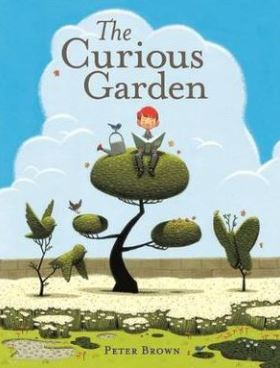
‘The Curious Garden’ by Peter Brown is a fabulous #picturebook encouraging students in becoming #ActiveCitizens by nurturing, caring and improving their local environment.
A versatile book for teaching #geography and the geographical inquiry process (Curtis, 2017).#UoNTeach
@MaleszkaJessica @MagabalaBooks What a great multi KLA resource and shows how valuable a well-written picture book can be! Thanks 🙌
#PictureBooks are great at providing a tangible, engaging link to a theme, complementing other resources by weaving complex meanings and layers throughout (Jones, 2018).#UoNTeach
@madicampbell01 I’m amazed by all the ideas on twitter honouring #EarthDay! Perhaps the best place to start is ensuring all our students have an #equity of background knowledge, specifically why #EarthDay was established and what it is trying to achieve (Hinde McLeod & Reynolds, 2007).#UoNTeach
With the 50th anniversary of #earthday on 22/04, how will you be celebrating this important day with your students? With many people currently isolating, I like the idea of uploading an #earthday poster to social media – a window to the world – connecting while isolated #UoNTeach
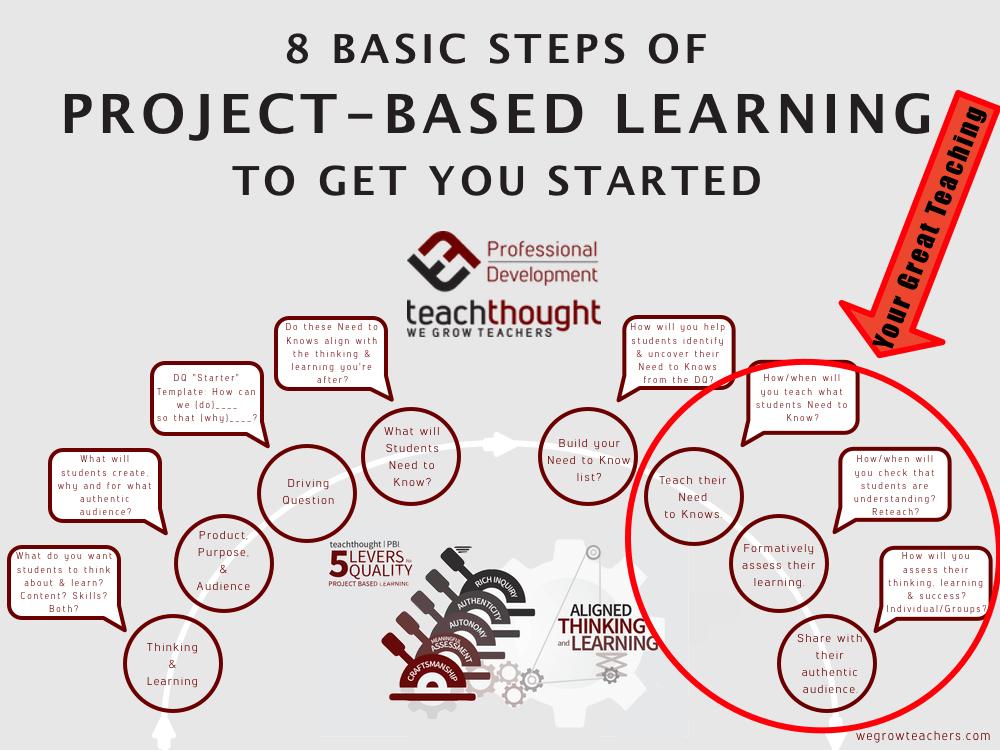
This resource has helped guide my #PBL unit by promoting students #CriticalThinking and problem-solving skills through an emphasis on rich enquiry and authenticity. The Question Formulation Technique has been surprising and shows that not all questions are created equal.#UoNTeach
"The valuable residue, though, that endures & grows...is an improvement in all teaching & learning towards a culture of more & better inquiry & a self-examination of the authenticity and purpose."
The Enduring Residue Of Project-Based Learning PD - https://t.co/mb8CkfZDS0
Twitter has facilitated my own ongoing learning on a local and global scale, enabling me to access strategies, ideas and knowledge from other educators in a 24/7 global space (Culberhouse, 2019). Thus, this social media platform has positively influenced my own pedagogy.#UoNTeach
What a great stimulus for an in-class debate, combining the Science & Tech. and English KLA's. Debating can assist student communication and critical thinking skills, whilst developing the literacy function of speaking and listening (Chikeleze et al., 2018; NESA, 2019). #UoNTeach
Not only is the ‘Autumn Birds in Backyards’ survey a fantastic introduction to the Living World strand in Science & Technology, but allows students to work scientifically as they plan and conduct investigations (NESA, 2017). #UoNTeach#CitizenScience
https://t.co/M9YUGmVoDQ
AITSL have provided a timely, evidenced based report, which contains plenty of practical links and useful advice for teachers during this difficult time. It is important to continue to support students by maintaining a meaningful presence (Gregori et al., 2018).#UoNTeach#teacher
With the emergence of #COVID19 and the move to social-distancing and remote learning, this latest Spotlight outlines practical approaches to help #teachers establish online and distance learning for their students.
https://t.co/U37JNQOg0Q
#RemoteLearning#COVID2019AU
CBP increases student engagement, but also displays an appreciation of local identity and culture (ACARA, n.d.; Sharkey et al., 2016). The 'Working with Aboriginal Communities’ guide provides protocols which can assist in developing community consultation (NESA, 2008). #UoNTeach
If like me, you are interested in outdoor learning, ACARA (n.d.) provides useful links/ideas across a range of learning areas, which also address general capabilities and cross-curriculum priorities. Personal favourite is The Wild Network (n.d.)! https://t.co/Zmmw3XdL1r #UoNTeach
The Vicious Cycle and digital divide will become more prominent as schools move towards online learning (Rogers, 2016). 21st century learning includes using ICT for learning. But how can students access online tasks if they don’t have ICT at home? (Drake & Reid, 2018) #UoNTeach
As a pre-service teacher, I was apprehensive in commencing Twitter (Rinaldo et al., 2011). Yet since starting, I’ve not only found an abundance of resources shared by peers, but global discussions regarding topics I’m interested in (Carpenter & Krutka, 2014)! #UoNTeach#Teachers
Happy World Forest Day! As teachers, should we be using the outdoor environment as a third teacher, using outdoor artefacts as learning tools? Will this approach spark our students curiosity and creative thinking? (Bradshaw, 2018; Kinney & Wharton, 2014) #UoNTeach#WorldForestDay