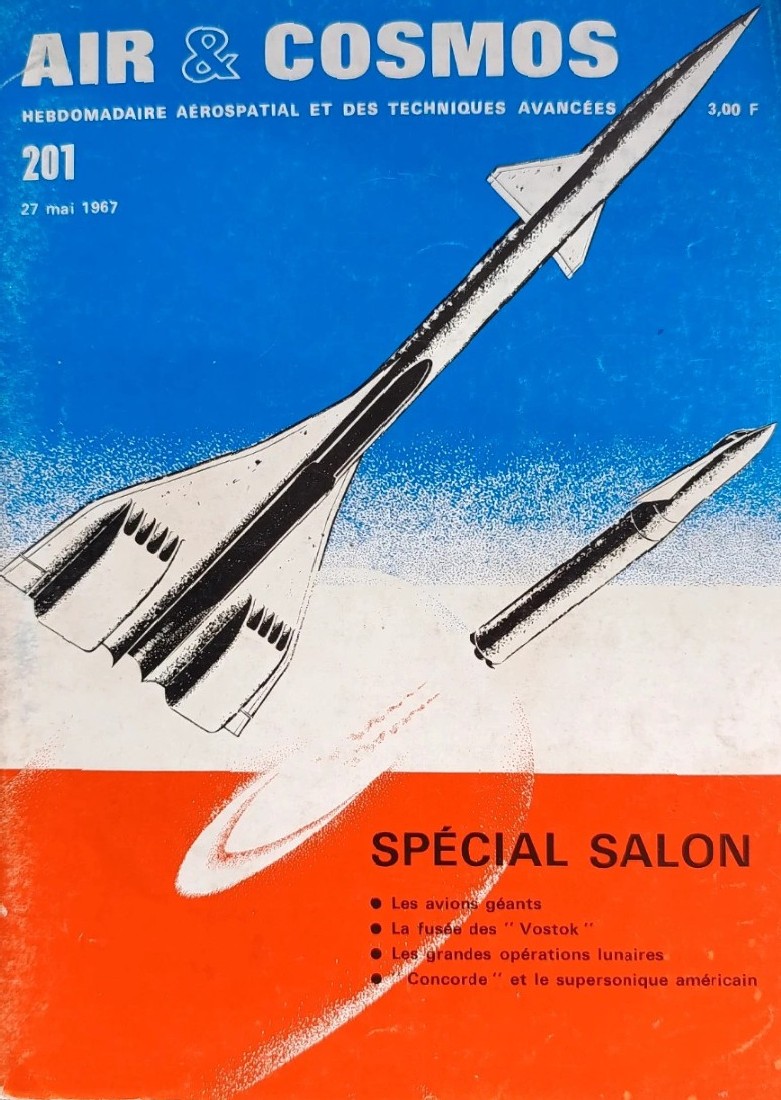
In the mid-1960s, France was exploring the possibility of developing a small manned space shuttle launched by a carrier aircraft reminiscent of the Concorde. The project never got beyond the drawing board.
13 juillet 1380, rappel à Dieu de Bertrand du Guesclin, modeste noble breton devenu
Connétable de France et acteur majeur de la guerre de cent ans. « qui meurt en bataille pour son seigneur et sa terre défendre, Dieu a de lui pitié. »
If there is one French warrior of the Hundred Years' War in the XVth century who, among a wide circle of warriors, deserves to be singled out, it is La Hire.
His company of men-at-arms was so disciplined when charging in close formation that, according to his protégé Jean de Bueil, "not even an apple could have fallen anywhere but upon the lances."
3 juillet 987, Hugues Capet est sacré Roi des Francs. « Moi, Hugues, qui dans un instant, vais devenir Roi des Francs par la faveur divine, au jour de mon sacre, en la présence de Dieu et de ses Saints, je promets à chacun de vous de lui conserver la loi, la justice qui lui sont dus et de vous défendre autant que je le pourrai, avec l'aide du Seigneur, comme il est juste qu'un roi agisse, en son royaume, envers chaque évêque et église qui lui est commise. Je promets aussi de faire justice, selon ses droits, au peuple qui nous est confié. »
Le croque-monsieur. Un monument de la cuisine de comptoir parisienne, né d’un coup de génie et d’un brin de malice.
Paris, boulevard des Capucines, 1910. L’âge d’or des cafés parisiens. Le gérant du Bistrot le Bel Âge, Michel Lunarca, manque de pain baguette pour ses sandwichs. Qu’à cela ne tienne : il utilise du pain de mie, y glisse du jambon, du fromage, et passe le tout au beurre dans un moule en fonte. Le croustillant est immédiat. Un client s’étonne de cette viande si savoureuse et demande d’où elle vient. Le patron, réputé pour son humour un peu canaille, répond dans un éclat de rire : « C’est de la viande de monsieur ! ». Le nom est trouvé.
La légende parisienne est en marche. Marcel Proust scelle sa légitimité littéraire en 1919. Dans « À l’ombre des jeunes filles en fleurs », il fait commander par Mme de Villeparisis des « croque-monsieur » et des œufs à la crème pour son personnage. Le mot est déjà entré dans le langage courant. Une consécration précoce pour un plat de brasserie.
À l’origine, pas de béchamel. Juste du pain, du beurre, du jambon de Paris et du gruyère (ou du comté) râpé ou en lamelles, dorés à la poêle ou au four. La simplicité absolue, mais exigeante. S’il s’arme d’un œuf à cheval, il devient « croque-madame », clin d’œil à la forme des chapeaux féminins de l’époque.
Aujourd’hui, il est partout, des cartes des grands chefs aux tables des cafés parisiens. Un classique intemporel qui prouve que la gastronomie française n’a pas toujours besoin de nappe blanche pour entrer dans l’histoire.
@DieNussecke@PrianShanm21553@Rainmaker1973 Bashing systématique du pays France à tour de post. Souhaitez-vous que nous nous y mettions durant les 40 prochaines années sur le sol US aussi ?
Veule, vénale, voleur, vendu, menteur, usurpateur, hypocrite, traître... Des qualificatifs bien trop gentils de ce qu'est l'Allemagne
15 June 1881. Birth of Paul Cornu (d.6 June 1944). French engineer who manufactured bicycles by trade, designed the world's first successful manned rotary wing aircraft in which he made the first piloted free flight on 13 November 1907.
13 juin 2020, rappel à Dieu de Jean Raspail.
« L'idée royaliste ne sera jamais ringarde car elle est permanente. Aujourd'hui, en France, personne n'incarne la continuité de la nation. Je pense qu'on peut aimer un Roi, être fidèle à un Roi...Mais pas à un président de la république. »
« Les Français se sont montrés les plus habiles artisans de ruine qui aient jamais existé au monde. Ils ont entièrement renversé leur monarchie, leur Église, leur commerce et leurs manufactures. Ils ont fait, nos affaires à nous leurs rivaux, mieux que vingt batailles de Ramillies n'auraient pu le faire. Si nous avions complètement vaincu la France, si elle était prosternée à nos pieds, nous aurions honte d'envoyer aux Français, pour régler leurs affaires, une commission qui leur imposât une loi aussi dure, aussi fatale à leur grandeur nationale que celle qu'ils se sont donnée eux-même. » Edmund Burke
**Concept Cars**
🇫🇷 Peugeot Quasar Concept
1 of 1
205 T16 engine
600bhp
Twin KKK Turbo
The Peugeot Quasar was the first concept car made by Peugeot in-house.
It was assembled in 1984 at the Peugeot plant in La Garenne, and first displayed at the 67th Paris Motor Show in the same year.
Named after the astronomical phenomenon, it shared many of its internal components with the 205 Turbo 16, Peugeot's rally variant of the 205.
After the success of the Peugeot 205 in all forms, Peugeot decided to enhance their revitalised image yet further,
Peugeot decided to create a T16-based design concept for the Paris Motor Show in October 1984.
Engine and transmission
Another unique feature of the Quasar was its twin instead of single turbo engine.
It was derived from the T16 Evolution 1’s all alloy water-cooled inline ‘four’. Displacement was an unchanged 1775cc thanks to a bore and stroke of 83mm and 82mm respectively.
As per the Evolution 1, the Quasar’s engine was dry-sumped and fitted with reinforced pistons, heavy-duty sleeves, 30° intake valves, 50° exhaust valves and Champion BN 60 spark plugs.
Two KKK K26 twin scroll turbochargers were installed, each with an air-to-air intercooler.
The Quasar also most likely came with Peugeot’s ‘Dispositif Pre-rotation Variable’ anti-lag system (DPV) similar to the type used on Renault’s Formula 1 engines.
A custom fabricated free-flow exhaust culminated in two massive centrally exiting megaphones.
Transmission was through a five-speed gearbox, Ferguson four-wheel drive system with fixed 40/60 torque split, ZF limited-slip differentials at both axles and a ventilated twin-plate clutch.
A state-of-the-art traction control system was also employed.
Chassis
Peugeot based the Quasar on the 205 T16’s central steel monocoque to which steel subframes were attached front and back. As per the T16, the wheelbase measured 2540mm and the central section was reinforced with an integrated roll cage.
Suspension
This was double wishbones with a single coil spring and telescopic Bilstein damper at each corner. Anti-roll bars were fitted at either end.
Ventilated brake discs were installed all round; they were most likely the 300mm diameter front and 273mm diameter rears from the T16 Evolution 1. Four-piston AP calipers would also therefore have been used.
Instead of a four-stud fixing, the Quasar’s new 16-inch diameter turbine-style wheels came with a centre-lock attachment. The handsome body coloured rims were shod with the latest generation Michelin MXX tyres.
Bodywork
The Quasar was clothed in a tightly packaged body fabricated from a mixture of carbonfibre and Kevlar.
It featured a short plunging nose at the base of which was a body coloured front spoiler with a large central intake.
Additional cooling slats were located between the slender single piece light units and up towards the windscreen
Thanks to the enormous windscreen, large side windows and a glass roof, the interior was flooded with natural light. Black A-pillars gave the cockpit canopy a seamless look.
Down each flank, Peugeot fitted deep side skirts and butterfly doors. Behind the doors were arced cooling scoops that ran from the roof down to the sills.
The Quasar’s back end was arguably its most radical feature. Behind the rear wheels, the bodywork was cutaway in a fashion reminiscent of the Porsche 917 Kurzheck.
Flying buttresses swept down from behind the cockpit and culminated in a fixed rear spoiler.
Mechanical elements such as the engine and exhaust system were left exposed.
Enormous twin venturis sucked the car onto the ground.
The only visual link to the T16 was a pair of tail light clusters.
Currently, it is part of an installation at the Peugeot Adventure Museum in Sochaux.
A shame it was never built. 🥹
Words by Supercar Nostalgia 👏🏻👏🏻
📷 @Peugeot@OfficialWRC
#cars #carporn
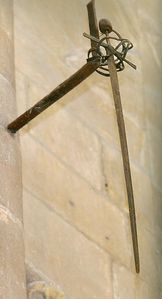
@Bigvadrouiller1 Ci-gît, en l'Eglise de Montereau Fault Yonne, l'épée de Jean sans Peur, Duc de Bourgogne. Même épée par laquelle commença la Guerre de 100 ans.