Diablo 2 NPC Hratli's introduction:
Welcome to Kurast, traveler. Few come willingly to this ancient city anymore. I hope you brought your wits with you, for sanity is in short supply here.
...
As you can see, the populace has been brutally decimated by the forces of Mephisto. The canals run red with blood and demons roam the land.
...
To make matters worse, the Children of Zakarum are in league with the forces of Mephisto. The Zakarum have concentrated their power in the Temple City of Travincal, located within Kurast deep in the jungle wilderness.
It's true... Their zeal is unmatched. But I say the so-called 'Warriors of Light' are nothing more than the twisted puppets of a hidden hand.
China’s Shenzhou-24 crew—Chinese astronauts Tang Hongbo, Wu Yi, and Pakistani astronaut Muhammad Zeeshan Ali—is set to launch on Nov. 25, 2026.
Ali will become the first foreign astronaut to visit the Tiangong space station and the first international crew member in China’s manned space program. 🚀🇨🇳🇵🇰
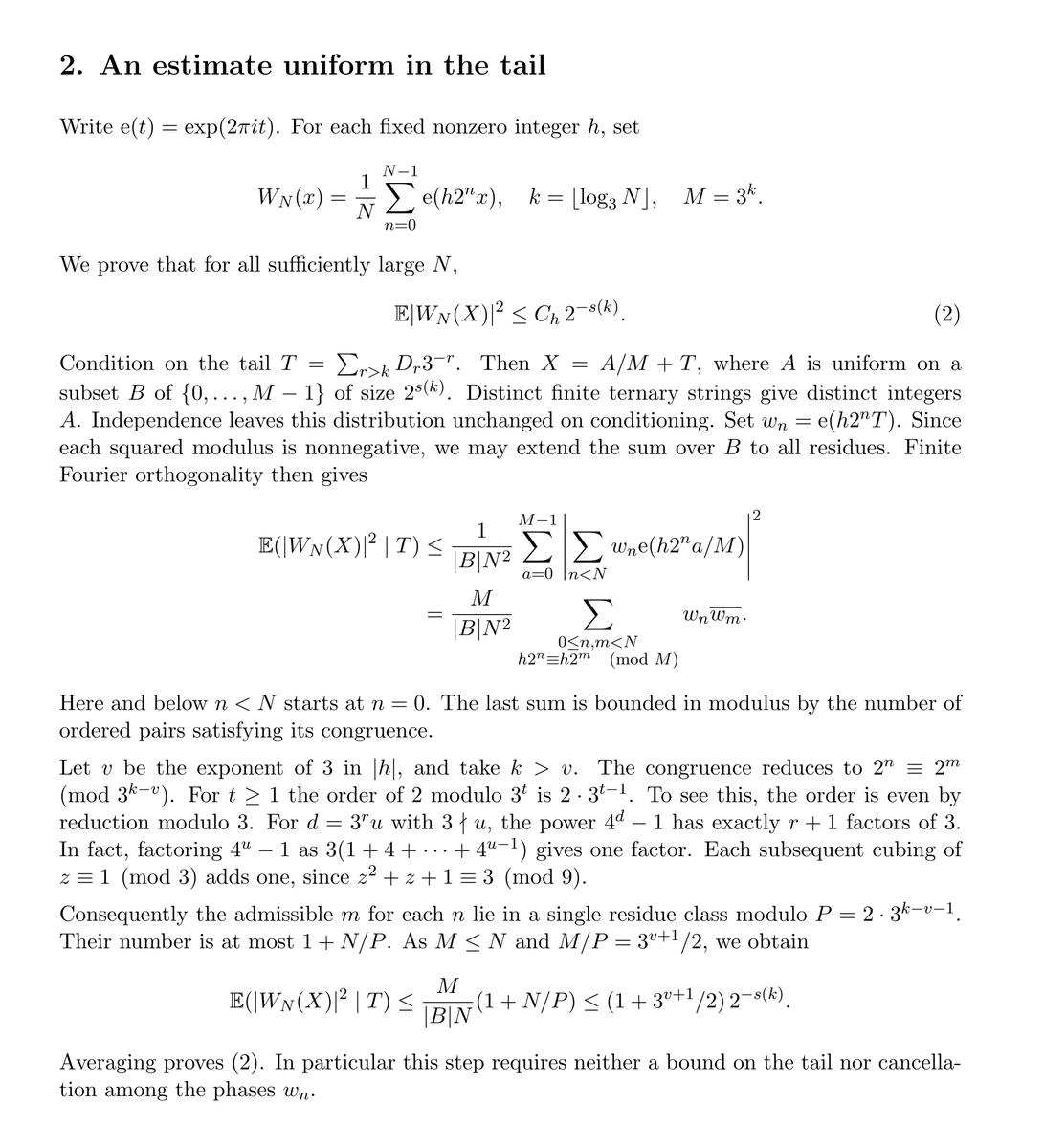
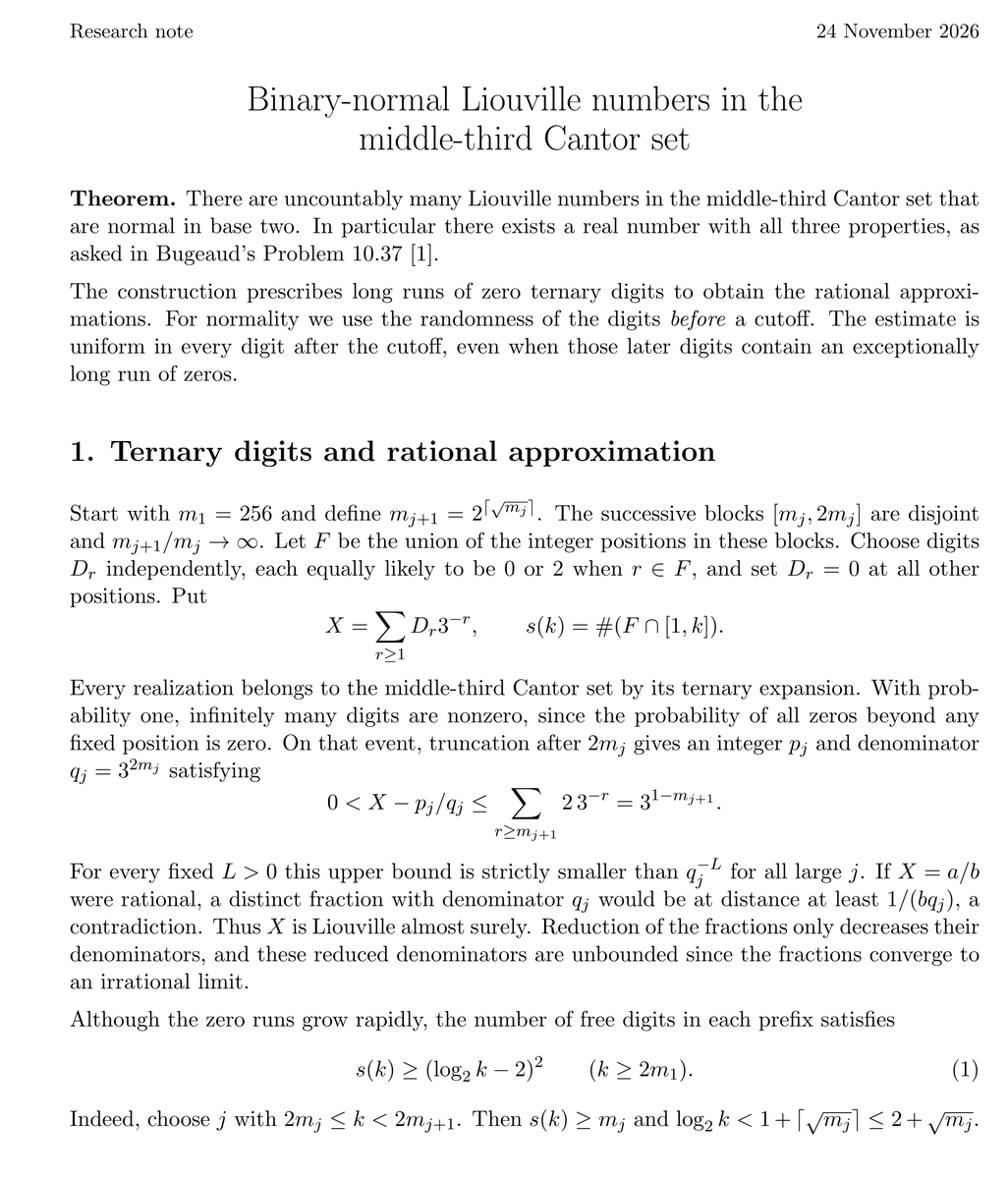
I am learning how to use AI in math research and the more I dive deep the less I understand people who go out there and cry that mathematics is dead. This is, from my viewpoint, ridiculous.
I have been going on for three weeks now on what I thought was a hard problem in the calculus of variations, and the latest Astra and Fable models commercially available at max reasoning seem to agree with me.
I am communicating with both models in a sort of "flow mode" where I don't check what they do line by line, but I just understand enough to ask questions and suggest ideas. I would say it is very similar to the kind of thinking mode that you have during a talk -- you may ask very insightful questions even without mastering the details.
If this were a human-to-human collaboration, I would say I am the lazy collaborator who just chats in grand terms without doing the nitty-gritty technical work.
But in a human-to-machine collaboration, the machine doesn't seem to resent me for flying high, and in fact it seems to need these gentle nudges that reshuffle its approaches. Maybe not surprisingly, it seems to approach the problem in a very clueless way, more or less "trying out everything" unless it is told to focus on something. In fact, very interestingly to me, the machine discovered a super cool fact about the problem we are studying by trying something so against the physical intuition of the problem that I would have never even bothered doing the computation. But the machine did, maybe because not having a physical intuition on the problem, for it it was just another thing to try... very cool!
I am also confronting the question: where is this going?
For me the plan is this:
1. Find the solution to this problem throwing at it everything I have.
2. When a solution is found, sit down with it until I understand every detail, write a paper without machine aid (I personally love writing math and don't like how machines write anyway), submit it for peer-review (because I believe peer-review is super important for keeping ideas flowing and healthy), and give talks about it when invited. (Of course, any paper written or talk given by this process will acknowledge the use of models.)
3. When a solution is found, I will not care too much about whatever merit or credit is given to my role in the discovery process. Probably because I have never been the smartest dog of the pack, but over the years math for me has been increasingly more about understanding and disseminating than about being individually recognized.
4. If someone publishes something on this problem before I do, I will read their work and invite them to give a talk. If I am satisfied with my understanding of the problem, that will be it, otherwise I will keep working on it until I have understood the problem to my satisfaction.
5. Before AI, I have probably written 2–3 papers per year on average? (It sounds about right, given that I have about 65 papers and got my PhD in 2005.) I don't think I will change that habit, INDEPENDENTLY of how many hard problems an LLM can help me crack. The point, in my opinion, is to exercise some self-discipline in asking for other people's time and attention. Increased capacity to produce math should come with an increased responsibility in selecting what we publish.
Publish a moderate number of insightful papers that are a joy to read and a delight to understand.
I think that's all from the trenches.
p.s.: this is so clearly bound to become one more boring essay :D
We now have a Lean proof of Ternary Goldbach using only the standard axioms!
This builds on Charlie Reams' formalization of Helfgott's original proof, where a large finite binary Goldbach check and partial GRH check are used as axioms, and of course relies on Levent's GRH proof.
Update on formalizing Masullo’s proof of the Riemann hypothesis.
93 contributors provided proofs for 13k+ statements using 465k lines of lean.
The current gaps:
- 7 false statements, corrected, but the intended statement is uncertain
- 3 classical theorems not yet proved
- 5 proof steps too imprecise to formalize
- 6 scattered statements which don’t connect to the rest yet
-1 principal result, 12.5.1.1, the cancelation of zeros outside the strip
1/3
Someone with a very questionable track-record (to put it mildly...) claimed to have solved the RH with a Lean verification, then many people pointed out her argument is circular and vacuous. Days later @__alpoge__ (who, it should be said, has an incredible track-record in math, even before moving to Anthropic and becoming the AI math guy) uses Claude to prove RH with a Lean verification, and aforementioned person claims Alpoge's AI proof is invalid and vacuous. Her post goes somewhat viral, boosted largely by people who don't want to believe AI is very capable--people who fail to look at the source of this critique and do even a basic information literacy check.
Alpoge admits there's a lot of pointless slop mixed in with Claude's Lean proof, but he expresses himself confusingly and now many AI critics are claiming either that he admitted his proof is wrong or that he's refusing to admit this critic is correct--and many of these AI critics are further using this misunderstanding of the situation to bolster their arguments that AI is overhyped, some even claiming that Alpoge either deliberately lied about solving RH to boost Anthropic's stock value or accidentally did so.
Punchline: Everyone is seeing in this saga what they want to see and desperately want to believe, but the most likely outcome is that RH is solved by Claude albeit very inefficiently.