A damning report from the European Court of Auditors has shown failures to protect the EU’s Marine Protected Areas, finding that just 1% of EU marine waters are strictly protected & that fishing activity is higher inside many of them than outside of them. https://t.co/MmBos50uxf
“Our findings show why fisheries managers need to consider more than temperature alone,” William Cheung said.“Understanding how different extremes interact will be essential for anticipating risks to fisheries & communities that depend on them.” @coru_ubc https://t.co/zuraU6UTbU
RESEARCH: Decoupling food insecurity from shocks: A global analysis of food system resilience. Co-authored by @DrRashidSumaila@SolvingFCB https://t.co/E1Wr6e8fo2
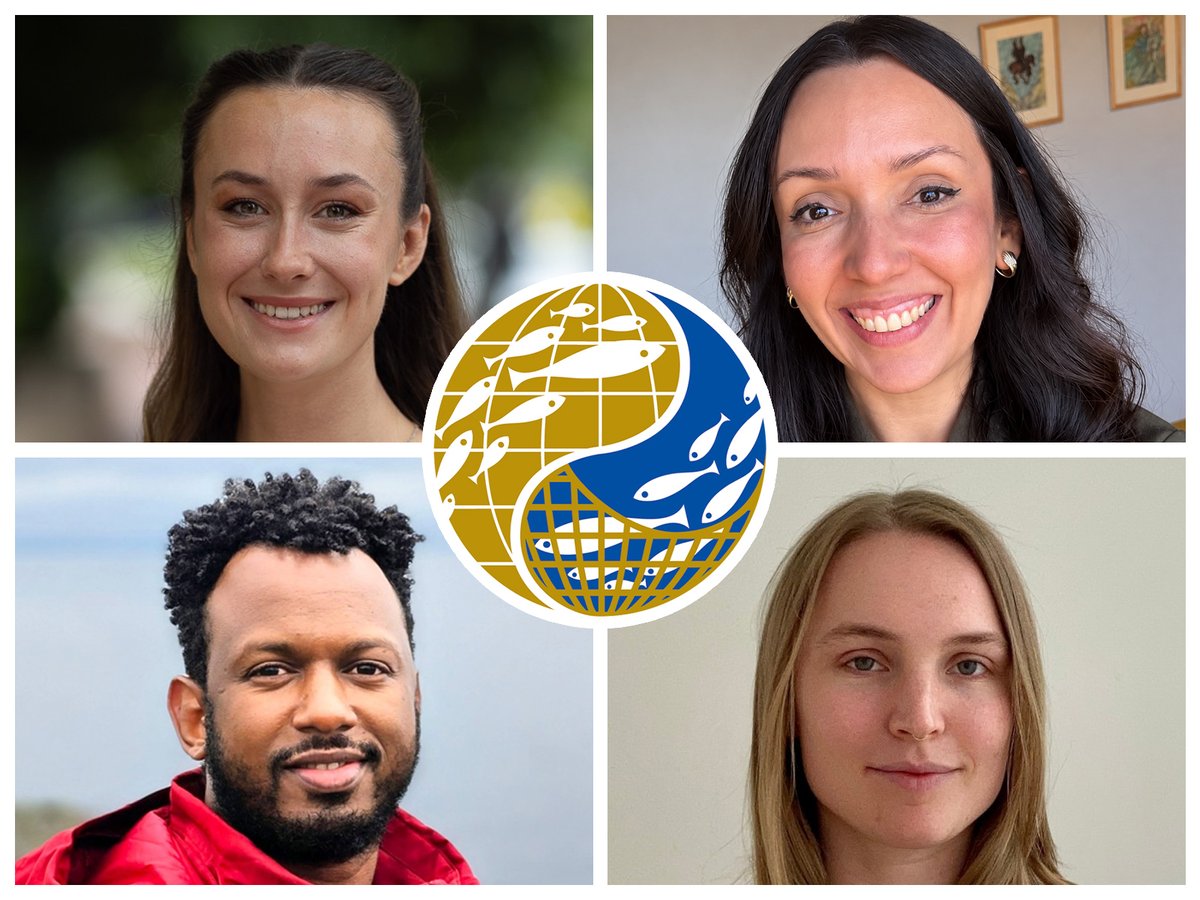
FERU is pleased to welcome four new members: Wila Manella, Gabriela Sarmento, Barry Momodou, and Helena Debus. More info: https://t.co/rAObrqXnUt @DrRashidSumaila@UBCoceans
Muhammed Oyinlola @OyinlolaMM said: “Our modelling shows that the outcome is not inevitable. A more diversified option favours growth in lower-input species, while ambiguity leaves the door open to growth that threatens communities, fisheries & climate.” https://t.co/5H3lNBrc7u
Illegal fishing estimated to 8 to 15% of marine capture, valued at $6 to $12 billion annually. Industrial-scale fleets are the main drivers, responsible for 82 to 93% of the 8.4 to 15.4 million tonnes of illicit fish traded each year. @DrRashidSumaila https://t.co/m8zPGB98Fm
Dr. William Cheung says he is concerned about deep-sea mining and highlighted that it’s possible sediment could affect plankton that form the base of the food web for many fish species, which could have wide-ranging impacts.
https://t.co/7TRZqooF4w @coru_ubc@solvingfcb
📢 Today, we are happy to announce funding results for four of SSHRC’s biggest competitions!
Congratulations to the recipients of:
✅ Insight Grants
✅ Insight Development Grants
✅ Partnership Development Grants
✅ Partnership Grants (Stage 2)
Read more: https://t.co/0Nw94xMJqd
New study finds #fisheries and #aquaculture strategies can reduce emissions & build resilience, but success depends on moving beyond isolated innovations towards equitable, context-specific action backed by effective policy. https://t.co/JHK03swypA @oceansolutions@SolvingFCB
Small-scale fishers, Indigenous Peoples, women, and coastal communities in the Global South make key contributions to fisheries & aquaculture, yet face disproportionate climate risks and structural barriers, said Colette Wabnitz @SolvingFCB https://t.co/JHK03swypA
RESEARCH: Climate change strengthens the case for a high seas fishing ban*. Authored by @DrRashidSumaila Dr. William Cheung, @julianop_a & Duncan Burnside @SolvingFCB
https://t.co/9TiQPk7MUq
Without a ban, wealthy distant-water fleets will exploit these migrating stocks, leaving vulnerable coastal nations behind. A high seas ban could protect biodiversity, stop an energy-intensive "emissions spiral", and act as a global insurance policy. @UBCoceans@FisheryEconomic
New Paper: As #ClimateChange warms our #oceans, ~22% of straddling fish stocks are projected to shift out of national waters by 2030. @DrRashidSumaila, @coru_ubc et al argue this redistribution makes a high seas fishing ban more urgent than ever: https://t.co/nVX4ySjVPa
The #StarfishBarometer2026 paints a stark picture: oceans are warming faster, sea levels are rising, coral reefs and marine species face growing threats, and the social and economic costs of ocean degradation are mounting. https://t.co/bLu7U0A6t6 (1/2)