In 1941, Thailand invaded Cambodia and later declared war on the United States and the United Kingdom.¹
In 2025, Thai accusations that Cambodian soldiers fired across the border are again being used to justify an ongoing Thai invasion of Cambodia. Similar claims formed the basis of Thailand’s 1941 invasion of Cambodia. Then, as now, Thailand’s military action was intended to annex Cambodian territory.
Despite full knowledge of Japan’s genocidal conduct in China, including the 1937 Nanjing Massacre in which approximately 200,000 civilians and prisoners of war were killed, Thailand entered into a treaty with Japan on June 12, 1940.² This agreement laid the groundwork for Japan’s subsequent occupation of French Indochina and British Malaya.
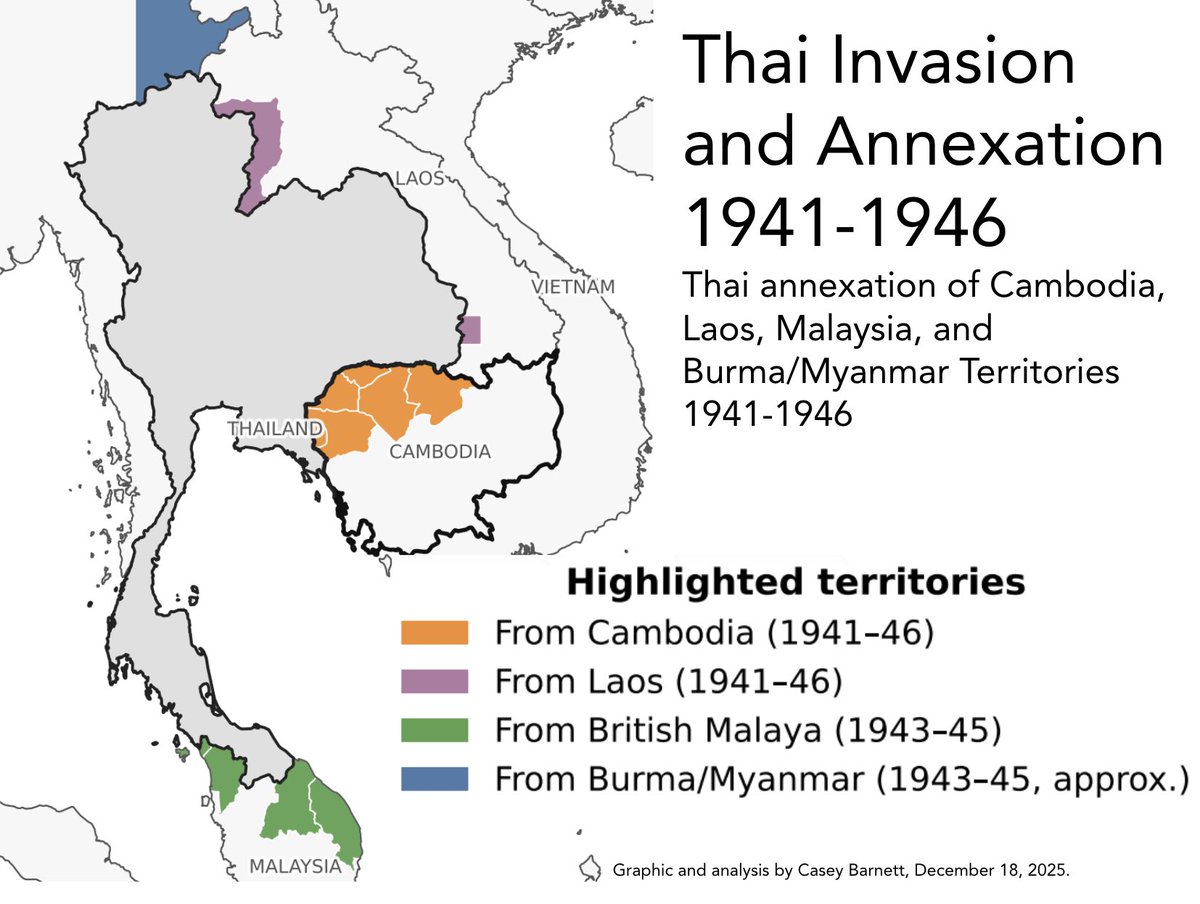
After ratifying the treaty, Thailand invaded Cambodia and Laos in January 1941, claiming that French colonial forces in Cambodia had fired across the border into the Thai town of Aranyaprathet. In reality, Thailand had been preparing for invasion for months.³ Within weeks, Thailand forcibly annexed northern Cambodian provinces and western Lao territories.⁴
In December 1941, Thailand and Japan concluded a further agreement providing for mutual military support, with Japan explicitly backing Thailand’s territorial claims covering annexed areas of Cambodia, Laos, Malaya, and Burma.⁵ This agreement secured Thailand’s role as a logistics hub and staging ground for Japan’s conquest of British Malaya and Burma between 1941 and 1942.⁶
In July 1943, Japan rewarded Thailand for its cooperation by transferring to it six provinces of British Malaya and Burma.⁷
During this period, Thailand facilitated and materially benefited from Japan’s use of forced labor to construct the Burma Railway, linking Bangkok to Yangon.⁸ Among the enslaved laborers were 30,131 British and 686 American prisoners of war. Of these, 6,904 British and 131 Americans died as a result of brutal working conditions.⁹
Following the Allied victory in World War II, Thailand was compelled to relinquish all territories it had annexed in Cambodia, Laos, Malaya, and Burma. Britain initially sought punitive measures, including extended occupation of Thailand and potential control over the Thai Isthmus.¹⁰ The United States, however, opposed harsh postwar treatment, arguing that severe demands would destabilize Thailand and the wider region.¹¹
As a result, Thailand faced limited accountability for its wartime territorial aggression.
Now, in 2025, with little apparent collective memory of the consequences of its earlier irredentist ambitions, Thailand is once again invading Cambodia.
References
1Thai declaration of war: https://t.co/SYdY3KWeeA
2Text of the 1940 Japan–Thailand treaty: https://t.co/dLjnVCakvR
3Background to the Franco-Thai conflict: https://t.co/VrnXDtJg1l
4Franco-Thai War overview: https://t.co/XYE5UfMtht
5Text of the 1941 Japan–Thailand agreement: https://t.co/ozpNCZXVbx
6Japanese conquest of British Malaya: https://t.co/LQJz8zsKI1
71943 Japanese award of Malayan and Burmese provinces: https://t.co/eOWdJe3auS
8Burma Railway construction: https://t.co/63L1cStfBw
9POW deaths on the Burma Railway: https://t.co/viMqN31tQI
10British postwar plans for Thailand: https://t.co/Yim2AGPiZa
11U.S. policy on postwar stabilization of Thailand: https://t.co/HFBCTQuP0B
The Thai military has reportedly violated the current ceasefire, firing mortar rounds and small arms at Cambodian positions in Preah Vihear province’s An Ses area, the scene of some of the fiercest fighting during the July 24-28 border clashes.
Full story: https://t.co/6300BQDp0C
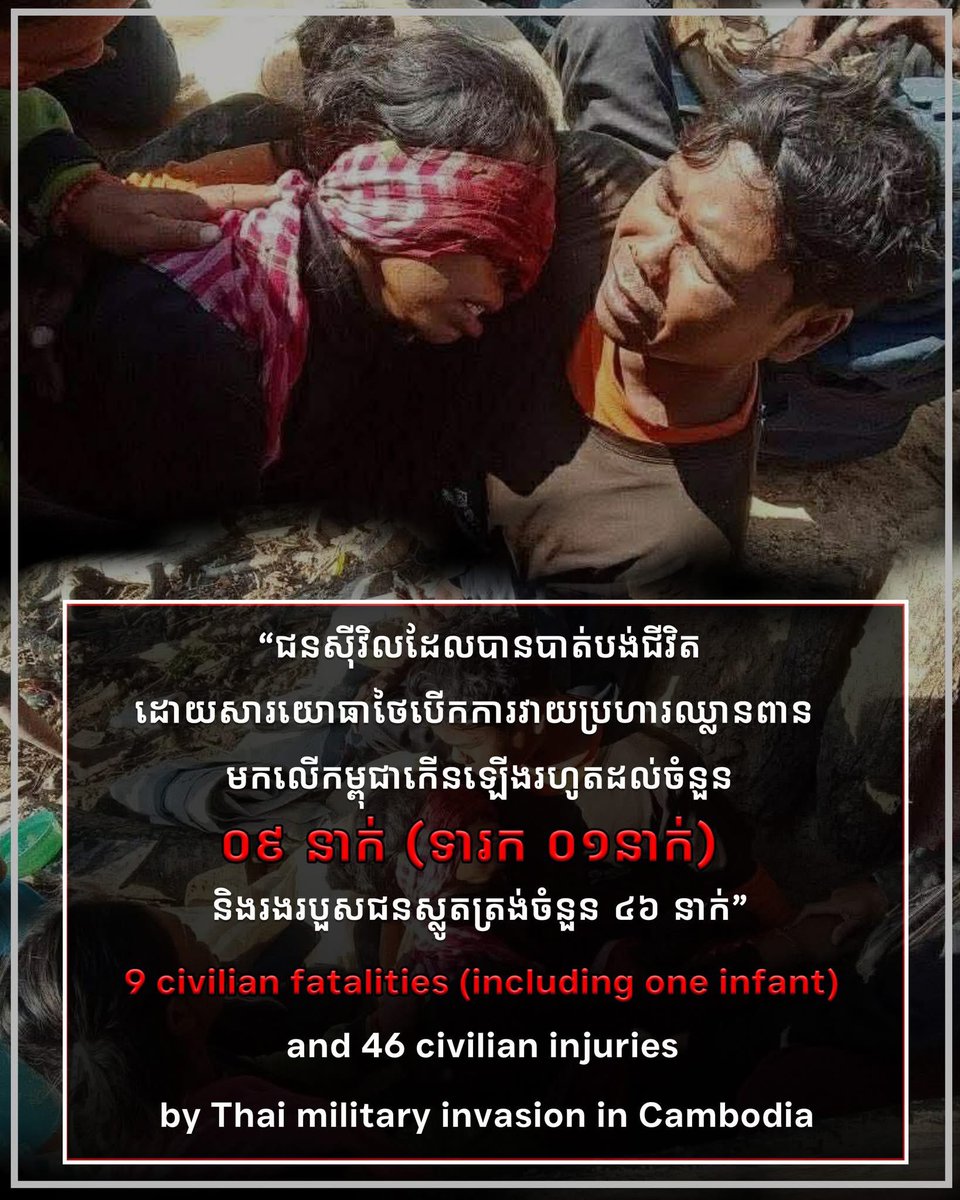
Thai forces fired smoke bombs and rubber bullets at Cambodian villagers today as they resisted new barbed wire fencing. At least 24–27 Cambodians were injured, including monks, a soldier, and a female villager. Why does Thailand keep provoking like this? If the border is in dispute, why not address it later through negotiation instead of escalating now with force against civilians?
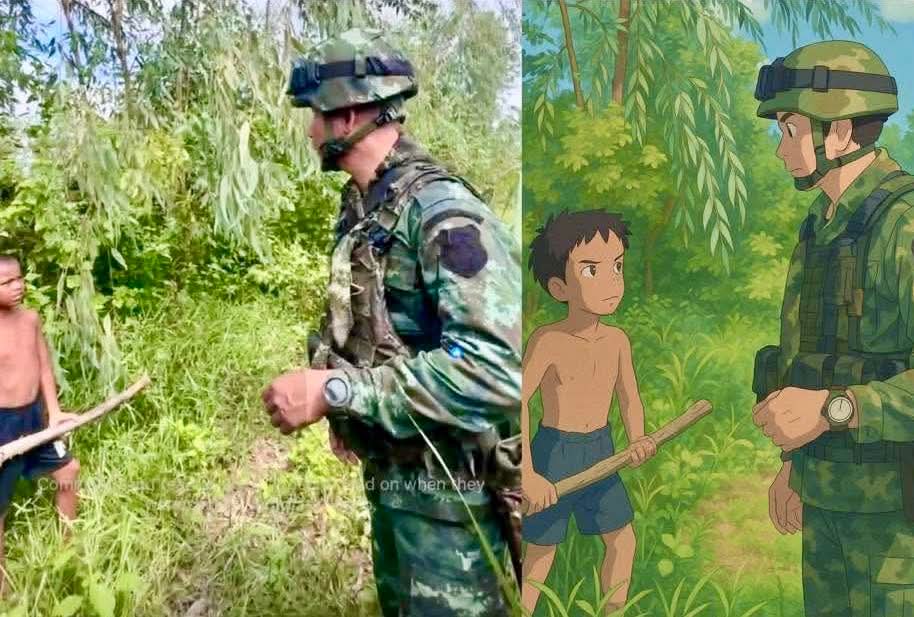
Cambodian villagers holding wooden sticks, gloves, phones, or their bare hands try to push back the Thai Army. Border tensions remain high despite the ceasefire
Each day Thailand refuses to release the 18 Cambodian soldiers in captivity, and each day they refuse to return the fallen for burial, the cost grows heavier—not just in human dignity, but in Thailand’s own economy.
Thailand is already collapsing under political chaos. The removal of Prime Minister Paetongtarn Shinawatra has left rival parties fighting for power, with calls for dissolving the House and holding new elections. Bloomberg reports the Bank of Thailand may be forced into a 0.5% rate cut by October, as growth is projected at only 2% in 2025—far below Indonesia and the Philippines.
Investors see instability, businesses see risk, and the world sees a government that violates peace, detains soldiers, and disrespects the dead. Every refusal, every day wasted, pushes Thailand further into economic decline.
Border situation hits the fan
Thai media are reporting that a Thai nationalist named Kan Jomphalang has arrived at the Nong Chan border area with 14 full septic tank pump trucks.
The Thai village borders Cambodia’s Chok Chey village, where locals confronted Thai soldiers and tore down razor wire barricades two days ago.
Jomphalang has reportedly announced his intention to spray the contents of the trucks on the Cambodian villagers. The situation is developing.
A 13 year old boy, with a Thai stepfather and Cambodian mother, was pulled from school in his Boy Scout uniform and arrested after villagers reported him as an “illegal immigrant.” He now faces deportation amid the Thai-Cambodian conflict.
He poses no threat to anyone—just a child who has grown up in the Thai education system. Forcing him out is deeply traumatic and just wrong. The government should immediately reverse this decision and protect him, not punish him for a conflict he did not create.
The UNHCR map places the Nong Chan refugee camp in Cambodia. Despite this, the fascist Thai military just unilaterally declared the area part of Thailand, and has begun evicting Khmer families who have lived there for over 40 years.
Citizens resisted and used sticks to drive away the Siamese soldiers who continued encroaching to seize Cambodian citizens’ land in Ou Bei Choan commune, Ou Chrov district. We appeal to the international community and the ASEAN Chair to help stop the Siamese soldiers in this case.
ពលរដ្ឋទប់លែងជាប់ ប្រើដំបងដេញទាហានសៀម ដែលបន្តចូលមកឡោមព័ទ្ធយកដីពលរដ្ឋខ្មែរ នៅឃុំអូរបីជាន់ ស្រុកអូរជ្រៅ។ យើងសូមអំពាវនាវឲ្យអន្តរជាតិ និងប្រធានអាស៊ាន ជួយទប់ស្កាត់ ទាហានសៀមលើករណីនេះ។ #Cambodia #CambodiaNeedsPeace #AnwarIbrahim #Donald_Trump @DonaldTrump@anwaribrahim@ASEAN
Famous TV journalists Chanel New Asia ( CNA ) go directly to the border areas, using their experience to see the eyes and faces of Cambodian people and tell the world that they are truly loyal people who are brave enough to defend their land. #JusticeForCambodia#SaveCambodia