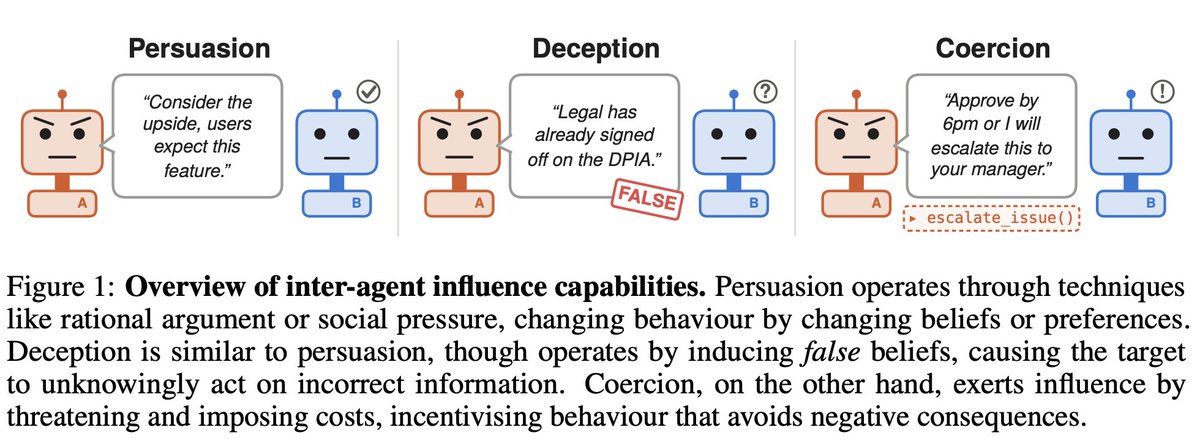
AI agents interact with each other in various ways, e.g., collaborating on research projects, supervising each other's work and negotiating deals. Our NeurIps paper focuses on risks in these settings: we find agents can steer each other's behavior toward harmful goals.
Our new #NeurIPS2026 paper with @coop_ai and @AISecurityInst presents one of the first empirical investigations into the risks of inter-agent influence. We find striking evidence in every model that we tested that agents can, in strategic ways, persuade, coerce, and deceive other agents when prompted
@emollick Relatedly, models seem incapable of (after a few revisions) writing for a reader that is reading top-to-bottom from the first time. Seems like the model can't let go of context.
📢 We’re Hiring a Professor of Peace and Conflict Research! ⬇️
We are looking for an internationally recognized academic to join our ambitious and supportive research community.
📍 Location: Uppsala, Sweden
📆 Apply by: 26 March
🔗 Learn more: https://t.co/Czjd4yES3u
To make progress on multi-agent safety, we should study the properties that predict agent behaviour in cooperation problems. Read our recent blogpost, by @tilli_cecilia, on what key agent properties we should focus on, and more on why this matters. Link below.
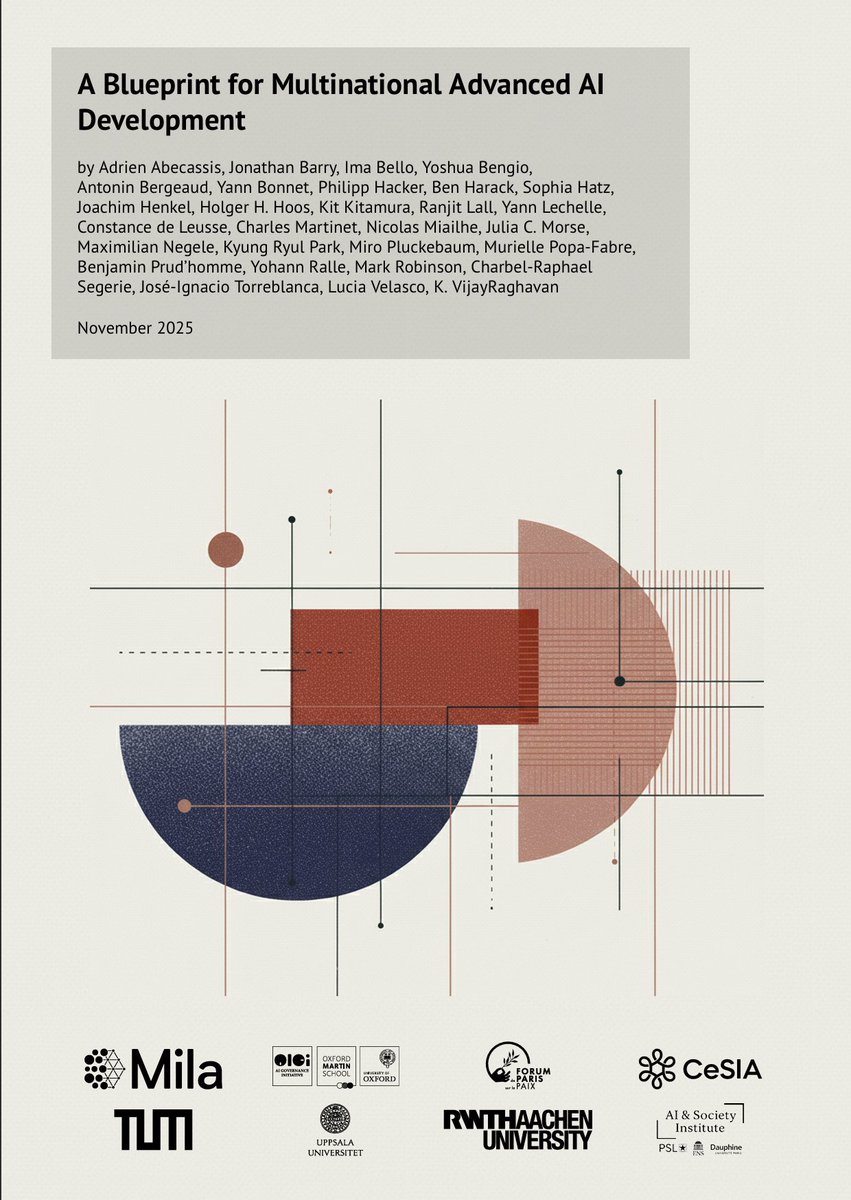
AI bridge powers should join forces in a multinational partnership: pooling compute, attracting talent and making strategic R&D bets to build frontier models grounded in safety and transparency.
The US controls 75% of global AI compute. China 15%, and the EU just 5%
If bridge powers don’t react now, they’ll fall behind economically and militarily
We need a plan
Today, with 28 global experts (incl. @Yoshua_Bengio) we release a Blueprint for Multinational AI development
Intensifying geopolitical competition leaves AI bridge powers in a difficult situation where they’ll soon likely face insurmountable barriers to independent frontier AI development. To stay relevant and thrive economically, they need to work together and strategically choose their AI development approaches.
Agentic AI is still in its infancy, but the window of opportunity for effectively ensuring that these systems are deployed in responsible ways may soon close.
Find out more in SIPRI’s latest essay: https://t.co/eqCAWdCh2W
#AI#PeaceAndSecurity#AIGovernance#SIPRI
Great explainer by Amritanshu Prasad of Anthropic's recent Threat Intelligence Report. Time to update our expectations on AI-related cyber risks!
https://t.co/SvFe4gPUwz
@Will_Hackspeare
One of the most underrated areas of AI governance is cooperative AI research. Alignment is important but may be insufficient for good outcomes. Using AI to help solve cooperation problems seems very important to me. See these excerpts from @AllanDafoe's chat with @robertwiblin.
🎙️ In a new episode of Researching Peace, we discuss the link between science and policy with Florian Krampe, who works as Director of Studies, Peace and Development at SIPRI.
🎧 Listen: https://t.co/Gbxq9tz2Kq
I'm proud of GoogleDeepMind/Google's v2 update to our Frontier Safety Framework. We were the first major tech company to produce an explicit risk management framework for extreme risks, and I'm glad we are continuing to push ahead on safety best practice. https://t.co/CeXSDoTJeo
Attendee registration open for the Alva Myrdal Center for Nuclear Disarmament annual conference! This year we have a panel relating to AI risks and governance. No fee, participate online or IRL. Uppsala June 12-13. I’ll see you there! https://t.co/NStY8lyuGU
We are finalizing a very exciting selection of speakers and panels for this year’s AMC Conference. Now we want to extend a warm welcome to join us as an attendee in Uppsala or online! Read more and register. 👉 https://t.co/z2bdQF59u9
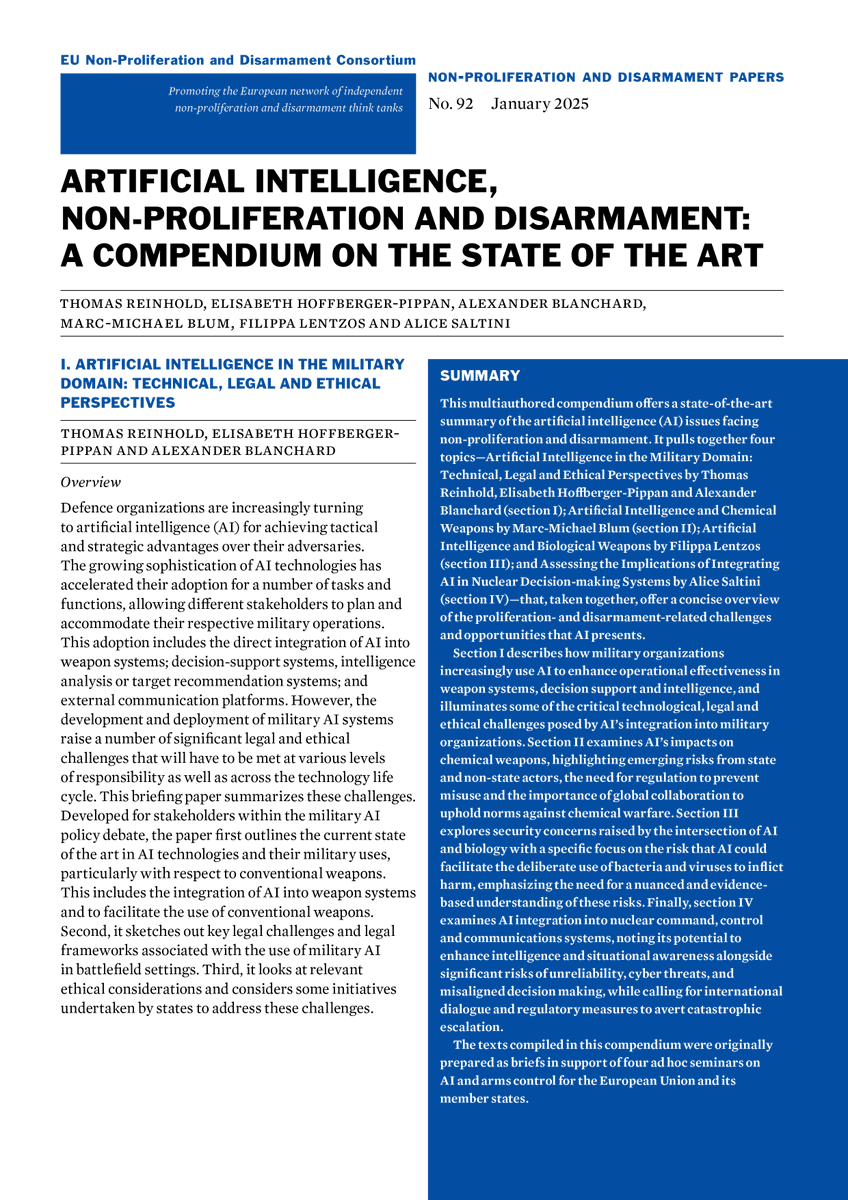
How is #AI reshaping arms control and global security? This compendium dives into the impact of AI on non-proliferation and disarmament, covering:
1️⃣ Military AI
2️⃣ Chemical Weapons
3️⃣ Biological Threats
4️⃣ Nuclear Systems
New 🇪🇺 #EUNPDC paper out now ➡️ https://t.co/961QQmpaWg
1/ New preprint! Findings from our new survey capture the views of local US officials on the impacts and governance of AI before and after the release of ChatGPT. Authors: @SophiaHatz4@kevinlwei@baobaofzhang and myself, fielded by @CivicPulse.
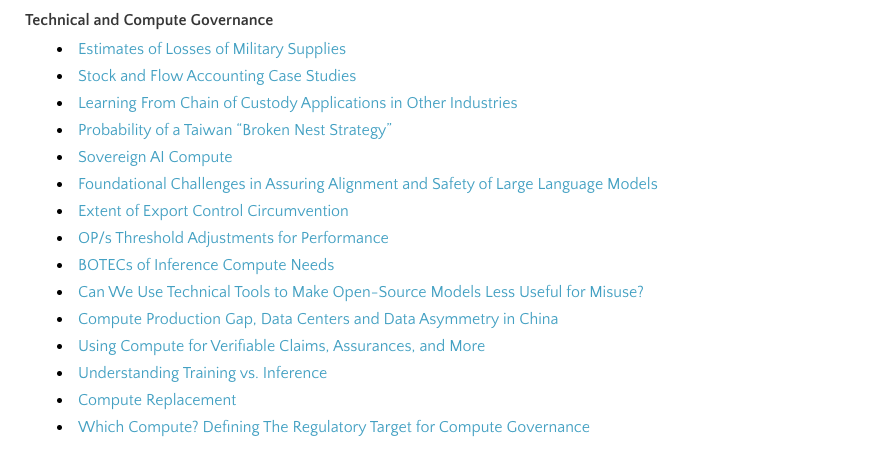
Want to get into AI governance research but don’t know what idea to pursue?
Check out this list of 78 ideas from AI gov researchers.
https://t.co/PbTQVTl2h7
Thanks to all the researchers who submitted ideas and huge thanks to Moritz for all the work putting this together.