How much should a bacterium invest in surviving stress? In our @emboreports article, we show that bacteria fine-tune their adaptive responses according to stress magnitude, carefully balancing the cost of adaptation against the need to survive @TIFRScience
https://t.co/7z0NuyIiv1
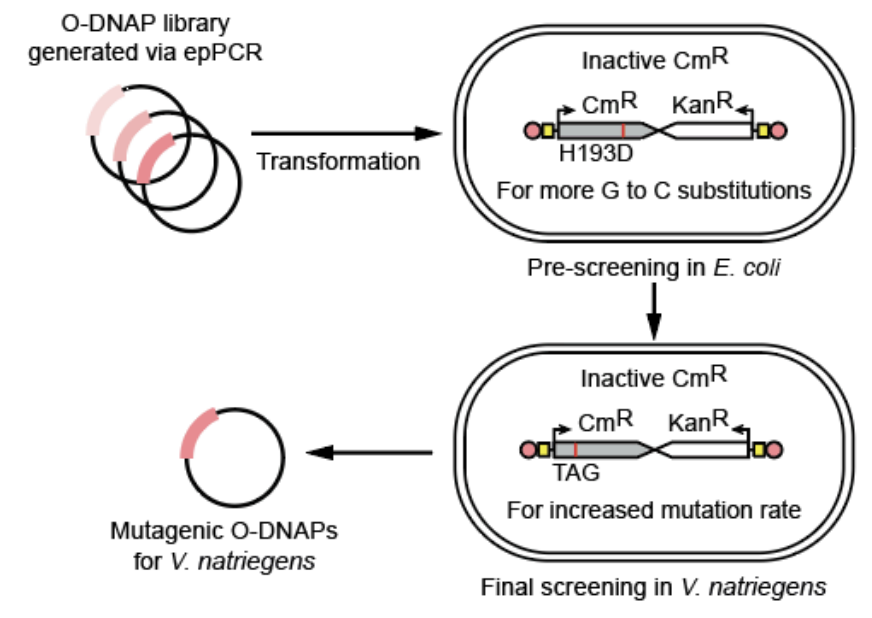
Optimized a continuous evolution system with an engineered error-prone DNAP (~10⁻⁴ mutation rate) without increasing genomic mutations
https://t.co/ADCz8emzzR
Transfer of the continuous mutagenesis platform into Vibrio natriegens and Pseudomonas putida
https://t.co/p1gSbAOpEX
How does E. coli age? According to this #mBio study, the the decisive factor driving growth decline in E. coli is not the presence of protein aggregates, but the fraction of the intracellular space they occupy. Learn more: https://t.co/iczYHZ9Yjs
What decides the “winners” in a microbial community? It's not only competitive traits; rare microbes play a key role. This #mBio study offers a “nomination-voting” model, showing how rare taxa collectively shape which species become dominant. #microbiome https://t.co/tb3u4VIaBu
Reprogramming encapsulins into modular carbon-fixing nanocompartments
"by fusing a short cargo-loading peptide to diverse Rubisco isoforms, we achieve targeted encapsulation while retaining CO2-fixing activity in E. coli" https://t.co/VojAc5LpTT
Biosynthesis cost and catabolic pathway length explain frequency of amino acid utilization as carbon sources by bacteria https://t.co/rIaAgoADBd #biorxiv_micrbio
Decoding emergent properties of microbial community functions through sub-community observations and interpretable machine learning https://t.co/clAT7B17fW