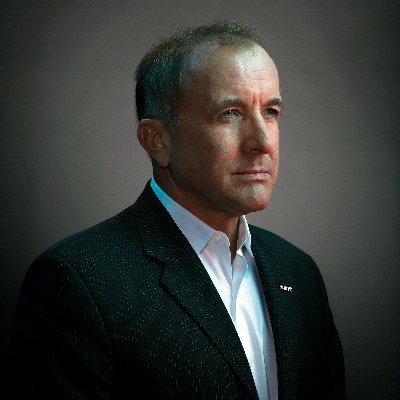
De Niro: I hate to say it, but loving our country is starting to sound like an abused spouse saying they love their abuser.
I can’t love a country that starts stupid and inhumane wars, killing thousands of innocents and indirectly causing the deaths and suffering of millions more.
I can’t love a country that takes healthcare away from millions of people and uses that money to enrich their pals in the Trump-Epstein class.
I can’t love a country that sends out masked militias to shoot citizens in the streets, torture our neighbors, and separate families.
I can’t love a country that’s led by a racist, misogynist, xenophobic tyrant.
And let me just say it: I can’t love a country that’s led by Donald Trump and his sycophant Congress.
@empire_res66190 Absolute arsehole who almost drove Southampton football club out of business.
Then he went into politics and got worse…..senile racist fascist cunt.
🚨 Until today, I was unaware of the circumstances leading up to the tragic stabbing of Henry Nowak.
The tweet quoted below contains a more detailed commentary on the fallout following the sentencing.
On 3 December 2025, Henry Nowak (18), a University of Southampton student, was walking alone in the Portswood area of Southampton after a night out.
During his walk home, he was recording himself on Snapchat. While walking along Belmont Road, he encountered Vickrum Singh Digwa (23) approaching from the opposite direction.
As they passed, Nowak filmed Digwa on his phone and directed taunting remarks at him. The Snapchat footage was shown in court. In the footage, Nowak says: “Innit bad man, what bad man. You’re a bad man, say you’re a bad man, go on.”
Digwa responded: “I am a bad man.”
Following this verbal exchange, Digwa turned back towards Nowak. A physical confrontation occurred in which Digwa took or attempted to take Nowak’s phone. A struggle followed between the two men. Digwa then produced a knife and stabbed Nowak multiple times.
Nowak suffered five stab wounds, including a fatal wound to the chest which caused catastrophic internal injury. He also sustained additional wounds to other parts of the body.
The judge’s comments are worth reading in full. Here is just one extract (I direct you particularly to paragraph 27):
13. “In Belmont Road, you and Henry passed each other. You claimed he deliberately barged into you. I am sure that was one of the many lies you have told and repeated since it happened. However, there was an interaction between you both. Henry, perhaps cheekily, made a comment, asking if you were a “bad man.” He was filming you on his phone when he said it. The tone of his voice was not aggressive or threatening but, as it turned out, a tragic error of judgement. It is a reasonable conclusion that the comment was because he had seen the large, sheathed dagger. That would have been a very unusual thing for an 18-year-old student and non-Sikh to see.
14. You moved towards him and, confidently, told him that you were “a bad man.” This was the response, I believe, of someone who thought they were being disrespected, made worse by the perceived intrusion of being filmed. You were not frightened or concerned and grabbed his phone, removing it from him. The exact events which immediately followed were only witnessed by Henry and you. However, it would not be unreasonable to conclude that Henry would have wanted his phone back, believing it had been stolen from him or that he had been robbed. That may have led to a physical struggle between you and him. In that situation, there was every need for self-restraint and control on your part. As someone who was born and raised in the UK, that should have been your focus rather than any distorted view of your religious traditions. Strong words, even a verbal threat, might have been justified but no more.
15. It would also seem that your turban may have been knocked, pulled or, potentially, punched off your head. The wearing of a turban at all times is another fundamental religious requirement of being a male Sikh. The removal of it by another would be considered a serious act and a further mark of disrespect. It is a reasonable conclusion that this would only have added to your anger.
16. You drew the dagger from its sheath and, as the jury was sure, you deliberately stabbed Henry in the chest with it. The knife passed through several layers of clothing, as demonstrated by the multiple slits in his dark top where the material had been overlaid on itself in the struggle and the single slit in his shirt. It passed upwards through soft tissue, between the two uppermost ribs, catching a lung and cutting an important vein behind the collar bone. This was to a depth of 8cm from the skin surface. The consequent bleeding flowed into his chest cavity. The pathologist, Amanda Jeffrey, found 1200 ml, or over 2 pints, of blood there. She said that no emergency medical treatment would have permitted access to the bleeding vein. In simple terms, he would not have survived, however quickly he received first aid, CPR or expert medical treatment.
17. You also stabbed him twice to the upper leg at some point and once again to the lower abdomen/groin area at the front. The latter only resulted in a knife tip injury; the former were both to a substantial depth, although not as deep as the chest wound. Henry’s face was also slashed with the blade of the dagger, but I cannot be sure that was aimed or intended. However, one or more of the four stabs must have had an immediate effect, as Henry was never able to put up his hands to defend himself from further serious injury. He was defenceless.
18. You, by contrast, had little, if any, injury. You told the attending police that you had a small bruise and swelling to your eye from a punch, but it is not obvious on body-worn footage taken then, and there has been no independent evidence given in the trial of any injury at all to you.
19. Your brother, Gurpreet, arrived on the scene very shortly after your attack had finished. You then filmed Henry desperately trying to get away from you, somehow scaling a fence onto a communal bin before landing on a car in front of the property next door. Bloodstains show that he had got one, more or all of his injuries before then.
20. You then showed a callous disregard for his wellbeing, knowing you had stabbed him to the chest. You continued to make films of Henry suffering, ignoring much of his desperation at having been stabbed. You told him that had not happened, no doubt to convince others who were nearby. Your attitude did not change even though Henry was clearly going downhill very fast. Your brother did much the same, although he may just have been accepting what you had told him, rather than lying himself. You lied to him that you had been attacked, picking up on his question about whether it had been accompanied by racism by falsely claiming that Henry had called you a “Paki.” I am sure that Henry had said nothing racist. You are the only person to make that claim and it is completely at odds with his previous character.
21. You joined your brother in relating these lies to the police. By then your mother and father were at the scene. Gurpreet explained that no weapons had been involved or were present. In fact, whilst he was talking to the call operator, you told your mother to take the murder weapon, sheath and belt away, which she did. You did not tell your father what had really happened. Much of the time you just stood by as he at least tried to do something to help Henry.
22. You carried on telling these wicked lies when police attended the scene, hampering them in doing their job and effectively obstructing the course of justice. You kept Henry’s phone with the incriminating recording of you on it. You had no intention of handing it over. It was found on you after you had been arrested and taken into police custody.
23. Thereafter, the time came when the police needed permission from a court to extend the time for you to be questioned in custody and arranged for you and Gurpreet to be taken there for that purpose. They took the opportunity to record secretly any conversation between the two of you on the journey. Speaking in Punjabi, you agreed to pretend you had acted in self-defence even though you confessed to stabbing Henry three times, including once to the chest with the dagger. You knew you were guilty, demonstrated by your saying to Gurpreet that if there were any cameras in that part of Belmont Road, you would be unable to put forward self-defence. You decided, much as you had at the scene, to try to cover it up. In all your police interviews, you decided not to answer questions about the incident. Instead, you made a written statement on 7/12/2025 which told more lies.
24. Once the criminal proceedings were underway, you made another statement, developing and modifying those lies. It was only when you gave evidence in court that you put forward your full defence. The jury entirely rejected that defence and I do too.
25. In addition to killing Henry and the irreparable harm to those close to him, you have also caused real suffering to others who knew him. You have brought shame upon your family, your community and your religion. Your actions have stirred up racial tension in Southampton and across the country which have made many Sikhs worried about their own safety even though they have done absolutely nothing wrong.
26. You bear some responsibility for the offence committed by your mother when you asked her to take the murder weapon away from you after she arrived on the scene. Your lies to the police about what had happened led, in part, to the arrests of your father, brother and mother for murder and their being taken into police custody. Your mother has remained in custody for the past seven months.
27. Another consequence of those lies is that the attending police officers honestly believed that there were reasonable grounds for suspecting Henry had committed an offence and arrested him, with the consequence he was handcuffed for about a minute before his condition further deteriorated and the arresting officer began CPR. The police were given a convincing but wholly false narrative of the incident. It was dark and Henry was wearing a dark top. The entry damage caused by the knife through it would not have been obvious. Whilst there was visible blood on Henry, it would not have clearly been seen coming from that wound and the clearly visible facial wound was not life-threatening. Henry was complaining that he had been stabbed and was struggling to breathe, but that would not have necessarily told the officers how serious the situation had become. It is the experience of the criminal courts that sometimes someone arrested and handcuffed will feign injury in the hope they may be released. These police officers were faced with having to make quick decisions in pressurised circumstances about the best way to act. The genuine shock to the particular police officer when he realised that he had been giving CPR to Henry when he had a serious chest wound tends to show that he was doing his best in a very difficult situation.
28. You were still present at the scene when Henry was saying he was dying and still you did not tell the truth about how seriously you knew you had hurt him and the need for urgency. Instead, you said he had not been stabbed and that he was exaggerating.
29. The sentence for murder is life imprisonment. You will remain in prison for life unless the Parole Board decides that it is safe for you to be released on a life licence.”
Link to the judge’s full sentencing remarks can be found here:
https://t.co/jzgIBDOldR
Konstantin Kisin’s video, amplified by Elon Musk, delivers an emotionally powerful commentary on the murder of Henry Nowak by Vickrum Singh Digwa in Southampton. It rightly highlights a genuine and disturbing initial policing failure. However, the presentation is selective, its causal claims speculative, and its central thesis is hyperbolic and unsupported by the official record.
Digwa stabbed Nowak five times, including a fatal chest wound with a large dagger/kirpan. He lied to police, claiming a racist attack involving a “Paki” slur, and his family aided the cover-up by hiding the weapon.
Officers arrived at a dark scene where Nowak wore dark clothing. The fatal chest wound was not immediately obvious (visible blood’s source was unclear; a facial slash was more apparent). Confronted with Digwa’s “convincing but wholly false narrative,” they handcuffed the dying Nowak, who repeatedly said he had been stabbed and “I can’t breathe,” for about a minute before realising the severity and attempting CPR.
The pathologist confirmed Nowak would not have survived even with immediate intervention. Digwa was convicted of murder and sentenced to life with a 21-year minimum term on 1 June 2026. Hampshire Police apologised for the initial response; the IOPC is investigating.
Kisin condemns the officers’ initial actions, yet his framing overrides the Nowak family’s explicit wishes. Henry’s father Mark Nowak stated:
“We do not want his death to be used to create further division, hatred, or tension. We want his story to make our streets safer for everyone.”
The family endorsed the prosecution’s view:
“This is not a case about Sikhism. This is not a case about racism. This is a case about murder. People should not be able to walk openly through the streets of Britain carrying a 21 cm blade.”
They called the initial police treatment “inhumane and degrading” and sought a “full, fearless and transparent” investigation, while consistently urging against racial or cultural politicisation of the tragedy.
Judge William Mousley KC’s sentencing remarks provide the authoritative account (I would urge everyone to read it).
On the police response, he stated (paragraph 27):
“Another consequence of those lies is that the attending police officers honestly believed that there were reasonable grounds for suspecting Henry had committed an offence and arrested him… The police were given a convincing but wholly false narrative of the incident. It was dark and Henry was wearing a dark top. The entry damage… would not have been obvious… These police officers were faced with having to make quick decisions in pressurised circumstances… The genuine shock to the particular police officer, when he realised [the truth]… tends to show that he was doing his best in a very difficult situation.”
It should be noted that despite Kisin’s framing and argument, the judge made no reference to post-2020 anti-racism training, BLM, “two-tier policing,” or any ideological bias.
The judge attributes the error squarely to Digwa’s deception, situational factors (darkness, non-obvious wound), and the inherent pressures of the scene, not systemic racism or training that elevated allegations as a “trump card.”
Kisin’s core claim, that UK institutions reformed in the name of anti-racism are now “openly racist against white people,” with racism allegations functioning as an overriding “trump card” due to mandatory diversity training, is a broad, sweeping indictment which rests on speculation rather than evidence.
The judicial record directly contradicts any ideological causation. The judge explicitly frames the officers’ actions as an honest, good-faith response to deception in chaotic conditions.
One serious but time-limited error (handcuffing for approximately one minute in a complex knife incident where the victim ultimately could not have been saved) does not prove systemic “bureaucratic racism” or institutional inversion targeting white people.
Kisin universalises from a single tragedy to indict entire institutions, while omitting or downplaying the judge’s contextual analysis, the successful prosecution, and the family’s de-racialised framing.
This turns a real policing failure, enabled primarily by the killer’s lies, into confirmation of a pre-existing anti-woke culture war narrative that Kisin has made a good living off for many years. It is rhetorically powerful but evidentially overstated.
I now want to turn to Kisin’s rhetorical techniques and discursive moves,
Kisin employs several effective techniques that enhance persuasiveness at the expense of completeness, including:
1. Emotional parallelism and moral inversion:
Equating George Floyd’s “I can’t breathe” with Henry’s creates a potent symmetry of hypocrisy, reframing 2020’s anti-racism efforts as having birthed reverse racism.
2. Selective curation and omission:
The video minimises the judge’s emphasis on darkness, the non-obvious wound, Digwa’s “convincing” lies, and family wishes, while amplifying the racial inversion angle.
3. Systemic indictment with individual absolution:
Saying Police Officers are “not bad people” but ideologically captured products of flawed training enables systemic critique without directly attacking frontline responders.
4. Appeal to silenced truth:
Positioning the commentary as breaking “institutional silence” resonates with distrustful audiences but a cursory glance across print, broadcast and social media suggests the opposite of a silencing.
These moves help make the video compelling and shareable, but they prioritise ideological coherence over the full, evidence-driven, judge-grounded picture.
In summary, Kisin takes a tragic murder involving lies, poor visibility, and high-pressure human error, where justice was ultimately and quickly served, and inflates it into definitive proof that post-2020 reforms produced openly anti-white racist institutions.
His claim is unsupported by the sentencing remarks, disregards the family’s explicit call against division, and weakens legitimate scrutiny of policing by relying on selective framing.
A stronger approach would condemn the initial failure, respect the Nowaks’ wishes to focus on knife crime and safer streets, adhere closely to the judicial findings, and debate broader cultural pressures on their own evidence, without hijacking this specific tragedy.
Musk’s amplification gives his overstated narrative far wider reach.
This morning I asked myself, not for the first time, who is Nigel and I made some notes.
And it does add up.
Here is a man who sells himself as the ordinary bloke with a pint, the man of the people, the great outsider standing up against the establishment.
And yet somehow this ordinary bloke always seems to arrive with a camera crew, a donor network, a friendly broadcaster, and now a parliamentary investigation into a £5 million gift from a crypto billionaire.
Very normal.
Very grassroots.
Very “just one of the lads”.
The peoples revolt, apparently, now comes with lighting, branding, fundraising dinners, professional outrage, and a small question about whether millions should have been declared properly.
Everything is a betrayal when Labour does it.
Everything is “nothing to see here” when Nigel does it.
Housing? Blame Labour.
The NHS? Blame Labour.
The economy? Blame Labour.
Boats? Blame Labour.
A £5 million gift? Suddenly everybody must calm down and respect the process.
And then came Tuesday.
A young man died. A family was grieving. A country was trying to understand something horrific.
And Farage stepped forward.
Not with calm.
Not with care.
Not with responsibilty.
But with his announcement of “pure cold rage”.
That phrase matters.
Because anger is human.
Anger can be moral.
Anger can demand answers, justice, accountability and truth.
I understand anger.
A lot of people are angry.
They have every right to ask serious questions.
But rage is different.
Rage does not ask careful questions.
Rage does not wait for investigations.
Rage does not protect grieving families from becoming political props.
Rage looks for a target.
And that is where Farage always seems most comfertable.
Not solving the pain.
Not calming the country.
Not asking how institutions failed and how they can be fixed.
But standing beside the pain with a microphone, turning the temprature up, and calling it leadership.
Warm enough to repost.
Warm enough to donate.
Warm enough to vote.
But never calm enough to ask:
“Hang on, who benefits from keeping us this angry?”
That is the trick.
He does not need Britain to feel hopeful.
He does not even need Britain to feel informed.
He needs Britain permanently one headline away from rage.
Because rage is usefull.
It fills rallies.
It drives clicks.
It turns grief into theatre.
It makes slogans feel like solutions.
And while everyone is shouting, nobody asks the boring questions.
Where is the plan?
Where is the funding?
Where are the costings?
Where is the responsibilty?
Maybe that is who Nigel Farage is.
Not the man of the people.
But the man who knows exactly how to turn peoples pain into his own political stage.
The Reform & Tory Sitcom continues.
Same chaos. Different rosette.
Anger can demand answers.
Rage just sells tickets.
If this speaks to you, please add your comments, repost it, and maybe follow me — not for me, but because politics needs fewer slogans and more people asking proper questions.
#Farage #ReformUK
🔥 The man in the red jumper on #BBCQT just said what millions are thinking, and what too much of the media won’t touch:
“We are just Germany in the 1930s instead of blaming Jews we are blaming migrants.
But they aren’t responsible for Austerity, Brexit or the profiteering crisis.”
He nailed the scapegoating game. The real problems are austerity, Brexit failures, and profiteering, not migrants.
This is the conversation the right-wing press is desperate to avoid. Share it before they bury it.
#BBCQT #QuestionTime
Jürgen Klopp on Liverpool appointing Andoni Iraola as their next manager:
🗣️ “I've seen some people questioning this appointment and honestly, I think they're making a huge mistake.
Liverpool haven't hired a manager because of his name. They've hired him because of his work. And in football, that should always be the most important thing.
When I watch Iraola's teams, I see courage. I see intensity. I see players who run like their lives depend on it. I see a team that refuses to be intimidated by anyone.
That sounds very familiar to me.
People forget that before managers become elite, they first have to be given the opportunity. Not everyone arrives with ten trophies and a global reputation.
What matters is whether you can coach. And believe me, this guy can coach.
I faced his teams and they were a nightmare. They pressed, they fought, they attacked and they never stopped believing. You leave those games exhausted.
The thing Liverpool supporters will love is that he doesn't play with fear. He doesn't care about budgets, reputations or big names. He wants to compete. Every single week.
And if he brings that mentality to Anfield, with better players and bigger resources, then the rest of the Premier League should be very worried.
Because Liverpool haven't appointed a caretaker. They haven't appointed a celebrity.
They've appointed a coach who is obsessed with improving, obsessed with competing and obsessed with winning.
And those are usually the most dangerous ones.”