“I’ve read and continue to read the Bible a lot—partly as a result of being in all those hotel rooms, partly a long-standing habit.” —Margaret Atwood https://t.co/M7oqe5zLoW
Greetings, everyone! It is time to count some bats! 🦇🦇🦇🦇🦇🦇🦇🦇🦇🦇🦇🦇🦇🦇🦇🦇🦇🦇🦇🦇🦇🦇🦇🦇🦇🦇🦇🦇🦇🦇🦇🦇🦇🦇🦇🦇🦇🦇🦇🦇🦇🦇🦇🦇🦇🦇🦇🦇🦇🦇🦇🦇🦇🦇🦇🦇🦇🦇🦇🦇🦇🦇🦇🦇🦇🦇🦇🦇🦇🦇🦇🦇🦇🦇🦇🦇🦇🦇🦇🦇🦇🦇🦇🦇🦇🦇🦇🦇🦇🦇🦇🦇🦇🦇🦇🦇 How many bats did you count?! 💜⚡
Whatever book you pick up, it’s likely to make you feel better—maybe even a whole lot better. “In a secular age, I suspect that reading fiction is one of the few remaining paths to transcendence, that elusive state in which the distance between the self and the universe shrinks,” Ceridwen Dovey writes, in “Can Reading Make You Happier?,” which was published in 2015. Dive into the research behind the therapeutic effect of books: https://t.co/H94aQp3jtK
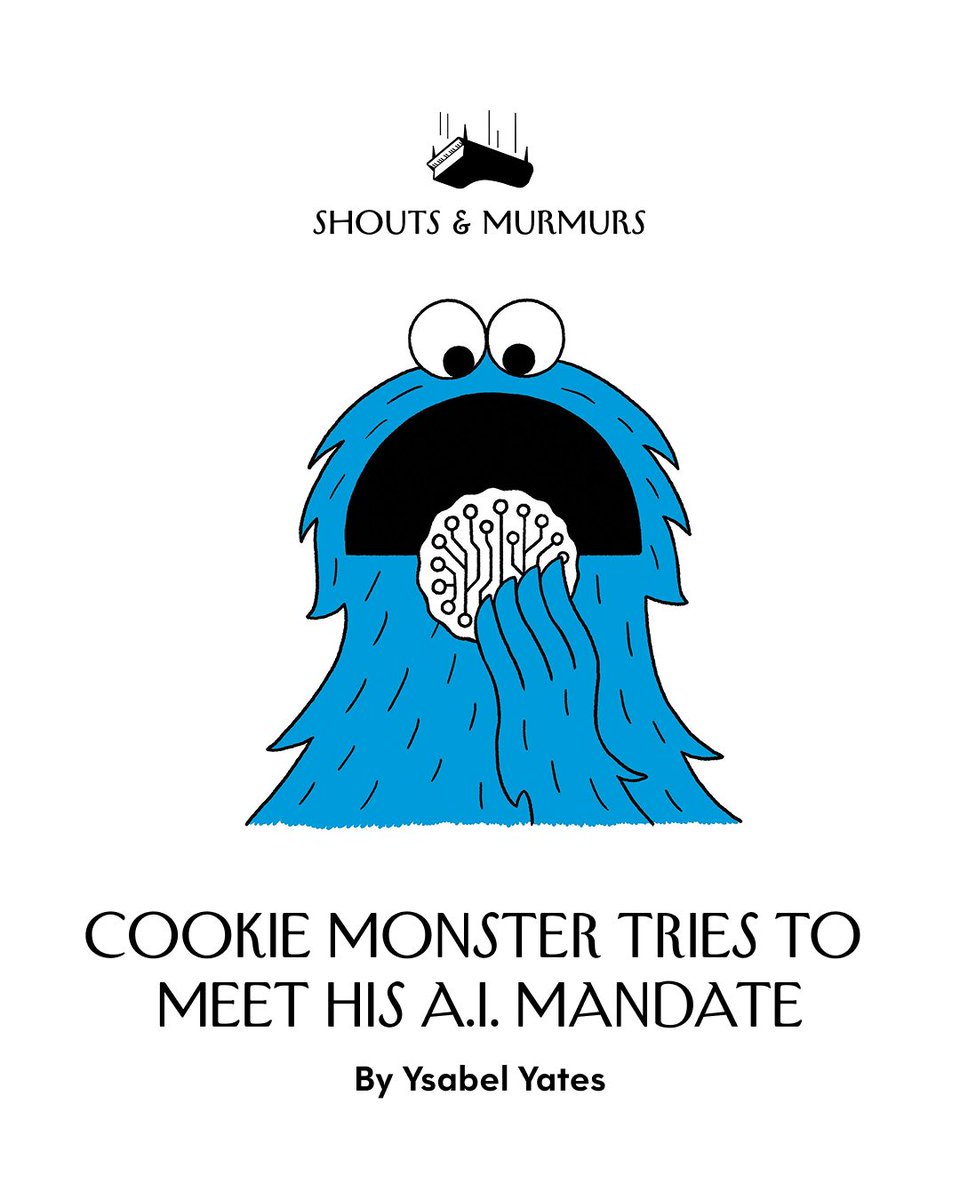
Cookie Monster, the resident cookie expert on “Sesame Street,” got a new boss who is insisting that he use A.I. for cookie work. For New Yorker Humor, read about his harrowing experience: https://t.co/ANTMIV8t3f
“In a secular age, I suspect that reading fiction is one of the few remaining paths to transcendence, that elusive state in which the distance between the self and the universe shrinks,” Ceridwen Dovey writes. Read more about the emotional power of books: https://t.co/JWWc4ipBLZ
Whatever book you pick up, it’s likely to make you feel better—maybe even a whole lot better. “In a secular age, I suspect that reading fiction is one of the few remaining paths to transcendence, that elusive state in which the distance between the self and the universe shrinks,” Ceridwen Dovey writes, in “Can Reading Make You Happier?,” which was published in 2015. Dive into the research behind the therapeutic effect of books: https://t.co/H94aQp3jtK
“It was the proudest dad moment of my life, with apologies to my kids,” says Bravo, describing the moment he watched his crewmate, Alpha, being rescued after they ejected from their fighter jet and landed miles apart in Iran. https://t.co/sjshiVcpwf
After 9/11, Sesame Street aired four episodes to help children (and grown-ups) process fear and grief.
In this episode, which aired in 2002, Elmo learns to face his fear with help from the FDNY firefighters — a reminder that even when we're scared, someone is there to keep us safe. #NeverForget
Hannah Arendt arrived in New York in 1941 with a formidable German training in philosophy. What she still had to learn, she learned on the Upper West Side. https://t.co/jIsNycECqm
Sometimes a book title tells the whole story:
🪧 World's Okayest Oracle (Reluctantly) Seeks Demon
☀️ A Perfect Day to Put Your Head in the Oven
Your OCD Will Hate This Book
👽 I Punched an Alien and Now We're in Couples Therapy
📨 I Hope This Email Finds You In Hell
In @nytopinion
“The U.S. government does not own shares in drug companies. It does not own shares in airlines or oil companies or meatpackers,” the editorial board writes. “It should not own shares in A.I. companies.” https://t.co/o10W9I7Og7
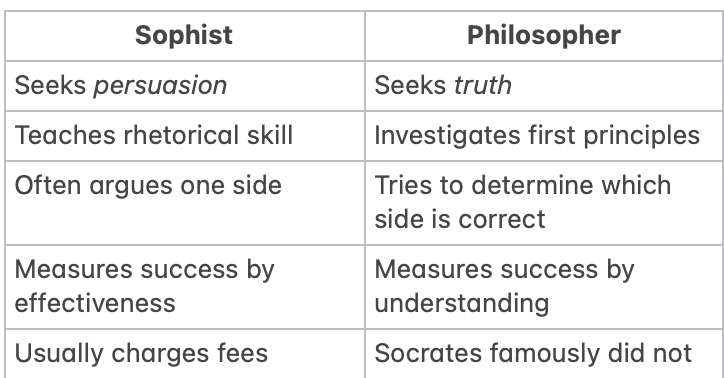
I am using the difference betw think tanks & genuine scholarship as a marker betw the SOPHISTS & the birth of PHILOSOPHY (Socrates), where you are not trying to advocate, learn effective rhetoric, & argue. You are just AT ALL TIMES trying to elicit the truth.
"I’ve lived in Princeton my whole life. Since I was a kid, I’ve been obsessed with the legacy of my town — roaming the campus, scavenging Princeton Battlefield and memorizing every Princeton-related fact I could find (shout out Orange Key Tours!) I was so captivated by our Revolution-era heroes George Washington, James Madison and Alexander Hamiton that over the COVID quarantine, I was inspired to write what is now a published children’s book, ‘The Young Federalists.’ In the story, three intrepid siblings travel through time, meet the legendary Hamilton and discover the significance of his contribution to the fundamental founding document, ‘The Federalist Papers.’ Just as Hamilton sought to encourage a genuine knowledge of and admiration for the American political system, so also do I write to encourage the timeless value of our constitutional structure. The ideas articulated in ‘The Federalist Papers’ will always be with us. In fact, they are present with us right here and right now. During my freshman spring, I was chatting with Dana Sheridan — a librarian at Princeton’s Cotsen Children’s Library — about local author events. When I mentioned the subject of my book, she was immediately excited. Did I know, she asked, that Princeton University Library’s Special Collections holds some of the earliest editions of ‘The Federalist Papers,’ including Hamilton’s personal copy? I didn’t then, but a couple of days later, I held that book in my hands. The binding was broken, the pages were worn and Hamilton’s scribbles were faded. I cannot articulate the incredible feeling of turning the pages of a book both so informative in my life and belonging to my beloved hero. I have Princeton to thank for that experience. The year 2026 is a special year for our town, for our nation. The 250th anniversary of the US gives us the opportunity to revitalize a knowledge of our history. And we can start right here on campus. Right here in my home, Princeton, N.J." — Abigail Readlinger '27
#America250
The Atlantic’s editors and writers have selected 25 books to suit every mood this summer. If you’re looking for a book that can teach you something completely new, @Borisk recommends “The Zorg.” See more selections: https://t.co/2lasH5E38N