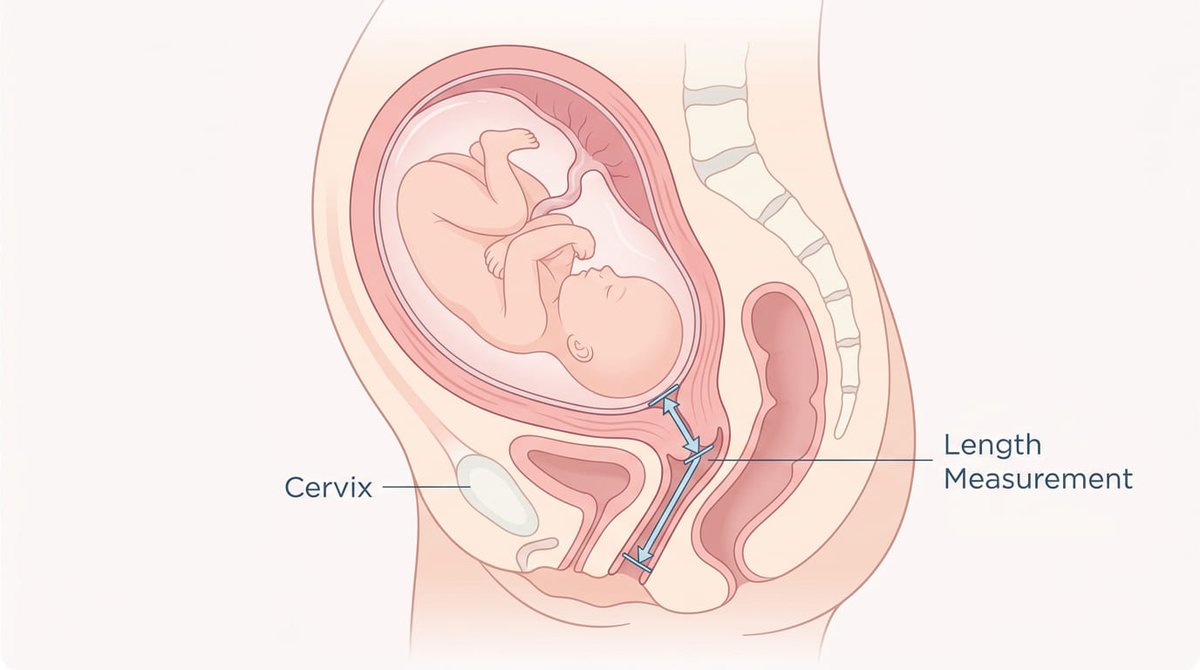
Fetal MRI cervical length correlated strongly with TVS (r=0.775) in 100 pregnancies. In the 2nd trimester, MRI CL >25 mm ruled out a short cervix (NPV 100%); PPV was 63.6%. TVS remains the standard. https://t.co/n0S7niN5cn #ObstetricUltrasound#FetalMRI
AI’s role in prenatal ultrasound is still being defined, and that’s a good thing. A review at ISUOG 2026 maps where AI already helps and where evidence still needs to catch up. https://t.co/PXSPV298T8 #PrenatalUltrasound#AIinHealthcare
Hemodynamics-guided antihypertensive therapy for hypertensive disorders of pregnancy was linked to fewer adverse maternal & perinatal outcomes vs standard BP-based care. Findings are hypothesis-generating; RCTs needed. https://t.co/M5GQkEOjLg #ObGyn#MaternalHealth#Preeclampsia
AI support helped clinicians detect fetal heart abnormalities more accurately on prenatal ultrasound—93.5% sensitivity and 97.0% specificity, versus 78.2% and 75.9% without AI. It also reduced interpretation time.
https://t.co/vnMjA9t1GQ
#AIinHealthcare#PrenatalCare
This study highlights span a systematic review on intrauterine transfusion outcomes for fetal anemia, a 7-year French national cohort study on maternal CMV screening trends, a study on the FMF pre-eclampsia screening algorithm across ART. #ObGyn
https://t.co/2dgvaSGuWv
FDA + CE-cleared AI ultrasound for high-volume clinics is now live in the US & EU. AI tools cut manual steps and exam time while standardizing results. Imaging AI is shifting from accuracy alone to workflow efficiency. #AIinHealthcare#MedicalImaging https://t.co/jSJXkU0FFO
New findings from the prospective, multicenter CANNES trial show ultrasound may offer diagnostic performance comparable to PET/CT and DW-MRI for preoperative pelvic lymph-node assessment.
An accessible imaging option for cancer staging. Read more: https://t.co/A0dtX5uONq
Can AI tell if a baby's lungs are ready for the world? New research presented at AIUM 2026 says yes. A CNN-based AI model now analyzes fetal ultrasound images to assess lung maturity — a critical factor in preterm birth outcomes. https://t.co/E0sm284HCH #Soundwaves
A new portable system developed at UNC brings five critical pregnancy diagnostics directly to community clinics and rural health centers, at a fraction of the cost of traditional machines. https://t.co/ZOwEAlhsoM
#Soundwaves#UltrasoundOnTheGo#MaternalHealth#AIUltrasound
New Cureus research highlights that endometriosis location matters. Deep and ovarian endometriosis are linked to painful intercourse and pelvic pain, while transvaginal sonography (TVS) may support early diagnosis and improved symptom management.
https://t.co/741f0e4Kcm
New Research: Key Risk Factors Identified for Partial Placental Retention After Cesarean Delivery
This research enables better risk stratification and timely intervention to improve maternal outcomes. Full study: https://t.co/4ZCXR36F6n
#MaternalHealth#CesareanDelivery
Using the FMF competing-risks model across 51,024 participants, a recent study found aspirin can delay delivery due to preterm pre-eclampsia, with predicted risk driven primarily by MAP.
Full study: https://t.co/IDaOrJKr4U
#PreEclampsia#MaternalHealth#PregnancyCare
Ultrasound analytics are powering the next wave of healthcare digital transformation. Better visibility into fleet performance helps healthcare organizations improve utilization, spot workflow bottlenecks, and make smarter equipment decisions.
Read more: https://t.co/uChy9q6KKb
Pregnancy care is getting a tech upgrade: researchers at UCSD, Stanford & Oxford created UPatch — a soft, wearable ultrasound that continuously monitors fetal anatomy and blood flow in real time without a sonographer. Read more: https://t.co/uSDzS8amDM
#HealthTech#WearableTech
Prospective comparison of diagnostic accuracy of ultrasound, PET/CT and DW-MRI for preoperative assessment of pelvic lymph nodes in cervical cancer patients: results of the CANNES trial
https://t.co/A0dtX5uONq #Soundwaves#GynecologicOncology#UOG2026#MedicalImaging
This review underscores the growing role of artificial intelligence in ultrasound diagnostics for congenital malformations, highlighting how AI may support earlier detection, more consistent interpretation, and better clinical decision-making. https://t.co/izFAZkvBxV
A recent multicenter study from West China found that AI-based quality control was associated with significant, sustained improvements in fetal ultrasound image quality, showing how technology can support more consistent care where it’s needed most.
#HealthcareInnovation
AI continues to reshape prenatal care. Ultrasound AI has received FDA De Novo clearance for its Delivery Date AI technology, which uses standard ultrasound images to help predict delivery date and support clinical decision-making.
https://t.co/MHnwt5313A
#MaternalHealth