This morning, I saw a reality that too many firstborns grow up living.
A little girl, no more than six, walking to school with her younger sister, maybe four. She held her hand tightly, not as a playmate, but like a guardian. Each time they approached the road, she gently pulled her inward, shielding her from passing vehicles. The younger one was crying, probably denied something from home, her tears loud and restless. Yet the older girl did not complain. She kept walking, whispering comfort, steadying her sister’s steps, carrying a responsibility far bigger than her age.
That is the quiet burden of firstborns.
From childhood, they are assigned roles they never applied for. Protector, caregiver, example, second parent, etc. While other children are allowed to be children, firstborns are taught to be careful, to be strong, to look out for others. Their mistakes are lessons, their sacrifices expected, their maturity forced into existence too early.
They learn responsibility before they learn freedom. They carry siblings on their backs, emotionally and sometimes physically. They are told to understand, to endure, to adjust, because they are the “eldest”. No one asks if they are tired. No one asks if they are ready.
The weight placed on firstborns is unreal, yet they carry it quietly, often with love, often with pain.
If there is any fairness in nature, then firstborns deserve to be rewarded with everything good life has to offer. Peace, softness, ease and love that chooses them first for once.
Tonight at a shopping mall , I watched a 5 year old boy ask a little girl if he could hug her because he liked her sweater. She said, "No.” He smiled, "Okay! I like your sweater. Bye!" and ran back to his dad. To his dad, he proudly said: "I didn't hug her because she said no... but I told her I liked her sweater!" His dad replied, “Cool, buddy!" ...and they went on shopping.
If a 5-year-old boy can understand consent and respect a "No," then so can every adult
I wanna marry into a funcional family... when they have cookouts, game nights, holiday dinners and bday parties...I wanna be able to go get breakfast with my mother in law & go shopping with their siblings. I don't want it to be just "US" I want a family that's oriented.
I would be my greatest joy to see our government’s ministries, state agencies, and state-owned enterprises (SOEs) obligated and embracing the practice of producing quarterly, semi-annual, or annual reports. Such reporting would not only enhance transparency and accountability but also provide researchers with critical data to better understand the challenges within our governance system.
Making this information publicly available would strengthen evidence-based policymaking, foster institutional reforms, and ultimately improve the quality of governance and service delivery.
Lastly, I would love to see the establishment of the South Sudan School of Government (SSSoG) and South Sudan Institute of Public Policy Research and Analysis (SSIPPRA).
Passing the phone to the girlie who lost her spark this year. Who can’t remember the last time she actually felt like herself, whole, sane, thriving. I know it must feel so difficult, having to carrying on with a huge piece of you missing. You won’t have to for much longer. That missing piece? She’s coming back to you. And when she returns, she’d be so much better than you remember.
Your laughter will run deep and echo fully again. Your heart will feel light again. Your soul will find bliss again. Your lips will sing once more. And your mind will experience peace like never before. Hold on now, the stars are beginning to align🫶🏼
Cabinet of ministers has approved SSP 7 trillion ($1.5b) for 2025-26 FY which will now be moved to the parliament.
As the parliament sits for allocation, these are my top five that should be given better allocation.
1. Military/security.
2. Ministry of Roads and bridges.
3. Ministry of agriculture.
4. Ministry of health.
5. Ministry of education.
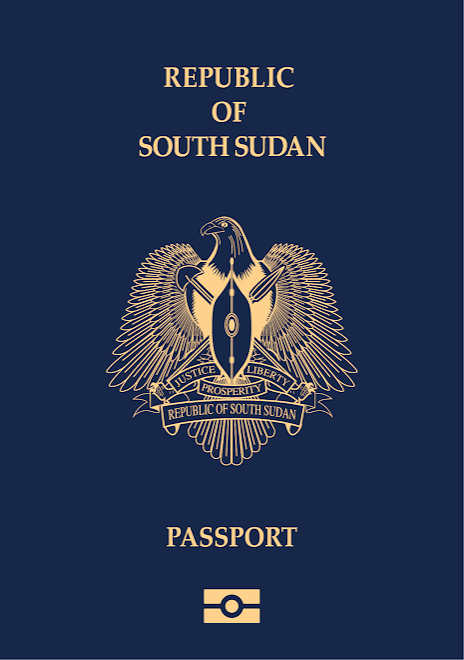
South Sudan's passport expires after every five years of issuance. Several attempts to give it a standard 10 year period have failed. The main reason for a short period of expiry is financial, because it gives a quick turnaround for the renewal whose charges are also the same as obtaining a new one.
The contract with the German company contracted to print and supply the booklets has not been managed well, with constant payment delays that result in delay of the processing and issuance of passports and even worse, Nationality Certificate Identifications.
The prudent thing to do is to increase the validity period to 10 years.
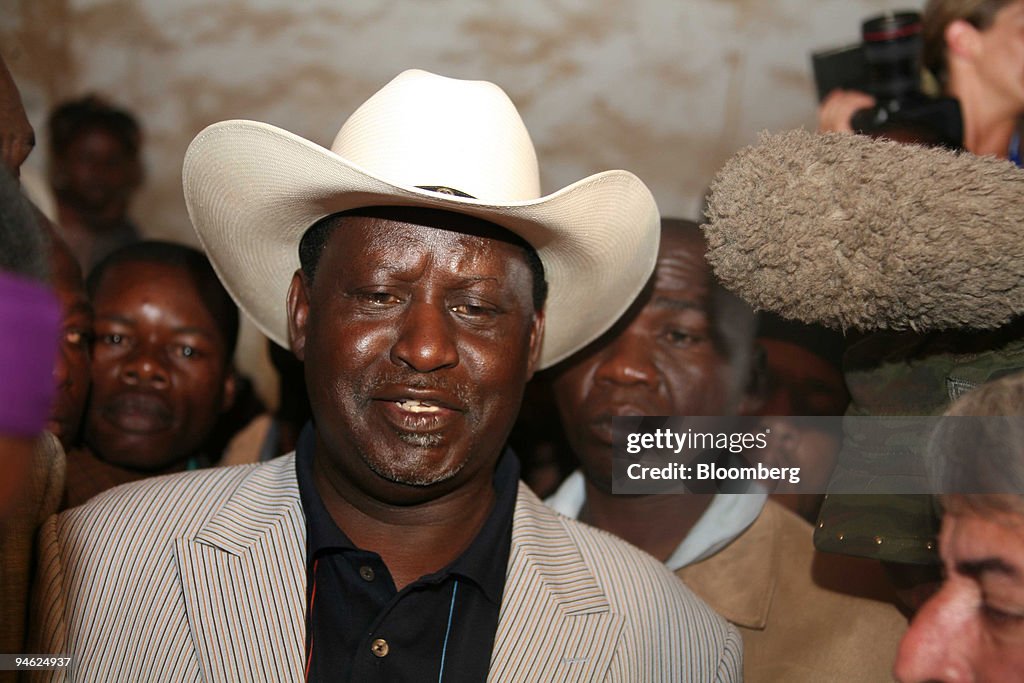
Raila Odinga died on October 15th, aged 80
In the humid haze of a Kerala morning, as the sun crept over the Ayurvedic hospital grounds in Koothattukulam, Raila Amolo Odinga embarked on what would be his final walk. The 80-year-old Kenyan statesman, ever the indefatigable campaigner, had sought respite in India's ancient healing traditions for an eye ailment, far from the dusty rallies and intrigue-laden corridors of Nairobi. But on October 15th, 2025, his heart faltered during that routine stroll, succumbing to cardiac arrest—a quiet end for a man whose life had been a symphony of thunderous oratory, near-misses at power, and unyielding defiance. Known to admirers as “Baba” (father), “Agwambo” (the mysterious one), or simply “the Enigma,” Mr Odinga was Kenya’s eternal opposition leader: a five-time presidential contender who reshaped his nation’s democracy without ever fully grasping its highest office. His passing marks not just the close of an era, but the fading of a political archetype—the post-colonial firebrand who blended socialism, pragmatism, and populism into a potent, if elusive, brew.
Born on January 7th, 1945, in the Anglican Church Missionary Society Hospital in Maseno, near Lake Victoria in western Kenya’s Nyanza Province, Mr Odinga entered a world already steeped in the ferment of independence. His father, Jaramogi Oginga Odinga, was a Luo elder and a key architect of Kenya’s liberation from British rule, serving as the country’s first vice-president under Jomo Kenyatta. But Jaramogi’s leftist leanings—dreams of a socialist utopia inspired by Soviet models—clashed with Kenyatta’s capitalist inclinations, leading to his ousting in 1966 and a life in opposition. Young Raila, the second of eight siblings, grew up in a household buzzing with political exiles, whispered plots, and the clack of typewriters drafting manifestos. His mother, Mary Juma Ajuma, a devout Anglican, provided a counterbalance of quiet faith and moral steadfastness, baptizing her son in the church where he would later return as a born-again Christian.
Education beckoned beyond the family’s modest Luo homestead. After attending Kisumu Union Primary School and Maranda Primary in Bondo, Mr Odinga transferred to Maranda High School, a bastion of colonial-era rigor. But in 1962, at 17, his father—ever the ideologue—dispatched him to East Germany, the German Democratic Republic (DDR), amid the chill of the Cold War. This was no whimsical exile; Jaramogi’s Soviet sympathies opened doors to scholarships in the Eastern Bloc. Raila spent two years at the Herder Institute, part of the University of Leipzig’s philological faculty, immersing himself in German language studies alongside other foreign students groomed for socialist solidarity. The grey austerity of Leipzig, with its rationed goods and ideological lectures, was a far cry from the sun-baked plains of Nyanza. Yet it sharpened his analytical mind.
In 1965, a scholarship propelled him to the Technical University in Magdeburg (now Otto von Guericke University), where he pursued mechanical engineering. Life in the DDR was a study in contrasts: rigid communist doctrine by day, clandestine adventures by night. Mr Odinga recounted smuggling Western goods—jeans, chocolates, even Beatles records—through Checkpoint Charlie from West Berlin to his East German friends, evading the Stasi’s watchful eyes. He graduated in 1970 with a master’s degree in mechanical engineering, specializing in production engineering and welding—a practical toolkit that would later underpin his business ventures. These formative years in the DDR instilled a love for tinkering with systems, be they engines or political coalitions, and a wariness of unchecked authority that echoed his father’s rebellions.
Returning to Kenya in 1970, Mr Odinga initially sidestepped the political fray, channeling his engineering prowess into enterprise. He founded the Kenya Petroleum Refineries Ltd (later renamed East African Spectre) in 1971, manufacturing liquid petroleum gas cylinders—a monopoly that built him a modest fortune in gas, molasses, and engineering supplies. By 1974, he had joined the civil service as group standards manager at the Kenya Bureau of Standards, rising to deputy director by 1978. It was a steady ascent, enforcing weights and measures with Teutonic precision, but politics lurked like a shadow.
The call came violently in 1982. Implicated in a failed coup against President Daniel arap Moi—led by air force mutineers—Mr Odinga was charged with treason. Though he denied masterminding it, a 2006 biography suggested deeper involvement, stirring calls for his arrest years later (thwarted by the statute of limitations). Detained without trial for six years in Kamiti Maximum Security Prison, he endured solitary confinement, emerging in 1988 only to be rearrested twice more. These stints—totaling nearly nine years—radicalized him, turning the engineer into a multiparty democracy crusader. Released in 1991, he fled to Norway amid assassination fears, returning in 1992 to join the Forum for the Restoration of Democracy (FORD).
Thus began a labyrinthine political odyssey, marked by party-hopping, alliances, and betrayals that mirrored Kenya’s fractious tribal and ideological divides. Elected MP for Lang’ata in 1992 under FORD-Kenya (his father’s party), he inherited leadership ambitions after Jaramogi’s 1994 death, but squabbles led him to form the National Development Party (NDP). In a stunning pivot, he merged NDP with Moi’s ruling Kenya African National Union (KANU) in 2000, earning ministerial posts in energy (2001-02) and roads (2003-05). Critics cried opportunism; he called it “cooperating with the devil” for reform. As energy minister, he electrified rural areas; in roads, he paved highways that knit the nation together.
The 2002 election was a triumph: Backing Mwai Kibaki’s National Rainbow Coalition (NARC), Mr Odinga’s rallying cry—“Kibaki tosha!” (Kibaki is enough!)—helped oust Moi after 24 years. But Kibaki reneged on a power-sharing deal, denying Mr Odinga the premiership. The rift exploded in the 2005 constitutional referendum, where Mr Odinga led the “No” campaign against Kibaki’s draft, winning decisively and getting sacked from cabinet. He founded the Orange Democratic Movement (ODM), its orange symbol evoking the ballot’s “No” option.
The 2007 presidential bid was his zenith—and nadir. Running on a populist platform against inequality and corruption, he claimed victory amid rigging allegations. Violence erupted, pitting tribes against each other in Kenya’s bloodiest post-independence crisis: over 1,000 dead, 600,000 displaced. Kofi Annan’s mediation forged a grand coalition; Mr Odinga became prime minister (2008-13), a revived post that gave him sway over infrastructure and devolution. He championed the 2010 constitution, decentralizing power to counties and curbing presidential excesses—a legacy that endures.
Four more presidential runs followed, each a saga of hope dashed by controversy. In 2013, under the Coalition for Reforms and Democracy, he lost narrowly to Uhuru Kenyatta (Jomo’s son), petitioning the Supreme Court in vain. 2017 brought drama: The initial vote was annulled for irregularities—a global first—but Mr Odinga boycotted the rerun, swearing himself in as “people’s president” in a mock ceremony that flirted with sedition. A 2018 “handshake” with Kenyatta thawed tensions, birthing the Building Bridges Initiative for constitutional tweaks (later struck down). In 2022, at 77, he ran with Martha Karua as deputy, promising social protections and anti-corruption drives, but fell short to William Ruto by 233,000 votes, conceding graciously.
Beyond elections, Mr Odinga’s influence spanned Africa. Appointed African Union high representative for infrastructure (2018-23), he advocated rail and road networks. In 2024, he bid for AU Commission chairmanship, losing in February 2025. He mediated Ivory Coast’s 2010-11 crisis and pushed devolution as a bulwark against ethnic strife.
Yet contradictions abounded. A millionaire businessman railing against cronyism, he faced scandals: embezzlement in youth jobs programs, tainted maize imports. Detractors accused him of tribalism, inciting violence; supporters revered him as a freedom fighter. Married to Ida Betty since 1973, he fathered four children—Fidel (died 2015), Rosemary, Raila Jr., and Winnie—naming them after revolutionaries like Castro and Mandela.
Mr Odinga’s life was a cat’s nine lives: detentions, exiles, near-victories. He never summited Mount Kenya’s political peak, but he carved paths for others. As Kenya mourns, one wonders: without his roar, will the savannah fall silent?
Japanese ice cream maker Akagi Nyugyo aired a one-minute ad apologizing for raising its famous ice pops’ price from 60 to 70 yen the first increase in 25 years.
There were no actors, the video featured the chairman and company officers