We’re entering a new chapter at Southern Equity. 🌍
As we continue to evolve, we invite investors, founders, and innovators to follow along as we share industry insights, portfolio updates, and perspectives on the trends shaping the future.
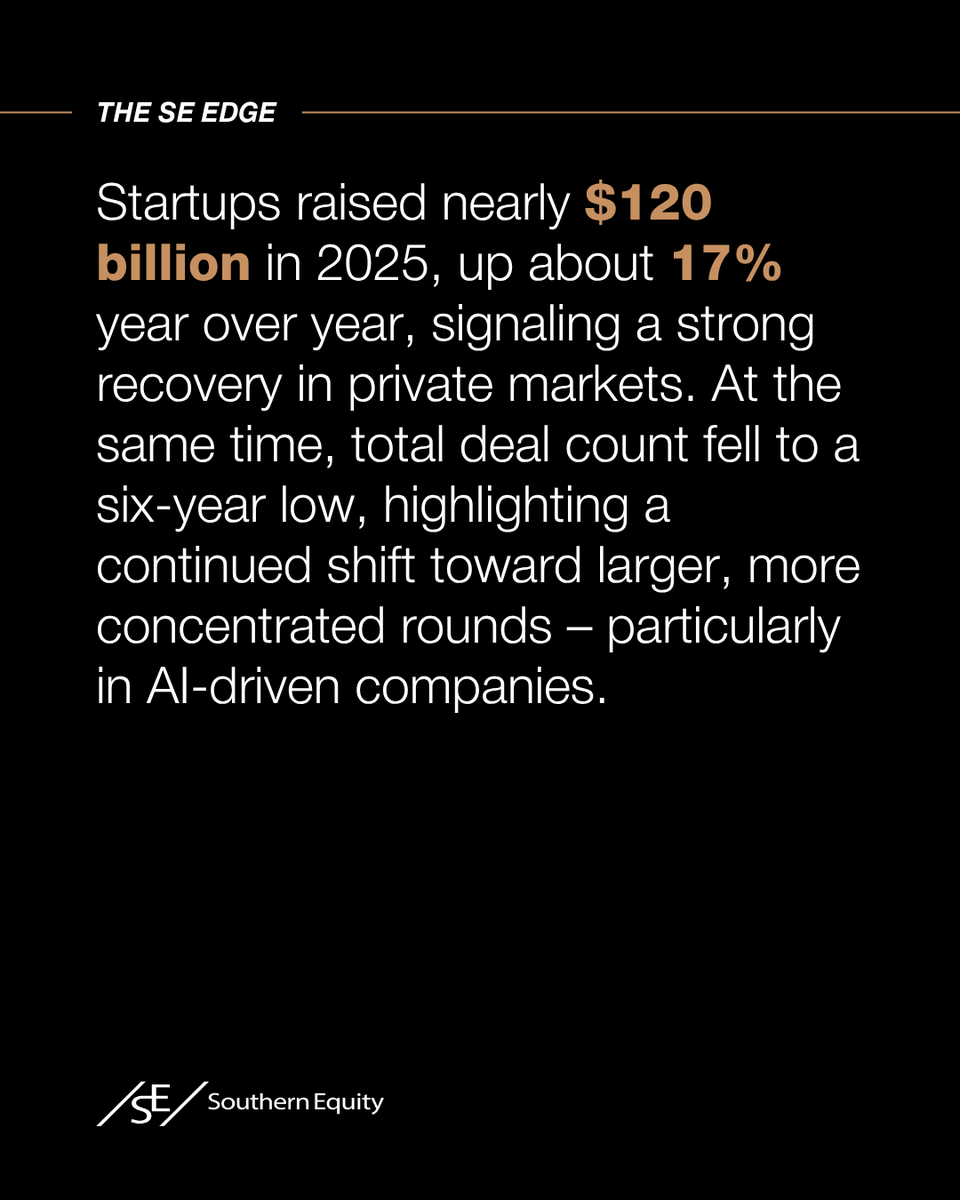
According to recent data, startups raised nearly $120 billion in 2025, up about 17% year over year, marking a continued recovery in venture funding. ⚙︎ (@cartainc)
At the same time, total deal count fell to a six-year low, potentially reflecting a growing concentration of capital into fewer, larger rounds — many of which seem to be driven by AI-focused companies.
This dynamic could point to a more selective funding environment, where scale, traction, and exposure to AI are increasingly influencing where capital flows across private markets.
▶︎ Read the full report: https://t.co/BFBDVdgtqk
#VentureCapital #PrivateMarkets #AI #Startups #Fundraising
While many investors worry AI will commoditize software and erode pricing power, @strattamcapital co-founder and Crunchbase News columnist Bob Morse argues the opposite. Drawing on examples ranging from coal engines to data centers, Morse contends that AI-driven efficiency will unlock vast new demand for knowledge work, expanding the software market rather than shrinking it.
Read more here: https://t.co/09PVYUUIDb
You can work 5 days a week and succeed as a startup.
Mercury has done that from day 0 and we are valued @ $5.2bn 7 years after launch.
I have been an entrepreneur for 20 years and raised 3 kids while doing it.
The point of success is to have a great life not just a startup 😊
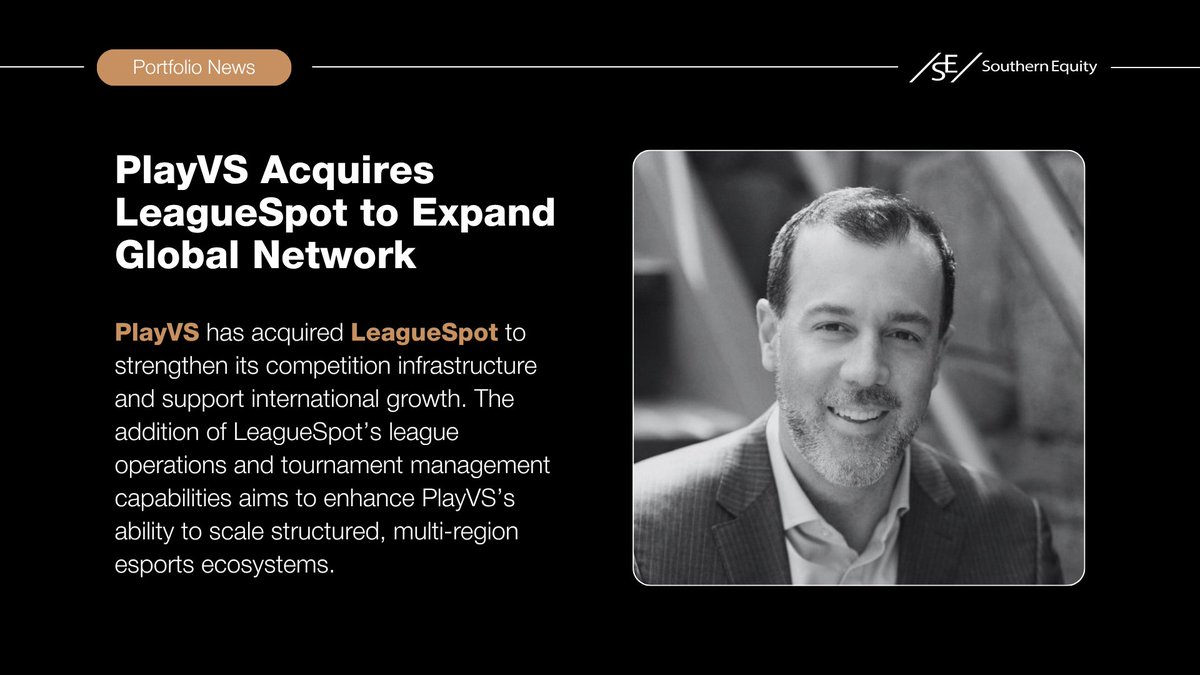
PlayVS (@playvs) has acquired @LeagueSpotGG, a global league and tournament management platform, with the aim of strengthening its technology and expanding its international competitive gaming network. ⌲
LeagueSpot brings robust league operations and multi-region competition infrastructure, while PlayVS continues to scale its platform across scholastic and collegiate esports ecosystems.
This acquisition could signal continued growth in structured, large-scale esports, as platforms invest in infrastructure to support global competition, partnerships, and more flexible league models.
► Read more about the announcement: https://t.co/7gvCkfexlN
Demand for agentic AI skills (AI systems that can autonomously plan, make decisions, and execute tasks across workflows) has increased by up to 60x year over year, as companies accelerate adoption of AI-driven systems and processes. ⚙︎ (@TheStartupsMag)
The shift is seemingly moving value away from execution-based roles toward those who can design, orchestrate, and manage interconnected AI systems, with demand for low-code tools rising more than 14x and AI expertise expanding beyond technical teams.
This trend could signal a broader transformation in the workforce, where technical skills are increasingly paired with system-level thinking, and AI fluency becomes essential across both technical and non-technical roles.
▶︎ Read the full article: https://t.co/bHyZhjSSlQ
#ArtificialIntelligence #FutureOfWork #Automation #TechTrends #Startups
Agentic AI refers to systems that can take action autonomously on behalf of users. ⇥
Unlike traditional models that respond to prompts, agentic systems can plan, execute, and adapt across multi-step workflows.
The category appears to be gaining traction across industries where workflow automation can drive meaningful efficiency gains.
► Learn more: https://t.co/6VKSEXOabD
#ArtificialIntelligence #AgenticAI #VentureCapital #PrivateMarkets #AIInvesting
According to @PitchBook, agriculture tech, or agtech, deal value reached $1.5 billion in Q1 2026, marking a 25% increase quarter over quarter and possibly signaling a continued rebound in investment activity. ⚙︎
The uptick is apparently being driven by growing interest in dual-use technologies and robotics, as investors back solutions that can serve both agricultural and broader commercial or defense applications.
As global food demand rises and labor shortages persist, investment in automation and AI-driven agriculture could continue gaining momentum, positioning agtech as an area of renewed focus in venture markets.
▶︎ Read the full article: https://t.co/XFzBV0Lltf
#VentureCapital #Agtech #AI #Robotics #PrivateMarkets
Global venture funding hit $300 billion in Q1 2026, marking an all-time high and a more than 150% increase quarter over quarter and year over year. ↩︎
AI drove the majority of this activity, capturing $242 billion, or 80% of total funding, with a small group of frontier companies accounting for a significant share of capital through record-setting mega-rounds.
This level of concentration could signal a continued shift toward fewer, larger deals, as capital flows toward companies building foundational infrastructure across AI, compute, and physical systems.
▶︎ Read more: https://t.co/BQBvIsHgTp
#VentureCapital #AI #Startups #PrivateMarkets #Funding
SITUATION ANALYSIS: At a new $5.2B valuation, Mercury is seeing a surge in new startup formation.
Mercury CEO @immad says applications into Mercury were up 2.5x in Q1 compared to last year, and roughly 75% of its customers are within six months of incorporation.
His read: AI is not just creating AI startups, it is making it easier to start normal businesses too.
“In Q1 this year, we saw a 2.5x increase in number of applications into Mercury.”
“75% or so of our customers tend to be within six months of incorporation.”
“Most entrepreneurs would say AI is making their life easier. You can build much bigger companies with a small set of employees.”
“I think there is a surge of entrepreneurship.”
Recent data suggests that rolling closes may be becoming more common in deeptech fundraising—deeptech referring to capital-intensive sectors like advanced hardware, biotech, and scientific R&D—allowing startups to raise capital in multiple tranches rather than closing a round all at once. ⚙︎
Deeptech now accounts for 36% of total global venture capital funding, nearly tripling its share over the past decade, highlighting the growing scale and capital intensity of these sectors.
This structure aims to give founders more flexibility to secure early capital, hit key milestones, and bring in additional investors over time without restarting negotiations.
As capital-intensive sectors continue to face longer development timelines and higher uncertainty, rolling closes could offer a more adaptable approach to fundraising, aligning capital flow more closely with company progress.
▶︎ Read the full article: https://t.co/0B2HzPZpaR
▶︎ Stat source: https://t.co/Tezk0kmAtU
#VentureCapital #DeepTech #Startups #Fundraising #PrivateMarkets
My conversation with @immad, CEO and co-founder of @mercury.
Immad's story is so unique yet largely underdiscussed. His father owned a mechanic shop and his mom was a teacher. After immigrating to the US, he spent nearly a decade pivoting before finally selling his first company for 45M. We dug into the sheer pain tolerance required to pivot constantly and still find sources of motivation, something many early-stage founders don't hear about enough.
From there, Mercury got off the ground — but with a unique twist. Immad generally doesn't work weekends and has still built one of the most successful fintechs. This goes entirely against Twitter hype that promotes working every waking hour, and Immad's clarity on this topic was refreshing. He feels like he's "playing the bonus levels" and is still just getting started.
Mercury is now worth multiple billions of dollars with 500M+ in recurring revenue, 10 consecutive quarters of profitability, and still growing 40% YoY. I hope you enjoy this conversation, Immad's clarity on company building, and learning about his life.
PS. As quite the ending, Immad & I tried Habanero hot sauce off his conference room table!
Timestamps:
00:00 Intro
2:11 Growing Up in Pakistan And Moving to London
6:37 "Yelp For London" and Early Entrepreneurial Endeavors
10:45 Pivoting From Flash Games to Mobile Ad Networks
12:15 Selling a Company After 8 Years of Pivoting
16:42 Thank You to Macroscope and Timeless Partners
17:56 Meeting His Wife Through Facebook
19:09 Finding Your Life’s Work
22:35 The Origins of Mercury
26:44 The Importance of Design at Mercury
27:37 How Mercury Landed Its Initial Customers
29:12 Raising Mercury's Seed Round
31:09 The Choice to Not Work Weekends
34:58 Immad's Best Startup Ideas
36:15 Are There Moats with AI?
38:05 Mercury’s 10-year vision
39:50 From Angel Investing to Formalizing a New Fund
42:13 Paul Graham's Influence
44:33 Parenting Philosophy
46:01 Sources of Happiness
46:52 Immad & I Taste Hot Sauce Off a Conference Table!
A lead investor is the primary investor in a funding round, typically committing the largest amount of capital and helping set the terms of the deal. ↗︎
Beyond capital, lead investors often play an active role in guiding the company’s strategy, conducting due diligence, and attracting additional investors to the round.
Their involvement can signal credibility to the market and help accelerate a startup’s ability to raise capital and scale effectively.
► Learn more about lead investors: https://t.co/7fRs7eh3pa
#VentureCapital #Startups #PrivateMarkets #Fundraising #Investing #LeadInvestor
AI may not be the constraint, but rather how the work is structured.
As adoption scales, the gap between investment and impact appears tied less to model capability and more to how organizations design and operate workflows. Applying AI to isolated tasks may deliver incremental gains, but larger outcomes seem to come from rethinking entire processes end to end.
This shift seems to move value toward organizations that can integrate people, agents, and systems into cohesive workflows, rather than layering AI onto fragmented infrastructure.
▶︎ Read more: https://t.co/9Xqz6L26EY
#ArtificialIntelligence #Automation #Workflows #DigitalTransformation #AI
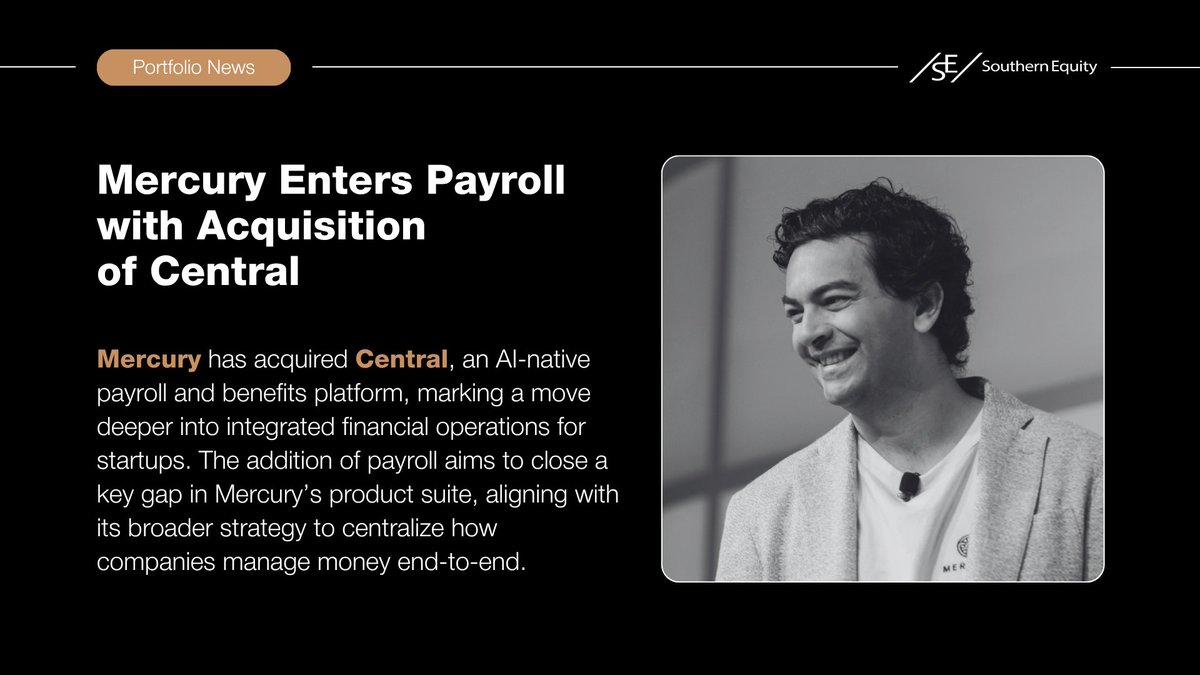
@Mercury has acquired @CentralHQX, an AI-native payroll and benefits platform, with the aim of expanding its capabilities across core financial operations for startups. ⌲
Central provides payroll, benefits, and compliance support through a combination of AI agents and human input, while Mercury continues to build toward a more integrated system for managing company finances.
This move could reflect a broader shift toward consolidating financial workflows into unified platforms, as startups look for more streamlined, end-to-end solutions beyond traditional banking tools.
► Read more: https://t.co/nZCb1GCTmZ
#Fintech #BusinessBanking #PortfolioNews #Mercury #Startups #TechNews
According to recent data, U.S. VC-backed companies raised $340 billion in 2025, making it the second-strongest year on record, largely driven by mega-deals. ⚙︎ (@SiliconVlyBank)
A significant portion of this capital has concentrated in AI, where a small number of companies are capturing an outsized share of funding and valuations, reshaping traditional venture dynamics.
This trend could indicate a continued shift toward fewer, larger deals at the top of the market, as investors prioritize scale, platform potential, and AI exposure in an increasingly competitive landscape.
▶︎ Read the full report: https://t.co/r8UhFI6m6m
#VentureCapital #AI #PrivateMarkets #Startups #Innovation
AI may not be the constraint. Infrastructure often is.
Recent analysis suggests that many companies are struggling to realize AI’s full potential due to legacy systems, fragmented data, and disconnected workflows.
In practice, outcomes often reflect the strength of the underlying systems AI is built on, reinforcing the importance of modernizing infrastructure alongside adoption.
► Read more: https://t.co/9Xqz6L1yPq
The Road to the 2026 PlayVS Cup has begun.
Every match matters. Every moment counts. Competition begins May 18.
Thanks to this year’s PlayVS Cup sponsors for making it all possible.
@zenni_gaming@INZONEbySony@FloridaMilk@RESPAWNProducts
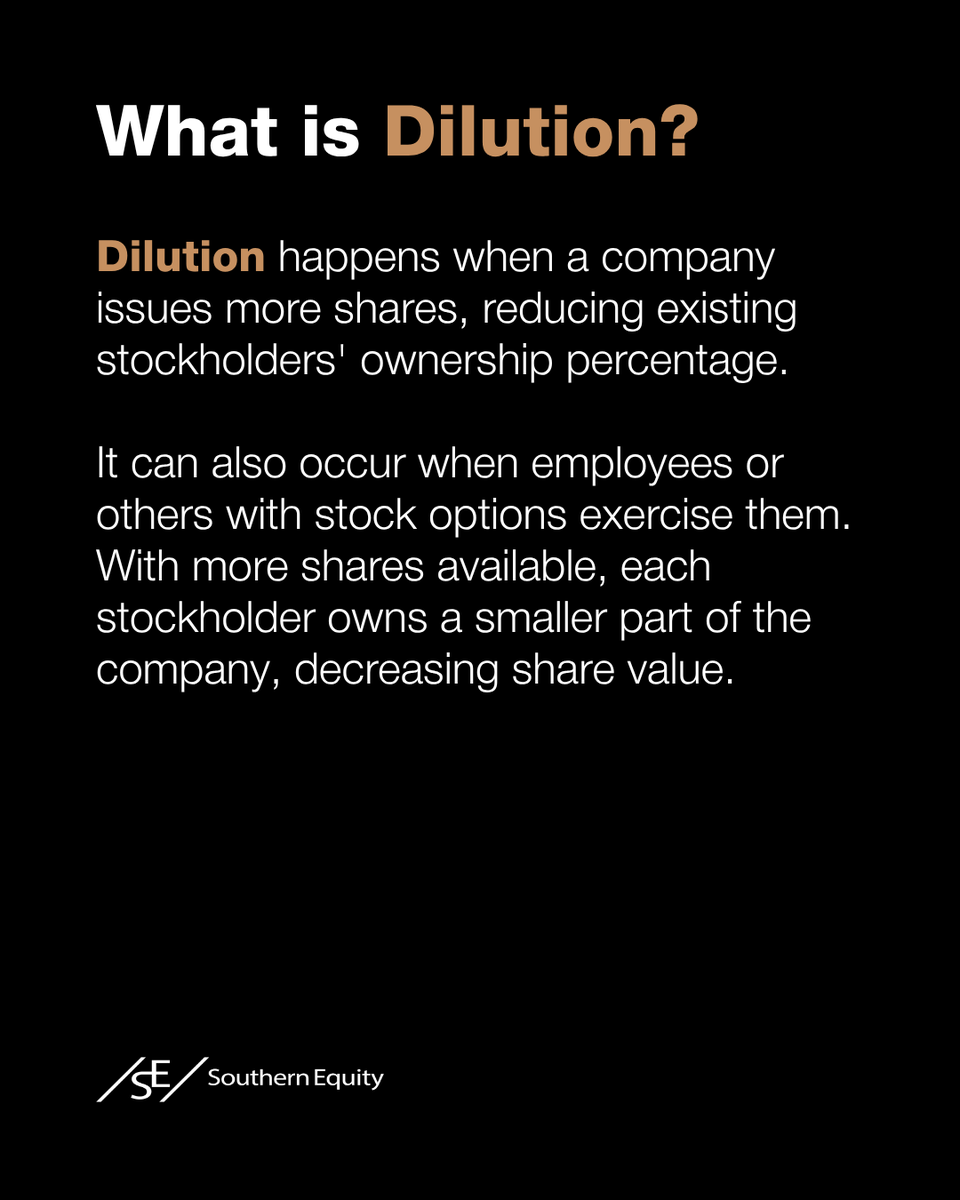
Dilution refers to the reduction in ownership percentage when a company issues new shares. ⇥
It commonly occurs during funding rounds, employee equity grants, or the conversion of convertible instruments. While ownership percentages decrease, dilution can support growth when new capital is deployed effectively.
Managing dilution is a core consideration for founders and early investors balancing capital needs with long-term ownership.
► Learn more: https://t.co/oHZYEkuadA
#VentureCapital #StartupFunding #PrivateMarkets #Investing #Finance #Dilution