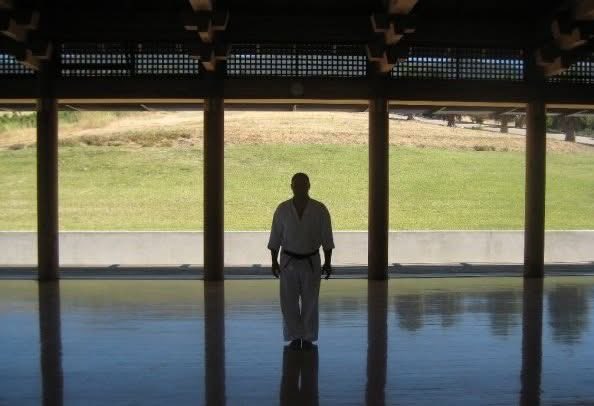
Everything I know about structure, I first learned in the dojo.
Nothing else makes you practise being calm while something is actually going wrong. You lose a round, you tap, you’re fine. Survivable downside, drilled into the body until the mind stops arguing.
Years later I built a company the same way. Floor first. Never bet the whole position. Lose the round, keep the fight.
The business books explain leverage. The mat explained losing. The second lesson was worth more.
The best product rarely wins. The best-monetized one does.
Spent my first years believing quality was the strategy. Quality is the entry fee.
The strategy is how money enters the building: who pays, for what, how often, and how automatically. Get that right and an average product funds its way to excellence. Get it wrong and excellence dies undiscovered.
The treat isn't the boat. It's the silence.
No notifications answered today. No decisions made. That costs less than people think and takes longer to earn than they hope.
Reward the work in the currency the work stole: attention.
At ground level these trunks are metres apart. At the canopy they touch.
Nobody networks their way to the top. You grow, and the connections arrive at altitude.
Reach isn’t a skill. It’s a height.
Everyone is arguing about whether the market is a bubble.
Wrong argument. There are two economies. One pays you for your hours. One pays you for what you own.
The argument isn't which one is real. It's which one you're building in.
Nobody moves economies by saving harder. You move by building an asset. The salary is the bridge, not the destination.
@Codie_Sanchez Correct, and it scales further than most realize.
At one level it's deductions.
Above that it's entity design.
Above that it's jurisdiction.
Your company doesn’t have to live where you live.
Mine rarely did. Incorporated where the structure made sense, resident where life made sense, compliant in both. Took advice, paid the fees, slept well.
Geography is a choice you make twice. Once for the business, once for yourself.
And before anyone asks “which jurisdiction is best”: answer below.
You don’t need to quit your job to build a business. You need your job to fund one.
Mine paid for the first company through eight years of evenings and weekends. A house to pay for, family counting on me, at times a second side hustle running. Dramatic exits were never an option.
So the constraint became the strategy: the salary funded the build. The build never risked the house.
Everyone romanticizes burning the boats. The boats were how I supplied the crossing.
Bravery is overrated. Structure isn’t.
@SovereignPathHQ "The salary funded the build. The build never risked the house." That's the first version of this advice that doesn't require being 22 with no responsibilities.
I’m in beautiful Antwerp. The statue in front of its city hall celebrates killing a toll collector.
A giant taxed every ship on the river. A hero cut off his hand. The city cheered, then built Europe's richest port and collected the tolls itself.
Nobody hates the middleman's position. They hate not holding it.
@SovereignPathHQ Amateurs count the upside.
Operators price the downside, then let the upside surprise them.
One of these groups is still here in year ten.
Amateurs ask "why hasn't anyone fixed this?"
Operators ask "who's getting paid while it stays broken?"
The second question explains almost everything the first one can't.
This is the best business lesson on the timeline today.
The optimal system lost to the profitable one. Airlines sell the right to skip the chaos, fix the chaos and the product disappears.
Inefficiency, correctly priced, is a revenue stream.