U početku bi Reč. I Reč beše u Boga. I Bog bi Reč.
Rč jeste govor i činjenje. Za ljude znači Moli i Radi. Čini ono za šta se moliš. Moli za ono što činiš. Amin
Поводом већ отвореног сукоба Исток Запад. Западу одговара само победа, Истоку би и нерешено нешто значило. Западу се никако не исплати нерешено. У преводу на српски: Имамо зачетак Тоталног светског рата.
Argentina's famous "werewolf law" has its roots in centuries-old folklore...
During the 19th century, legends surrounding the lobizón (a werewolf-like creature from Argentine folklore) became intertwined with European traditions that claimed the seventh consecutive son in a family was destined to become a werewolf. Similar beliefs held that a seventh consecutive daughter could become a witch.
According to the superstition, the curse could be prevented if the child had a person of great power as a godparent. In 1907, a family asked President José Figueroa Alcorta to become the godfather of their seventh son. He accepted, beginning a presidential tradition that continued for decades.
In 1974, President Isabel Perón formally codified the practice through Law 20.843. Under the law, the President of Argentina could become the honorary godparent of the seventh consecutive son or seventh consecutive daughter in a family. Eligible children also received a commemorative medal and educational benefits.
Today, the tradition still exists, making Argentina one of the few countries where a centuries-old werewolf legend directly influenced national law.
#drthehistories
Top 8 Largest Christian Denominations ✝️
1. Catholicism — 1.3 billion
2. Eastern Orthodoxy — 220 million
3. Anglicanism — 110 million
4. Baptists — 100 million
5. Methodism — 80 million
6. Reformed (Calvinism) — 80 million
7. Lutheranism — 77 million
8. Assemblies of God — 69 million
Pope Leo at Sagrada Familia: “We cannot believe in Jesus and make war. We cannot believe in Jesus and kill the innocent. We cannot believe in Jesus and abandon those who suffer, those who weep, those who flee from misery.”
#VisitaPapaRTVE | León XIV, sobre el perdón: "perdonar no significa dejar que alguien siga haciendo daño ni olvidar como si nada hubiera pasado. Significa no dejar que el odio se convierta en dueño de nuestro corazón".
Battle of Pelekanon, June 10, 1329
On this day in 1329, the Byzantine Empire lost Asia Minor forever, and almost nobody knows the battle's name.
Emperor Andronikos III marched out to save Nicaea, the city where Christianity's most famous creed was written. Facing him: Orhan, son of Osman, leading a small Ottoman force everyone in Constantinople still considered a nuisance.
The Byzantines fought well until the emperor took an arrow to the leg. Rumor spread that he was dying. The orderly retreat collapsed into a rout overnight.
No Byzantine army ever campaigned in Anatolia again. Nicaea fell two years later. Nicomedia after that. Then, in 1453, Constantinople itself.
Empires rarely die in one famous battle. They die in the small ones nobody remembers. Which "minor" event do you think future historians will point to as the real turning point of our era?
A young boy in northern Afghanistan wearing a Confederate flag T-shirt, photographed in 2002.
The global secondhand clothing trade moves millions of used garments from North America and Europe to markets throughout Africa, Asia, and the Middle East each year. By the time many of these items reach their final destination, the original cultural, historical, or political significance of the designs they carry is often unknown to the people wearing them.
In 2002, Afghanistan was emerging from decades of upheaval, including the Soviet-Afghan War, years of civil conflict, and Taliban rule. Imported and donated goods played an important role in the economy, and secondhand clothing was commonly sold in local markets.
The Confederate battle flag originated during the American Civil War (1861–1865) as a military banner used by several Confederate Army units. In the years that followed, it became linked to Southern identity, but it was also adopted by segregationist movements during the 20th century, making it one of the most controversial symbols in American history.
The scale of the secondhand clothing industry is immense. The United States exports hundreds of millions of pounds of used clothing every year, with many garments passing through multiple countries and distributors before eventually being purchased by consumers thousands of miles from where they were first sold.
A new study has reconstructed 1,000 years of earthquake activity along Southern California’s San Andreas and San Jacinto fault systems and found that tectonic stress in the region has reached levels not seen in the past millennium.
Using a physics-based 4D earthquake cycle model, researchers combined paleoseismic data (from geological evidence, radiocarbon dating, tree-ring anomalies, and historical records) with simulations of stress accumulation and release. The results show that current stress on key fault segments, particularly around the Cajon Pass junction northeast of Los Angeles, equals or exceeds the highest values observed over the entire 1,000-year period.
Cajon Pass functions as an “earthquake gate”, a critical junction where ruptures on one fault can sometimes propagate to the other under the right stress conditions, potentially triggering much larger, multi-fault events. Historical patterns indicate that joint ruptures across both fault systems have occurred when stress levels on the adjacent segments (such as the Mojave South section of the San Andreas and the San Jacinto Bernardino section) become similarly high and aligned. Today, those segments are modeled at approximately 2.8 MPa and 3.6 MPa, respectively, placing the system in a configuration historically associated with through-going ruptures.
This has significant implications for the densely populated greater Los Angeles region, including San Bernardino, Riverside, and critical infrastructure corridors through Cajon Pass. However, the study does not predict the timing of the next major earthquake—such events cannot currently be forecasted precisely. Instead, it provides a physics-based assessment of accumulated stress and the range of plausible rupture scenarios that could occur.
[Burkhard, L. M. L., Smith-Konter, B. R., Scharer, K. M., & Sandwell, D. T. (2026). Cajon Pass and the Southern San Andreas Fault System: Earthquake Cycle Stress Accumulation and Present-Day Loading. Journal of Geophysical Research: Solid Earth, 131(6), e2025JB033213. DOI: 10.1029/2025JB033213]
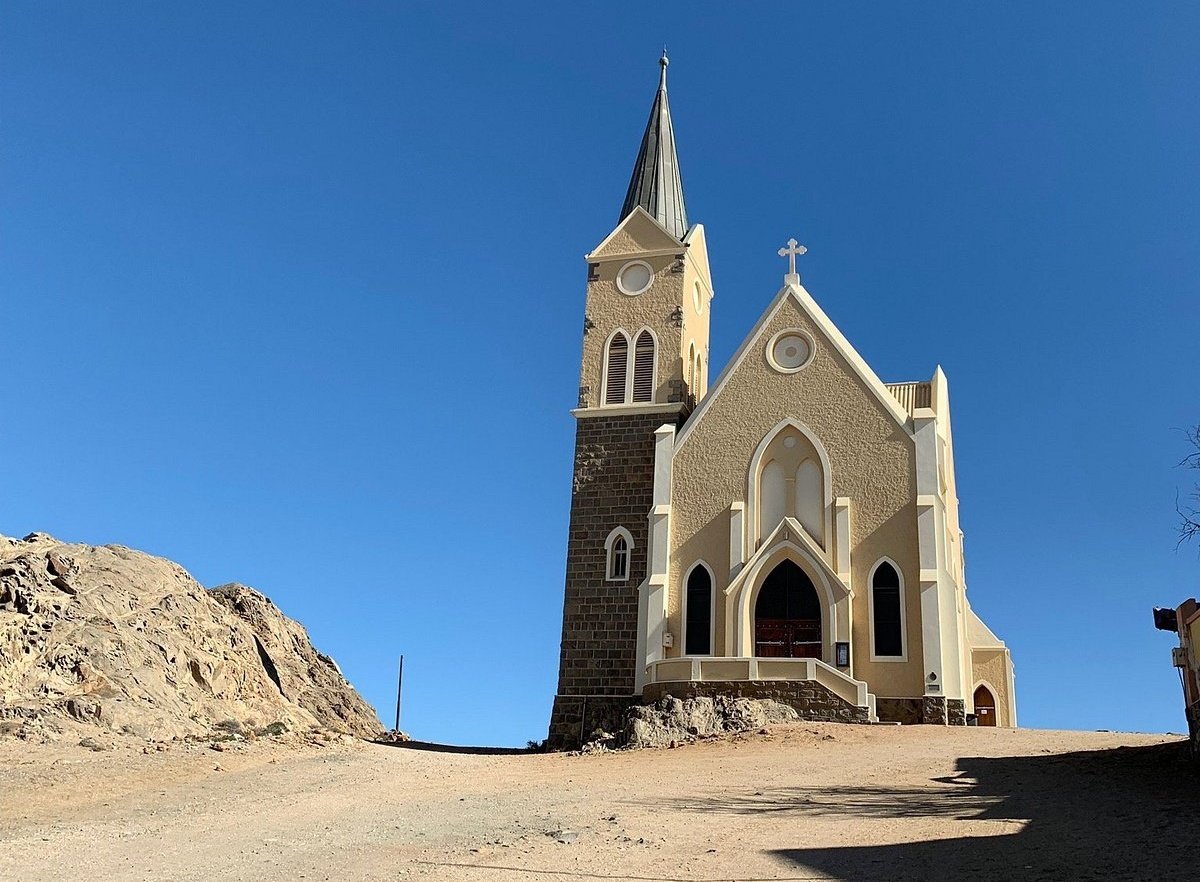
El surrealismo germánico en las dunas del desierto.
Lüderitz es un pueblo costero construido por los alemanes a principios del siglo XX durante la fiebre del diamante.
Lo curioso es que está en Namibia, aislado de todo.
Edificado con una arquitectura art nouveau y luterana alemana, es el choque visual definitivo.
Iglesias luteranas alemanas de tejados empinados y casas coloniales de colores pastel plantadas en medio del árido y desolado desierto del Namib.
A pocos minutos se encuentra el pueblo fantasma de Kolmanskop, donde la arena ya invade los salones de las mansiones abandonadas.
The German phrase for "I'm sorry" is the most accurate description for what people actually mean when they say it. 🇩🇪
More honest than English could ever manage.
𝘌𝘴 𝘵𝘶𝘵 𝘮𝘪𝘳 𝘓𝘦𝘪𝘥.
Word for word:
𝘌𝘴 = it
𝘵𝘶𝘵 = does / causes
𝘮𝘪𝘳 = to me
𝘓𝘦𝘪𝘥 = pain / sorrow
Not "I feel bad."
Not "I regret this."
Literally: it causes pain to me.
In English, sorry puts the speaker at the centre.
In German, the pain itself is the subject.
The sorrow acts upon you.
German treats an apology less as an act and more as a burden one carries. The acknowledgement of pain, regret and remorse for something you've done wrongly.
𝗟𝗲𝗮𝗿𝗻 𝗚𝗲𝗿𝗺𝗮𝗻 𝗦𝗶𝗺𝗽𝗹𝘆 🇩🇪







![Rainmaker1973's tweet photo. A new study has reconstructed 1,000 years of earthquake activity along Southern California’s San Andreas and San Jacinto fault systems and found that tectonic stress in the region has reached levels not seen in the past millennium.
Using a physics-based 4D earthquake cycle model, researchers combined paleoseismic data (from geological evidence, radiocarbon dating, tree-ring anomalies, and historical records) with simulations of stress accumulation and release. The results show that current stress on key fault segments, particularly around the Cajon Pass junction northeast of Los Angeles, equals or exceeds the highest values observed over the entire 1,000-year period.
Cajon Pass functions as an “earthquake gate”, a critical junction where ruptures on one fault can sometimes propagate to the other under the right stress conditions, potentially triggering much larger, multi-fault events. Historical patterns indicate that joint ruptures across both fault systems have occurred when stress levels on the adjacent segments (such as the Mojave South section of the San Andreas and the San Jacinto Bernardino section) become similarly high and aligned. Today, those segments are modeled at approximately 2.8 MPa and 3.6 MPa, respectively, placing the system in a configuration historically associated with through-going ruptures.
This has significant implications for the densely populated greater Los Angeles region, including San Bernardino, Riverside, and critical infrastructure corridors through Cajon Pass. However, the study does not predict the timing of the next major earthquake—such events cannot currently be forecasted precisely. Instead, it provides a physics-based assessment of accumulated stress and the range of plausible rupture scenarios that could occur.
[Burkhard, L. M. L., Smith-Konter, B. R., Scharer, K. M., & Sandwell, D. T. (2026). Cajon Pass and the Southern San Andreas Fault System: Earthquake Cycle Stress Accumulation and Present-Day Loading. Journal of Geophysical Research: Solid Earth, 131(6), e2025JB033213. DOI: 10.1029/2025JB033213]](https://pbs.twimg.com/media/HKdoAjXWEAAplSS.jpg)


