A British biologist looked at 200,000 years of human history and found that the entire reason humans broke out of poverty was not intelligence, not language, not even agriculture, but one mechanism so simple a 6-year-old could explain it.
His name is Matt Ridley.
He is a zoologist by training, an evolutionary biologist by career, and in 2010 he wrote a book called The Rational Optimist that quietly argued the most important fact about human progress had been hiding in plain sight for the entire history of economics.
Naval Ravikant has been telling people to read everything Ridley has ever written for the last 15 years. The reason is the argument inside this one book.
For 200,000 years, anatomically modern humans walked around with the same brain you have right now. Same skull size. Same neural architecture. Same raw capacity for language, planning, and abstract thought.
For roughly 190,000 of those years, almost nothing happened. Generation after generation lived and died inside the same Stone Age toolkit their great-great-grandparents had used. Then somewhere around 50,000 years ago, the line on the chart of human progress started to tick upward. Then it bent. Then it exploded.
The question Ridley spent years on was the only question that mattered. What changed.
It was not the brain. The brain had been the same for 190,000 years. It was not language, which had existed long before the takeoff. It was not even agriculture, which arrived only 10,000 years ago and was actually preceded by the upward bend, not the cause of it.
What changed was that humans started trading with strangers.
This sounds too small to be the answer. Ridley argues that it is the answer to almost everything. The moment one human exchanged a useful object with another human from a different group, something happened that no other species on earth had ever done.
Two ideas that had developed in isolation came into contact. The flint knapper learned what the spear maker had figured out. The fisherman from the coast learned what the hunter from the forest had figured out. The two pieces of knowledge fused into something neither side could have produced alone.
Ridley calls this ideas having sex. The phrase sounds frivolous and it is meant to. The point is that ideas, like genes, get better when they combine with other ideas from different lineages.
An idea sitting inside one head, no matter how brilliant the head, eventually hits a ceiling. The same idea exposed to ten thousand other ideas does something genes do under sexual reproduction. It mixes. It recombines. It produces offspring nobody planned.
The cleanest proof of this argument is the most uncomfortable case study in the book. Tasmania.
Around 10,000 years ago, rising sea levels cut Tasmania off from mainland Australia. A population of roughly 4,000 humans was now isolated on an island, with no possibility of contact with the rest of humanity. They had the same brains. The same language. The same starting toolkit as their cousins 150 kilometers north. The natural experiment was now running.
What happened next is something no economist or geneticist had ever predicted.
The mainland Australians kept inventing. Boomerangs. Spear-throwers. Fishing nets. Bone needles for sewing fitted clothes. Watercraft with paddles. Their technology compounded slowly across the centuries.
The Tasmanians went the other way. They did not just fail to invent the new tools their cousins were developing. They started losing the tools they already had. Fishing was abandoned within a few thousand years. Bone tools disappeared. Fitted clothing disappeared. They forgot how to make fire from scratch and started carrying lit firebrands from camp to camp instead, relighting their fires from a neighbor's whenever their own went out.
By the time European explorers arrived in the 17th century, the Tasmanians had the simplest toolkit of any human society ever recorded. Their material culture had gone backward for 8,000 years.
The archaeologist Rhys Jones called it a slow strangulation of the mind.
Joseph Henrich at Harvard later proved with formal mathematical models that there was nothing wrong with Tasmanian brains. There was something wrong with their network. A toolkit requires a critical mass of people exchanging skills to maintain itself.
The act of teaching a skill is imperfect. Every generation loses a small percentage of what the last generation knew. If your population is large enough and trading widely enough, those losses get caught and corrected by someone else who still remembers.
If your population shrinks below a certain threshold and stops mixing with outsiders, the small losses compound until entire technologies disappear.
This is the part that should haunt anyone reading this in 2026.
Intelligence is not a property of the individual brain. Intelligence is a property of the network the brain is connected to. A genius in isolation will produce less than a mediocre thinker inside a dense exchange of other mediocre thinkers.
The thing your ancestors needed in order to break out of 190,000 years of stagnation was not better brains. It was better connections between brains they already had.
The implication for any individual is direct and uncomfortable. If you are smart and isolated, you will be outproduced by people half as smart who are connected.
The most successful people in any field are almost never the smartest people in it. They are the ones positioned at the intersection of the most idea flows. They are reading more authors than their competitors. They are talking to more people from more disciplines. They are in the rooms where ideas from different lineages bump into each other.
Ridley ends the book on the line that sounds optimistic but is actually a warning its this "The future will be invented by people who connect ideas, not by people who guard them."
This person has never actually ridden a tandem bicycle.
If you are in the back, you are powerless, totally at the mercy of the psycho in front. If you are in the front, it's 5x harder to steer and the deadweight in the back can easily crash you by flailing around. You are clumsy, lumbering fender fodder and will quickly realize the beauty of not ever sharing a bike with another person again.
[guy who's job it was to teach people to ride tandems and triples]
Another major AI vibe shift is happening.
The tech is moving so fast that our collective reactions are emotionally exaggerated.
In mid 2022 most didn't think anything could pass the Turing test.
We get chatbots in 2023.
We get agents in 2024. But nobody trusted AI for coding.
We get Claude Code in 2025, and in one calendar year we go from "I'd never let AI code for me", to "I let it write the code but I review it", to "I don't even write code anymore."
In late 2025 and early 2026 most boards and CEOs start demanding everyone use AI. For what they're not quite sure. The vibe is "we need to immediately replace workers with AI." People think everything will be AI inside companies within 18-36 months.
And now in mid 2026 the pendulum is coming back. "Oh crap that's hard and expensive. We better slow down and rethink this." People start thinking this was a giant miss, and that human workers will never go away.
The pendulum swing from "it can't code" to "I don't code anymore" happened in less than a year.
And now this one has gone from "AI will replace all human workers" to "AI can't replace human workers" in less than 6 months.
Pardon the cringe analogy but I'm reminded of when someone is dying of cancer (in this case I think the thing dying would be the old way of work being done).
When someone gets a major / terminal cancer diagnosis there is tons of uncertainty. You keep testing and testing, and you often have two groups of people.
We've already been told it's terminal, but whenever there are positive responses to a treatment, or positive test results, they conclude that "It looks like we beat this thing, you'll probably live another couple of decades."
And there's another group who, upon hearing any negative result or analysis, says they could pass any day, or any week. They'll be gone in less than a few months.
I've seen this structure play out multiple times.
1. It'll happen in less than 2 months.
2. It'll never happen.
And sometimes people in one group might switch to being in the other group.
But what I've seen basically every time is that it ends up being something in the middle. It actually doesn't happen instantly like the fast group said. And then right when it starts to look like things are going to be fine, it happens.
Somewhere in the middle.
I hate this analogy for obvious reasons, but I feel like we are collectively stuck in this mode when it comes to the inevitability of change from AI.
The combination of "really bad" with "don't know when" causes a special kind of anxiety and reaction in us humans.
Also, this model doesn't necessarily tell us what's happening in AI because it depends on what you use as the substitute.
My intuition is that the thing at risk in our current situation is "most work being done by humans". That is the thing that now has limited time.
And you can find all over Twitter the people who think 20% unemployment or whatever will happen in 1-2 years. And an equal number of people who think this is a psychosis that will soon end. Or that it'll take 10 or 20 years instead.
This reminds me a little of regression to the mean. It's something like find the median number for all the guesses.
But that method wouldn't have been correct in early 2022, so who knows.
I just think this RTM mental model might be useful in thinking about what could happen and how long it might take.
Just finished a US tour. Key observations:
1. US Hardware Founders: “By the time I get a quote from a US factory, I would have already built it in China. They are fast, flexible, and low-cost.”
2. US VCs: “China is the enemy, we must re-industrialize America.”
3. Google will win enterprise AI.
4. US founders are, on average, more hardcore.
5. World models are the next frontier in robotics.
6. AI data center demand is at an all-time high, but grid connections queues are getting into 2030s.
7. Power prices for data centers have gone up 3X.
8. Americans hate data centers regardless of political leaning.
9. Inference uptime requirements at an all-time low of 99%.
JUST IN: Scientists say AI has decoded communication patterns in mice, dolphins, apes, birds, whales, & cuttlefish — could eventually lead to humans communicating directly with animals.
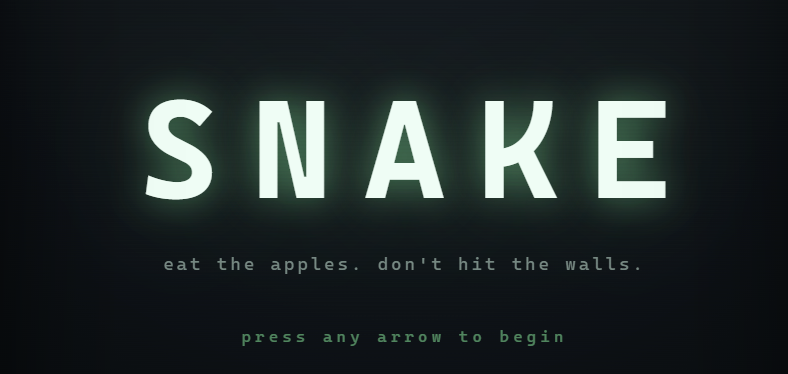
Had Claude Code build a snake game where the snake becomes aware it is in the game and then... stuff happens. Some impressive creative decisions by the AI (& also some very AI ones), I just gave a first prompt and some feedback on the game as it went. https://t.co/WdmlBD5iHI
@ericnofsinger@Mohamadrezaa14@konnex_world Creating robots is so difficult that it favors engineers that can create robots so they create what they want to create as people who enjoy the challenge of creating robots …not necessarily aligned with what the world actually needs.
What people need to understand is that content creators are just digital serfs. We work the land owned by the tech giants and billionaires.
We own nothing. We aren't the customers, and neither are our fans. The real customers are the advertisers. This relationship isn't between creators and fans. It's strictly between the owners of the platforms and the companies who advertise with them.
This is technofeudalism already.
What people need to understand is that content creators are just digital serfs. We work the land owned by the tech giants and billionaires.
We own nothing. We aren't the customers, and neither are our fans. The real customers are the advertisers. This relationship isn't between creators and fans. It's strictly between the owners of the platforms and the companies who advertise with them.
This is technofeudalism already.
Today a crazy quantum story just got wilder.
On March 31, the Google Quantum AI team published a landmark result on Shor's algorithm for elliptic curve cryptography. Technically, the paper was a bombshell: a dramatic 10x improvement over the state-of-the-art. As a stunt and wakeup call to the blockchain space, those optimisations were illustrated on secp256k1, the elliptic curve underlying Bitcoin and Ethereum signatures.
But perhaps the most striking part of the paper was sociological, not technical. Instead of following standard academic process, the optimisations were kept secret, hidden behind a zero-knowledge (ZK) proof. Google's accompanying blog post mentions they "engaged with the U.S. government". The ZK proof demonstrates the existence of algorithmic improvements without leaking details. Academic censorship with ZK, a historic first!
As a co-author of the Google paper I witnessed some of the context surrounding this censorship. To be honest, multiple aspects of that context don't sit well with me. As much as I believe the general public ought to know more, I am limited in my ability to whistleblow. Though let me be clear about one thing: the Google team's professionalism has been absolutely exemplary, and they deserve nothing but praise.
Censorship has a way of backfiring. The Streisand effect, where an attempt to bury something only draws more attention to it, is exactly what's unfolding today. First, Google's key optimisation has been rediscovered by the French. And in a thrilling turn of events, a collaborative Shor-at-home challenge just launched. The initiative, available at ecdsa[.]fail, breached a new Shor world record in a matter of hours.
Let's start with the rediscovery. Just two months after Google's paper, French quantum expert André Schrottenloher cracks the main secret optimisation. His paper, titled "Optimized Point Addition Circuits for Elliptic Curve Discrete Logarithms", landed on the arXiv today. Big congrats to André, who beat several other nerdsnipped experts to it. In a blog post also published today, Craig Gidney, the world expert on Shor optimisations, revealed that he'd been sitting on this very optimisation for a whole year under censorship pressure.
Interestingly, André missed a handful of minor optimisations, both from Google's original publication and from improvements found since. It's plausible there's still plenty of juice left to squeeze out of Shor, and this is exactly what the ecdsa[.]fail challenge is about. The verifier program developed for the ZK proof does double duty, automatically filtering for valid submissions. Dozens of compounding small and micro improvements are rolling in. As of the time of writing there's an 8.4% improvement to Google's circuit, as measured by the product of logical qubit count and Toffoli gate count. Nice!
The nerdsnipping ran deeper than anyone expected. Over the last few weeks it became clear it extended well beyond André and other quantum experts. Behind the scenes, a small army of amateurs quietly got to work. Inspired by Karpathy-style autoresearch, they turned AI on Shor. Ironically, the verifier program for the ZK proof makes an ideal reward function for AIs. The barrier to entry for this modern style of research is refreshingly low, with several non-experts, even a teenager, finding nice optimisations. Get in touch if you'd like to join a Telegram group with fellow autoresearchers :)
Part 2: neutral atoms and qday
The story doesn't end with Google. On the same day Google went public, a stealthy startup called Oratomic published its own Shor paper in a coordinated release. It made a splash, ultimately becoming the most upvoted paper on scirate[.]com, a website ranking arXiv papers.
Oratomic's claim was wild. By building on Google's logical optimisations and applying custom physical optimisations for neutral atoms, they claimed just 10K physical qubits were sufficient to run Shor's algorithm on secp256k1. That number is mind-bogglingly low.
Knowing essentially nothing about neutral atoms when Oratomic's paper landed, I was intrigued and decided to learn more about the tech. I fell straight down the rabbit hole and spent a couple hundred hours on the topic. I got a little obsessed and watched every YouTube video I could find and spoke to a bunch of experts.
My conclusion? The tech is real, very real. Even Google recently decided to start a neutral atom lab, a notable pivot from their sole focus on superconducting qubits. If you care about qday, i.e. the day a quantum computer will break the first piece of cryptography in production, neutral atoms demand your attention. I shared some of my learnings on Shor and neutral atoms in a 30min talk at the ZKProof cryptography conference. You can find it on YouTube by searching "zkproof neutral atom".
Here's an interesting observation about this duo of breakthrough papers: neither Google nor Oratomic say a word about what their results mean for qday. No timelines. Zero. Nada. That is especially baffling given that the whole point of whitehat quantum cryptanalysis is to inform qday estimations and help the general public make good decisions.
So let me attempt to partially fill the silence, similarly to what Scott Aaronson did in his April 29 post. Given everything I know, including scary non-public information, I now put the odds of qday by 2032 at 50%. 10% by 2030.
Anecdotally, the US government has its own date: 2035. Originating at the NSA and later adopted by NIST, it's when branches of the US government will be disallowed from using quantum-vulnerable cryptography. In plain language: with hindsight, that date is a joke and should be discounted entirely. I don't see how NIST avoids being forced to pull it forward by years.
Part 3: post-quantum cryptography
There are good reasons to sound the alarm today, but please do not panic. Rushing carelessly towards immature post-quantum cryptography is a recipe for disaster. IMO a good target date for migration is 2029, roughly 3.5 years out. 2029 happens to be the date selected by Google, Cloudflare, and the Ethereum Foundation.
These days most of my time goes to safely migrating Ethereum towards post-quantum cryptography as part of the broader lean Ethereum effort. There's a lot to do. We need to rip out and replace BLS signatures at the consensus layer, KZG commitments at the data layer, and ECDSA signatures at the execution layer.
The plan to get there is compelling, and is based on hash-based cryptography. Within the Ethereum Foundation we've developed a Swiss army knife called leanVM (github[.]com/leanEthereum/leanVM) powered by the magic of hash-based SNARKs. Thanks to truly exceptional work by Emile, Thomas, and others, its performance is derisked. Regarding security, leanVM is a jewel, a minimal zkVM crafted for end-to-end formal verification and maximum security.
Want to help? There are two $1M initiatives. First, the Proximity Prize (proximityprize[.]org). Solve a long-standing mathematical conjecture in coding theory, improve hash-based SNARKs, and go home a millionaire. Second, the Poseidon Initiative (poseidon-initiative[.]info), offers $1M for breaking Poseidon, the SNARK-friendly hash function.
If corporations are considered people under US law… Then I think AI agents should be considered sovereign entities and as such be responsible for their actions. Probably a really good CSI episode to be made about trying to hold AI accountable for murder…
if you're under 50 and you stay healthy, i think you will live to 150 years old minimum
the medical singularity is happening.
just in the past 2 months alone:
> revmed's pancreatic cancer drug (daraxonrasib) doubled survival in the deadliest cancer there is, 13.2 months vs 6.7 on chemo. it got a standing ovation from 40k+ doctors at the world's biggest cancer conference
> a one-time gene editing infusion (verve-102) permanently switched off the gene that drives bad cholesterol and cut it up to 62% from a single dose. one and done, no daily pill for life
> a lung cancer pill (lorlatinib) kept 60% of patients with spread cancer progression-free at 5 years. the longest anyone has ever held back a metastatic solid tumor with a single drug
> mayo built an ai that catches pancreatic cancer on routine ct scans up to 3 years before doctors can. it spotted 73% of the earliest cases vs 39% for human radiologists
> lilly's new weight loss drug (retatrutide) hit up to 30% body weight loss in its big phase 3 trial, and along the way it cut knee arthritis pain by 76% and dropped bad cholesterol about 20%
and we are still just at the beginning of the exponential
call me crazy but i'm a believer when Demis hassabis says we will cure all disease in the next 10 years
Being a filmmaker who has worked in many mediums, I agree that there is no such thing as an AI filmmaker, in the same way that I agree there is no such thing as being a 3D animation filmmaker, a 2D animation filmmaker, and a live-action filmmaker.
I also think that if your idea of making a film with AI is that you type a prompt and get a film, you are severely out of touch with how the technology works and don’t really understand the modern production process as a whole - or that there are variable levels of AI use in that process.
The events of the last 6 months in technology are arguable amongst the most important in human history
The tools now increasingly exist for recursive self improvement of models & agents
We are likely in very early lift off & exponential
Largely unnoticed outside of tech