@us_hupo Ed&Out committee announces our new data of the month highlight. Coming out of the @LauLabColorado, a Jordan Currie et al. publication in Nature Commmunications:https://t.co/nMT2pzTMix
@neely615 @SchejbalJLab That is my interpretation too. I just was a little concerned with some of the phrasing in the second document from the NSA and DOJ in response to the executive order
So I just came across an executive order that directly states the government may limit the sharing of proteomics and metabolomics data. I haven't seen anyone talking about it. https://t.co/LCqsJ77dmX
(9/9)I just thought our field should know this and comment on it as it may directly impact collaborators, post-docs, grad students and how we share data at large. If you would like to make a comment yourself, the steps are listed here: https://t.co/YxSYXJC5W1
(8/9)They are currently asking for comment on several aspects of this order that may be pertinent to our field
1.) Recommendations assessing the risks and benefits of regulating ‘omics data
2.) Should they include other ‘omics data beyond ‘omics data where a genome can be derived
(7/9) If a dataset contains >1,000 human samples, their opinion is that it should be controlled by the current attorney general, and that they will determine what “transactions pose an unacceptable risk to national security.”
(6/9) Caveat here is that someone from these countries who currently resides in the U.S. is not banned from accessing this data. After this, they throw in human genomics and other ‘omics-derived data into the bulk data category.
(5/9) In the beginning of this document, they state their case for controlling bulk data, arguing the need to prevent the tracking/blackmailing of military officials, law enforcement officers, lawyers, etc. by “countries of concern,” or by citizens of said countries.
(4/9) Within 180 Days of the executive order, the DOJ and NSA will come out with rules regarding this executive order. On March 4th an “Advance notice of proposed rulemaking” statement in which they detail what their plan is and are asking for comment https://t.co/YxSYXJC5W1.
(3/9) It is recommended that the “logical or physical access” of human derived ‘omics data be controlled. It specifically points out epigenomic, proteomic, transcriptomic, microbiomics or metabolomic data.
(2/9) This should be relevant for anyone who works in genomics, proteomics or metabolomics. Executive order 14117 was released at the end of February concerning bulk datasets being exploited for AI training by “countries of concern” https://t.co/3HOw2w6CFs.
(1/9) Ok so per my last post, since there is so much government jargon in this document, I attempted to make a TLDR. Have to add the typical “my opinions are my own and this is just my personal interpretation on this” statement.
@fabhlach3592 @GNPS_UCSD@FemalesInMS Other option is AMDIS ( https://t.co/2odQ3wzMo5) but I am less familiar with how to get the data out but I know it will read the .D files
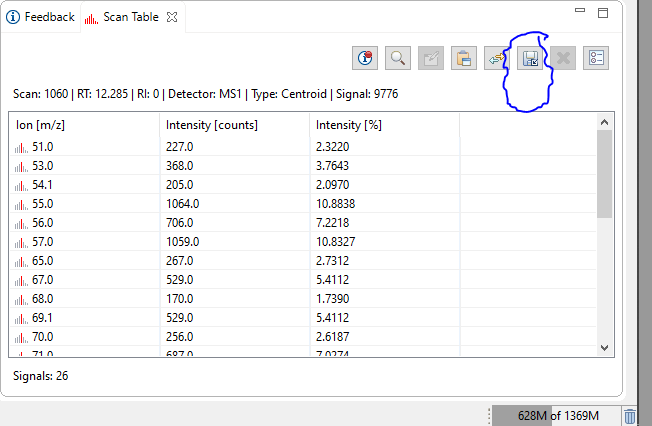
@fabhlach3592 @GNPS_UCSD@FemalesInMS So I think you have a couple options and forgive me, I did this a long time ago. You can use OpenChrom (https://t.co/TmQUInAHo9), to pull in the .D files and there is a way to select all the scans and press the button in the scan table window and export to mgf then PW to MZML/XML