Our latest bioRxiv preprint characterizes our Arg-C Zero protease (available now at https://t.co/le1gAzp8bf 😏) What you may learn might surprise you!!1!! (ie. equivalent protein group ID's to Trypsin with half the peptide IDs)
#proteomics#teammasspsec
🔬 New bioRxiv preprint: Arg-C Zero, recombinant arginyl endopeptidase with >99% cleavage efficiency, proline-adjacent cleavage, Histone and labile PTMs analysis like ADP-ribosylation and comparable proteome depth to Trypsin.
https://t.co/cpWFzASQLG
#Proteomics#TeamMassSpec
@woongworks Hey Woong very good question! In short we didn't compare with Trypsin alone in this experiment since it is generally performing even worse than compared to Trypsin/LysC. If I had to guess, it would be probably 5-10% worse than the combo of Trypsin/LysC .
🚀 We're very excited to announce KRysin! We have been working on this for a long time and our preprint is finally today on bioRxiv #proteomics#TeamMassSpec
Let’s walk through it 🧵👇
https://t.co/IMZdUxkPcy
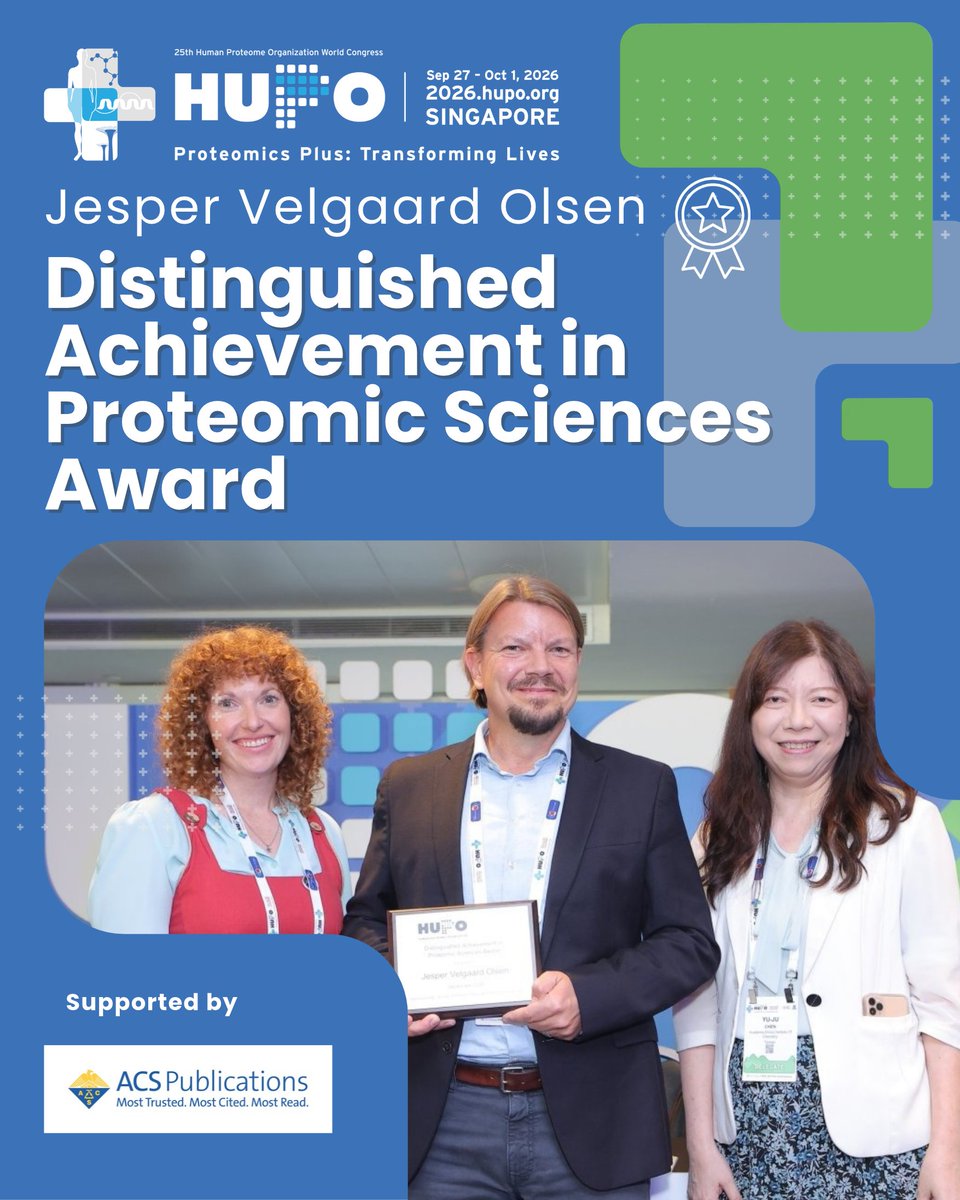
Congratulations to Jesper Velgaard Olsen, recipient of the Distinguished Achievement in Proteomic Sciences Award!
Presented during the HUPO 2026 Plenary Session on Monday, September 28, the award recognizes Jesper’s contributions to the field of proteomic sciences.
A special thank you to ACS Publications for supporting the Distinguished Achievement in Proteomic Sciences Award.
Congratulations, Jesper, and thank you to everyone who helped make HUPO 2026 a success!
#HUPO2026 #Proteomics #HUPOAwards #ACSPublications
🤝 Thanks to @GENOVIS , KRysin is now commercially available, and we’re really excited to see how the community puts it to work 👀 We’re far from done in the lab, so expect us to keep flexing our skillz 💪😉
@arjunrajlab lol this thread is a good example of people just burying their head in the sand with so many incorrect statements. Look, I get RNA is easy to measure and analyze but let’s not pretend it tells us more about biology than an estimate of transcript levels.
Can MS-based proteomics see what histology can’t? We profiled 83 rare paediatric adrenocortical tumours from archival FFPE tissue & found 4 proteome-defined states that predict survival better. Now in @eBioMedicine, led by Rainer Claus & Andreas Metousis. https://t.co/SVHsCrhFBd
NEW: A U-Copenhagen scientist voiced concerns that Claude might have trained on his enzyme research.
Anthropic's head of life science tells me he is "absolutely certain that that did not happen" in a new interview with @endpts
Full Q&A: https://t.co/0uecsF1KHF
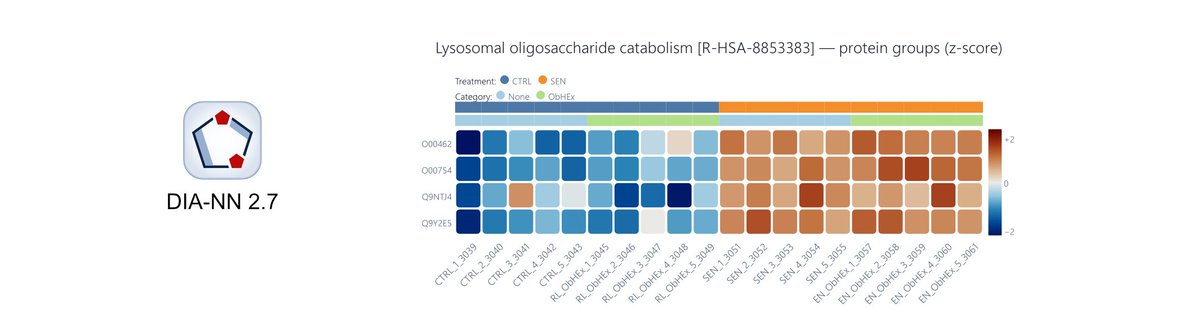
We have released DIA-NN 2.7. Performance improvements (more proteins) and GUI improvements. In particular, added a data completeness filter for pathway analysis. Further feedback on how to improve statistics and visualisation in DIA-NN is very welcome!
After OpenAI stole the navier stokes work it is obvious that big orgs and universities will need to have their own AI centers running their private IP just like they have their own supercomputers.
Imagine being a big pharma company using ChatGPT rn.
That is urgent.
There is a super shady data control setting on everyone's ChatGPT which makes it seem like your data can be used for training even if you explicitly say to *NOT* improve the model for everyone (1/9)