Drills and exercises are common terms for locomotive movement strategies.
In simple terms, they are ways to get from point A to point B and can help teach, train, or even test athletes' abilities.
Learn them from people better than you, especially in the "speed slop" era.
Deceleration without articulate foot mechanics is very surface level. Damian has advocated for testing for years, let’s all contribute to a deeper solution.
The next generation of foot data will be more granular, more connected, and more practical as an intervention.
🚨Latest blog @sciofmultispeed
DECELERATION: The most mechanically demanding task in multi-directional sports? 🏀🏈⚽️
Example: In basketball 🏀 deceleration activities registered highest number of cases > 8G forces! #basketball#braking#forces#NBA
https://t.co/QMMcKB4JRK
@DHMov The foot's form and function determine much of how we interact with the ground. While leg capacity matters, bad footwear and poor foot function can negate much of that ability.
Barbell tracking is 60 years old...
I have not seen any innovation since the original technology was released.
Focus on the craft, and use it only when you need to recalibrate a traditional or analog program.
This doesn’t make sense! Send him to Spain!
Saints sent Jordyn Tyson to renowned hamstring specialist at University of Wisconsin https://t.co/YTaYogGurG
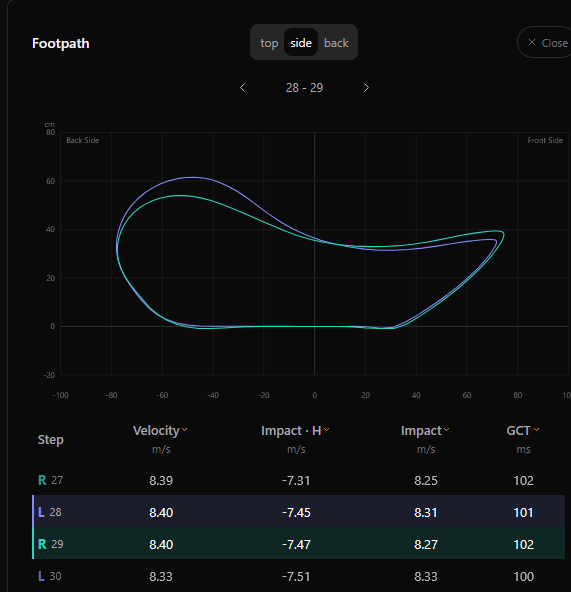
Another Footpath from @StrydSpeed showing some tempo running from Coach Furlong.
Keep the back side low, front side sharp, kick out far, and the strike point at 25-30 cm.
When you "sweep to reap," athletes get faster and stay healthy.
Conservation of kinetic energy wins...
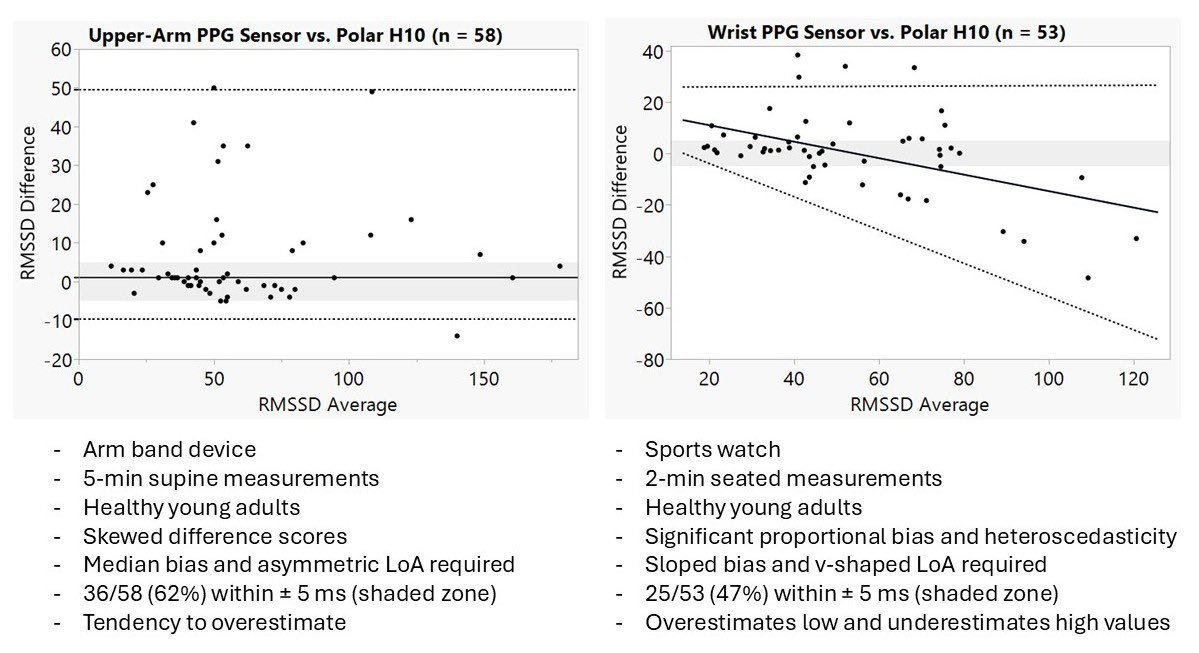
“A Youtube scientist tested X wearable for HRV and showed it was accurate”.
Both devices below were within ~2 ms of ECG for me. Then we tested >50 people.
Each were “accurate” in only ~half the samples, and their error tendencies were completely different. Both unacceptable.
N=1 comparisons are important for validating a device for you, but those results apply only to you.
Posterior ankle pain on plantar flexion after a sprain?
Ultrasound showed posterior tibiotalar effusion and an os trigonum separated from the talus, painful at that level during plantar flexion.
Consider posterior impingement.
#MSKultrasound #AnkleSprain#Mskfreak
Scientific journals are contributing to the illusion that consumer wearable PPG devices are valid HRV research tools, which benefits brands while misleading everyone else.
My concerns with this study:
🚩RMSSD was estimated via Whoop, not measured with ECG
🚩 Whoop has not been rigorously independently validated for HRV
🚩 According to their website, Whoop’s proprietary HRV metric is weighted to later phases of slow wave sleep, which likely misses the short-term effect of feeding on HRV that would occur post-ingestion
🚩 100 ms is high for a group mean
🚩 Every other wrist/ring wearable PPG device that has been independently tested shows much greater estimation error at higher HRV
🚩 Feeding can alter peripheral vascular tone and BP, potentially affecting whoop/PPG estimation of RMSSD via changes in pulse arrival time rather than cardiac-ANS modulation. Thus, ECG is needed.
🚩 While a small liquid serving may not substantially affect HRV like a solid mixed meal would, we don’t really know how HRV was affected in this study based on the above comments
I like the study idea but disagree with the HRV methods. I’m less familiar with the validation research for the other sleep metrics from Whoop but a quick search showed disappointing results for this model.