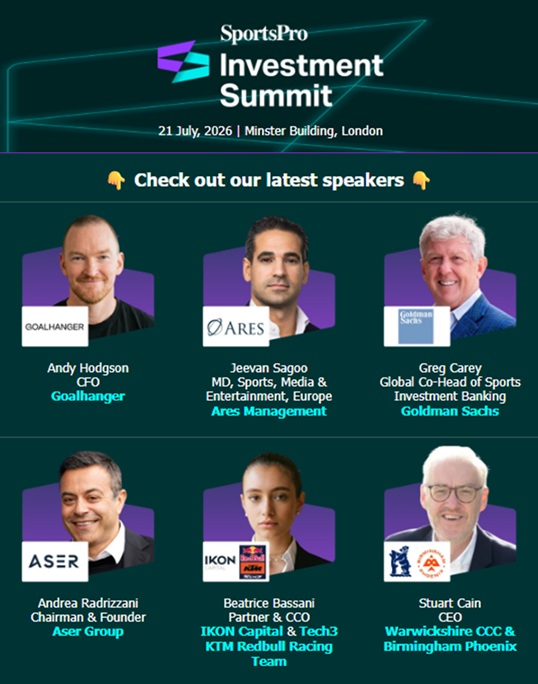
Check out the latest round of speakers announced for this year's SportsPro Investment Summit. Some of the biggest investors in the space, investing and deploying billions into the sports industry.
More details for next months event here: https://t.co/MJHAtyBDk2
The FIFA World Cup has enjoyed remarkable commercial growth over recent editions, cementing its position as one of the most valuable properties in global sport.
But as the tournament continues to expand, questions are emerging about how sustainable that growth is.
With larger competition formats, increasingly fragmented media rights arrangements and new distribution partnerships with platforms such as YouTube and TikTok, FIFA is reshaping how the World Cup is consumed, distributed and monetised.
At the same time, more content, changing audience behaviours and mounting pressure on traditional broadcasters are creating new challenges.
Across media rights, sponsorship, ticketing and emerging revenue streams such as in-game advertising, the balance between scale, revenue growth and fan experience is becoming harder to maintain.
And let's not get started on ticketing.
The central question: is the FIFA World Cup still set for continued growth, AND does it really need to?
Key discussion points:
1️⃣ How much further can FIFA grow the value of the World Cup's media rights?
2️⃣ Do partnerships with YouTube and TikTok expand reach without undermining broadcaster value?
3️⃣ Is FIFA successfully balancing reach and revenue, or is the commercial model becoming overstretched?
4️⃣ Are the growing financial demands of national federations starting to take their toll?
5️⃣ Do rising ticket prices and concerns around fan experience point to a broader disconnect within the ecosystem?
6️⃣ Will the transition from a North American-hosted tournament in 2026 to a multi-country event in 2030 create new commercial challenges or opportunities?
More on this week's StreamTime Sports:
Podcast: https://t.co/Nwg88sISrJ
Spotify: https://t.co/lgprMKu5MT
YouTube: https://t.co/ZUhWEaVnbI
xG is a stat driven by Opta Sports, sitting as part of Stats Perform. It's become synonymous with assessing how a team performed relative to the scoreline.
And using that sort of framework, they worked with Edelman and XBOX to create one of the most fascinating campaigns I've seen targeting sports fans.
xJ stands for 'expected jinx'.
Many fans are incredibly superstitious about how they sit on a sofa, where they watch a game, what they're wearing and heck even who they're watching with can impact the result of their beloved team.
So the 3 parties came together to launch a campaign that fans absolutely loved and engaged with - all to answer the simple question - Are you really a curse to your team?
The campaign is a lot of fun, and beat all sorts of performance expectations.
Learn more about it all on this week's StreamTime Sports podcast.
A big thanks to Jonny Whitmore and James Donovan for sharing their story with us.
📺 / 🎧 Watch or listen below, or just search 'StreamTime Sports' on your pod platform of choice!
Spotify: https://t.co/SXVUewI0dx
The Dream for sports is that investors will 'save' sports. The reality so far looks very different....
The full 8 dreams versus reality podcast and presentation available on Youtube and Spotify. Just search for 'StreamTime Sports'
Wondering why DAZN bought ViewLift, The Walt Disney Company bought UEFA Champions League rights, or Bruin Capital invested in Matchroom at a $1bn valuation?
Check out the latest StreamTime Sports podcast here:
https://t.co/QsIi9HV5Ch
YouTube: https://t.co/nsoapCzA55
I recently delivered a presentation titled '8 things sports needs a reality check on'. It was a 11 minute presentation at #SPLondon comparing the narrative to the reality of several key aspects of the #sportsbiz.
Topics such including: investment, media rights, technology, recruitment, use of social and more.
If you want to hear the presentation, we've made it available via the #StreamTime Sports Podcast.
You can access it here:
Spotify: https://t.co/Y7WKHszlgq
Apple: https://t.co/ZAVf0WUuxs
Other channels: https://t.co/8YUlBbIkIS
And if you were someone that was there and enjoyed it. Please share - either on Linkedin or to a colleague or peer you think might benefit from it.
And of course, let me know what you think.
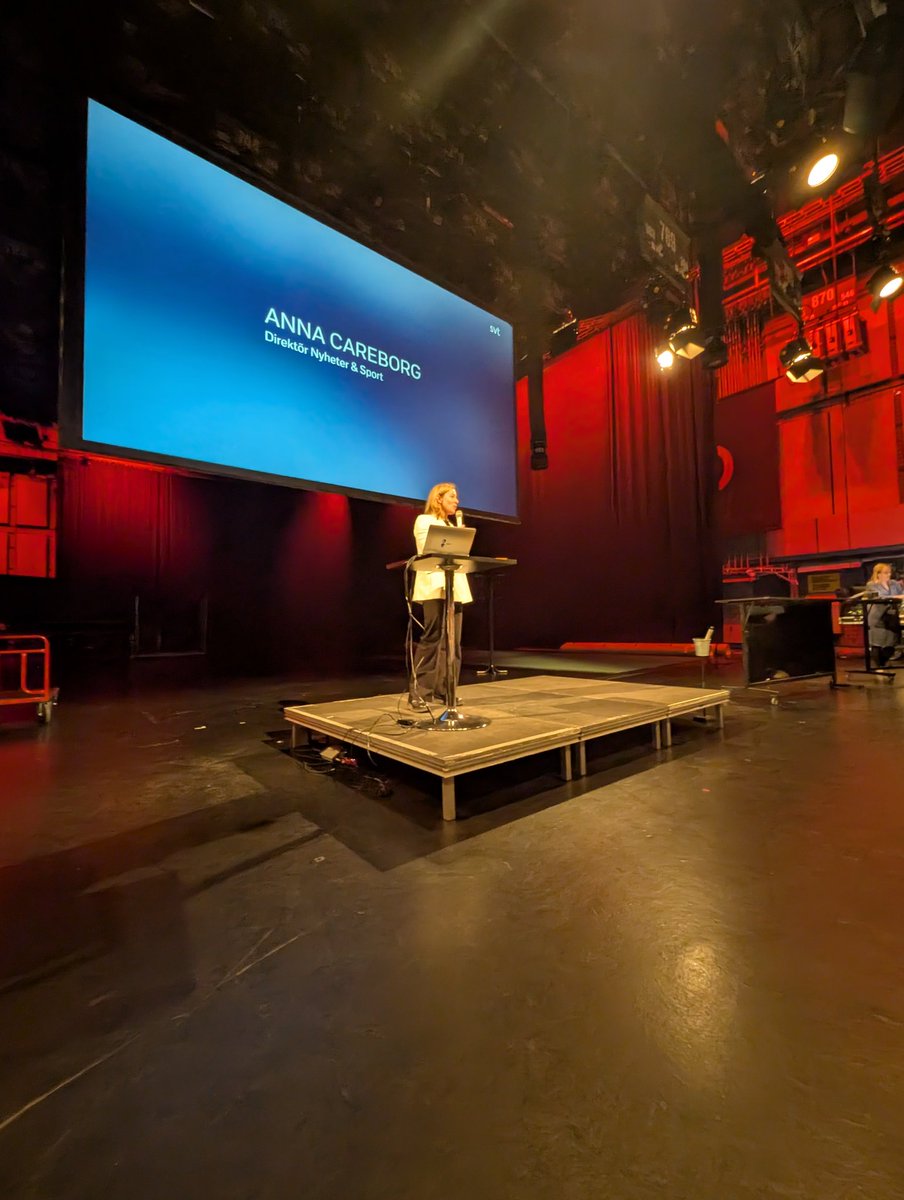
A privilege to speak today at the SVT Sports internal conference in Stockholm. I discussed trends, insights and case studies from across the industry that might be relevant to SVT's sports strategy.
A big thank you to the SVT sports leadership for the opportunity.
@oethesaint@NRL Netflix are showing they're not afraid to go to local and outside the US anymore after localised deals in Japan and Mexico. Without reading the article and knowing what rights they're linked with, I would guess that tier 1 rights like the NRL are a step too far too soon for them
📺⚽ Netflix have made another interesting move in sports. And it's in a market I didn't think was a priority for them given the established players. 👇
This week Netflix secured exclusive rights in Mexico to the CONCACAF Gold Cup and Nations League Finals from 2027.
By my count, it's only the 3rd country they've done a single market deal. With US, and the recent baseball deals they've done in Japan ⚾ as the only others announced.
Why it's worth paying attention to: 👇
✅ Single‑market and exclusive, in a market that has meaningful sports rights competition.
It shows Netflix our now tailoring their sports approach to a much more granular level.
✅ simplified economics
Netflix continue to offer these premium rights as part of its base package - it's yet to consider a supplementary subs package like it's streaming counterparts.
✅ Consistent pattern emerging
Taken together with:
- World Baseball Classic (Japan only)
- MLB Japan‑specific coverage
Netflix is now starting to narrow focus on single markets. This will cause alarm bells for the incumbents sitting on top tier rights in localised markets
📌Zooming out, Netflix still is being selective, disciplined, and perhaps opportunistic about where live sport rights investment makes sense.
They're going for sports and events that are audience needle movers, and they're now doing it market by market.
Will be intrigued to see who's next on the Netflix shopping list.
There's plenty of European markets ripe for disruption!
#streaming #sportsbiz
Why would DAZN spend $100m acquiring a B2B platform provider when it already claims to have one of the strongest OTT platforms in the market? 🤔
That may be the immediate question following its acquisition of ViewLift.
But this deal is likely less about technology — and more about US market access, rights relationships, and a more flexible commercial model.
ViewLift’s core business has been built around securing rights-style agreements, often involving minimum guarantees, particularly across the US regional sports market through partners like NESN, Monumental Sports & Entertainment, and Altitude Sports & Entertainment.
And as we know, sports properties rarely ignore the appeal of an MG when one is on the table. 💰
For DAZN, this deal could immediately strengthen its US footprint while materially evolving its proposition to rights holders.
Their current “all roads lead to DAZN” strategy is naturally limited and frankly less appealing in this day and age of multi platform distribution.
The new approach will be much more flexible and more attractive as they'll be able to offer:
➡️ Maintain standalone DTC platforms
➡️ Build within DAZN’s ecosystem
➡️ Expand across digital and linear distribution
➡️ Structure more sophisticated local and global rights deals
➡️ Reduce friction for existing subscriber bases
Had this capability existed earlier, there’s a realistic argument that products like #NFL GamePass International may have remained standalone while also leveraging DAZN’s infrastructure.
That matters because O&O platforms still offer immense value for both customers and sports properties - especially when it comes to top tier fans.
A hybrid model could offer sports properties the best of both worlds: independent visibility, global scale and full value to all tiers of fans. 🌍
Commercially, this should also strengthen DAZN’s ability to secure:
• More US rights opportunities
• More fan/partner-friendly deals that avoid some of the friction created when standalone products are fully absorbed into DAZN
At a time when both European football distribution and US RSN models are under increasing pressure, this move could make DAZN a materially more compelling partner again.
‼️ One thing they need to get right: Removing user friction through seamless authentication and movement between DAZN’s ecosystem and partner DTC products.
In summary:
If this acquisition is executed well, it could provide DAZN:
1️⃣ A new lease of life in the US
2️⃣ A significantly more complete rights-holder offering
3️⃣ An opportunity to rebuild confidence among sports partners following premature exits in France and Belgium
Whether that's the final move they make before they sell or IPO is a whole other story.
#sportsbiz #streaming
So ESPN finally launched a direct‑to‑consumer D2C platform. But why the heck did it take so long?
My view - as shared in this week's pod:
I think the more useful way to look at it is through the lens of commercial trade‑offs.
For a long period of time:
• The cable business remained extremely strong
• Any standalone DTC launch would have competed directly with that revenue
• The incentives to move earlier simply weren’t compelling
• So they launched ESPN+ as a way to trial new ways of working and building a captivated streaming audience whilst biding their time ready to go all-in on DTC.
As the market has evolved, those incentives have changed.
➡️ Cord‑cutting is now (beyond) material, not marginal
➡️ Tens of millions of US households no longer have cable (60m was the number last time I heard)
➡️ That naturally creates a distribution gap that needs addressing, and a revenue gap that needs plastering.
Now of course, it’s unlikely to replicate anywhere near the historic cable economics it received on its own. But it does finally complete their distribution flywheel:
• Cable
• DTC
• Partnerships
• Aggregation
What’s particularly interesting is the downstream effect.
Once ESPN operates across all of those layers, competition shifts. It becomes less about who owns which rights, and more about who earns attention on the home screen.
At that point, ESPN isn’t just compared with other sports platforms — it’s competing alongside every major entertainment service.
That dynamic is likely to matter far beyond this single launch. And ultimately the big existential question ESPN needs to solve.
⁉️ Can they maintain their cultural relevance to the levels of peak cable?
If they do, then many would bank on them working out a new way of resolving the cable economics gap - eventually.
Here more about their journey to launch their DTC platform on the latest StreamTime Sports podcast - featuring Brian Marshall of ESPN talking about the journey to launch and beyond.
Listen: https://t.co/Qc8sVBswRV
Youtube: https://t.co/1BiBbtPi33
#SportsMedia #ESPN #DTC #Streaming
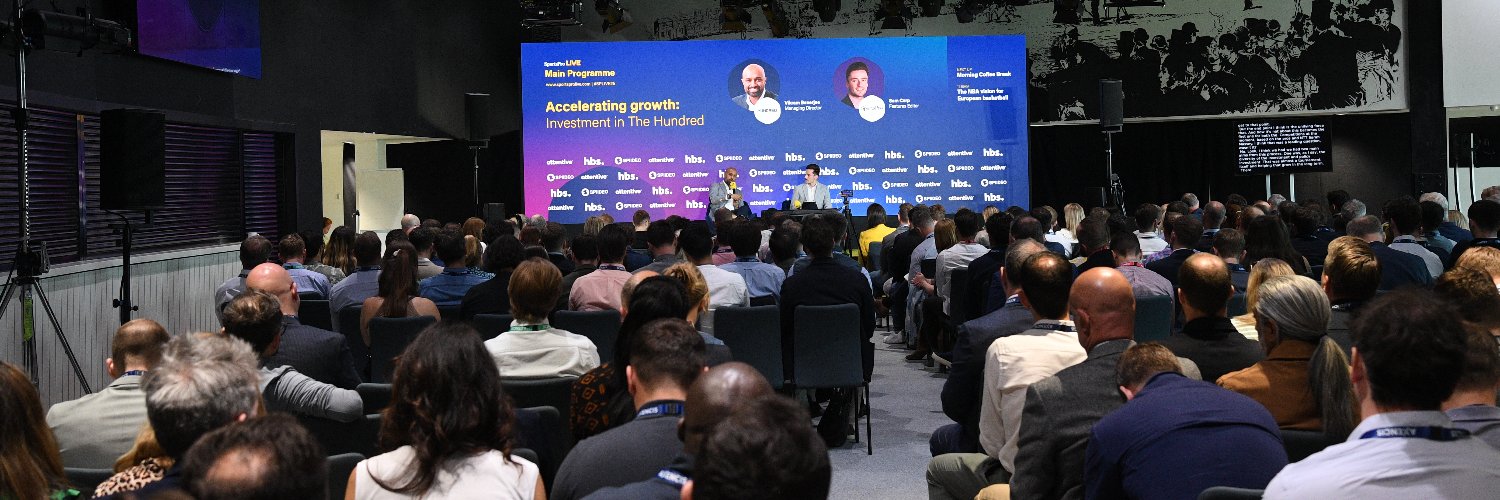
Such a great lineup of speakers (and attendees) to this month's @SportsPro London.
This event has grown from strength to strength, with over 1000 people joining the event, including 100's and 100's of sports properties, brands and key stakeholders in attendance and speaking.
Check out the sample below to get a better idea of who you'll be there.
And not only have we the big names, but we also have an agenda that ranges all spectrums of the industry.
From Premier League CEO's to Former Grand Slam Winners to Big Spending Brands to technologists, broadcasters, industry veterans, experts from outside of sports, challenge sports leaders and investors - and the list goes on.
See what's in store here - before it's too late!
https://t.co/iBZrAGUbkB
And for those already coming, see you there!
#SPLONDON #Speakers #SportsBusiness #Agenda #SportsConference
US Masters isn’t just the best golf tournament in the world, it’s one of the most carefully protected brands in global sport. And it has built an approach where control matters more than cash.
If you look back at it's history, some might say were the first stages of private equity in sport!
On this episode of #StreamTime Sports, we unpack how the tournament has remained culturally dominant by resisting many of the commercial pressures reshaping sports today. We explore its unique broadcast strategy, limited sponsorship framework, and how the manicured fan experience has succeeded in spite of going against industry norms and pressures.
Key Points:
- Why does The Masters willingly leave tens of millions of dollars in broadcast revenue on the table every year?
- What are the parallels between Wimbledon and The Masters?
- How has a 70-year partnership with CBS shaped the way the tournament controls its global narrative?
- Is The Masters proof that not all sports should chase fragmentation and short term growth?
- Can tradition and innovation coexist, or is The Masters generational exception?
- Is The Masters the strongest example of brand over revenue in modern sport sponsorship?
Podcast:
https://t.co/PgcavxKm78
Youtube: https://t.co/8tJ2ZtpVRn
HYROX has gone from concept to 1.5M participants globally in less than a decade.
So how was it created and what's been the secret to its success?
At SportsPro London, CEO & Co-Founder Christian Toetzke will join me on stage to break down how they identified the opportunity, built a global community, and scaled a business model that blends elite sport with mass participation.
📢 Explore the full agenda: https://t.co/IxA5w1XBqU
#SPLondon
#HYROX
CVC launched Global Sport Group (GSG) as a new organisation set to manage its sports related assets.
For those that have followed, some of those assets have had a bumpy ride, and as those that follow me would have picked up, I have concerns (as do many) of the future of media rights revenues as a driver of growth, and the role private equity is having in sports.
In this week's episode, you'll hear from the Chair of GSG Marc Allera, recorded live at #SPNY.
I asked him on his views of the industry, how he sees the state of investments in rugby and Ligue 1, and ultimately where he thinks the growth is going to come from, given their committing to making further investments in the space.
Take a listen if you want to hear his views.
Spotify and Apple:
https://t.co/BqkGiSRmXo
YouTube: https://t.co/PN1OkJBy3N
FIFA's new preferred platform approach could be one of the biggest moments in live sports events since the beginning of the streaming era. It could also be one of the most disappointing.
On this week's StreamTime Sports, we debate what could result from FIFA's new social video partner approach, the major differences between the US and European sports markets, Investors perception of sports future and loads more.
Spotify:
https://t.co/0QdYr0dh4U
YouTube: https://t.co/7OJ3njtfry
Apple and others: https://t.co/LtEOMAOXpv