@RepScottPeters@NCAI1944 has asked the Senate to drop Title III. Congress already requires Tribal consultation under Section 106. It’s in 54 U.S.C. § 302706(b). Which new right in #BAAJA are you saying Tribes lack today? https://t.co/6KP5DMlyDp
@SenWhitehouse The study you linked projects just $4.17–$6.50 a month in household electricity savings in 2040, based on the September #BAAJA bill. Senator, how much would the average household actually save under the November substitute, and when? https://t.co/pA4V8euqVF
@ABQJournal@NCAI1944 asked the Senate to remove Division B, Title III. The All Pueblo Council of Governors says the bill was written without consulting Pueblos. @SenatorHeinrich, you told the Journal you’re open to amendments. Will you support striking Title III? https://t.co/n3HSYOMgat
@willpoffwebster Cape Wind lost its power contracts in 2015 after missing financing and construction milestones. The D.C. Circuit left the lease and construction approval in place when it ruled on NEPA in 2016. Which #BAAJA provision would have kept those contracts alive? https://t.co/7d4HONX6o5
Even @algore agrees:
That, yes, we need clean energy permitting reform, but as this bill currently stands, it “would be an extremely serious mistake” and “would do far more harm than good.”
We urge our Senate colleagues to reconsider and vote no, and to continue finding a path forward that respects Tribal sovereignty, protects the environment, and protects the rights of our communities ⬇️
@SenCapito@NCAI1944 flagged what your transparency pitch leaves out. Under #BAAJA, a federal official can end Section 106 review after deciding, in their sole discretion, that other considerations outweigh harm to a sacred site. Why keep that provision? https://t.co/n3HSYOMgat
@JasonBordoff@DanielPalken@NCAI1944 flagged what the amendment leaves in place. Even if a Tribe proves a Section 106 violation, #BAAJA bars an injunction on that claim alone. How does a court protect a sacred site while the agency fixes the violation? https://t.co/n3HSYOLIkV
@mattyglesias So why then did the co-sponsors not carve them out? And provide otherwise punitive measures against tribes, not just in NHPA, but elsewhere in the bill? see @NCAI1944
@willpoffwebster SunZia is your example. The Pentagon raised its route objection in 2018. The Tribes sued in 2024, after BLM authorized construction. The court denied the injunction. Which years would #BAAJA have saved by barring an injunction the court never issued? https://t.co/DmDvzStvN9
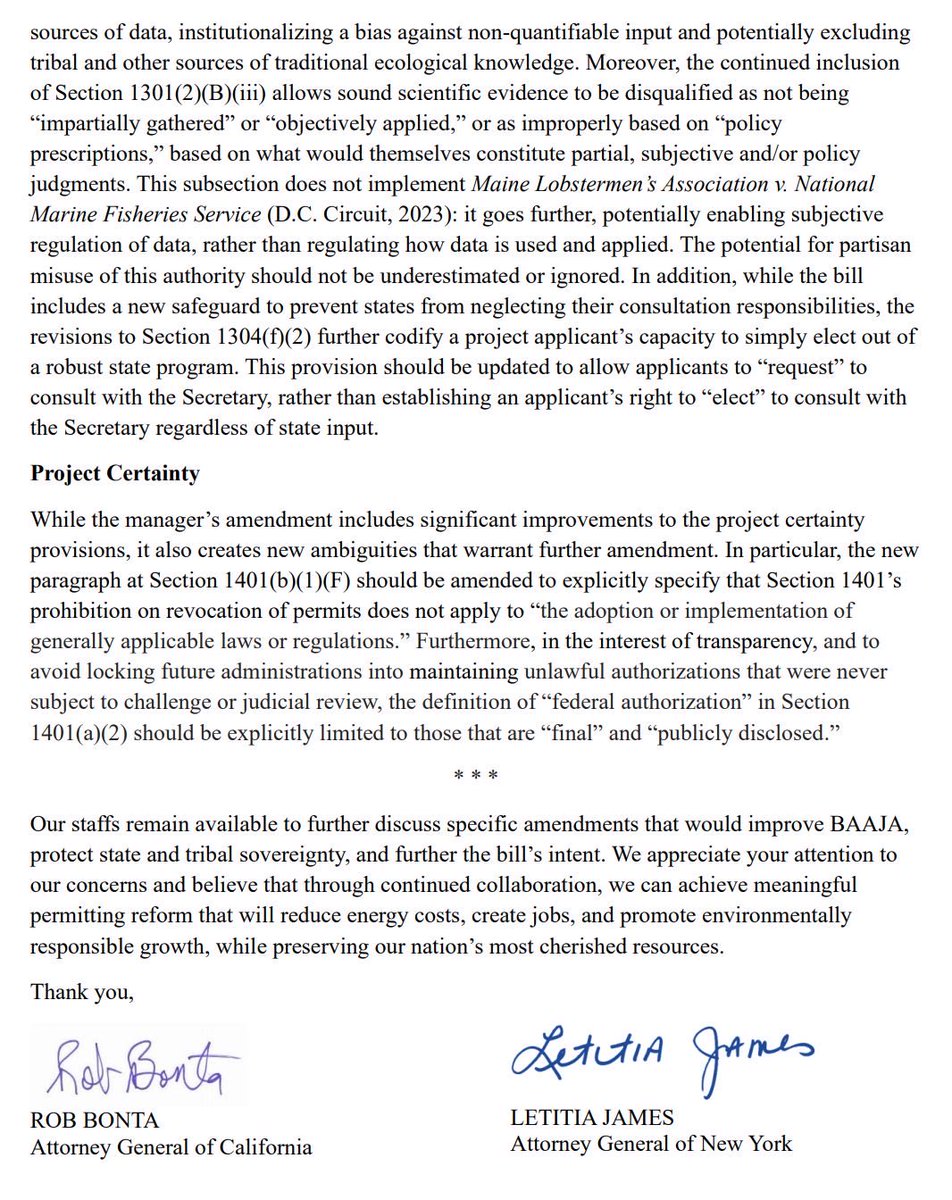
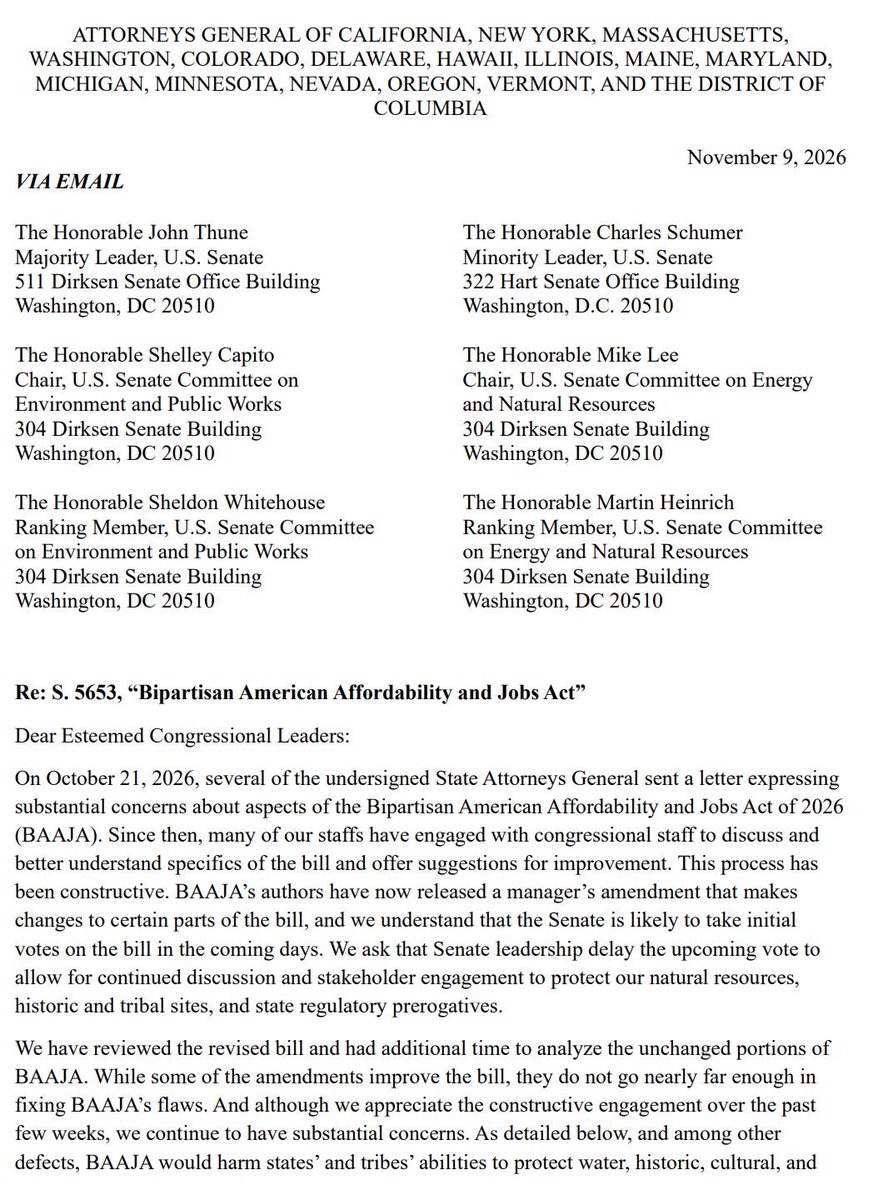
AGs of CA, NY, MA, WA, CO, DE, HI, IL, ME, MD, MI, MN, NV, OR, VT & DC v. #BAAJA: “We ask Senate leadership delay the upcoming vote to allow continued discussion & stakeholder engagement to protect our natural resources, historic & tribal sites, & state regulatory prerogatives.”
@JesseJenkins@NCAI1944 has asked Congress to withdraw Title III of #BAAJA. Which clean energy project needs the bill’s provision allowing federal officials to end Section 106 review when they decide other considerations outweigh historic preservation? https://t.co/n3HSYOLIkV
Congress is tinkering with tribal consultation over the destruction of sacred sites & burial grounds and tribal leaders are telling them to STOP. Tribal leaders are calling for Title III of the Bipartisan American Affordability and Jobs Act (BAAJA) to removed entirely.
@willpoffwebster Eight years is too long. Now answer the question. NEPA has had a court-enforceable two-year EIS deadline since 2023. Which new #BAAJA provision would have resolved the Pentagon’s 2018 SunZia routing objection, and how much time would it have saved? https://t.co/XknlAbLgLR
"Respect Tribal sovereignty. Let Tribal Nations speak for themselves. Strike Title III entirely." (6/6)
Read the full memo here: https://t.co/9qbnCmkPRs
@Shawn_Regan@NCAI1944, @NATHPO_org and other Tribal organizations asked senators to strike #BAAJA’s Section 106 changes on Oct. 9. The All Pueblo Council of Governors adopted its own opposition resolution Oct. 16. Both are public. https://t.co/0eQjh4bGwn
I have tremendous respect for the two Democratic Senators who have negotiated the permitting bill with two of their Republican colleagues — a bill that Congress is considering for passage during the lame duck session. I sincerely and respectfully urge the Democratic sponsors of the bill to reconsider their decision to move forward with this legislation. There’s no doubt that we need to reform the way that clean energy projects are reviewed and permitted. But as it currently stands, the bill would be an extremely serious mistake, in my opinion, and would do far more harm than good. Given how this Administration has run roughshod over the environmental laws and protections that are currently in place, now is not the time to give the Trump administration freer rein to double down on fossil fuels — which is what President Trump would surely do. And after last week’s historic election, we will have a new Congress in January that can strike a far better balance.