Amnesty UK was already smearing feminists as 'anti-rights' back in May, according to @thetimes. It appears that, far from being an accidental slip up or an editorial error, the latest defamatory report accurately represents Amnesty UK's deep-seated hostility to all organisations that believe sex is real and important in contexts such as same sex attraction and healing after sexual violence and trauma.
Those who've been defamed are owed an explanation of why Amnesty claimed to have withdrawn the report because of its 'language' when, per @thetimes article, it had already expressed exactly the same beliefs, in the same language, months previously.
Many of the organisations Amnesty has attacked are grassroots campaigners with a tiny fraction of a gigantic, well-funded international NGO's resources. The defamatory report has already had serious consequences for a service supporting women at the most vulnerable time of their lives, as detailed by Beira's Place lawyers in the legal letter sent two days ago. The withdrawing of the report cannot undo the harm it has already done and is continuing to do.
If Amnesty is under the illusion that the women's, children's and gay rights organisations it has attacked will be unwilling to go to court, they have made yet another massive error of judgement. They underestimate both the solidarity that exists between the targeted organisations and my willingness to support legal action, not just on behalf of Beira's Place, but for all women's and LGB organisations falsely branded 'anti-rights.'
'Who does it hurt if we make every space mixed-sex?'
This is who it hurts: the most vulnerable, those without power and influence, the invisible people politicians don't bother to consider when chasing likes and photo ops. If this girl or an adult acting on her behalf wants to take legal action, contact https://t.co/EQnwivL9hW
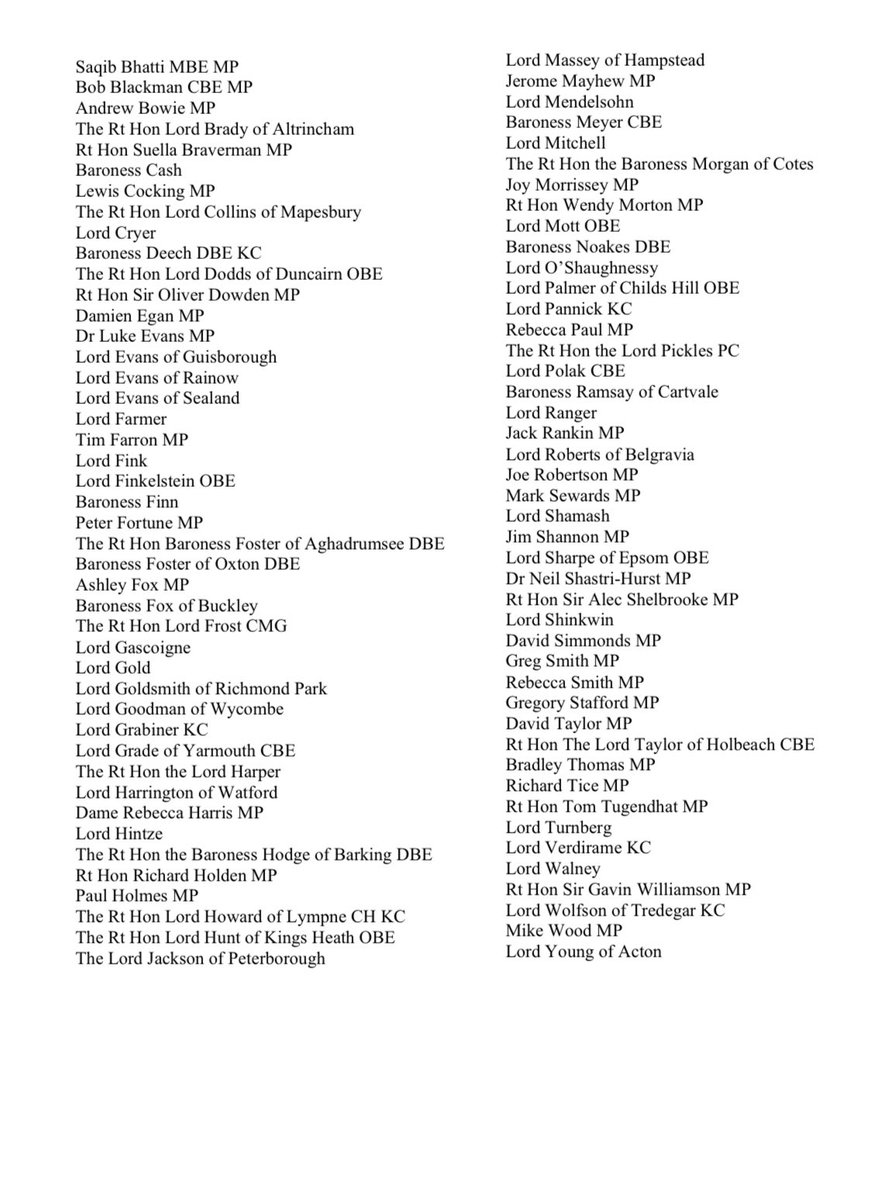
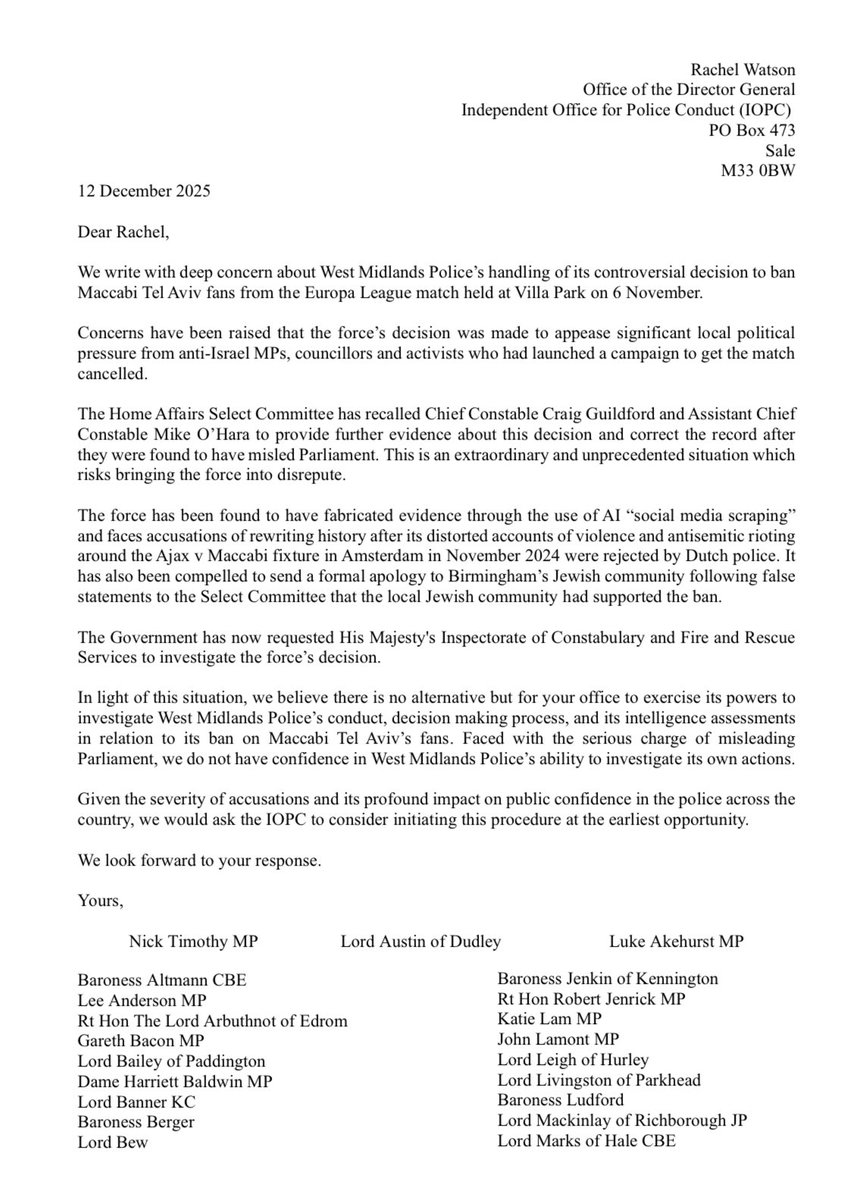
Over a hundred MPs and Peers have written to the Independent Office of Police Complaints asking them to investigate West Midlands Police's decision to ban Israeli football fans.
The letter has been signed by members of all the major parties, current and former front benchers and Parliamentarians from the West Midlands.
Man assumes his fellow men won’t take ‘no’ for an answer, will break the law, will transgress women’s boundaries unless physical force is used against them, and wants to make it clear that he’s entirely on the men’s side.
MY REBUTTAL TO SIMON COWELL’S ROLLING STONE STATEMENT
I am writing in response to Simon Cowell’s recent remarks in Rolling Stone, in which he references the tragic loss of my friend and fellow 2010 XFactor contestant Liam Payne and reflects on his time overseeing the management of One Direction. While he expresses personal sadness and regret, his statements present a distorted and incomplete account of the reality experienced by many of us who were held via contract under his structures.
It is important, ethically, legally, and journalistically — that a fuller picture is acknowledged.
When Liam passed away, the entire world saw my public reaction. It was not a reaction to fame, or grief alone, or the pressures of the music industry in general; it was a reaction rooted in first-hand experience of the duty-of-care failures, coercive pressures, and systemic harms that were present during our time under Cowell’s management umbrella.
In 2010 none of us were in a position to speak out. We were young, isolated, tightly contracted, bound by NDAs, and operating in what can only be described as survival mode. The power imbalance was absolute. The conditions were psychologically suffocating. We lacked the language, the support, and the legal understanding to identify, let alone challenge, what we now know were serious safeguarding and ethical breaches.
For Cowell to publicly present himself today as reflective, concerned, and wounded — while omitting the systemic pressures, relentless work schedules, emotional manipulation, public shaming structures, and unregulated high-stress environments that defined our experiences — is not merely selective storytelling. It is an erasure of the very conditions that contributed to the mental health struggles of multiple artists, including Liam, myself, and many others.
In the Rolling Stone interview, Cowell asks:
“Could I have done anything more?”
This question only holds weight when paired with genuine acknowledgement of what was done — or not done — at the time.
What happened to us was structural, patterned, and deeply harmful.
To suggest otherwise is to reframe tragedy as unexpected, when in truth many of us were shouting — privately, then publicly — about the same mechanisms of harm long before the world lost Liam.
Cowell also states:
“Music is not everything. Don’t let it run your life… Find something else you are passionate about.”
A sentiment that would have been meaningful had the environment he controlled not been one where music, ratings, public humiliation, and pressure were weaponised in ways that eroded our mental health. During our contracted years, none of us were ever given the space to “find something else.” We were given one option: obey, perform, survive.
To invoke hindsight wisdom now — without acknowledging the realities we were subjected to — further entrenches the myth that these tragedies occurred in a vacuum rather than within systems he built, profited from, and continues to control.
For any outlet quoting Cowell’s remarks, I respectfully ask that you include:
- the perspective of those who lived the consequences of his production culture,
- the context of documented duty-of-care concerns,
- and the fact that multiple participants — including myself — have suffered long-term psychological harm and have raised legal challenges regarding these very issues.
This is not about blame for the sake of blame.
This is about accuracy, responsibility, and the urgent need for accountability and safeguarding reform in an industry that continues to reshape itself publicly while leaving its internal harms untouched.
If Cowell wishes to have public conversations about loss, duty, and the “what ifs,” then it is vital those conversations include the full truth, not the curated fragments currently being offered.
I am available for comment, clarification, or interview should you require further insight.
Sincerely,
Katie