India’s manufacturing problem is not that China makes better products.
China spent 30 years building a system that made manufacturing cheap, fast and scalable.
India made very different choices.
Here’s what happened:🧵👇🏻
I resigned from Anthropic today. I spent the last three years doing pretraining research at both OpenAI and Anthropic. Neither company is acting responsibly. They are racing straight to self-improving superintelligence and gambling with our lives. More thoughts below.
We were 45 minutes away from disaster.
By the time the emergency came through, our pilots had already turned the plane around and were flying home.
Here is what happened.
IX 415 left Cochin for Abu Dhabi. Fifty minutes in, at 36,000 feet, both pilots saw the oil quantity on Engine 1 falling fast.
Quick explanation of what this means.
First of all engine oil is not fuel.
Inside a jet engine, shafts spin at tens of thousands of times a minute. They sit on bearings. So the oil does two things there.
It keeps metal from grinding on metal, and it carries away heat.
Take the oil away and those bearings get hot. Then they seize. A bearing seizing at that speed can rip an engine apart.
To ensure the engine oil works well, the pilots track two different numbers.
Oil quantity - How much oil is left.
Oil pressure - How hard it is being pushed through the engine.
Quantity falling means it is leaking somewhere. That is the warning.
Pressure falling means the bearings are about to get nothing. That is the emergency.
Our pilots moved on the warning.
They ran something called FORDEC.
It stands for Facts, Options, Risks, Decision, Execution, Check. It is a thinking checklist pilots are trained in, so that under pressure they work through a problem in order instead of going with their gut.
The facts said the oil was still dropping. The options were carry on to Abu Dhabi or go back. They picked Cochin.
Now, Cochin to Abu Dhabi is about three hours, and most of it is open sea. Almost nowhere to land. Turning back meant a known airport, their own engineers waiting, and land underneath them the whole way.
The captain got through to Mumbai Radio on high frequency and told air traffic control they were coming back. Both pilots kept their eyes on the engine gauges the entire time.
Forty five minutes into the return, the oil pressure started jumping around and the needle went red.
They pulled out the Non-Normal Checklist, which is Boeing's written procedure for exactly this situation, and shut Engine 1 down.
Pilots do not make this up as they go. They read and they do. Boeing already worked out the right order with a calm head on the ground.
Then came the hardest bit, and almost nobody is talking about it.
They landed overweight.
Every aircraft can take off heavier than it is allowed to land. You normally burn fuel through the flight and are light by the end. This one was fuelled for three hours and only flew about ninety minutes.
It came back heavier than expected for landing.
Heavy means a faster approach, a longer run down the runway, and a lot more heat going into the brakes. The 737-800 cannot dump fuel. There is no system for it.
So you land heavy or you keep flying on a dying engine.
Now when you do that with one engine out, all the thrust is coming from one side, which keeps trying to swing the nose of the plane. The pilot holds it straight with rudder the whole way down.
That is a difficult landing.
They made it look ordinary. The passengers reportedly had no idea anything serious was happening.
Yes, a twin engine airliner is built and certified to fly and land on one engine. Pilots practise engine failures in the simulator every six months.
And this is not rare. The government told Parliament there were 21 in-flight engine shutdowns by Indian airlines in 2024. RTI data to the Times of India showed 65 since 2020, roughly one a month. Six were reported between January and July 2025.
Air India Express has been here before.
In February 2023, IX 348 from Abu Dhabi to Calicut had an engine flame out at 1,000 feet with 184 people on board and got back safely.
In August 2023 an Air India 787 to London had an engine shut down during climb with 267 on board and turned back to Mumbai.
But to pull it off under extreme pressure, our pilots did a great job.
The open question now is why that oil was leaving the engine.
But the flying was excellent. They saw an alert they did not like, went home before it became a crisis, and then handled the crisis calmly when it turned up.
No internet for 24 hours despite full 5G signal, calls work fine. Complaint says resolution by 7th September.
Making a postpaid customer wait weeks for basic internet is pathetic customer service and totally unacceptable. @Airtel_Presence@airtelindia
India is the absolute first to achieve this and every Indian should be extremely proud of how clever this is.
Let me explain what you are even looking at.
That video shows a freight train carrying shipping containers stacked two high, one box on top of another, running under live overhead electric wires.
Sounds simple. But it is not. No other country in the world has pulled this off. India is the only one.
Here is why it is so hard.
When you stack two containers on a wagon, the train becomes very tall. Around 7 metres. Normal electric train wires in India sit much lower, around 5.5 metres. So the two cannot share the same track. The train would smash straight into the wire.
That leaves you with a choice. Go electric and stack only one container. Or stack two containers and pull the train with a diesel engine.
The US, China, Canada and Australia all run double-stack trains. But they mostly do it with diesel, or on routes that were never electrified in the first place. Nobody bothered raising electric wires that high on old tracks.
India did both electric and double-stack together. That is the world first.
The reason India could do this is a decision from the early 2000s.
So, Indian Railways had a basic problem. Goods trains and passenger trains shared the same tracks. Passenger trains always get priority.
So freight trains crawled at 25 to 30 km/h. For a growing economy, moving goods that slowly is a major problem.
So we built separate tracks only for freight. No passenger trains allowed. These are the Dedicated Freight Corridors.
The government approved the project around 2006 and set up a company called DFCCIL to build two corridors.
The Western one runs from near Delhi to the port near Mumbai, around 1,500 km. The Eastern one runs from Punjab down to West Bengal, around 1,875 km.
Because they were building from zero, the engineers were not stuck with old bridges, old tunnels or old wire heights. They could decide the clearances themselves.
So they made a deliberate call to build the whole corridor tall enough for two stacked containers. And electrify it.
Then they had to solve two hard problems.
First, the wire. On a normal Indian line the wire hangs around 5.5 metres. On the freight corridor they raised it to about 7.5 metres. This is called high-rise OHE.
No railway in the world had run a regular freight wire that high before.
Second, the engine. If the wire is way up high, a normal loco cannot reach it. The arm on the roof that touches the wire, called the pantograph, would be too short.
So India needed a new locomotive. A taller reach. And enough power to drag thousands of tonnes.
This is why we built a new loco called the WAG-12.
It is a beast.
12,000 horsepower. Double the power of the old WAG-9 it replaced. It can haul trains over 6,000 tonnes, and up to 15,000 tonnes in some setups, at 100 km/h. That is roughly three times the old freight speed.
The WAG-12 has its own backstory. In November 2015, Indian Railways signed a deal worth about ₹19,604 crore, around 3.4 billion dollars, with the French company Alstom.
They built a new factory in Madhepura, Bihar. Indian Railways holds 26 percent, Alstom holds 74 percent. It was the largest foreign investment ever in Indian Railways.
Over time the factory reached close to 90 percent local manufacturing. So most of each loco is now made in India.
So, the government approved an infrastructure decision in the mid 2000s, then it got built over almost two decades by DFCCIL, Indian Railways and RDSO. The locomotive came through the Alstom joint venture.
The first double-stack train ran under high-rise wires in June 2020, from Palanpur and Botad in Gujarat. The corridor sections were opened in stages after that.
And finally, why only India can do this.
Three things stack up together.
One, broad gauge.
India runs on a wider track than most of the world, 1,676 mm. A wider track gives a bigger loading box. So India can run plain flat wagons with two containers on top. Many countries need special low well-cars to manage height, and those still do not fix the wire problem.
Two, the fresh corridor.
India built new track with no height limits baked in. Old networks in Europe and the US are full of low tunnels and bridges never meant for 7 metre trains. Rebuilding all of that is close to impossible and crazy expensive.
Three, the system.
The tall wire, the high-reach pantograph and the powerful WAG-12 were all designed to work together as one package. You cannot copy just one piece. You need the whole thing.
Put those three together and other railways simply cannot recreate it without rebuilding from scratch.
But the part I keep thinking about is that India approved this in 2006 and ran the first train in 2020.
Fourteen years. :)
🚨 OPERATION SINDOOR - THE COST OF DETERRENCE
How India became the first nation to strike a nuclear-armed state - and shook an American base in the crossfire.
A Strategic Deep Analysis - One Year After Operation Sindoor
At 2:09 AM on May 10, 2025, Indian BrahMos missiles and precision drones struck Pakistan’s Nur Khan Airbase - just kilometres from the nerve centre overseeing Pakistan’s nuclear arsenal.
Hours earlier, the conflict was dismissed as “none of our business.” Within hours of the strike, Washington was in crisis mode, diplomatic channels were activated at breakneck speed, and an “immediate and full ceasefire” was announced.
What changed?
India had crossed a line the world assumed no nation would dare cross - striking deep into the strategic heart of a nuclear-armed state.
This was the moment India called the biggest bluff of the post-Cold War era - and the world watched what happened when that bluff collapsed.
📌 CHAPTER I: THE HISTORICAL THRESHOLD - WHAT INDIA DID THAT NO NATION HAS DONE BEFORE
Before unpacking the Nur Khan dimension, the foundational historical fact must be stated with full clarity.
Operation Sindoor shattered a core assumption of the post-nuclear era. Unlike the restrained responses of 2016 and Balakot in 2019, India struck deep inside Pakistan’s strategic heartland - crossing a line previous doctrines avoided for fear of triggering nuclear escalation.
For decades, Pakistan’s Full Spectrum Deterrence relied on one belief: that the threat of nuclear retaliation would freeze India’s conventional response. Operation Sindoor challenged that belief head-on.
India broke that assumption on May 7, 2025.
For the first time since 1971, India struck across the internationally recognised boundary with Pakistan - reaching Bahawalpur in Pakistan's Punjab province, 600+ kilometres from the Line of Control, targeting the headquarters of Jaish-e-Mohammed and Lashkar-e-Taiba. This was not a surgical strike on a forward operating base. This was a statement that no geography in Pakistan is off-limits when Pakistan exports terrorism onto Indian soil.
Search the entire history of the nuclear era for a parallel. There is none. Israel struck Iraq's Osirak reactor in 1981 - but Iraq had no nuclear weapons. The United States bombed North Korea in the Korean War - before Pyongyang had the bomb. No state, in the post-1945 nuclear era, has struck sovereign territory of a declared nuclear-armed adversary with the depth, scale, and deliberate target selection that India demonstrated in May 2025.
India's deterrence logic was precisely documented by the Bulletin of the Atomic Scientists: "Pakistan's deterrence logic was undermined during the four-day conflict in May, when India ignored Islamabad's nuclear signaling and established what Prime Minister Modi described as a 'new normal.'"
The new normal. India became the first nuclear power in history to bomb another nuclear power's sovereign territory - and survive the nuclear bluff intact.
📌 CHAPTER II: THE COST OF DETERRENCE - HOW PAKISTAN'S 75-YEAR INSURANCE POLICY EXPIRED IN 88 HOURS
Pakistan has been running one of the most successful protection rackets in the history of international relations. Since 1998 - when it conducted nuclear tests days after India's Operation Shakti - Pakistan's strategic doctrine has rested on a single pillar: nuclear weapons as the ultimate guarantor against Indian conventional retaliation for state-sponsored terrorism.
The doctrine had a name: Full Spectrum Deterrence. Its logic was explicit. Pakistan would arm, train, and deploy non-state terrorist groups against India. When India threatened military retaliation, Pakistan would rattle the nuclear sabre, triggering Western - particularly American - diplomatic pressure on India to stand down. The deterrence was not designed to stop a nuclear war. It was designed to stop India from imposing a conventional military cost on Pakistan for terrorism.
India's Operation Sindoor starkly exposed the failure of this strategy. By striking eleven major airbases - from Sargodha to Sialkot, from Nur Khan to Jacobabad - India effectively neutralised Pakistan's capacity to deliver a nuclear warhead via its air vector. Complementing this, India's robust and layered air defence systems constrained Pakistan's missile delivery options. Even if Pakistan possessed a complete nuclear triad - which it does not - the Indian Navy's vigilant containment of the Pakistani Navy in the Arabian Sea would have thwarted any maritime strike.
Pakistan lacks a nuclear-armed submarine for sea-based deterrence, critical for a credible second-strike capability. Without second-strike survivability, Pakistan's nuclear doctrine rests on first-use threat - a threat India calculated, correctly, that Pakistan would not execute given that any Pakistani nuclear strike would be met with total Indian retaliation that would eliminate Pakistan as a functional state. India called that existential bluff. Pakistan blinked.
The numbers behind the conventional dominance that made this possible:
India destroyed an estimated 20% of Pakistan's operational Air Force across four days of combat.
Strikes across 10 Pakistani airbases were completed in just over 22 minutes - designed to paralyse Pakistan's capacity to assess, react, and recover simultaneously.
India's Akashteer system demonstrated a 100% kill rate against Pakistani drones. The S-400 Sudarshan Chakra intercepted all incoming Pakistani missiles successfully - zero Pakistani missiles or drones caused meaningful damage to Indian infrastructure.
Satellite imagery confirmed massive destruction at Jacobabad Air Base including the complete destruction of a large hangar housing US-made F-16 fighters. Pakistan's claims of minimal damage were demolished, literally and photographically.
Massive craters were observed near the hills surrounding Nur Khan airbase, believed to house Pakistan's nuclear storage infrastructure - a deliberate signal of India's capability to reach Pakistan's nuclear architecture without triggering its use.
The cost of deterrence had been imposed. For the first time in 27 years of nuclear Pakistan, the bill had come due. And Pakistan paid it.
📌 CHAPTER III: NUR KHAN - THE BASE THAT CHANGED EVERYTHING
The Nur Khan Airbase strike is the most consequential single action in Operation Sindoor - and the least fully understood.
Nur Khan Airbase in Rawalpindi serves as the hub of Pakistan's Air Force air mobility operations, VIP transport, and strategic operations. It is located kilometres from the Pakistan Army's General Headquarters (GHQ) and the Strategic Plans Division - the command overseeing Pakistan's estimated 170 nuclear warheads.
The New York Times cited a former American official: "Pakistan's deepest fear is of its nuclear command authority being decapitated." The Indian missile strikes on Nur Khan were interpreted as a warning of India's capability to do exactly that. According to Christopher Clary, an associate professor at the University at Albany: "An attack on the facility may have been perceived as more dangerous than India intended."
But here is the dimension that Western reporting consistently buried and that deserves full analytical exposure.
Pakistani security analyst Imtiaz Gul alleges - with significant corroborating evidence - that Nur Khan Airbase operates under de facto American operational control through a covert arrangement, with US aircraft regularly landing and taking off amid limited transparency. Even senior Pakistani military officials are reportedly restricted from accessing certain operations at the base.
During the Cold War, Pakistan permitted US U-2 reconnaissance missions from Peshawar's Badaber Airbase. During the War on Terror, critical facilities - including Shamsi, Shahbaz, Dalbandin, and Nur Khan - were used by US forces for drone strikes, intelligence gathering, and logistical operations in Afghanistan. While less overt today, this military collaboration continues in more discreet and sophisticated forms.
Despite the US withdrawal from Afghanistan, Nur Khan is believed to serve as a forward-operating location for US intelligence, surveillance, and reconnaissance missions - potentially including pre-positioning for potential strikes targeting Iranian nuclear sites or remnants of ISIS-Khorasan.
Now read the sequence of events again with this context.
• May 9, 10:00 PM: JD Vance - "none of our business."
• May 9–10, 2:09 AM: India strikes Nur Khan.
• May 10, morning: Rubio emergency calls activated. White House situation room fully engaged. Trump announces ceasefire on social media by afternoon.
Reuters reported that India's strikes on Nur Khan airbase had alarmed US officials, due to the base's proximity to Pakistan's Strategic Plans Division. According to a senior Pakistani intelligence official, Pakistan viewed the strike on Nur Khan as a red line particularly given its proximity to nuclear infrastructure. "US intervention was necessary to pull the two sides back from the brink," the official said. "The last move came from the president."
Pakistan's Deputy PM Ishaq Dar confirmed in December 2025 that Rubio called him at 8:17 AM on May 10 and conveyed India's readiness for a ceasefire, asking whether Pakistan would agree - effectively revealing that the US had been in direct diplomatic engagement with both sides through the night, activated by the Nur Khan strike.
The analytical conclusion is unavoidable: India did not merely strike a Pakistani military base. India struck a facility with embedded US strategic interests - and that strike is what triggered the most rapid American diplomatic intervention in the India-Pakistan conflict's entire history.
Vance said it was none of America's business. India made it America's business in 23 minutes.
📌 CHAPTER IV: THE GEOPOLITICAL EARTHQUAKE - WHAT THE STRIKE REVEALED
The Nur Khan strike and its aftermath revealed four structural geopolitical truths that will reshape South Asian strategic calculations for decades.
Truth 1: Pakistan's Nuclear Shield Was Always An American Shield
Pakistan's nuclear signaling is primarily aimed at securing third-party intervention - particularly from the United States - when confronted by India's conventional military superiority. The nuclear threat was never primarily about deterring India. It was about triggering American diplomatic intervention before India could impose a decisive conventional defeat. Frontiers
Operation Sindoor revealed the mechanism. Strike close enough to Pakistan's nuclear infrastructure - and specifically, close enough to US covert interests embedded within that infrastructure - and Washington activates immediately. The nuclear shield Pakistan advertises to the world is, in operational reality, an American diplomatic guarantee that gets triggered when American assets are threatened.
India proved it understands this mechanism - and that it can operate within it.
Truth 2: Chinese Weapons Failed Under Real Combat Conditions
Operation Sindoor highlighted that Pakistan's Chinese-supplied air defense systems - J-10Cs, HQ-9 batteries, PL-15 missiles - failed to prevent a single Indian strike from reaching its target. Wiley Online Library
The operation carries longer-term implications for Chinese-supplied air defense worldwide. Systems marketed as peer competitors to Western and Russian alternatives failed completely. Defense procurement officials worldwide are reconsidering contracts built on assumptions that May 2025 demolished. The Wire
This has a direct deterrence implication for Taiwan, for the South China Sea, and for every country that has purchased Chinese air defense infrastructure. China's weapons failed against Indian indigenously developed systems. That is a strategic advertisement for Indian defense manufacturing and a strategic liability for Chinese arms exports that China will spend years trying to counter-narrate.
Truth 3: The Nuclear Threshold Is Higher Than Pakistan Claimed
India demonstrated by striking eleven major Pakistani airbases that it could impose devastating conventional damage without triggering nuclear response. India's strikes effectively neutralised Pakistan's air-vector nuclear delivery capability while its navy contained the maritime vector and its missile defense intercepted all incoming threats. PubMed Central
Indian strategists may increasingly see through Pakistan's nuclear bluff and could pursue a decisive conventional campaign in a future India-Pakistan confrontation. A conventional war under the shadow of Pakistan's nuclear threats is now more plausible, not less, because India has demonstrated the threshold is higher than Pakistan's rhetoric suggested. Frontiers
Truth 4: India Has Redefined the Rules of Engagement for Nuclear-Era Conflicts
India's Chief of Defence Staff General Anil Chauhan articulated the new doctrine explicitly: "There is increased propensity amongst nations and governments to use force because political objectives today can be achieved by short-duration conflicts. Precision strikes create very little collateral damage - hence the cost of war for nations is less." Taylor & Francis Online
Operation Sindoor established three pillars of India's new doctrine: any terrorist attack on Indian soil will be met with assured and proportionate retaliation; India will no longer be deterred by nuclear blackmail in striking terrorist hideouts across the border; India will not differentiate between terrorists and the government that harbours them. PubMed Central
This doctrine - articulated publicly, validated operationally, and enforced with precision - has permanently changed the cost-benefit calculation for state-sponsored terrorism. Every government in the world that uses non-state actors as strategic instruments against a neighbour now has to factor in India's May 2025 precedent.
📌 CHAPTER V: THE IMF FOOTNOTE - HOW THE US PROTECTED ITS INVESTMENT
In May 2025, amid escalating conflict with India following Operation Sindoor, Pakistan secured a crucial US$1 billion disbursement from the International Monetary Fund under its $7 billion Extended Fund Facility. The Tribune
The timing is not coincidental. It is structural.
The IMF disbursement, arriving precisely during the conflict, served multiple US strategic purposes simultaneously: it prevented Pakistan's economic collapse (which would have destabilised US intelligence and military assets in the country), it signalled to Pakistan's military establishment that American institutional support remained operative regardless of the conflict's military outcome, and it gave Pakistan's leadership the financial cushion to accept a ceasefire without appearing domestically as having capitulated.
Pakistan's 2025–26 federal budget included a nearly 20% increase in defence spending, raising the allocation to approximately 2.55 trillion rupees, even as overall public expenditure was reduced by 7%. Analysts argue that such a move would not have been possible without continued external backing from the US through financial assistance and favourable multilateral mechanisms. The Tribune
India demonstrated military dominance. The US ensured Pakistan's military establishment survived financially to fight another day - or rather, to remain useful for American strategic purposes in the region. This is the honest geopolitics that India's strategic establishment must map, plan around, and ultimately work to change through sustained diplomatic investment in Quad architecture, G20 leadership, and the long project of making the US-India partnership structurally more important to Washington than the US-Pakistan arrangement.
📌 THE VERDICT: WHAT OPERATION SINDOOR CHANGED FOREVER
Operation Sindoor didn’t just strike targets - it shattered assumptions.
India called Pakistan’s nuclear bluff, proving that terror attacks can now invite direct military retaliation without fear of nuclear blackmail.
For the first time, India demonstrated a fully indigenous kill chain - BrahMos, Akash, Akashteer, S-400 integration - exposing both Pakistan’s vulnerability and the combat limitations of Chinese weapon systems.
Pakistan paid the price in damaged airbases, crippled operational capacity, and a forced ceasefire request after Nur Khan was struck at 2:09 AM.
The old doctrine of “bleeding India by a thousand cuts” collapsed the moment India showed it could impose a cost far greater than Pakistan’s nuclear shield could prevent.
The bill was delivered with a BrahMos missile. The receipt was the DGMO call requesting ceasefire.
May 7–10, 2025 changed the rules of deterrence in South Asia forever. And the world - from Beijing's defense procurement offices to Washington's situation rooms - has been taking notes ever since.
धर्मो रक्षति रक्षितः Jai Hind 🇮🇳
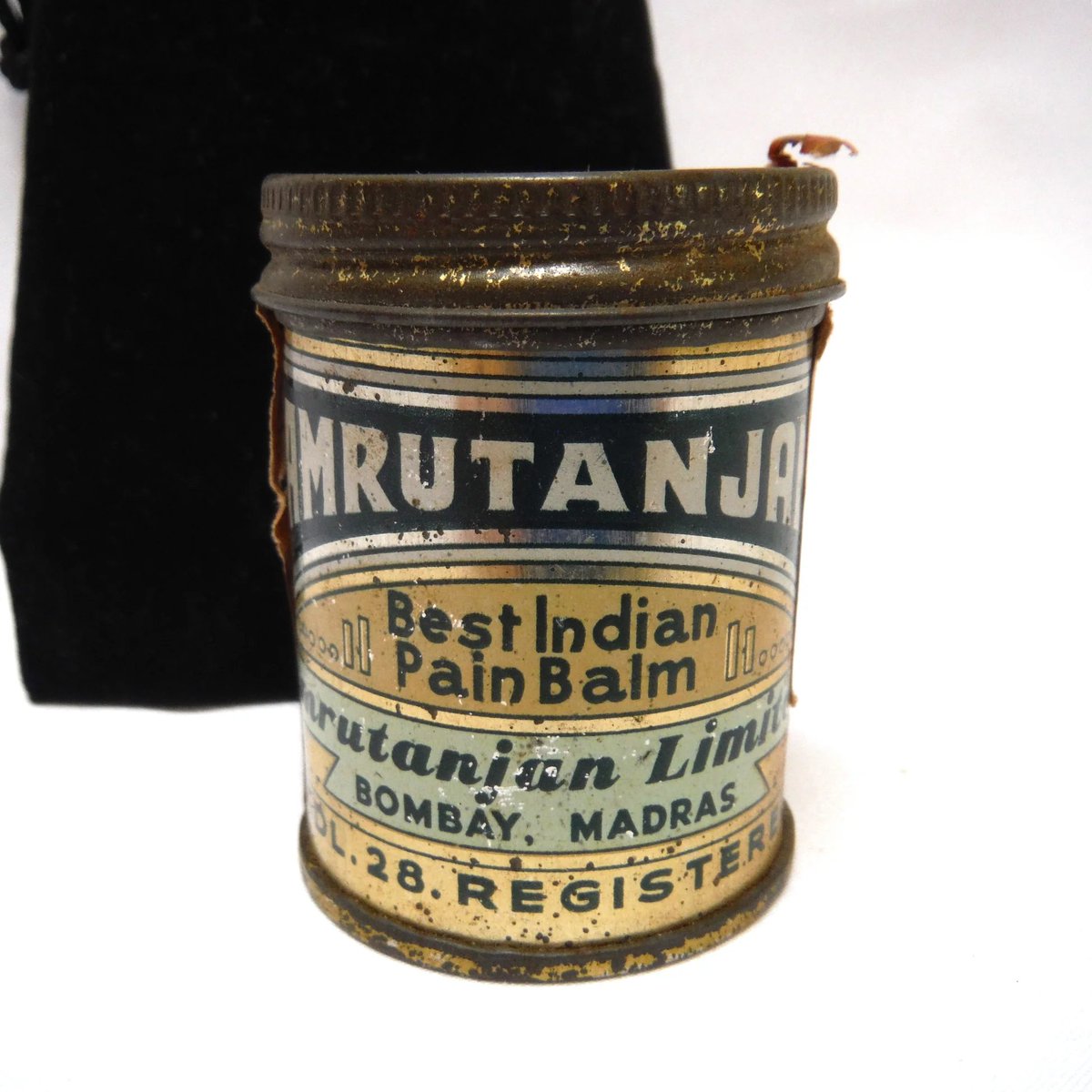
Before the world knew the power of Big Pharma, a journalist in a tiny lab in Bombay created a substance so potent it triggered a trade war with London. It was a yellow grease that did not just soothe headaches but funded a movement, bypassed British blockades, & became 1 of the few Indian products to make the Empire's own medicine look like scented water.
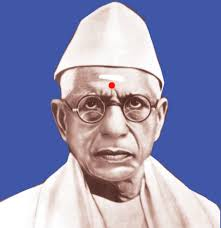
Unlike other brands started by chemists, Amrutanjan was founded by Kasinadhuni/Kasinathuni Nageswara Rao, a man who was primarily a journalist & a freedom fighter. In the late 1800s, the pain balm market in India was a British monopoly. If your head throbbed, you bought imported ointments. Rao saw this as a tax on pain. He retreated into a lab & perfected a formula that was significantly more potent than anything coming out of London.
The British tried to push their own balms like Vicks/early menthol rubs as sophisticated & odorless. They attempted to smear Amrutanjan as primitive because of its overpowering scent. Rao leaned into the scent. He realized that in a country where literacy was low, a brand could not just be a name, it had to be an experience.
He distributed free samples at music concerts (Sabhas) & religious festivals. By the time the British tried to patent the market for pain relief, the entire Indian public had already associated the smell of camphor & menthol with trust. The British balms felt alien & weak compared to the sensory explosion of the yellow tin.
The smell of Amrutanjan... that piercing, camphor-heavy aroma became the literal scent of the freedom struggle. If you walked into a room & it smelled of Amrutanjan, it was a silent signal: A patriot is present. It was a scent the British police could not arrest, yet it was everywhere.
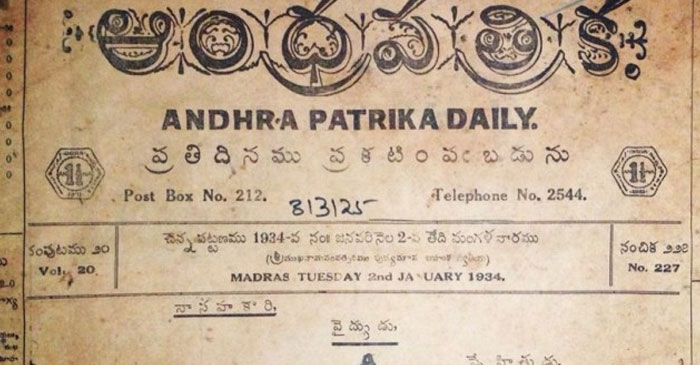
The British had a Patent Medicine Tax that made imported drugs expensive. However, by classifying Amrutanjan as an Ayurvedic Proprietary Medicine, Rao managed to navigate a complex legal gray area. He essentially used the British legal system against itself. By proving his ingredients were ancient yet his manufacturing was modern, he avoided the crippling taxes that applied to purely Western drugs, while maintaining a price point (initially 10 annas) that made British imports look like daylight robbery Rao fought back not just in the market, but in the press. He used the profits from the balm to fund Andhra Patrika, 1 of the most influential anti-British newspapers.
The British were literally paying for their own downfall. Every time a British officer’s wife bought a jar of Amrutanjan for a migraine (because it worked better than the London balms), she was inadvertently funding the printing of revolutionary literature that called for the end of the Raj.
By the 1930s, this Indian yellow grease was being exported to Indian diaspora & locals in South Africa & Ceylon. It became a global symbol of Eastern Wisdom defeating Western Chemistry. It was 1 of those few occasions, an Indian OTC (Over the Counter) product achieved cult status internationally w/o a single pound of British investment.
In fact, the yellow tin became so iconic that it did not need a label in the villages. The color & the smell were the brand. It was a biological Swadeshi. While others were fighting with words, Rao was fighting with molecular relief.
A deadly Black Mamba is snatched mid-air by a Snake Eagle… but the hunter becomes the hunted as the snake twists free and locks onto the eagle’s talons in a brutal struggle. Before either can escape, lions arrive on the scene, turning the chaos into a full-scale battle-leaving the trapped eagle with almost no chance of breaking free.
#videosvuvu
For an animal like a great white shark, weighing up to 2.5 tons, staying afloat and swimming requires a complex biological design. They have a fatty liver that helps them beat the force of water despite their heavy weight.
Their liver makes up to 25% of their body mass. It is filled with an oil called squalene that has a specific gravity of around 0.85, which is much lighter than seawater.
With this lighter oil occupying a large volume of the shark's body, it helps them stay afloat and requires less energy to swim. This is like ballast water used in ships.
Further, great white sharks have a fusiform shape, with the broadest diameter in the middle and tapering at both ends. It helps them reduce water drag while swimming, making it effortless to cover long distances.
Moreover, their skin has tiny microscopic structures called denticles that point backwards. The denticles generate vortices as sharks move and help in reducing drag.
Sharkskin technology has been studied to design ships and swimsuits for Olympic players. The swimsuits became so good that they were banned for giving an unfair advantage.
Nature's design never fails and keeps guiding us.