The “Latins” as you call the One, Holy, Catholic, and Apostolic Church never left the Faith.
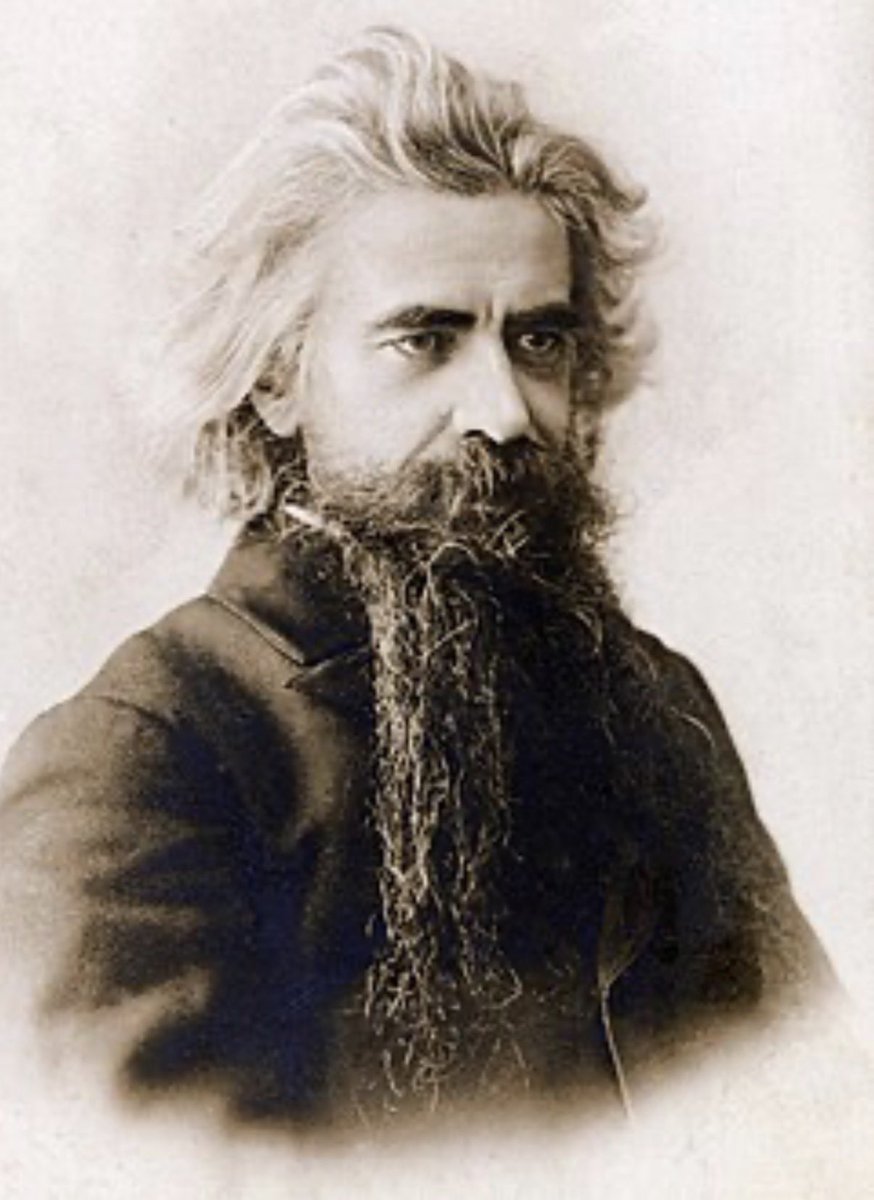
One of my favorite passages from Vladimir Soloviev:
“No amount of argument can overcome the evidence for the fact that apart from Rome there only exist national churches such as the Armenian or the Greek church, state churches such as the Russian or Anglican, or else sects founded by individuals such as the Lutherans, the Calvinists, the Irvingites, and so forth.
The Roman Catholic Church is the only church that is neither a national church, nor a state church, nor a sect founded by a man; it is the only church in the world which maintains and asserts the principle of universal social unity against individual egoism and national particularism; it is the only church which maintains and asserts the freedom of the spiritual power against the absolutism of the state; in a word, it is the only church against which the gates of Hades have not prevailed.”
Vladimir Soloviev, “The Russian Church and the Papacy” (1889)
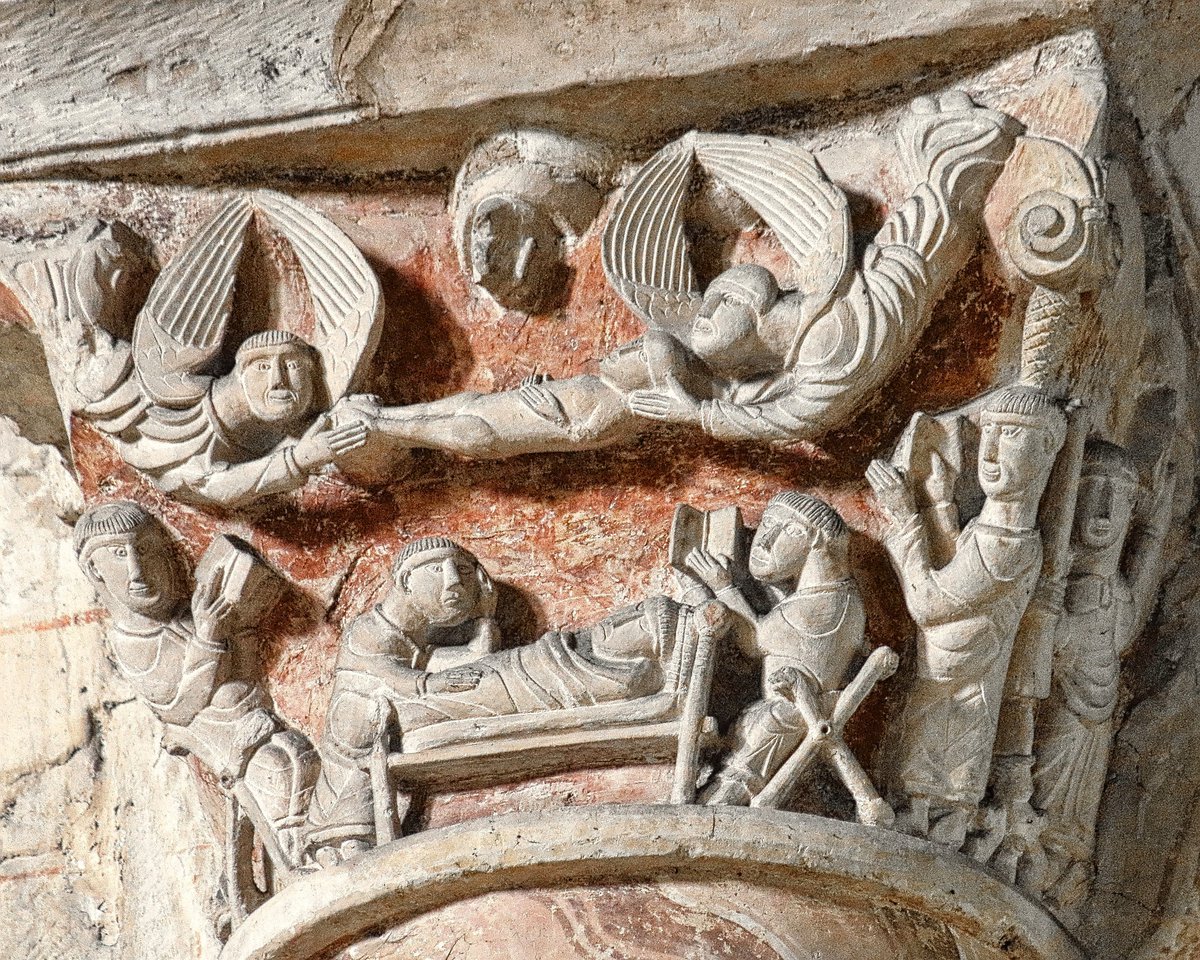
Hoy 13 de enero se celebra la festividad de San Hilario de Poitiers y precisamente en la basílica a él dedicada en esa ciudad francesa se conserva un precioso e interesantísmo capitel que representa su muerte y ascenso de su alma a los cielos portada por ángeles
#FelizSábado
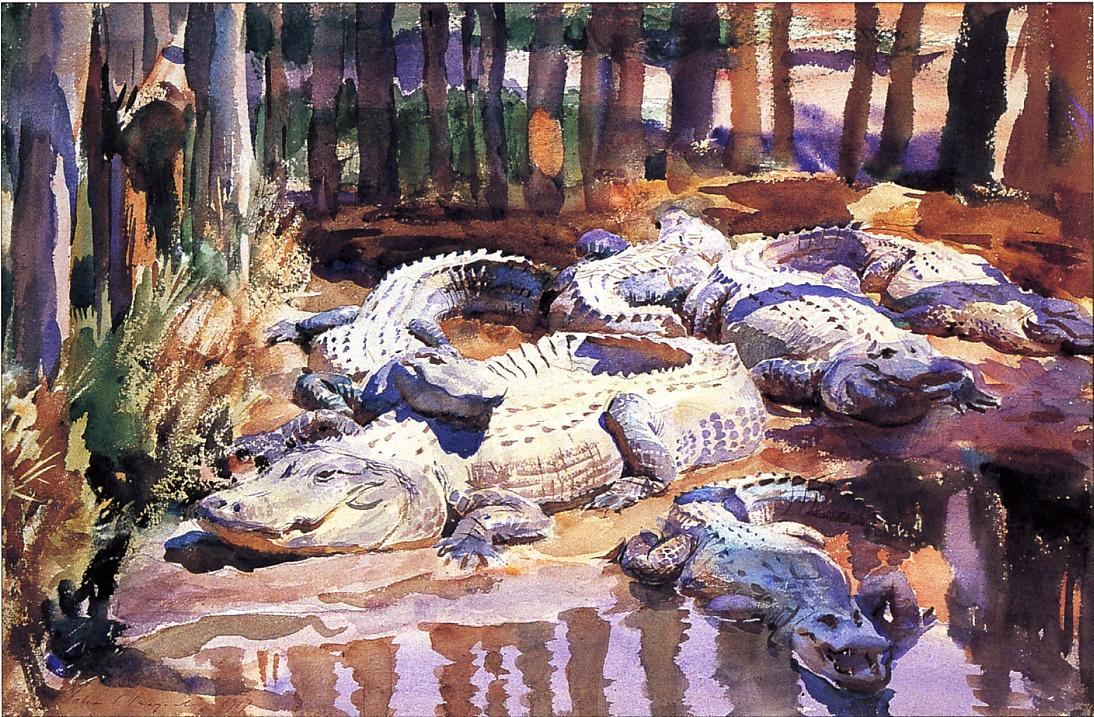
La Crucifixión de San Pedro (1604-1605) es un óleo sobre lienzo de Guido Reni que se encuentra en la Pinacoteca Vaticana. Fue su primer gran éxito en Roma y es famosa por ser la obra donde el artista boloñés adoptó brevemente el estilo de Caravaggio antes de desarrollar su propio clasicismo idealizado.
Reni se inspiró directamente en la versión de Caravaggio de Santa Maria del Popolo, pero atenuó la crudeza realista en favor de una elegancia más "limpia" y espiritual. Se dice que Caravaggio se enfureció por este "plagio", amenazando con pelear con sus puños en lugar de pinceles.
Quien es tu favorito? Caravaggio o Reni?
Arte en movimiento con apoyo de Grok
The phrase "the men who followed Baal of Peor" is easier to understand when I tell you that Baal Peor means "lord of the hole". 🤯 Now, in that light, look at modern society.... 🤔💡💥☦️
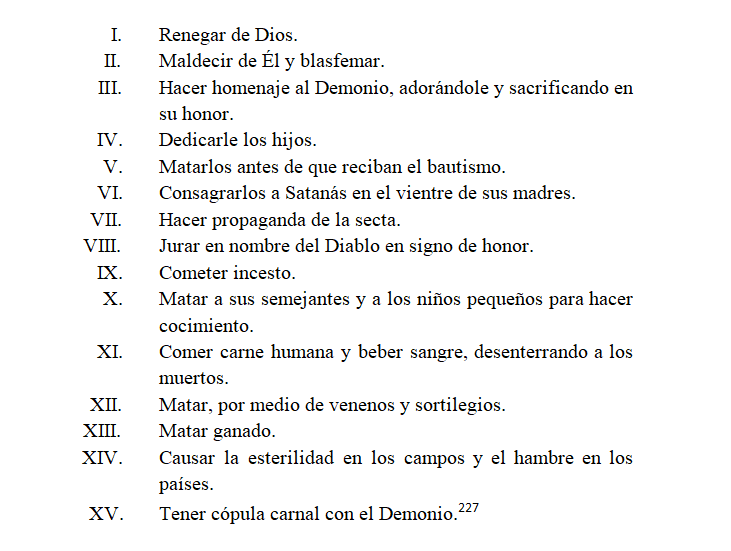
Según Jean Bodin, en su obra 𝐷𝑒 𝑙𝑎 𝐷𝑒́𝑚𝑜𝑛𝑜𝑚𝑎𝑛𝑖𝑒 𝑑𝑒𝑠 𝑆𝑜𝑟𝑐𝑖𝑒𝑟𝑠 de 1580, los brujos son culpables de 15 crímenes. ¿Cuántos cumplís en vuestras brujerías?
(Extraído de mi libro 𝐸𝑙 𝑐𝑎𝑚𝑖𝑛𝑜 ℎ𝑎𝑐𝑖𝑎 𝑒𝑙 𝑎𝑞𝑢𝑒𝑙𝑎𝑟𝑟𝑒).
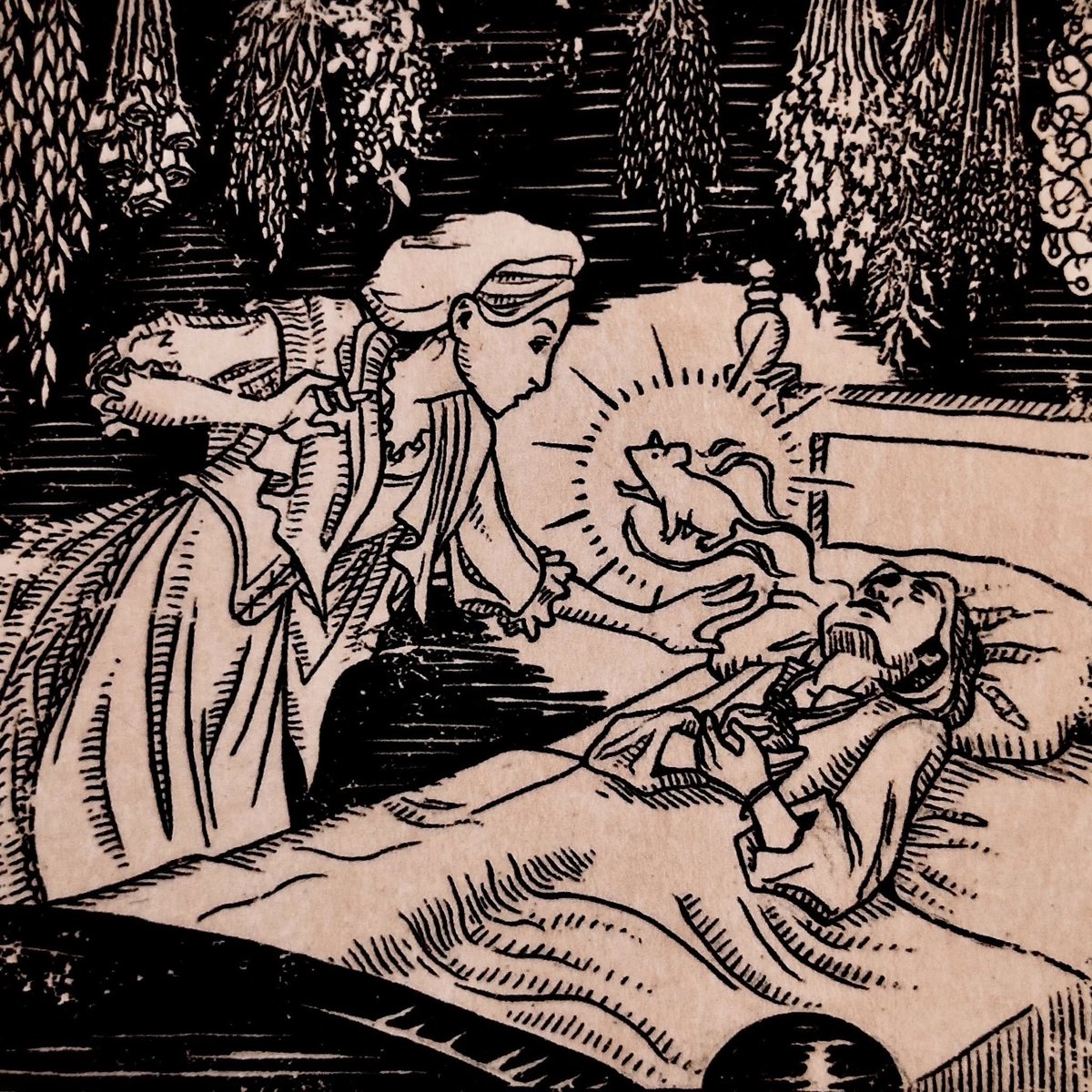
El libro es excelente para huir de las viejas narrativas que ven en la brujería algo diabólico, pero también de las modernas que nos hablan de esta como un romántico culto de sacerdotisas wiccanas. Ambas dos igualmente alejadas de la auténtica naturaleza de la brujería.
Partiendo de los trabajos de Carlo Ginzburg y Mircea Eliade, propone que la brujería es la evolución del chamanismo que una existió en Europa. Una idea que confieso que no me es extraña, puesto que también se encuentra en mi propio libro, El camino hacia el aquelarre.
Dostoevsky was horrified when he read Nechayev’s pamphlet
It inspired him to write his darkest novel of all time — The Demons — warning about the terrors of nihilism and communism
Nechayev himself inspired the main antagonist of the story
THE PINE CONE AND THE PINEAL GLAND
The pine cone is among the most eloquent of sacred emblems. It appears in the hand of initiates, upon the summit of staffs, and in the ornament of temples, as though many nations, divided by sea and century, had agreed to confess one secret without uttering it aloud. In the ancient mysteries it was borne upon the thyrsus, the staff of Bacchus; in esoteric interpretation it signified not merely vitality, but a hidden awakening, a fire ascending toward illumination. Manly P. Hall even joins this emblem to the pineal gland, calling it the “sacred pine cone in man,” the latent eye of inner sight.
Thus the pine cone may be read on several levels at once: as a sign of immortality, because the evergreen endures; as a sign of fecundity and generation, because it bears the seed in ordered scales; and as a sign of the third eye, because its very form invited the sages to see in it the image of a secret organ of perception. In Blavatsky’s esoteric physiology, the pineal gland is linked with the atrophied “third eye,” once held to be an organ of spiritual vision rather than common sight.
To the contemplative Mason, such a symbol teaches that true vision is not of the outer world alone. The vulgar eye beholds surfaces; the awakened eye discerns correspondences, causes, and meanings. Therefore the pine cone, raised upon the staff of the adept, may be taken as a quiet proclamation: that authority is not merely power over men, but mastery of perception; that the highest crown is inward; and that the soul, when disciplined, becomes capable of a more luminous seeing. Freemasonry itself preserves this ancient habit of instruction by symbol, teaching truths through visible forms rather than by naked assertion.
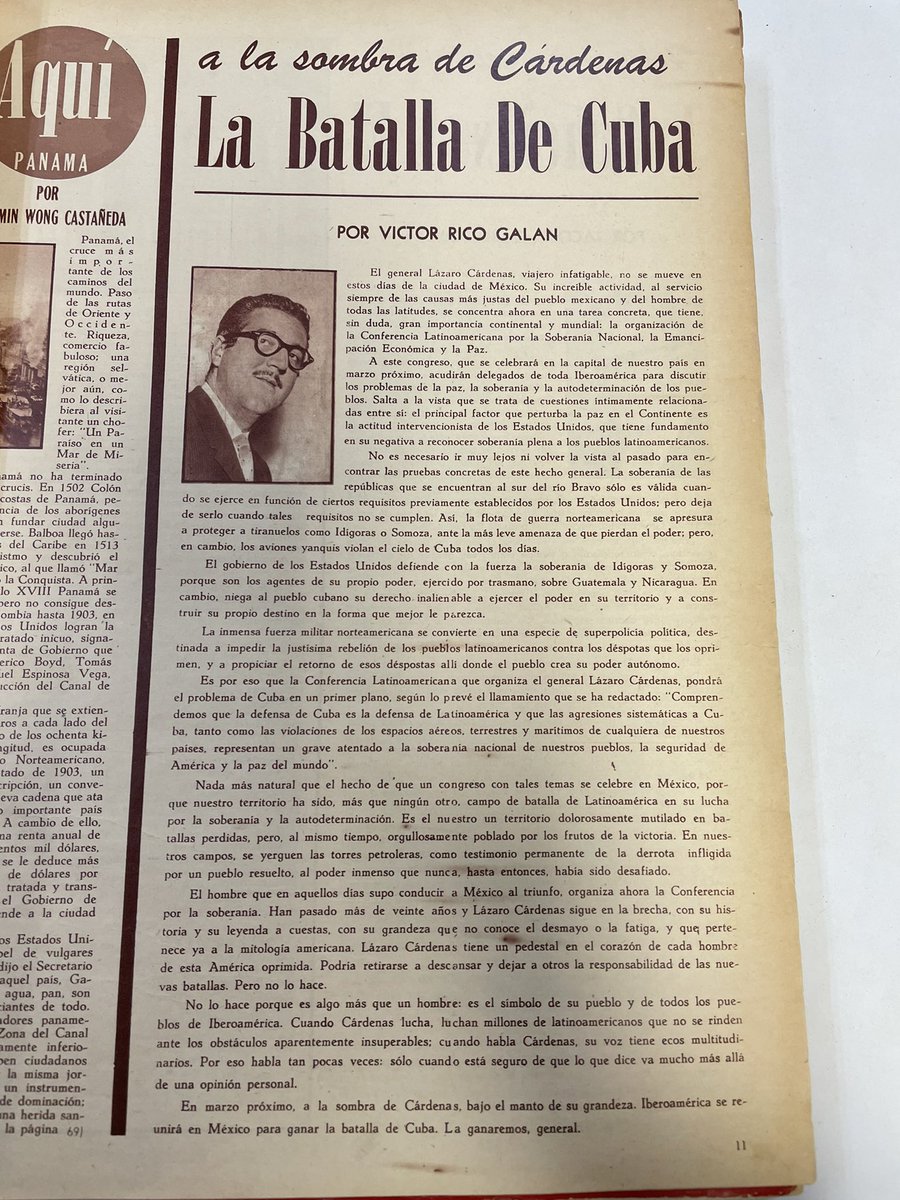
Hoy se cumplen 50 años de la muerte de Victor Rico Galán, en 1961 protagonizó un debate frente a Emilio Uranga en las páginas de Siempre! a propósito de la actitud de Lázaro Cárdenas con Cuba y su revolución







![jdmccafferty's tweet photo. Pineapple [Ananas comosus] by Anselmus Boëtius de Boodt, 1596 - 1610 (Rijksmuseum) Either a very big centipede or a very small pineapple here https://t.co/Ssp1a16nFv](https://pbs.twimg.com/media/HElJyR0boAA3eRz.jpg)