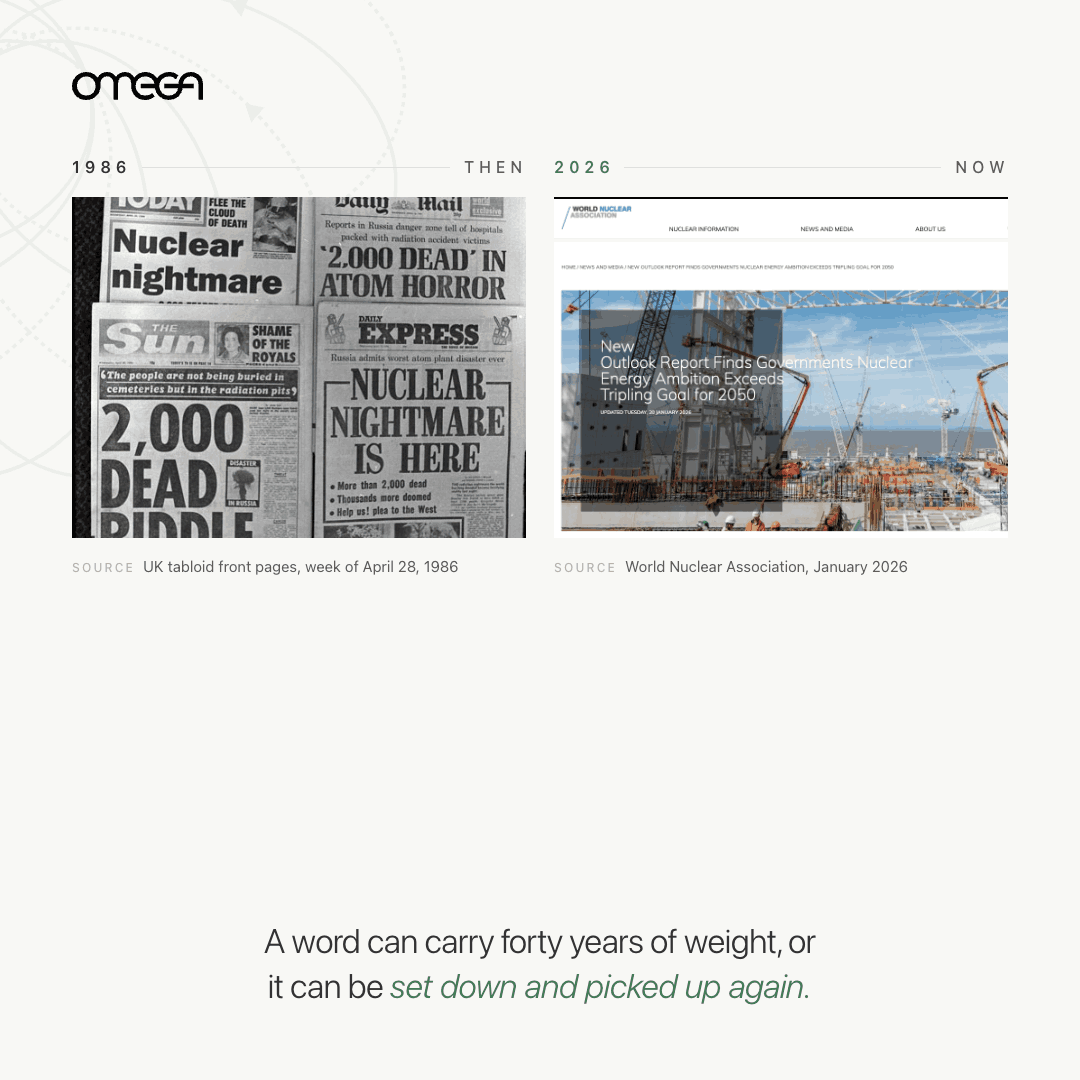
The safest and most resilient energy assets we have are nuclear - and they have the worst PR in the history of energy.
Now is the time to change that and safeguard our energy future.
Here's a write-up from @FastCompany and @UL_Standards on the panel @Greg_Lindsay, @YingShirleyMeng, Jeff Marootian, and I spoke on about the topic: https://t.co/6nmCX2sTeT
Spacecraft like Voyager 1 & 2 and rovers on Mars are still operating thanks to radioisotope power sources. We're bringing that same persistent power to the U.S. space industry at @ProjectOmegaHQ.
Check out our work with @charter_space_ and @TomNovelly in @axios on how we extend the mission for commercial spacecraft with nuclear power:
https://t.co/TjWq9n8Mbi
Thanks for a sharp conversation across orbit and critical minerals during a Climate Week NYC panel hosted by @BCapitalGroup and @CerberusCapital and fellow panelists from @rivensystems and @StarCatcherInd like @rushspace.
My message: the US is sitting on roughly 100,000 metric tons of used nuclear fuel, a national resource holding fuel for reactors and isotopes that can provide power for decades.
At @ProjectOmegaHQ we're building the refinery for the nuclear century.
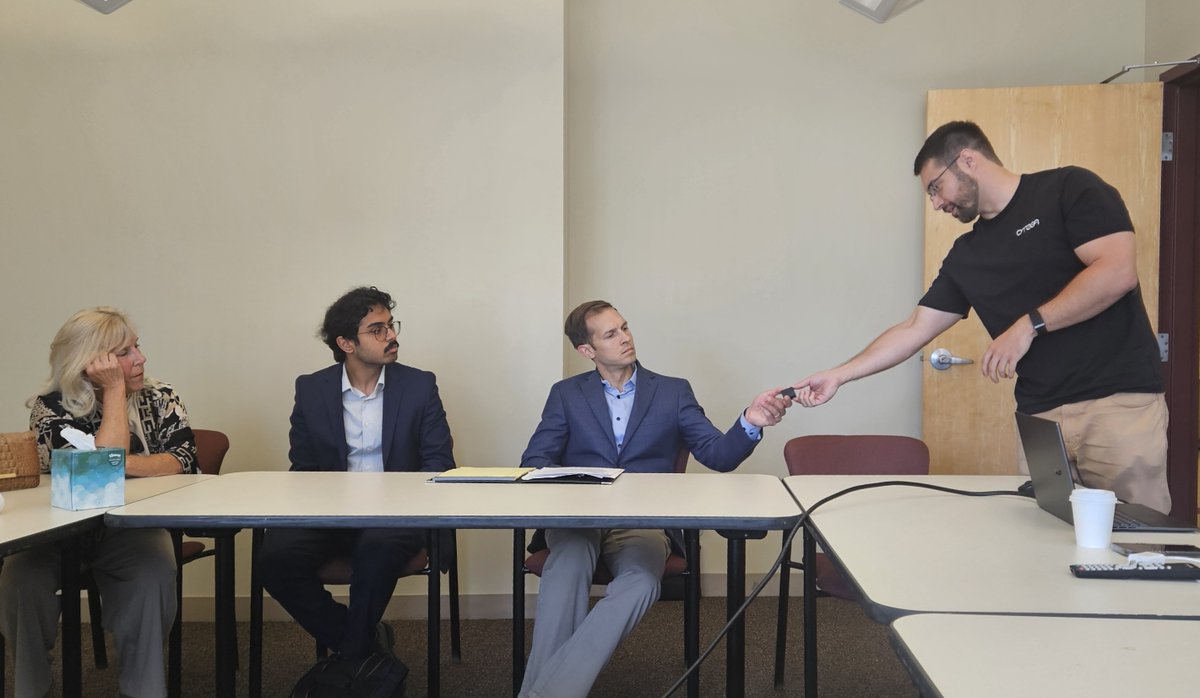
Tomorrow, I'm joining @Greg_Lindsay, @YingShirleyMeng, and Jeff Marootian (CEO of @UL_Standards) to talk about how resilient energy systems are critical for energy independence at @FastCompany's Innovation Festival in NYC. Come check it out:
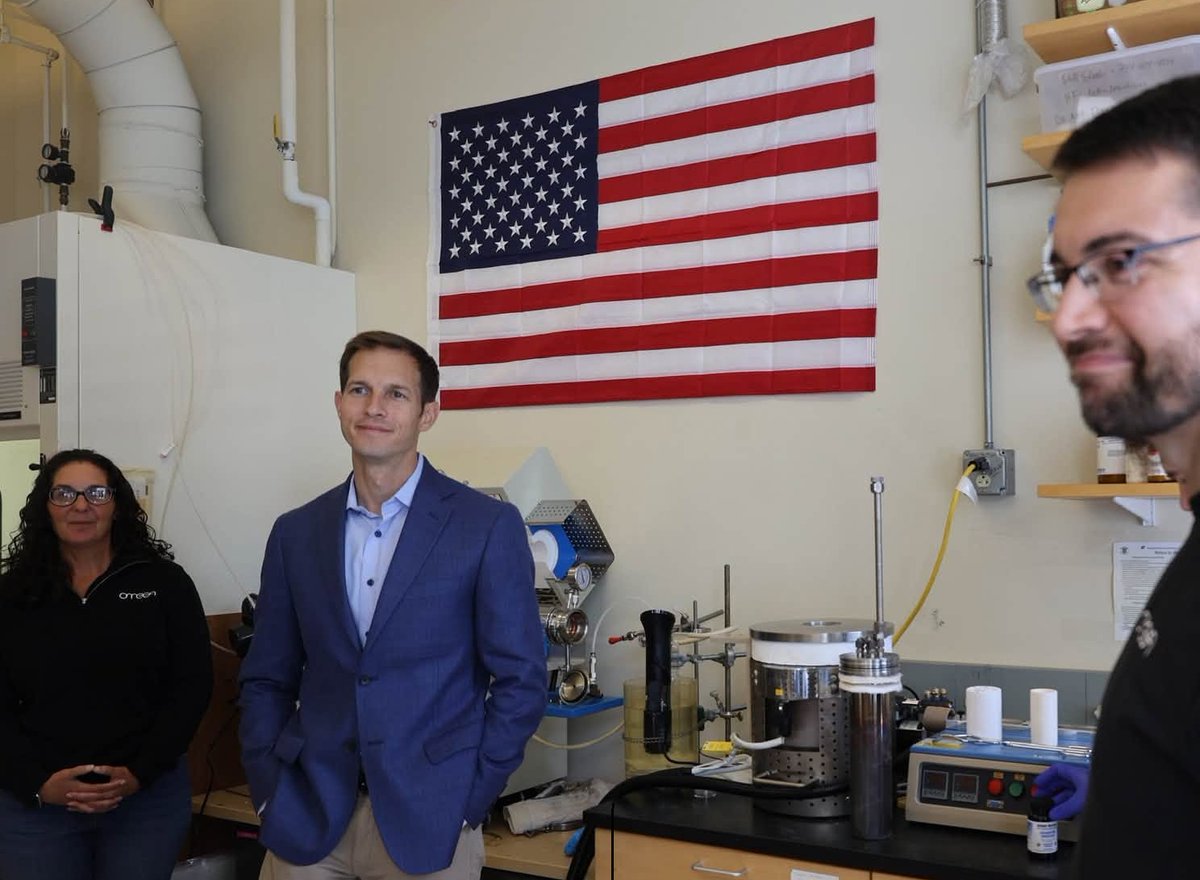
It was a pleasure hosting our Congressman, @RepAuchincloss, in @ProjectOmegaHQ's Massachusetts laboratory earlier this week.
We're doing incredible work with partners at @PNNLab, @INL, @DARPA, and @ARPAE to refine nuclear waste and separate energy-dense materials for portable power sources, they're like a battery that lasts 30 years.
Together with leaders in @HouseCommerce, we're reviving America's nuclear industry just in time to fulfill our rapidly increasing energy needs.
Kudos to @ADoricko and the @RainmakerCorp team for taking a fact-based and scientific approach. Proper measurement and verification is critical for weather technologies, and it’s been missing until recently.
Rainmaker just produced ~19M gallons of water in Alaska via next-gen cloud seeding over 3 hours of operations.
We are the first company to provably produce precipitation in Alaska. As promised, we’ve linked our white paper and relevant data.
In the future, Rainmaker will protect and restore glaciers with man-made snowfall.
Immediately, this demonstration shows how Rainmaker will add new water to the Colorado River and Great Salt Lake in the coming months.
We turned around this analysis and white paper just a couple days after operating. There are many data sources I want to deepen our understanding of the atmosphere and increase our provable production; we’re building the instruments to collect that data in subsequent operations. But at Rainmaker, we won’t tout LOIs, simulations, or lab tests. What matters is physically measuring that you’ve affected the atmosphere; proving that we’ve produced water. We prefer sharing only the tech that has proven to make more water for farms, industries, and ecosystems in need.
Expect a regular cadence of these from us as we build the best atmospheric science lab in the world. Feedback is welcome in the interim.
Rainmaker Century.
https://t.co/QZikxP1KyH
The narrative around nuclear energy in the U.S. has been shaped by misconceptions and policy failures rather than technical limitations.
In reality, nuclear power is safer than many alternatives (e.g., coal), but public perception remains skewed due to costs and scary messaging versus lives lost.
The U.S. government’s failure to uphold waste storage agreements has created logistical and legal issues, not scientific issues.
Meanwhile, strategic decisions led to dependence on foreign energy sources and challenges to our supply chain for isotope access.
Although interest in nuclear is resurging, only companies actively building infrastructure will be successful @AntaresNuclear, @AaloAtomics, @TheNuclearCo, @standardnuclear, @valaratomics, @Oklo, @generalmatter, and us at @ProjectOmegaHQ, to name a few.
Like electricity in its early days, nuclear still faces uncertainty and some fear that can be overcome through standards, education, and time.
With recent advancement with reactors and the President’s Executive Orders advancing nuclear, things are starting to change.
Be a part of the change.
Since 1957, the rules of space have largely been dictated by a single constraint: energy. For nearly 70 years, the space industry has accepted that satellites must constantly chase the sun to operate.
The physics are unyielding, the farther you get from the sun, the less viable solar power becomes. It limits your maneuverability and operational effectiveness.
We are fundamentally changing space power with small nuclear power sources. Space exploration is experiencing a massive surge in ambition, and the old energy models can no longer support the infrastructure we want to build.
Isotope powered systems completely rewire the equation by eliminating the sun-facing limitations that have restricted satellite design.
• Total Operational Freedom: No more steering spacecraft around solar alignment or losing power in orbital shadows.
• True Deep Space Viability: Scalable, reliable power that thrives whether you are in Earth's orbit or the farthest reaches of the solar system.
• Unprecedented Power Density: Delivering the high-output energy required for the next generation of space infrastructure and commercial enterprise.
Project Omega is bringing this next-generation power architecture to the market and helping unlocking the ability to explore at scale.
People talk about the American manufacturing renaissance like it's a political slogan.
We outsourced our manufacturing base to China more than 30 years because cheap labor, cheap energy, and a frictionless supply chain. during this same time, we let the nuclear industry in this country atrophy.
We told ourselves we'd be friends forever and built an economy dependent on a strategic adversary.
We're now in the position of needing to rebuild both at the same time.
Bringing that manufacturing back for semiconductors, rare earth processing, battery components, defense supply chains, etc. requires enormous amounts of electricity that is reliable, always-on, high-density electricity that can power industrial processes around the clock.
But you have to actually generate that electricity needed.
Wind and solar are intermittent. They're part of the answer. But you cannot run a 24/7 industrial operation on power that depends on whether the sun is shining or the wind is blowing.
You need baseload power that’s steady, reliable, always available.
That's nuclear.
Reactors in the U.S. generate power continuously. They do that regardless of weather, season, or time of day. The fuel is domestically producible… if we rebuild the fuel cycle we let atrophy. The carbon intensity is close to zero compared to most other energy sources.
You can't reindustrialize America without solving the energy problem and you can't solve the energy problem without nuclear.
@9mmsmg France, Russia, China, and India all recycle nuclear fuel into resources for their energy independence, and they do it with outdated technology. We can do it with more innovative, cleaner, and all-around better technology here in the US.
@ksorbs Closing the nuclear fuel cycle is imperative for our national security and energy independence. 96% of the “waste” volume is just reusable uranium, a critical mineral that we rely on other countries (and not all friendly) for today. Thanks for the shout out, @ksorbs!
A friend just sent me this. I was under the impression we could only use the first 10% of nuclear before having to put it aside as “waste“ so… recycling nuclear waste seems pretty green to me.
When Russia cut off natural gas to Europe after invading Ukraine in 2022, two interesting things happened.
• Germany's energy prices exploded. Factories shut down. The government scrambled to reopen coal plants they'd just closed.
• France kept the lights on.
It's because of a decision France made decades ago.
France generates about 70% of its electricity from nuclear power. More importantly, they recycle their spent nuclear fuel. They run a mixed-oxide fuel cycle.
They take used fuel, separate out the reusable uranium, fabricate it into fresh fuel, and run it through their reactors again.
The result is a country that produces most of its own electricity, recycles its own fuel, and doesn't depend on Russian pipelines or Middle Eastern supply chains to keep its lights on.
Germany went the other direction. They had shut down their nuclear plants on the assumption that renewables would fill the gap and Russian gas would stay cheap and reliable. Neither assumption held.
Energy independence is built over decades through infrastructure decisions.
We now have the opportunity to build a nuclear infrastructure here in the United States to provide us greater energy resilience.
And that includes the more than 90,000 metric tons of used fuel sitting at 75 sites across the country waiting for us to use to power the next generation of innovations.
People ask me what @ProjectOmegaHQ means for the future, here’s one example.
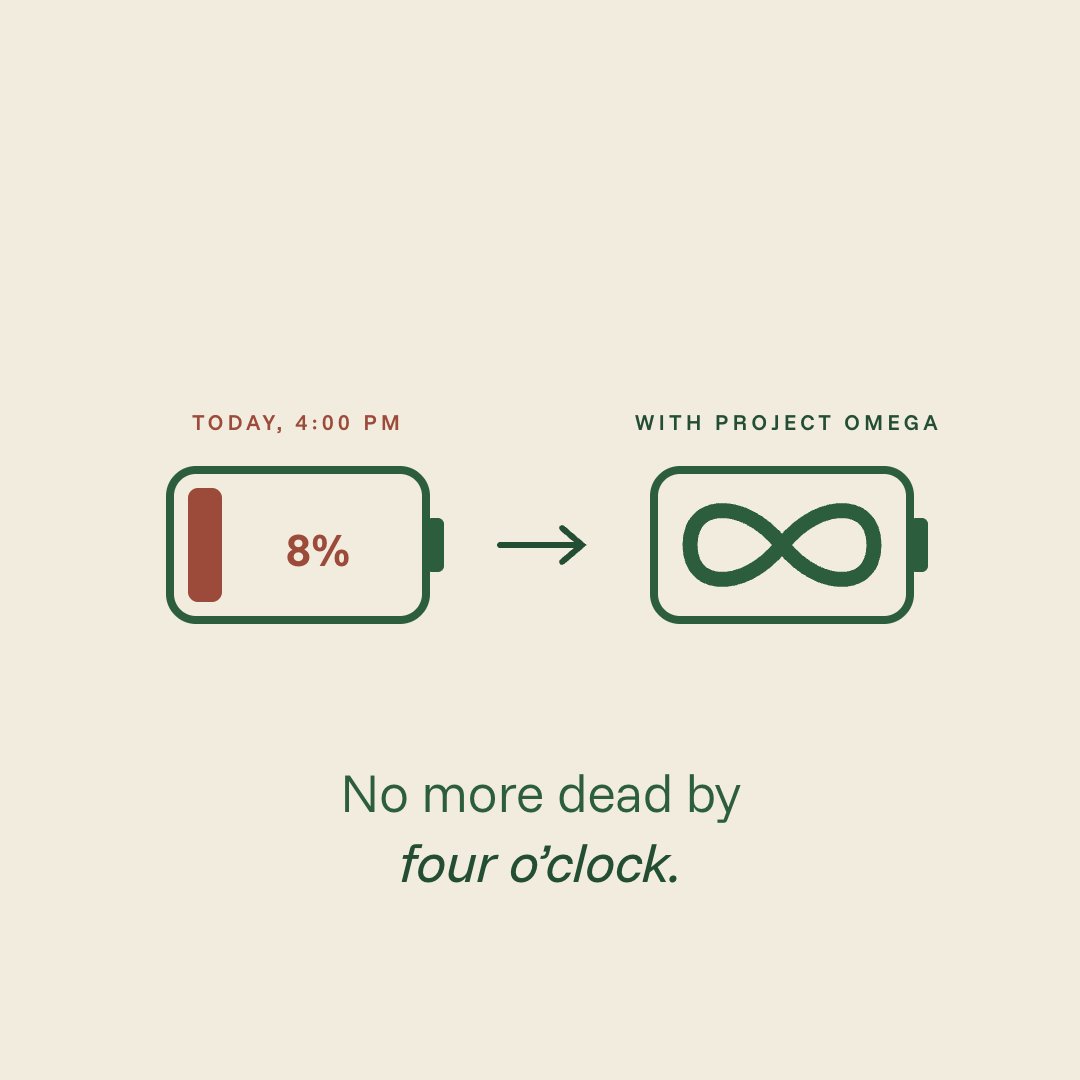
Your iPhone. The one you're charging right now. The one you forgot to plug in last night. It always dies at 4pm, when you actually need it.
We can change that, with the portable nuclear power sources that we’re developing, safely. It’s not new, we all already have at least one nuclear device in our homes, keeping us safe.
We've been so constrained by what current power sources can do that we've stopped imagining what devices could do if the battery problem went away entirely, or if your iPhone was self-charging.
We are building the defense version, the space version, the AI version of this. In the future, we aim to make the consumer version too.
@UnoMasReactor They can fund US-based enrichment facilities with binding offtake to sell to them, that solves their problem. Helping them build an enrichment facility overseas is a huge mistake.
Kale was romaine’s sorry stepsister.
But companies like @sweetgreen redefined the product by educating people on the benefits.
I've been thinking about this as we build @ProjectOmegaHQ.
Nuclear is not an easy thing to make feel approachable. The word “nuclear” carries fifty years of cultural baggage with people picturing Chernobyl and protest signs.
The instinct is to respond with serious and technical communications that reassure people that we know what we're doing.
But 'serious' and 'technical' don't disarm fear.
Stories do. The most important marketing job we have at Project Omega isn't explaining what nuclear recycling is, but rather making people feel something positive about it. Curiosity. Optimism. Maybe even a little excitement.