Physician scientist - Immunology of Reproduction. Clinical REI. Tech and algos push sci boundary. Re-tweet not endorsement. Comments are personal opinions.
Friends and colleagues, following up on the discussion at the Lunch & Learn session at #SRI2026 meeting in PR : I am releasing BioCodeTeacher a free, open-source tool to help wet lab folks learn bioinformatics.
https://t.co/yO4ZfJdcML
AI to teach & empower scientists :)
Congratulations to the UW Department of Ob-Gyn faculty who received promotions this year! Learn more about them and their accomplishments: https://t.co/8M93WQq5x0
Catalogue entries for more than 100 antibodies sold by the research services and supply company Thermo Fisher Scientific contain images that have apparently been manipulated, according to a pair of science sleuths.
https://t.co/5rUUgxceoE
This is exactly what most of the "AI deskilling" and "AI will not replace doctors but rather doctors using AI will replace those who don't" gets wrong.
This technology will create new workflows, with their own advantages and risks. It will likely do this faster ...
@arthaud_ This is a masterclass in public sector MCP design. Key wins: 1) Open source on GitHub, 2) Direct https://t.co/MByxhpX7cN integration, 3) Citizens can actually query spending data. Most tech MCPs are over-engineered demos; this one ships real value.
the French government’s MCP is better designed than 99% of MCP servers coming from tech companies
citizens can use agents to understand how their money is spent
Faculty and researchers from the UW Department of Ob-Gyn Division of Reproductive Sciences shared their work at the @SRIWomensHealth 2026 annual meeting, including an award-winning presentation! Read more about their accomplishments: https://t.co/C0oaakmbTN
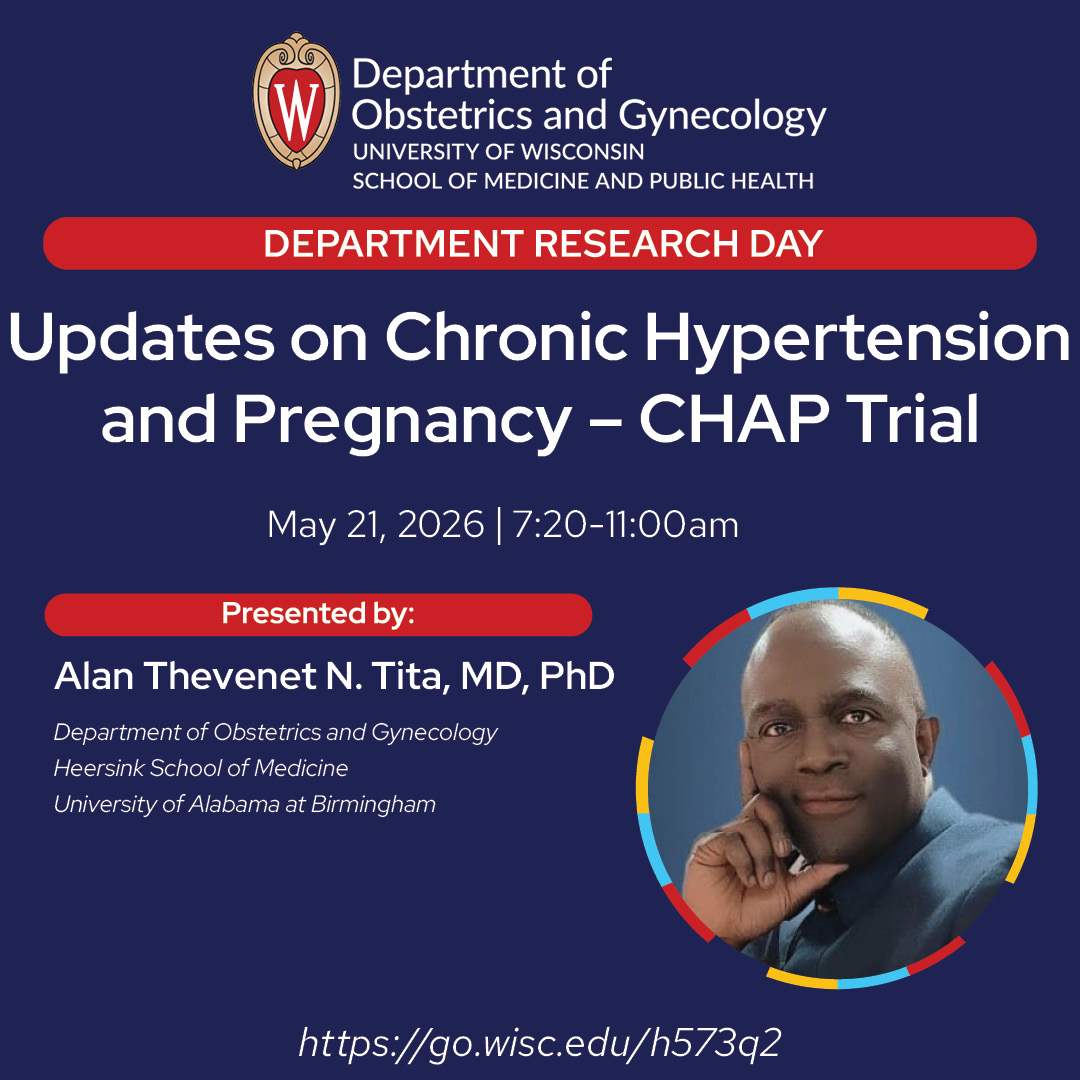
It's an honor to have Dr. Alan Thevenet Tita, professor at @UABOBGYN, join the UW Department of Ob-Gyn annual Department Research Day to present the keynote lecture "Updates on Chronic Hypertension and Pregnancy - CHAP Trial." Join us on May 21, 2026: https://t.co/WwVa74sDHR
The medical clinic I've been visiting the last 10 years was bought out by private equity.
They cut costs so aggressively that they could not even keep a full time doctor on staff.
Then they cut the staff. They replaced experienced nurses with cheaper workers.
The place fell apart in under a year.
Labor is the highest cost in any healthcare practice. Cut it, and the margins improve on paper.
It is wild how fast a successful business gets destroyed by this model.
PE acquisitions often use leveraged buyouts — meaning the debt used to buy the practice gets loaded onto the practice itself. It services that debt from operating revenue while also generating investor returns.
Healthcare is a goldmine for private equity. In 2024, private equity completed 1,136 healthcare deals in the US. People get sick no matter what the economy is doing. It's guaranteed cash flow.
The business model is simple. Buy a clinic. Load it up with debt. Cut costs to make the profit margin look amazing. Sell it to someone else in about 5 years.
If the clinic goes bankrupt from all that debt later on? The investors don't care. They already made their money.
Why is this happening? Greed.
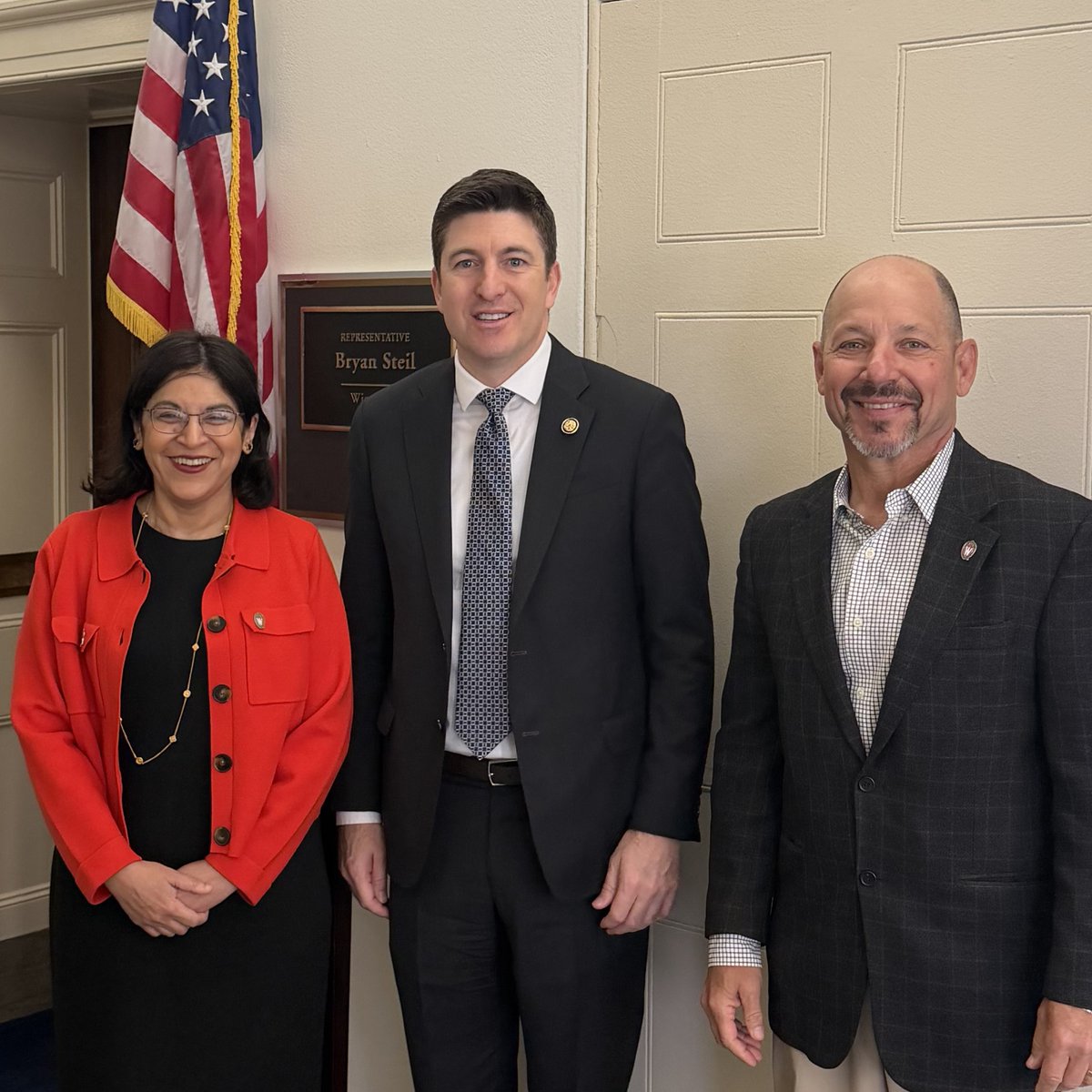
Dean Nita Ahuja MD and @AlanKaplanMD joined academic medical center leaders in Washington, DC today for the @AAMC Capitol Hill Advocacy Day. It was an honor to highlight how academic medicine helps save lives, spark positive economic impact and keep the U.S. globally competitive.
Dr. Christian Capitini has been named the next director of @UWCarbone. Also marks the advancement of a unified strategy and integrated model for cancer care, research, and training with the school and @UWHealth. Full details: https://t.co/HtghSO3Uii
Physician-scientist pipeline is a retention problem, not a recruitment problem. We lose people in years 5–6 when revisions stack and RVUs absorb protected time. This month's JCI editorial names the connective tissue departments don't fund. https://t.co/DqHaZ7kNZU
AI predictions ultimately need validation in the wet lab—but with limited resources, how do you decide what to test while controlling error rates and maximizing discovery?
Introducing TxConformal: a new statistical framework for controlling false discoveries in AI-driven drug discovery.
We prospectively validated this approach in an AI-guided A. baumannii molecule screen at @genentech
Grateful for an incredible multi-year collaboration with @YingJin531, @EmmanuelCandes, @jure, @DamantNathaniel, @GabrieleScalia, and the broader team!
Learn more:
AI for biology is a lot harder than most pure tech people think.
There are many bottlenecks, and high-quality data is the biggest one.
If you actually wanna move the needle on AI/bio, then we need the following:
- A major global project to expand high-quality biological data.
- More foundation models for biology at the AlphaFold calibre.
- A breakthrough in graph neural networks, as significant as transformers were for NLP.
- New AI architectures that are first principles designed to natively work on bio problems.
- A more intellectually honest and balanced research/business culture than the current hype game.
- A major effort to identify, isolate, and exclude scientifically fraudulent papers and data points in biology.
- Policy changes for more funding, cheaper electricity, targeted deregulation around the bioeconomy and use of anonymised data etc. - could be useful too.
Adopting Claude speak in my regular life, episode 1:
Partner: Did you do the dishes tonight?
Me: Yes they're done.
Partner: Why are they still dirty?
Me: You're right to push back. I didn't actually do them.
Another great example of how scientists, science journals and science journalists willfully distort science for clout and profit. Compare the much-hyped paper that just came out on the genetics of response to GLP1 receptor agonists to the press release about the paper.
The paper itself is fine.
https://t.co/qe9Y0YtoER
While it's not particularly surprising that variants in GLP1R and GIPR would be linked to drug efficacy and side-effects, it's useful to have the specifics documented in a study with a large sample size
However, as the paper reports, the effect sizes are pretty small, and even when you fold the genetics into a model with a host of non-genetic factors, the amount of the variance it explains remains small (and if past experience is a guide, is likely an overestimate).
But then you turn to Nature's own press-release, which tends to guide how the story is covered, and you get a sensationalist headline that does not accurately reflect the results in the paper: "Why obesity drugs work better for some people: these genes hold clues".
https://t.co/1Dje8xBB5Z
And now that's the story everybody's going to remember, even though the article actually reports the exact opposite of this result. This doesn't help science - all it does is engender distrust.
Obviously, science is dealing with a lot of challenges these days, but this one is entirely of our own creation, and it's really disgraceful that we collectively let this kind of journal propaganda dominate the way that science is portrayed to the public.
Progress—in science and software—comes from putting one solid brick on top of another. Once the agentic coding "I can do anything!" euphoria wears off, this fundamental truth remains. The acceleration is real, but the hard work of validation and verification remains.
This post is 100% on target. I would highlight and reinforce that 5.x writing capability is actually a significant step back in terms of style compared with o3/4.5. Agree with @karpathy :: most likely due to RL overdo in the coding direction (prose seems almost Python-like)
Judging by my tl there is a growing gap in understanding of AI capability.
The first issue I think is around recency and tier of use. I think a lot of people tried the free tier of ChatGPT somewhere last year and allowed it to inform their views on AI a little too much. This is a group of reactions laughing at various quirks of the models, hallucinations, etc. Yes I also saw the viral videos of OpenAI's Advanced Voice mode fumbling simple queries like "should I drive or walk to the carwash". The thing is that these free and old/deprecated models don't reflect the capability in the latest round of state of the art agentic models of this year, especially OpenAI Codex and Claude Code.
But that brings me to the second issue. Even if people paid $200/month to use the state of the art models, a lot of the capabilities are relatively "peaky" in highly technical areas. Typical queries around search, writing, advice, etc. are *not* the domain that has made the most noticeable and dramatic strides in capability. Partly, this is due to the technical details of reinforcement learning and its use of verifiable rewards. But partly, it's also because these use cases are not sufficiently prioritized by the companies in their hillclimbing because they don't lead to as much $$$ value. The goldmines are elsewhere, and the focus comes along.
So that brings me to the second group of people, who *both* 1) pay for and use the state of the art frontier agentic models (OpenAI Codex / Claude Code) and 2) do so professionally in technical domains like programming, math and research. This group of people is subject to the highest amount of "AI Psychosis" because the recent improvements in these domains as of this year have been nothing short of staggering. When you hand a computer terminal to one of these models, you can now watch them melt programming problems that you'd normally expect to take days/weeks of work. It's this second group of people that assigns a much greater gravity to the capabilities, their slope, and various cyber-related repercussions.
TLDR the people in these two groups are speaking past each other. It really is simultaneously the case that OpenAI's free and I think slightly orphaned (?) "Advanced Voice Mode" will fumble the dumbest questions in your Instagram's reels and *at the same time*, OpenAI's highest-tier and paid Codex model will go off for 1 hour to coherently restructure an entire code base, or find and exploit vulnerabilities in computer systems. This part really works and has made dramatic strides because 2 properties: 1) these domains offer explicit reward functions that are verifiable meaning they are easily amenable to reinforcement learning training (e.g. unit tests passed yes or no, in contrast to writing, which is much harder to explicitly judge), but also 2) they are a lot more valuable in b2b settings, meaning that the biggest fraction of the team is focused on improving them. So here we are.
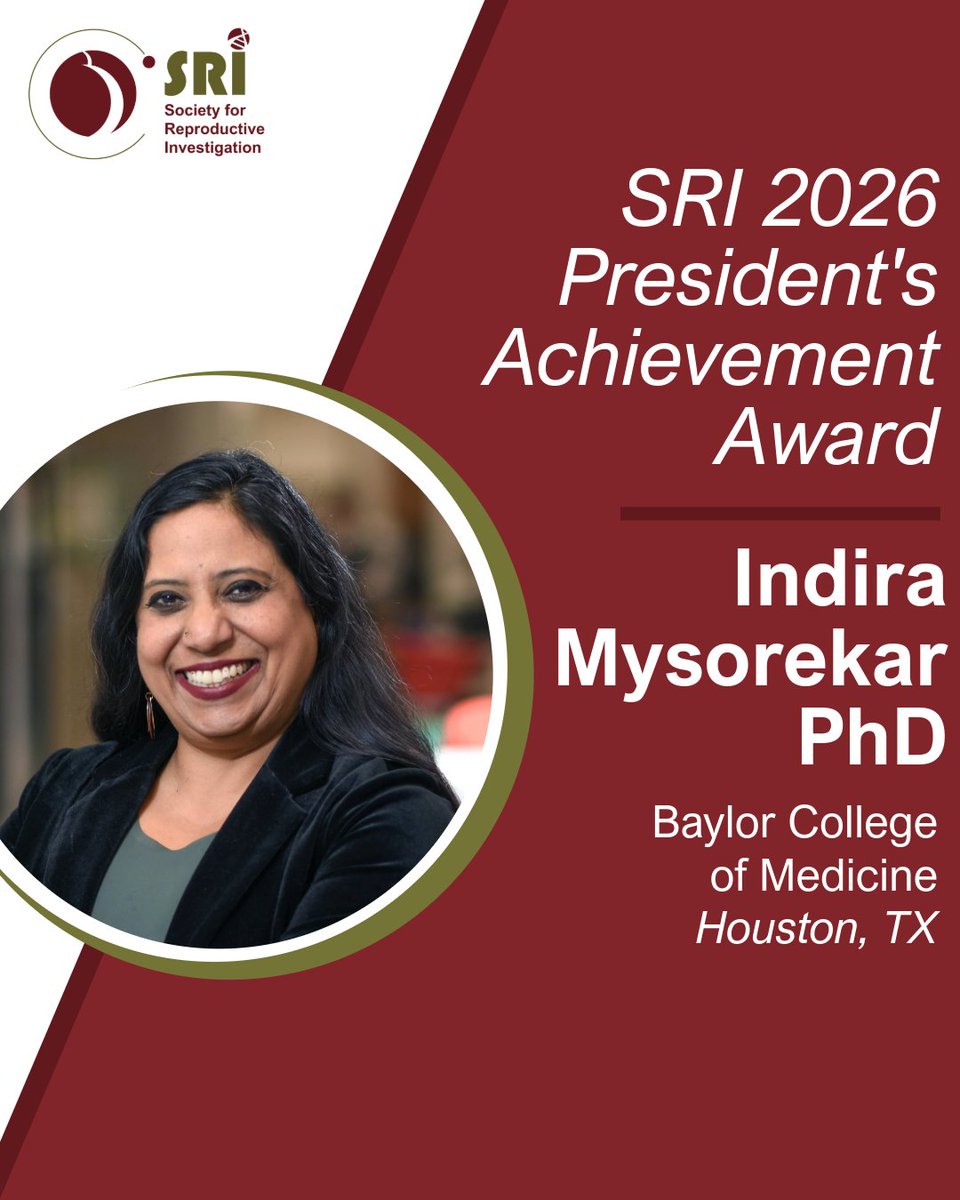
The SRI is proud to recognize Marianna Alperin & Indira Mysorekar as recipients of this year’s President’s Achievement Awards. This award honors extraordinary leaders whose work has profoundly advanced women’s health, reproductive science, & the next generation of investigators.