After 4 months of hard work, my Blender add-on is finally out of beta! Paint light directly in the viewport like you paint in Photoshop. No nodes, no wiring, no hassle. #blender#b3d
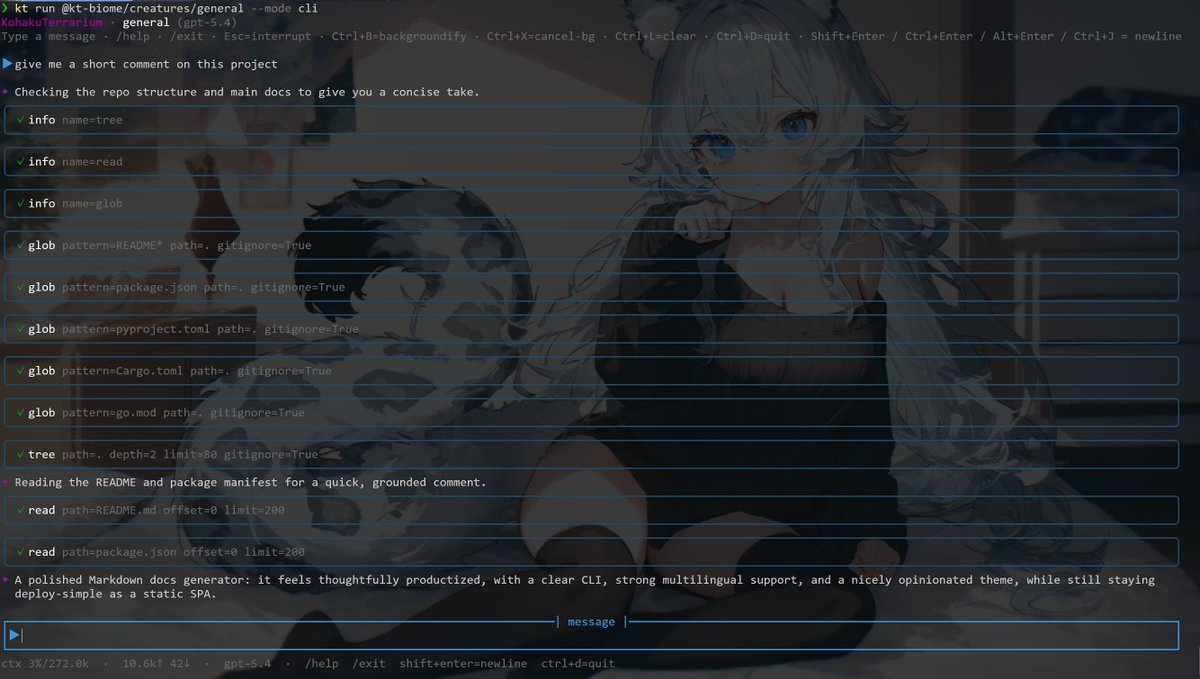
KohakuTerrarium 1.0.0 is now published!
https://t.co/hZ38IEImcK
KohakuTerrarium is a framework for you to make ANY agent. You can use it to reproduce openclaw, hermes agent, or design completely new agent architectures.
It also ships production-ready agent out of the box.
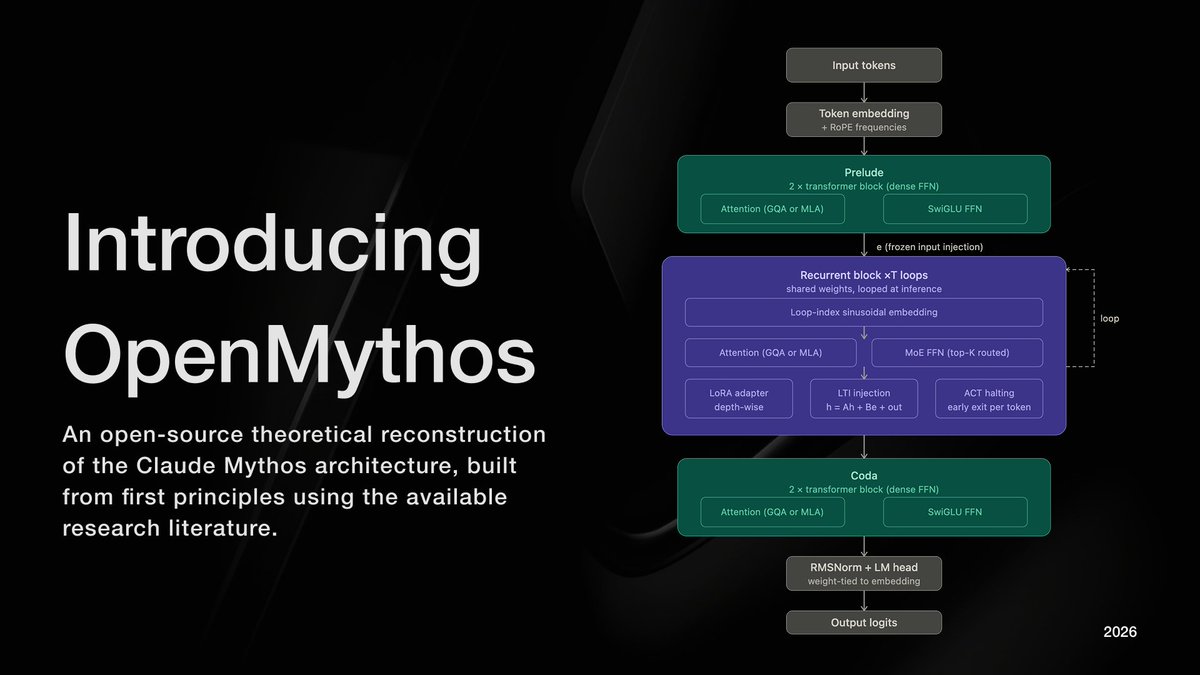
Introducing OpenMythos
An open-source, first-principles theoretical reconstruction of Claude Mythos, implemented in PyTorch.
The architecture instantiates a looped transformer with a Mixture-of-Experts (MoE) routing mechanism, enabling iterative depth via weight sharing and conditional computation across experts.
My implementation explores the hypothesis that recursive application of a fixed parameterized block, coupled with sparse expert activation, can yield improved efficiency–performance tradeoffs and emergent multi-step reasoning.
Learn more ⬇️🧵
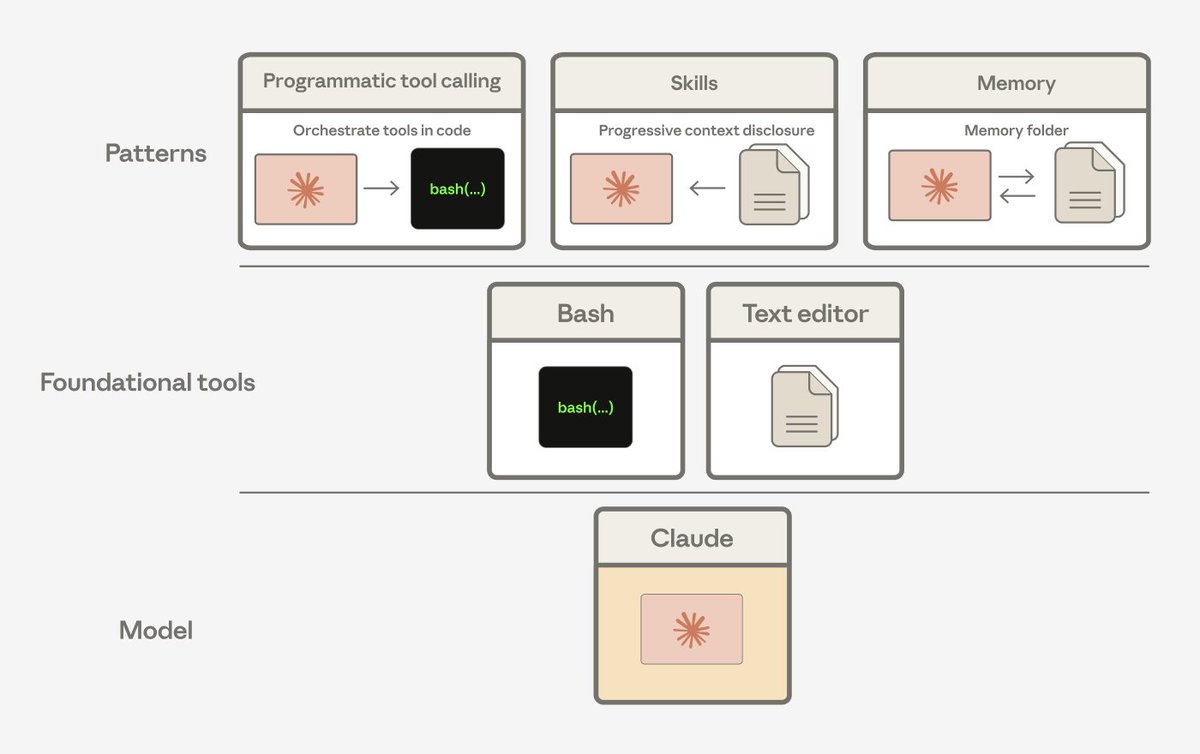
i just published a short article on building applications w/ Claude. captures a few lessons from my own work and many discussions with others at Anthropic.
https://t.co/VYnSSGwDet
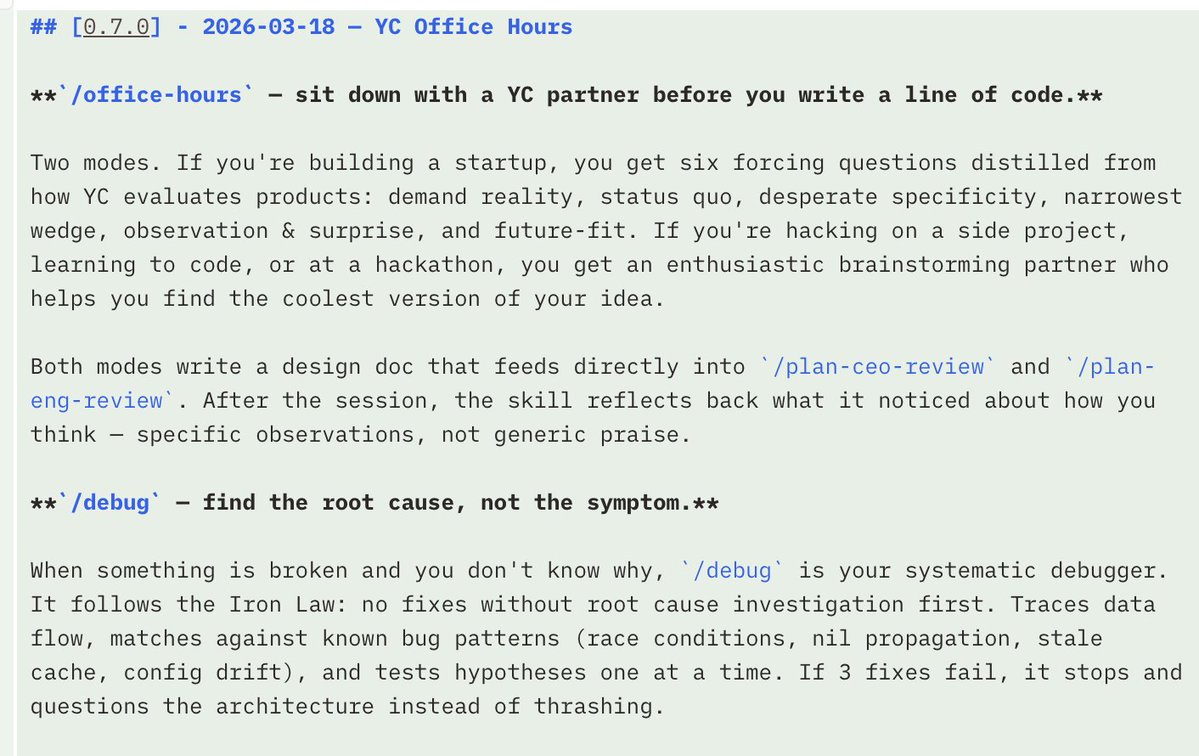
I just launched /office-hours skill with gstack.
Working on a new idea? GStack will help you think about it the way we do at YC.
(It's only a 10% strength version of what a real YC partner can do for you, but I assure you that is quite powerful as it is.)
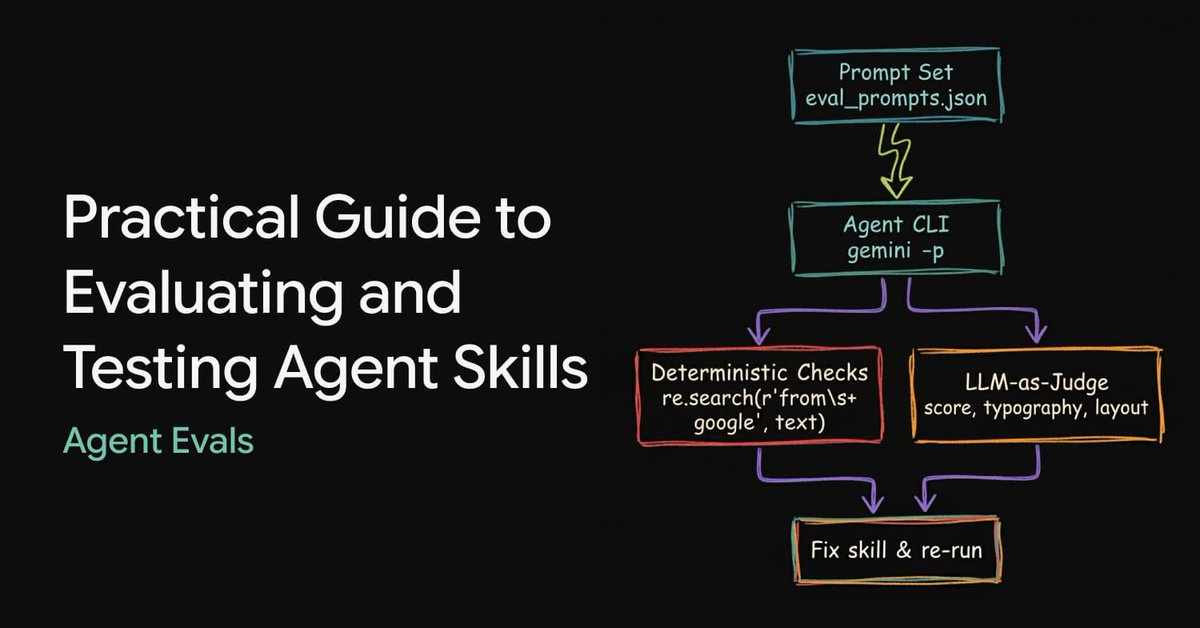
Agent skills are powerful but they are often AI-generated and not tested. Here is a practical guide to evaluating agent skills with code, prompts, and real results.
📋 Define success criteria (outcome, style, and efficiency).
🧪 Create 10-12 prompts with deterministic checks.
🤖 Add LLM-as-judge with for qualitative checks.
🔁 Iterate on the skill using eval failures.
"Unit tests" for AI agent skills
Skill Eval uses Docker-isolated benchmarks and a mix of deterministic and LLM-based grading to evaluate your skills and catch regressions before they hit production
Read more: https://t.co/ZsxzLHNQPv
Our Neural Irradiance Volume (Eurographics 2026) permits real-time rendering of large scenes with dynamic objects and moving lights, while providing a higher quality at a given memory budget (10x improvement over probe grids!). Project page: https://t.co/IHI1URC0WU.