Beautiful start to the spring and Navreh ( New Year)
May all beings be healed and everyone be blessed !😊🌷
Navreh poshte 🙏🏻
#NavrehMahotsav#kashmir#Spring2021
https://t.co/09Mmto3ZVm
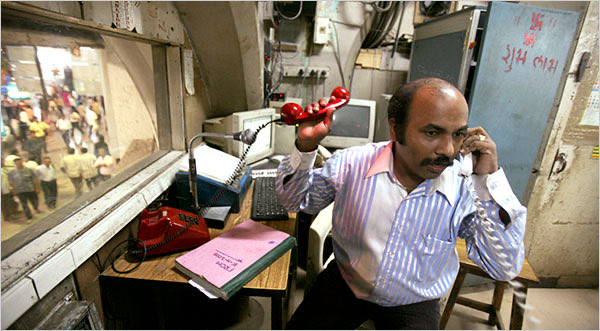
Everyone remembers the attack on the Mumbai railway station on 26/11, the gunmen walking the platforms, more than fifty people killed. Almost nobody remembers the announcer whose voice sent hundreds of strangers running the other way while the bullets were still flying.
His name is Vishnu Dattaram Zende.
On the night of 26 November 2008, he was on duty in the announcer's cabin at Chhatrapati Shivaji Terminus, a raised glass room looking out over the platforms. It was near the end of his shift when he heard a loud blast and gunfire, and saw people running.
Two terrorists had walked into the busiest station in the country and begun shooting everyone in sight. At that station alone, they would kill more than fifty people.
From his cabin he could see the whole layout, and he understood something fast. Local trains were still pulling in, each one about to pour hundreds of passengers straight onto the platforms where the gunmen were standing.
He had a microphone that reached every platform. He decided to use it, even though it meant staying exactly where he was, in full view, instead of hiding.
He began making announcements, over and over, in Hindi and Marathi, telling people not to come to the main concourse, telling them to leave by the rear exits, warning them away from the guns.
Hundreds of people changed direction because of that voice and walked out of the station instead of into the bullets.
The terrorists worked out where the announcements were coming from. They came and stood almost directly below his cabin. One of them fired up toward him. He kept low, waited, and when he could, went back to the microphone.
He was an ordinary railway announcer on an ordinary shift. He had no weapon and no protection, just a mic and a clear view of what was coming. He stayed at his post and used the one tool he had to push strangers out of the path of the killers.
The men with the rifles are the names everyone remembers from that station. The voice that quietly saved hundreds of the people they came to kill belonged to Vishnu Zende.
Picture a roaring, icy river slicing through the isolated Spiti Valley in 1972. The local villagers are completely cut off by a mountain collapse. The military says a traditional concrete/riveted steel bridge will take yrs to bring heavy machinery up the treacherous cliffs.
Then, a young woman steps out onto the frozen mud wearing a hard hat, carrying a set of rolled up blueprints under her arm.
She does not have bulldozers. She does not have massive cranes. Instead, she brings trucks loaded with small, lightweight steel components, like a adult-sized structural Lego set. In just 4 months, w/o a single piece of heavy machinery, her team hand-assembles a rock-solid, load-bearing steel bridge across the gorge.
Her name was Shakuntala Bhagat & she was changing the rules of civil engineering forever.
Born in 1933, Shakuntala was the daughter of S.B. Joshi, a legendary figure known as the "Father of Bridge Engineering in India". While other young girls of the 1940s were expected to follow quiet, traditional paths, Shakuntala spent her childhood staring at bridge trusses & stress diagrams.
In 1949, she walked into the classrooms of VJTI in Bombay. The lecture hall went dead silent. Dozens of male students turned to stare at the only woman in the room. In 1953, at just 20 yrs old, she walked out with a degree, making history as India’s 1st female civil engineer.
She flew to the United States, earned her Master's in Structural Engineering from Penn & trained across Germany & the UK.
When she returned home in the 1960s, she joined IIT Bombay as an Assistant Prof, taking charge as the Head of the Heavy Structures Lab.
At IIT Bombay, Prof. Shakuntala was obsessed with a single problem: Why did Indian infra take so long to build?Traditional steel bridges relied on slow, dangerous, on-site welding & heavy riveting. If a flood wiped out a road in Arunachal Pradesh/Kashmir, cut-off communities had to wait yrs for a replacement bridge.
In the late 1960s, turning her small Bombay apartment into a late night workshop littered with steel prototypes & stress formulas, Shakuntala & her engineer husband, Anirudh Bhagat, cracked the code.
They invented & patented the Quadricon Modular Bridge System & the Bhagat Unishear Connector.
Instead of custom-casting a bridge for every river, their system used mass-produced, interchangeable, lightweight steel modules. They could be packed onto small trucks, hauled up narrow mountain tracks & assembled on-site using simple hand tools, reducing bridge construction time from yrs to weeks.
Yet, when they took this revolutionary idea to institutional investors & govt departments for R&D funding, they were met with cold skepticism.
"If advanced Western nations have not developed a total-system modular steel bridge like this, how can an Indian couple do it?"
The establishment refused to back them. She & her husband took massive personal financial risks, mortgaging their own assets to build & test the prototypes themselves. In 1972, the Invention Promotion Board awarded them the highest honor for the Unishear connector.
The skeptics were forced to eat their words.
Shahkuntala Bhagat went on to design & oversee the construction of 200+ Quadricon steel bridges worldwide, including 69 vital superstructures across India’s most dangerous border terrains, from the high passes of Kashmir to the dense forests of Arunachal Pradesh, as well as projects in the US, the UK & Germany.
In 1993, she was named Woman Engineer of the Year.
When she passed away in 2012 at the age of 79, she left behind an army of students & a country connected by her steel.
We celebrate the famous monuments of concrete and glass in our metros, yet few history books mention the woman in a hard hat who stood on freezing riverbeds to connect India's most forgotten corners.
The next time you travel through a remote mountain pass in the Himalayas & your vehicle rolls smoothly over a steel bridge spanning a deadly gorge, look closely at the steel joints beneath you. You are driving across the indestructible genius of Shakuntala Bhagat.
Namaste, Ma'am...Aapko 1 story sunata hoon....
In the summer of 1980, a distraught 7th grade boy stood in the courtyard of a modest house in Mylapore, watching his father toss his cricket bat down a deep well. A fast bouncer had shattered the boy's spectacles during a local match & his father, a renowned Sanskrit logician, was terrified for his son's sight.
"Your cricket days are done," his father declared, handing him a violin. "If you want to master precision, master this."
The boy did not throw a tantrum. He directed his focus toward the strings, training until he was performing alongside musical legends, even taking direct corrections from Bharat Ratna M.S. Subbulakshmi.
5 yrs later, he suffered another blow: he failed to clear the IIT-JEE examination.
He did not give up. He enrolled in a regional engineering college, quietly mastering computer science logic gates. He eventually worked his way into IIT Madras as a postgrad researcher, earned a PhD, joined as a prof & eventually became the Director of the very institute that had once turned him away.
By 2011, while the world was building consumer mobile apps, this prof was looking at a hidden national vulnerability: every radar, fighter jet, banking server & defense system in India was running on foreign-designed microprocessors.
He had a single question in his mind: "We can test that a foreign chip does what we WANT it to do. But can we guarantee it does not do something we DO NOT want it to do when a war starts?"
He proposed building a completely indigenous, industrial-grade microprocessor from scratch. Global tech giants insisted it could not be done w/o billions of dollars in infrastructure & massive foreign patents.
He did not care. Working out of cramped labs on long shifts, he & his team adopted the open source RISC-V instruction set. They hand-coded logic gates, mapped silicon layouts & verified billions of instruction cycles.
In July 2018, a tiny 16mm² piece of silicon codenamed Risecreek arrived back at the lab. The team wired it up, flipped the switch & watched a flickering monitor as the Linux operating system booted on 100% Indian-designed silicon for the 1st time in history.
Today, his SHAKTI processor architecture powers everything from defense communications to space grade controllers built in collaboration with ISRO.
That young boy whose father threw his cricket bat down a well...
The student who missed the JEE list in 1985...
The violinist who turned down the official IIT Director's mansion to stay in his family home & protect his late father's Sanskrit library...
His name is Prof. Veezhinathan Kamakoti.
The level of petty corruption in our trial courts is staggering.
Pay the sristedar to get your report processed.
Pay someone to move your file from the record room to the courtroom.
Pay the peshkar if you want a short date.
Pay the stenographer if you want your judgment typed on time.
People often blame only judges. But corruption in the justice system isn't always judge-centric. A court functions through an entire ecosystem. If the judge is honest but the registry, court staff, stenographer, peshkar, or peons are corrupt, the litigant still experiences a corrupt court.
Judicial reform cannot stop at the Bench. It has to reach every desk inside the courtroom.
@DeadlyLaw And then the judge will take offence if someone talks about corruption there. A person once asked for 5k for preparing summons for a foreign country. Sadly no one knew how it was to be done. Later got a format from the MHA without spending a rupee.
@Adani_Gas is this company a scam?There is no grivience redressal system,No TAT 4 complaints,no deadlines,no response system, no customer care,nor customer email system, neither twitter. What exactly is one supposed to do. Tag @gautam_adani ? What painful system is this.
Paper Leaks Don't happen in Japan or Western Countries. You know why?
Not because their Govt is taking any special measures to stop it that @dpradhanbjp or @narendramodi doesn't.
It's because There is no demand for leaked papers in the society. The parents there don't incentivise their kids by allowing them to "Buy Out" leaked papers.
We are ready to pay lakhs to Coaching centers to buy Leaked Papers for our kids, but blame Govt for not stopping others to do so.
Just as we Want VIP Darshan at Tirths for ourselves but expect Govt to stop it for others..
Check out my detailed article on this below, if you are also wondering - Are we really looking for a solution to the crisis? 🤔
https://t.co/lgSkXZtJ40
Exactly ! Students are protesting for transparency and accountability yet the same students cheat to pass exams and would be involved in these paper leaks or buying seats
…. Even response on email is same, one week back received an email that request is being forwarded, but to whom and when will they contact, no idea. The whole customer service system is like a scam.
@Adani_Gas is there any work that is done without having to post it on twitter. Your service is downright pathetic. As usual, no deadlines for service requests, no user friendly way to get grievances registered. No follow up. No proper escalation system. No body to contact…..
…. except your useless customer care who have no idea, and simply tell you that resolution will be done in 4-5 days. Once we register a complaint, there should be a call from you end. How does this system work? Local office contact no never works.Horrible service…..
@chiragbarjatya This is such a generalised statement and without much context. Modalities are never the cure. Different injuries respond to different treatments. Modalities may be required for conditions where exercises alone would not work.
@sunandavashisht After killing of my neighbour Sh Pushkar Nath Handoo, word was passed around by Muslim neighbours that nobody from Balgarden will visit Handoo family or join funeral. Only three persons were in funeral beside pall bearers, in them one was his son & other guruji.
@PunjabPoliceInd@sasnagarpolice Black net removal is okay but what about the people driving on the wrong side. more people driving on the wrong side than in their correct side. Zirakpur traffic is a mess. It’s a free will place. Go whichever sideyou want,whenever you https://t.co/xQob4mOeDT use of red lights.