Et si on s’envolait pour Hawaï ? 🌺
Concours : Voyage pour 2 à gagner ✈️
Conditions :
▫️ RT ce tweet
▫️ C’est pas plafonné à 300€ 🤡
Tirage au sort le 30/11
Can $DOGE reach 1$ in 2025?
$DOGE has been outperforming the market since Trump’s election. This trend has been bolstered by Elon Musk's vocal support for the memecoin since its launch.
Recently, Trump announced that Elon Musk would head the Department of Government Efficiency (D.O.G.E.), alongside Vivek Ramaswamy, further fueling hype around the dog-themed cryptocurrency.
Looking at $DOGE’s historical performance, its all-time high (ATH) of $0.73 was achieved in May 2021. Currently, the price is approximately 50% below this peak, with a market cap of $55 billion. Returning to its ATH would require doubling the current market cap, reaching levels similar to Solana’s current valuation. Hitting $1, however, would push $DOGE’s market cap to an estimated $145 billion, a significant leap.
My Assessment:
-$DOGE returning to its ATH ($0.73): Very Likely.
-$DOGE reaching $1: Likely.
-$DOGE surpassing $1: Possible.
-$DOGE over 1.5$ : Unlikely
-$DOGE at 2$: Very Unlikely
While $DOGE benefits from strong community support and celebrity backing, it’s important to remember that it remains a meme coin with no intrinsic utility. Its value is heavily reliant on hype, which can fade as quickly as it rises. Given these factors, I believe $DOGE has room to continue its upward trend, but exceeding $1 in 2025 is highly ambitious and improbable in my opinion.
$SMH is pumping! 🚀
For those of you who haven’t jumped on this gem yet, this might be your last opportunity if there’s a pullback.
Anywhere between 0.35-0.4$ is a good entry.
#NFA
The Red Car Theory.
#Psychology#MindsetMatters#Winners
Have you noticed any red cars today on your way to work, while meeting a friend, or running errands?
Probably not—at least, not consciously. They may have passed you by, but you didn’t pay attention.
Now imagine if, just before leaving your house, I told you that for every red car you spot today, I’d give you $50.
Would you notice them then? Absolutely! Suddenly, every red car on the road would grab your attention. You’d actively search for them.
This is exactly how luck and opportunities work in life. When you move through your days unaware or disengaged, opportunities pass you by unnoticed—just like those red cars. But the moment you decide to focus, to actively look for them, they appear everywhere.
Awareness changes everything. Start paying attention. Keep looking. What you seek is already out there, waiting for you to notice.
#Cryptos Total Market Cap excluding Top 10.
As we can see we’re getting close to march levels. However, the real action still seems to be ahead of us. Earlier in 2024, we experienced a brief and modest Altseason, but I anticipate the upcoming one to be far more significant and impactful.
Historically, the most substantial gains in Altcoins occur after $BTC decisively breaks through its previous ATH, and that happened just a few weeks ago, setting the stage for a potential surge. When we zoom out and consider the bigger picture, it becomes evident that we’re not even close to the nearly $500 billion market cap reached in 2021.
Given the current momentum and market dynamics, there’s immense potential for growth. I’m confident that we’ll see this chart over $1 trillion market cap in the coming months.
A quick reminder on @PythNetwork next unlock.
Remember how the circulating supply of $PYTH x2.5 in May 2024? Well, here's the next big unlock:
That's another x1.59 on the circulating supply, going from 36.25% of token unlocked to 57.5%.
Until May 20th we should be fine, but I would suggest for $PYTH holders to get ahead of others and sell your bag before May. #NFA
$PYTH > $LINK
Why do I believe @PythNetwork will outperform @chainlink in the coming months?
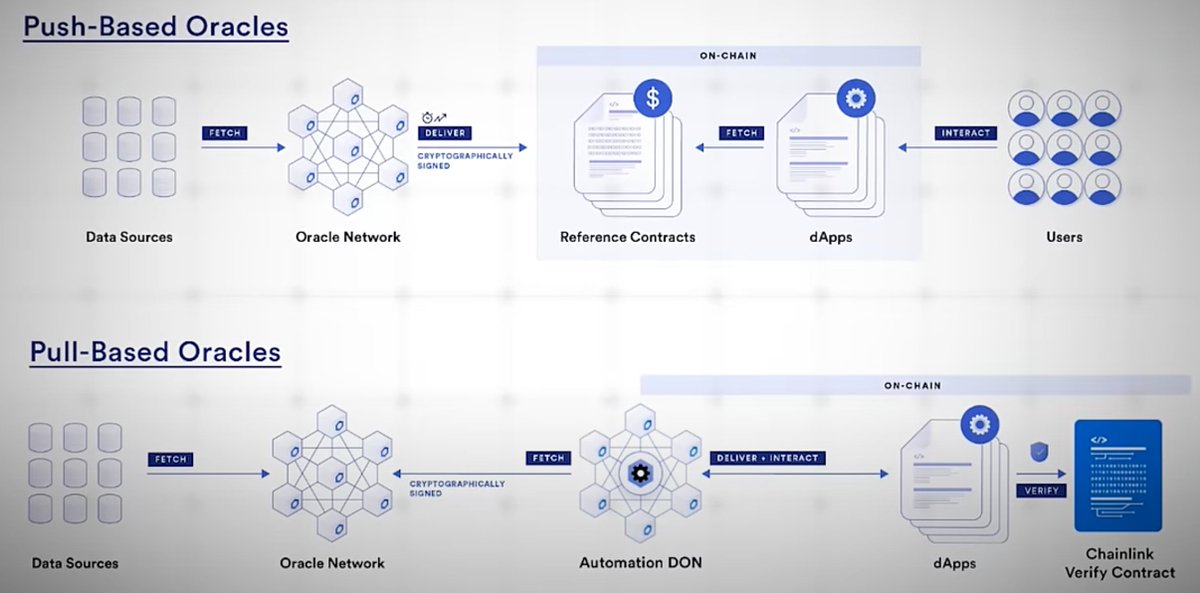
The first thing I learned about $PYTH was its innovative oracle design, which uses a pool-based architecture to deliver external data to smart contracts in under a second. This approach contrasts with $LINK's traditional push-based design, which prioritizes security and decentralization but isn't as fast.
A key advantage of $PYTH is that smart contracts only pay for the specific data they use. In contrast, the push-based model requires contracts to pay for entire data feeds, even if they don’t use them.
However, what’s often overlooked is that $LINK introduced a pull-based design over a year ago. This new approach enables smart contracts to access only the data they need, ensuring cost efficiency, while also delivering data streams at very competitive speeds.
Data streams leverage additional layers of nodes known as Data Oracle Networks (DONs).
According to their website, these DONs currently provide around 100 data streams across five blockchains.
In comparison, $LINK’s earlier oracle service (data feeds) involves approximately 100 node operators. These operators collectively supply between 1,000 and 20,000 data feeds to nearly 20 blockchains, all of which are EVM-based.
On the other hand, $PYTH’s pool-based design uses an architecture similar to Chainlink’s DONs but with a notable distinction: it operates its own blockchain called Pythnet. Pythnet is essentially a private, permissioned version of the Solana blockchain. According to Pyth network documentation, this blockchain is managed by Pyth oracle data publishers.
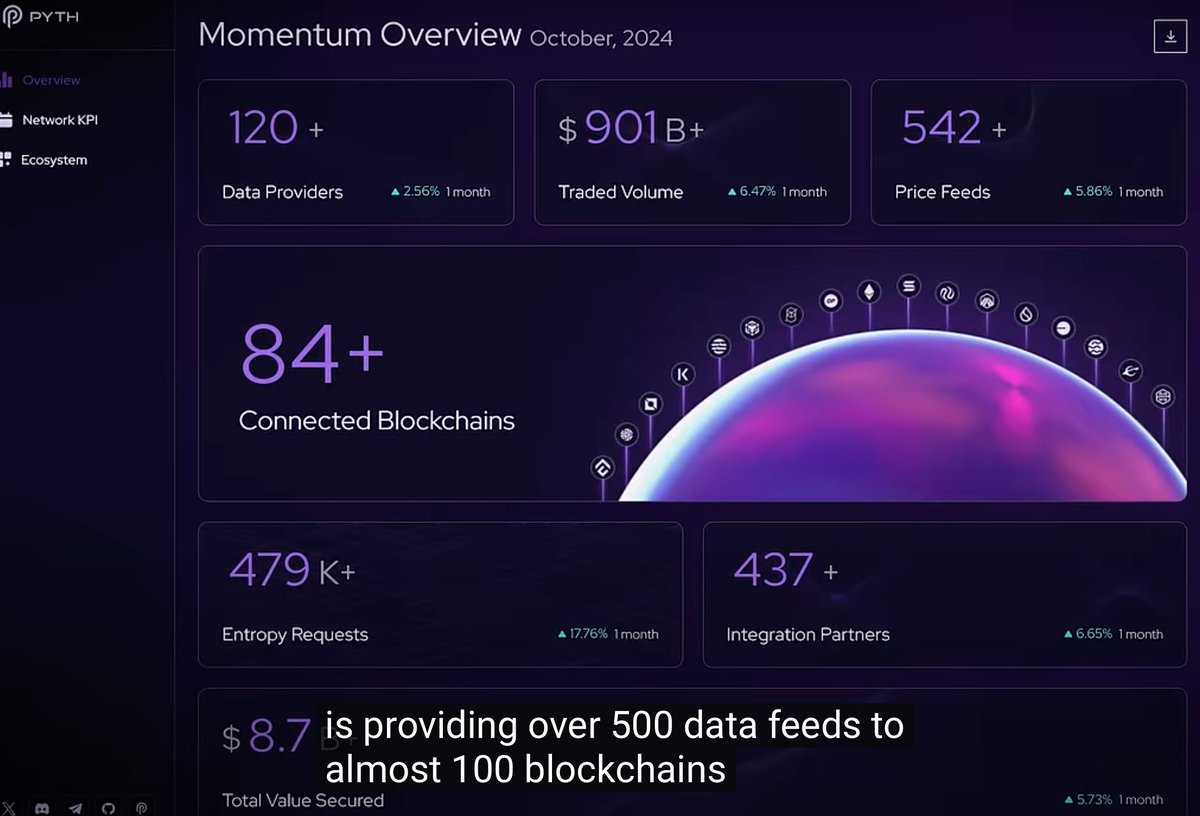
Currently, there are over 1,000 publishers in the Pyth network. The Pyth dashboard also highlights that the Pyth oracle provides more than 500 data feeds to nearly 100 blockchains.
Let’s now introduce the $PYTH Wormhole Bridge. One key reason $PYTH’s oracle supports significantly more blockchains compared to Chainlink is its use of Wormhole for cross-chain interoperability.
Here’s how it works: data is first published to the Pythnet blockchain by its data publishers, who also serve as its validators. When other blockchains request this data, it is seamlessly bridged using the Wormhole protocol. This enables $PYTH to extend its reach across nearly 100 blockchains.
While $LINK currently provides a greater volume of data, the question remains: for how long?
$LINK is undeniably a pioneer in the space and has even begun expanding into other services. However, with its already sizable market cap of nearly $12 billion, future performance potential could be constrained. In contrast, $PYTH is a newer project with a market cap roughly 10 times smaller, offering significantly more room for growth.
Another key advantage for $PYTH is its potential to ride the wave of hype surrounding $SOL. As recent trends suggest, the fastest cryptos often come out on top, and $PYTH’s architecture aligns well with this momentum
Personally, I appreciate both projects, but if I had to choose, I’d go with $PYTH, as its potential to outperform $LINK in the coming months seems strong. #NFA
The @teamspacemesh - $SMH tokenomics often raise concerns, especially around its fully diluted valuation (FDV), which many find off-putting. While it’s true that only 3% of the total supply (just over 70 million of the 2.4 billion SMH) has been unlocked, understanding the long-term vesting dynamics can offer a clearer perspective.
Token Distribution:
- Of the 2.4 billion tokens, 2.25 billion will be mined over the next 875 years, with the final token expected in the year 2899.
- The remaining 150 million tokens (6.25% of the total supply) are reserved for the Vault, allocated to early investors and builders. These were locked for a year post-genesis and are now being released linearly over four years.
Circulation Timeline:
- After 10 years (by mid-2033), these Vault tokens will represent 25% of the circulating supply.
- It will take approximately 29 years for half of the maximum supply to be in circulation.
- Issuing the second half of the supply will take much longer: An additional 237 years for the final Smesh Coin, and a total of 611 years for the last Smidge (1 Smidge = 0.000000001 Smesh Coin).
The entire vesting process spans an impressive 900 years.
While inflation is a legitimate concern, a deeper look at the vesting schedule reveals its true design.
Quick judgments can overlook $SMH tokenomics' long-term vision and sustainability.
5 reasons why @fluence_project, DePIN-Powered Cloudless Computing is the Future. $FLT
Decentralized cloudless computing, driven by DePIN such as @fluence_project , offers a revolutionary alternative to traditional centralized cloud systems. It addresses the limitations of centralization by prioritizing reliability, cost-efficiency, security, and scalability.
Here's why DePIN-powered solutions are set to reshape the digital landscape:
1/ Reliability Through Decentralization
Unlike centralized clouds prone to outages (e.g., Microsoft Azure, Cloudflare), DePIN eliminates single points of failure by leveraging a network of independent providers, ensuring greater uptime and system resilience.
2/ Cost Savings via Competition
DePIN reduces costs significantly—up to 60-80% compared to centralized cloud providers—by fostering competition among providers and eliminating hefty platform markups, as demonstrated by $FLT's open, market-driven approach.
3/ Enhanced Security with Blockchain Technology
By integrating cryptographic proofs and blockchain, DePIN ensures verifiable, tamper-proof computations and builds trust. $FLT Proof of Capacity protocol ensures performance transparency, making billing fair and aligned with actual resource usage.
4/ Faster, Scalable Edge Computing
DePIN's edge computing processes data closer to its source, reducing latency and enhancing real-time performance, which is vital for IoT, gaming, and other latency-sensitive applications.
5/ Open-Source Innovation
Built on open-source principles, DePIN networks benefit from global collaboration, fostering rapid innovation, agility, and resilience, unlike the closed systems of centralized cloud providers.
$FLT leads the way by enabling trustless, decentralized execution through peer-to-peer VMs. Its architecture empowers developers with privacy, control, and scalable solutions, bypassing traditional cloud limitations.
DePIN-powered cloudless computing represents a transformative shift, offering businesses a more secure, cost-effective, and scalable alternative to centralized clouds. As these technologies evolve, platforms like $FLT are poised to challenge traditional cloud providers, becoming the preferred infrastructure for enterprises worldwide.
Can @RowanEnergy make a comeback? $RWN
1/ What is Rowan energy?
Rowan Energy is a blockchain-powered renewable energy platform designed to decentralize energy production and empower users. Its primary focus is on helping solar panel owners monetize their renewable energy output through the installation of SmartMiners—innovative devices that connect directly to solar panels, enabling users to actively participate in the network and earn rewards for their contributions.
Rowan Energy’s ecosystem incentivizes green energy production and consumption by rewarding users with its native cryptocurrency, $RWN.
Rowan Energy operates on a low-carbon, Proof-of-Authority blockchain, designed to be energy-efficient and eco-friendly compared to traditional PoW blockchains.
$RWN has chosen to focus on the UK market initially, aiming to become a leading renewable energy provider in the region.
2/ Strengths & challenges
The economic model of $RWN is designed with accessibility in mind, even for users unfamiliar with cryptocurrencies. Any customer can utilize Rowan Energy’s services without needing to create a Rowan wallet, as rewards can be conveniently paid directly in fiat currency. Additionally, Rowan offers a user-friendly app that allows customers to track their energy history and earnings seamlessly.
$RWN stands out as a Web2-style company leveraging blockchain technology, making it a perfect middle ground to attract both crypto-friendly and non-crypto-friendly customers. This hybrid approach could broaden its appeal and drive adoption across diverse audiences.
Their product is already live and fully tested, with plans to scale through the training of over 200 companies to install SmartMiners for their clients. So far, customer feedback has been positive, 4.6/5 out of 58 reviews on Truspilot .
However, there are a few concerns regarding Rowan Energy’s adoption:
-Limited blockchain interoperability: There is currently no option to bridge $RWN to other blockchains, and the team has clearly stated they have no plans to pursue this in the future.
-Slow wallet growth: Rowan Energy’s blockchain explorer shows just over 9,000 wallet addresses, a figure that has barely grown since the summer, indicating limited progress on this metric.
-Small team capacity: Currently, only a handful of people are capable of setting up SmartMiners. Paula, Rowan Energy’s Director of Operations, even acknowledged in a Trustpilot response: “As you know, we are a very small team working hard...”While they’ve committed to training external companies to handle installations, their ability to deliver on this promise is critical. Failing to do so could pose a significant barrier to the project’s development.
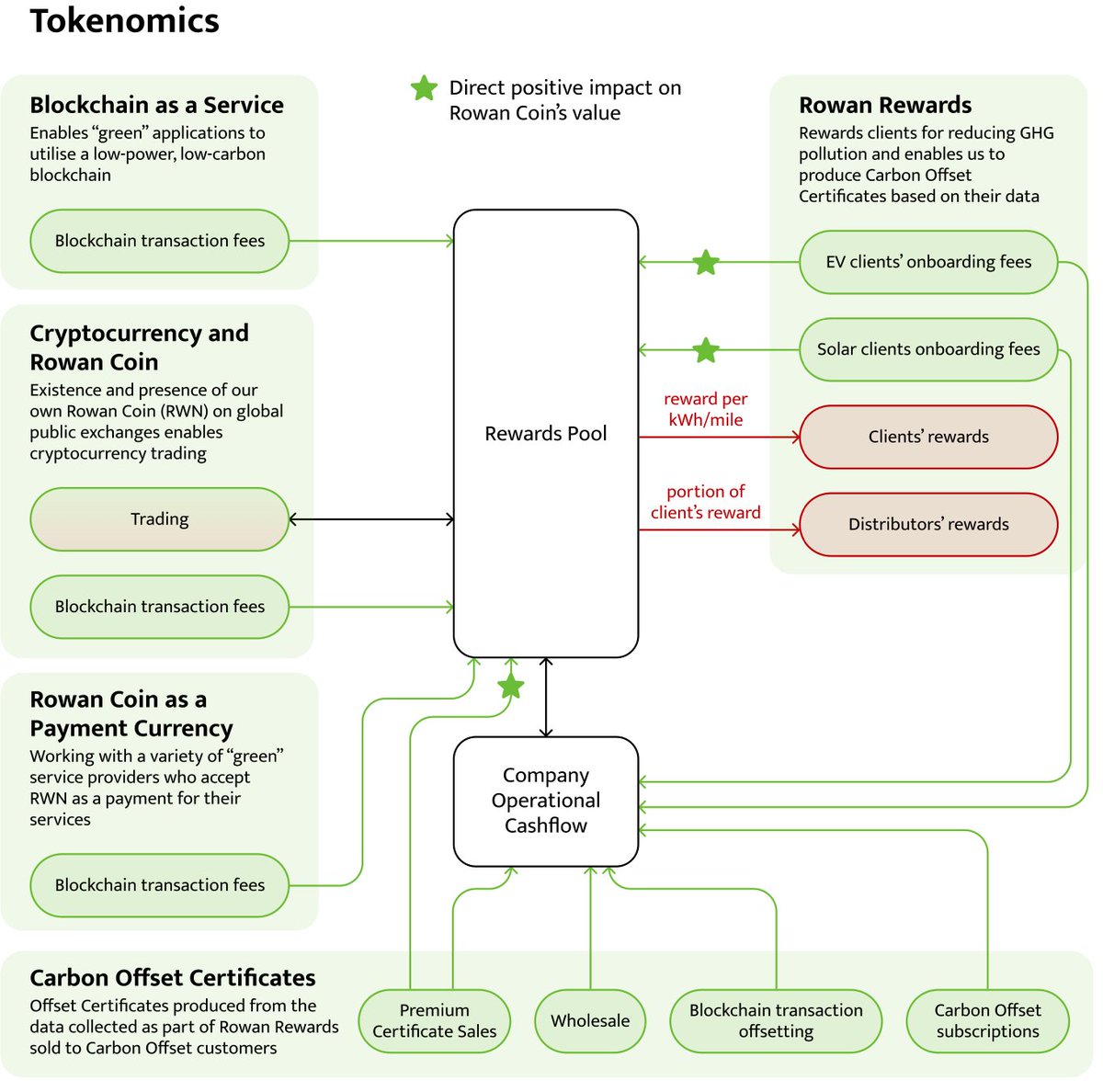
Here’s a quick look at $RWN tokenomics:
3/ Is it now a good investment opportunity?
Rowan Energy's $RWN price dropped from $0.35 in May to $0.015 in November 2024, leaving it with a small $4M market cap.
The UK’s commitment to achieving net-zero emissions by 2050 creates a highly favorable regulatory and market environment for $RWN. While Rowan Energy’s UK-focused strategy could potentially limit expansion opportunities in the future, the current focus on this market aligns well with national sustainability goals. Moreover, with such a small market cap, there remains significant room for growth, presenting a compelling opportunity for early adopters.
In my opinion, $RWN holds potential to reclaim its ATH, which would translate to a 15x–20x return from its current value. Several factors, such as potential CEX listings, new partnerships, and strategic deals, could positively impact $RWN’s price and even push it to new highs.
However, it's important to consider the risks. If the project faces challenges in execution, struggles to maintain momentum, or fails to generate sufficient market interest, $RWN’s performance might fall short of expectations.
That said, Rowan Energy is undeniably an innovative project at the intersection of blockchain and renewable energy. While it offers exciting opportunities, it also comes with inherent risks.
Personally, if I were to invest soon, I would limit my exposure to 1% of my portfolio. #NFA
$SMH Athena VM.
At its initial launch, Spacemesh did not include a full Virtual Machine (VM), a deliberate choice by the team.
For context, the Virtual Machine acts as the backbone of a network, enabling the execution of smart contracts and securing the transaction process.
In its current state, Spacemesh resembles a network like Bitcoin. As of now, it is not yet possible to build directly on Spacemesh. However, this will change with the implementation of a fully-fledged VM.
This is why the development of the VM is now the primary focus of the project and the top priority for the @teamspacemesh.
Not all holders have lost 80-90% of their investment in $SMH, although it's true that many have faced losses. After all, it’s hard not to when the price drops from over $6 to just $0.25 in the span of seven months. Personally, I was invested, but I decided to sell my $SMH at a -40% loss because I didn’t want to hold through the search for a bottom and wait for the start of an accumulation phase—which, in my view, is exactly what we’re seeing now.
In my opinion, this presents a great opportunity to start DCA into $SMH. Of course, this is not financial advice, just my perspective as someone who loves the project and believes in its fundamentals, team, and long-term vision. That’s why I’m choosing to invest in $SMH - not when it’s 10x higher than its current price, but at these lower levels, where I see real potential.
$SMH blockmesh explained. @teamspacemesh
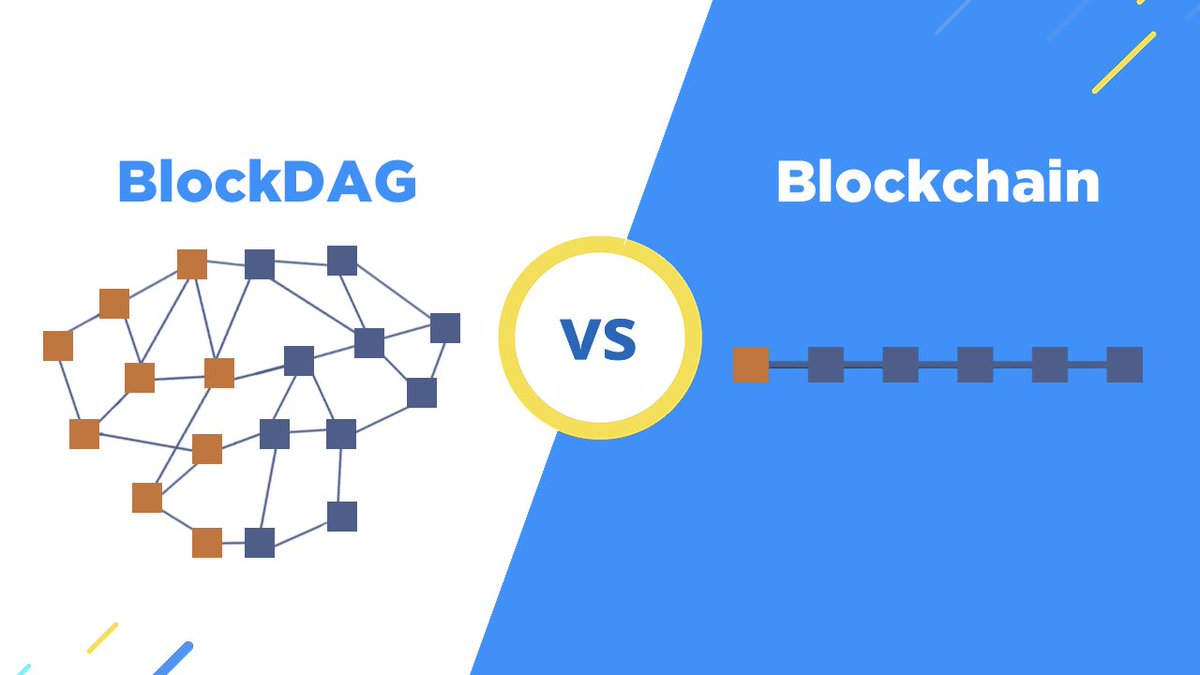
Spacemesh utilizes blockmesh technology, which is similar to a blockDAG (Directed Acyclic Graph).
Unlike traditional blockchains, where blocks are added linearly, one after another, a blockDAG allows multiple blocks to be added simultaneously.
This design significantly enhances the scalability of the network without compromising its security.
$IO vs $ATH GPUs.
Let's start with @ionet :
$IO announce over 327k GPUs; with over 5000 of them cluster ready.
What about @AethirCloud ?
$ATH have 49k GPUs; with over 3000 of them being $NVIDIA H100s.
On $IO's website they recognise just over 150 cluster ready GPUs for $ATH.
fyi: a cluster ready device is defined as a device that have passed PoW and readily deployable.
So who's lying? 🤔
Accumulation Zone Spotted for $SMH.🚀
After a steep decline of -95% since its peak in March 2024, the @teamspacemesh token appears to have found its accumulation zone, consolidating in the $0.25–$0.40 range.
Could this be the calm before the storm?
Are you buying $SMH? 📈📉