If we really are seeing the “end of globalisation” then Subsidy Control law is of greater importance.
That’s because it’s a route to give assurance to trade partners (to reduce tariffs) but also to ensure hard earned taxpayer funds are directed towards appropriate activities.
Manchester United’s plans for a new 100,000 seater stadium have started a debate about the role of public funding in supporting sports stadia.
In this article, Jonathan & I review the regeneration benefits of such projects & Subsidy Control implications.
https://t.co/2zGkB13Hzt
I hope this report by @FlintGlobal kickstarts a discussion about whether the UK’s Subsidy Control regime is working well.
Some aspects of the UK regime are good - it’s more flexible and big projects avoid the delay of notification.
However….
1/3
At Kings College London, listening to a fascinating discussion about how to improve the UK Subsidy Control regime - at the moment Joanne Clement KC discussing whether the lack of successful cases ought to be a cause for concern.
Free Subsidy Control event - 7 March 2024.
Your chance to hear from expert practitioners on how the regime has fared so far and what improvements could be made.
#SubsidyControl#UKPolitics#UKLaw
The UK’s Subsidy Control regime is one year old on 4th Jan 2024.
In this 🧵 I review whether it has been a success so far.
1. The good
Public authorities can quickly award large subsidies under the UK rules. There’s no cumbersome notification process as under EU State aid law.
Kwasi Kwarteng led on the design of the Subsidy Control Act 2022
His claims there would “be no return to 1970s approach of ministers trying to run the economy or bailing out unsustainable companies” are contradicted by higher levels of state aid, seemingly for no greater return.
Sir Marcus Smith, President of the Competition Appeal Tribunal, has written an article for this month’s Subsidy Control Insider newsletter.
It reflects on the first 12 months of the Subsidy Control rules & how case law may evolve in the coming years.
https://t.co/zIiwFdBEkY
Just before the Christmas break, the government referred its planned £500m subsidy to Tata Steel to the CMA.
This 40% steel subsidy is said to reduce the UK’s entire carbon emissions by around 1.5%.
This was doable under EU State aid law, but quicker under Subsidy Control law.
The Department for Business & Trade has published an evaluation of the early Subsidy Control regime.
However it’s selective, only factoring in the views of public authorities and the Department (which happens to give out the most subsidies in the UK).
https://t.co/dAIhKClMK4
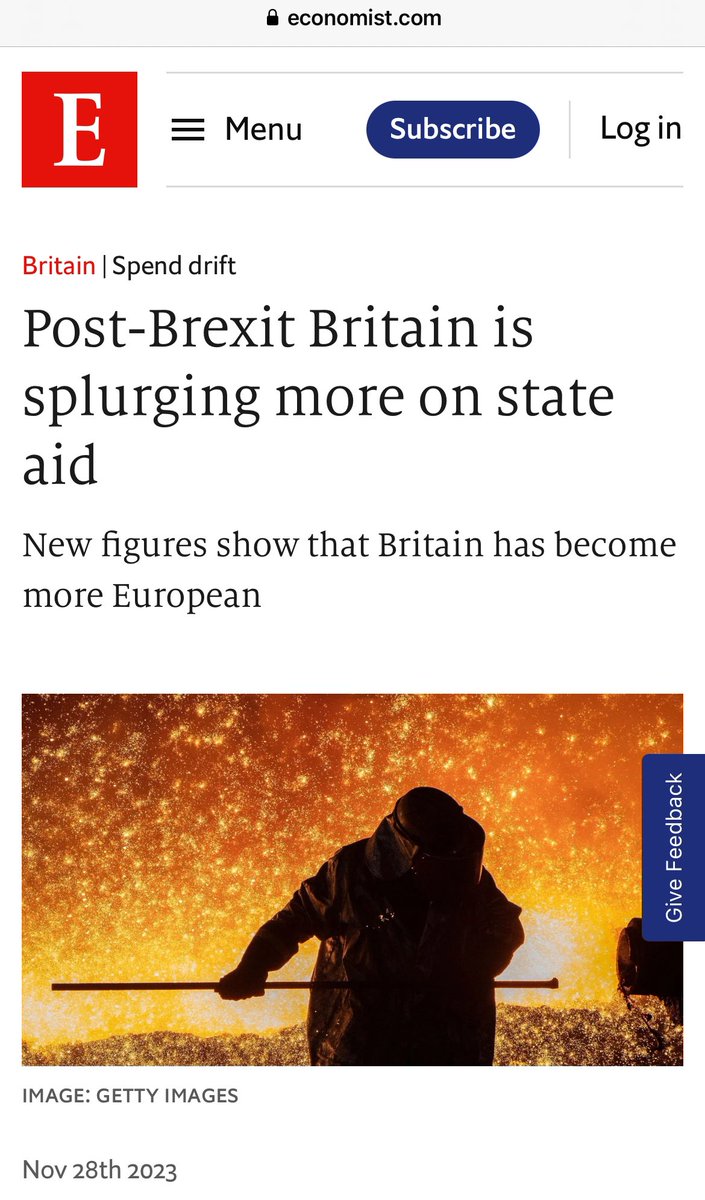
The UK was once a frugal outlier when it came to state aid, spending just 0.35% of GDP on supporting businesses, lagging far behind Germany’s 1.35%.
That figure has tripled to 1.13%, bringing into question the logic of lighter touch Subsidy Control laws. https://t.co/bFgC5QjyaU
A big moment for EU State aid law.
The European Commission were left bruised after the General Court ruled against them in the €13bn Apple tax case.
Now the Advocate General of the ECJ has stated that she thinks errors of law were made by the General Court in that decision.
Do you understand subsidy control?
This #webinar hosted by Jonathan Branton, Alexander Rose, and Michelle Maher of @DWF_Law will tell you all you need to know.
Watch now to find out all about negotiation and advocacy: https://t.co/hCkSqjfrke
#EMLawshare#SubsidyControl
A £190m subsidy is planned for the Post Office towards its costs of participating in the Horizon IT scandal and compensating wrongly convicted postmasters.
Under the Subsidy Control Act this subsidy is to be reviewed by the Competition and Markets Authority before being granted.
In Dec 2020, the government considered the ability to control the award of state aid was so important it was worth jeopardising the trade deal with the EU.
In Oct 2023, the UK’s Subsidy Control regime is not working as well as it should - will the government make changes?
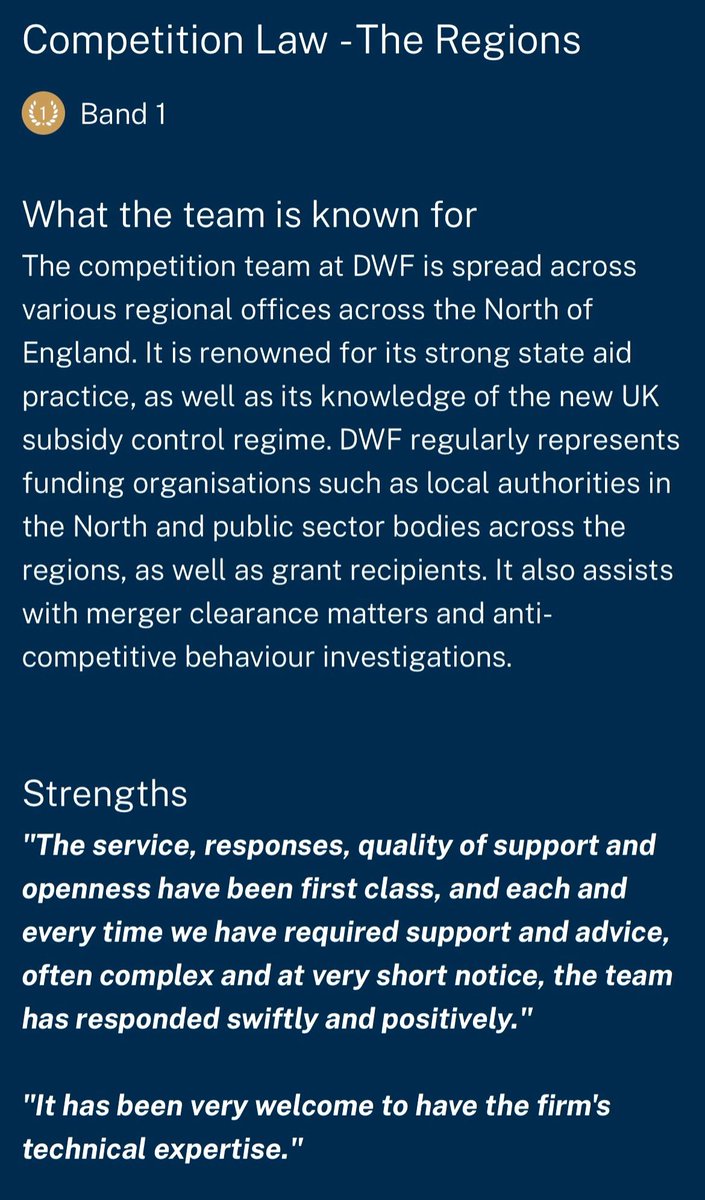
Really pleasing to see DWF’s competition law team ranked in the top tier in Chambers 2024.
Thank you to everyone who has taken the time to provide feedback.
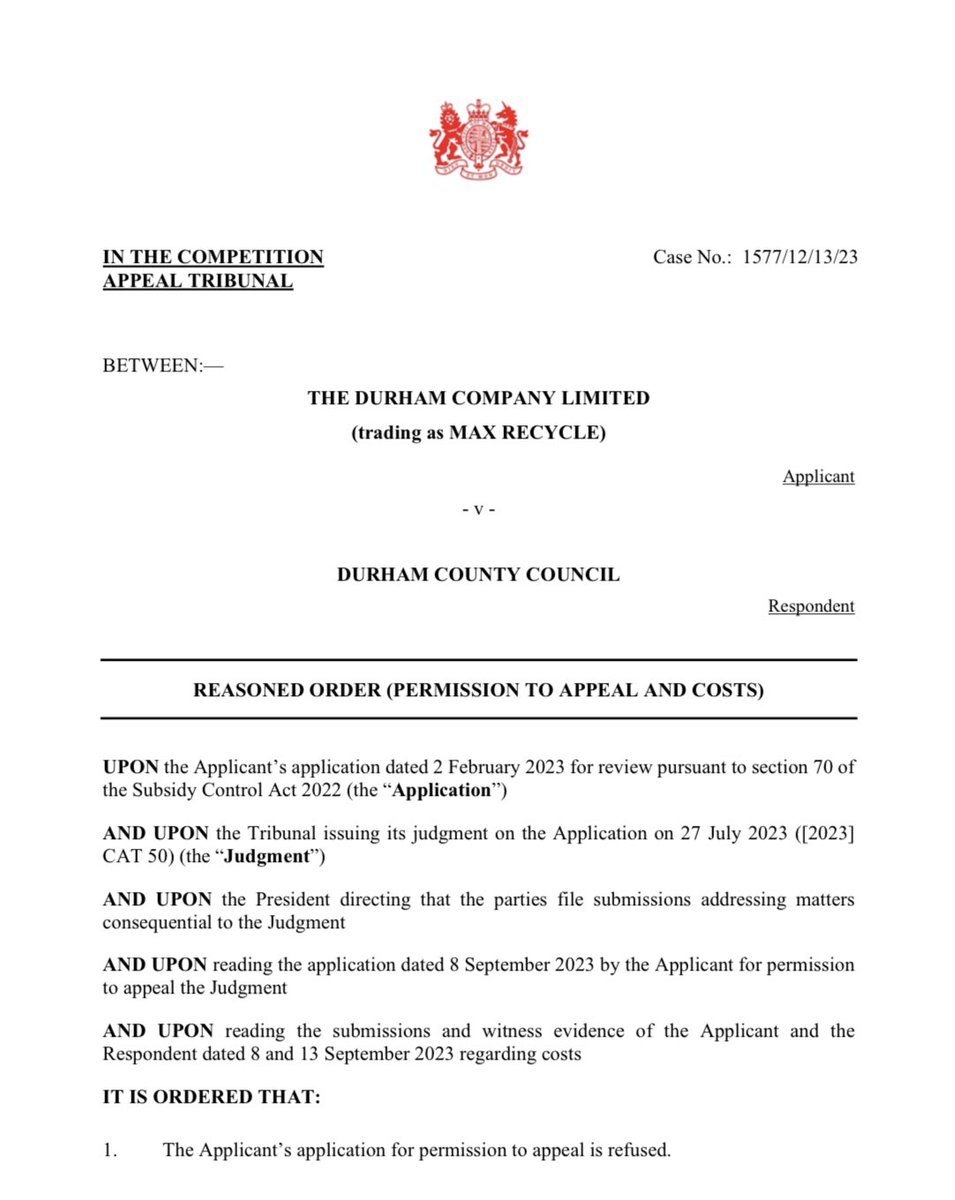
Update on the landmark subsidy control case (Durham County Council v Max Recycle) which looked into the compliance of commercial waste collection arrangements.
@letsrecycle@MRWmagazine@TopWasteNews
The Competition Appeal Tribunal has rejected permission to appeal in the UK’s first Subsidy Control case, stating that it is “not satisfied that any of the Applicant’s grounds of appeal have a reasonable prospect of success”.
https://t.co/mBulax4GNQ #SubsidyControl#LegalNews
The EU Foreign Subsidies Regulation comes into force properly today with mandatory notification requirements and fines of up to 10% of Worldwide turnover.
The aim is to apply something akin to State aid law to subsidies from outside the EU, that affect the Single Market but….
The agenda of the TCA meetings tells us what the EU is concerned about when it comes to State aid / Subsidy Control.
In this case, it’s:
• enforcement;
• freeports and investment zones; and
• the British Industry Supercharger